If you've only had "pho" at a hotel restaurant or a place with a laminated English menu on Bui Vien, you haven't had Saigon "pho" yet. The real thing is different from what you'll find up north—sweeter broth, more fresh herbs on the side, nobody judges you for dipping hoisin, and the atmosphere is usually just a plastic stool on a sidewalk at 6 a.m.
Here are five places where locals actually eat it.
Pho Hoa Pasteur — The Institution
Open since 1968 on Pasteur Street, in District 1. This isn't the Pho (쌀국수 / 越南河粉 / フォー) Hoa chain you've heard of (that's a different, more commercial thing). The original is a narrow shop-house with a front counter and a few tables wedged into a space that feels unchanged since the 70s.
The broth is what matters: sweet, clear, built on beef knuckle and bone simmered low for hours. It's noticeably sweeter than northern "pho", which is exactly the point. A large bowl with brisket and tendon runs about 65,000 VND. The noodles are rolled fresh daily, slightly thicker than you'd get in Hanoi, and they soak up the broth without falling apart. Arrive before 8 a.m. or wait; locals queue here.
Address: 260 Pasteur, District 1. Open 6 a.m.–11 a.m. only.
Pho Hong — Sweet, Generous, No Apologies
Located on Nguyen Hue walking street (the pedestrianized boulevard downtown), Pho Hong embraces southern style without pretense. The broth tastes almost like a light curry—lots of star anise, a touch of rock sugar, and a richness that comes from pork knuckle as much as beef. Southern "pho" cooks often use both; northern purists would call that cheating.
Their specialty bowl adds extra brisket, beef ball, and tendon. Around 70,000 VND. The fresh herb plate—mint, sawtooth coriander, Thai basil, chilies—is generous and actually matters here; the broth is light enough that the herbs cut through it properly. Hoisin sauce is on every table, and people use it. That's the south.
The place is narrow, crowded, and noisy by 7 a.m. That's also the south.
Address: Nguyen Hue (후에 / 顺化 / フエ) Walking Street, District 1. Open 6 a.m.–10 a.m.
Pho Le — Bone-Deep, No Flash
On a small street (Doan Thi Diem) in District 1, Pho Le looks like nothing—plastic chairs, a communal table, morning light through the metal gate. But the broth is exceptional: it's been running the stock pot since before dawn, and the beef is deeply flavored without being murky. The difference between a 6-hour and an 8-hour broth is audible; this one tastes cooked.
The standard bowl is 50,000 VND (brisket) to 60,000 VND (with extras). They'll add a poached egg if you ask. Noodles are rolled in-house, slightly chewy, almost al dente in texture. The place fills up by 7 a.m. and closes by 10 a.m., so timing matters.
This is where you learn that "pho" isn't fancy—it's breakfast, it's fast, and it tastes like someone's been up since 3 a.m. making it work.
Address: 38 Doan Thi Diem, District 1. Open 5:30 a.m.–10 a.m.

Photo by Quý Nguyễn on Pexels
Pho Quynh — The Reliable Deep-Diver
Technically there are a few Pho Quynh locations around Saigon, but the original (and best) is on Calmette Street in District 1. This is a proper sit-down restaurant—not fancy, but more stable than a sidewalk stall. Wooden tables, ceramic bowls, a real kitchen visible from the dining area.
The broth is dark and sweet, leaning heavily into caramelized onion and beef bone. They use a lot of charred onion and ginger to get color and depth; it's a stylistic choice you either love or puzzle over. Most locals love it. A large bowl with brisket and tendon is about 70,000 VND. The noodles are silky and delicate—if Pho Le is chewy, Pho Quynh is almost fragile, which changes how you eat it.
They serve a side of raw beef (tai) alongside the cooked cuts, so you can add it to the hot broth and cook it as you go. That's a southern touch too; northerners think it's wasteful.
Address: 5 Calmette, District 1. Open 6 a.m.–10 p.m.
Pho Phu Vuong — When You Need It at 2 a.m.
Running 24 hours, on the corner of Phu Vuong and Vo Van Tan (District 3), this place is less about cult status and more about necessity: it's open when everything else is closed. The broth is respectable—not as nuanced as Pho Hoa Pasteur or Pho Quynh, but solid. Sweet, beef-forward, the way southern "pho" should taste.
A bowl with brisket runs 60,000 VND. The noodles are consistent. The herb plate is standard but fresh. What matters is the 2 a.m. bowl after a night out, or the 3 p.m. bowl if you've just arrived from the airport and can't wait for morning.
There's less crowd pressure here than at the 6 a.m. stalwarts, which means you can actually sit and eat without someone's elbow in your back.
Address: Corner of Phu Vuong and Vo Van Tan, District 3. Open 24 hours.
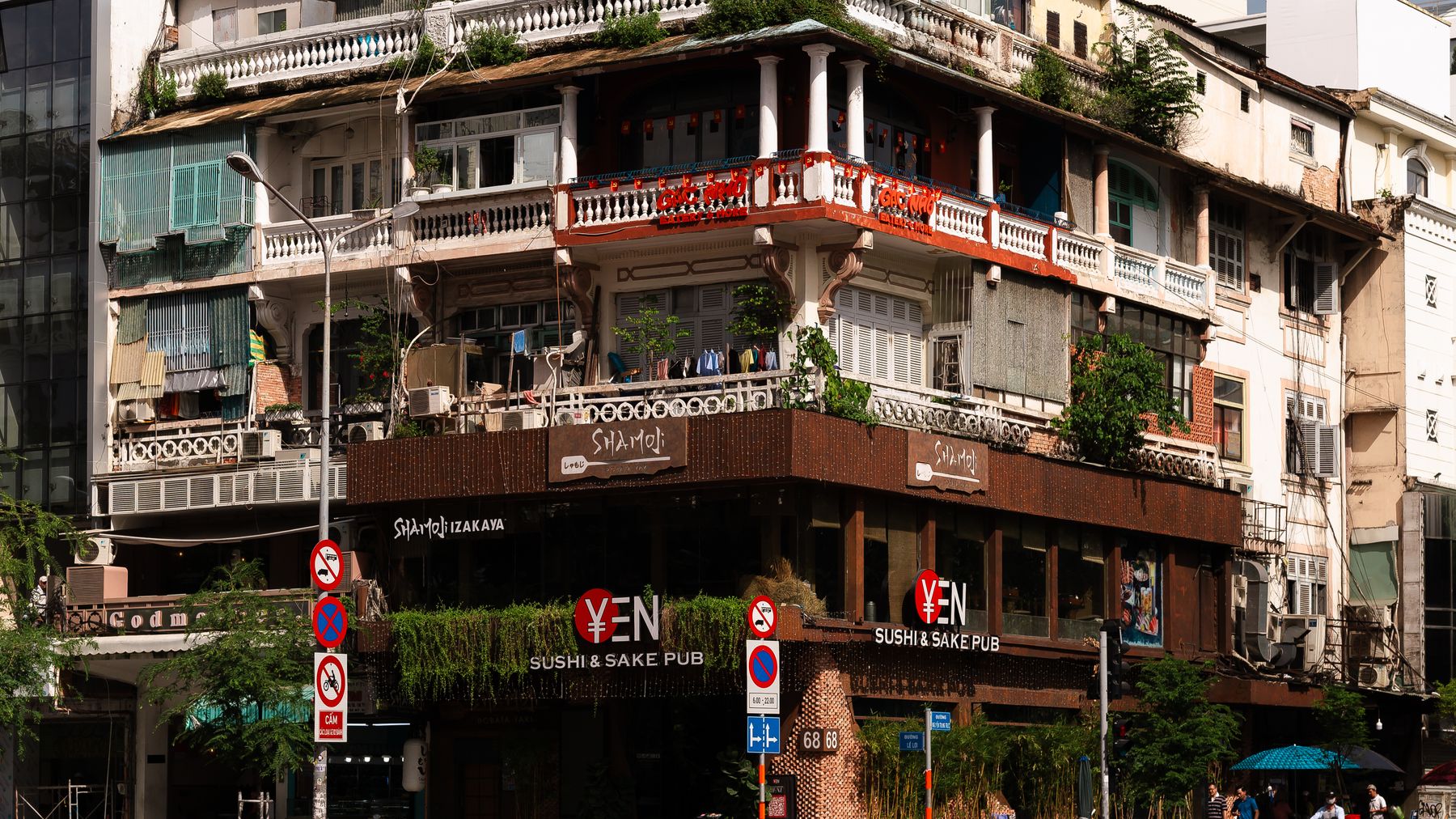
Photo by Thien Phuoc Phuong on Pexels
Why Southern Pho Tastes Different
The gap between Hanoi "pho" and Saigon "pho" is real and worth understanding. Northern "pho" is broth-led, delicate, built on beef bone and time. Southern "pho" is more forgiving: it's sweeter (rock sugar, caramelized onion), the broth is often heavier (more meat, more pork), and the fresh herbs on the side aren't just garnish—they're part of the eating experience.
Northerners often skip hoisin and say it masks the broth. Southerners dip without guilt. The herb plate is also bigger and more varied down here: sawtooth coriander (ngo gai) and Thai basil (hung que) appear more often than in Hanoi bowls. The noodles tend to be slightly thicker and chewier, built to handle a heavier broth.
None of this is worse. It's different. Saigon "pho" is designed for hot, humid mornings and people in a hurry—which is most mornings in Saigon.
Frequently Asked Questions
How is Saigon pho different from the northern style found in Hanoi?
Saigon pho uses a sweeter broth built on beef knuckle and bone, sometimes combined with pork knuckle, and is served with a generous plate of fresh herbs including mint, sawtooth coriander, and Thai basil. Hoisin sauce is standard on every table. Northern pho uses a cleaner, less sweet broth, and purists there would consider mixing beef and pork bones a shortcut. The noodles in Saigon tend to be slightly thicker and rolled fresh daily.
What does a bowl of pho cost at local spots in District 1?
Prices at local pho shops in District 1 range from 50,000 VND to 70,000 VND depending on toppings. Pho Le on Doan Thi Diem starts at 50,000 VND for brisket and 60,000 VND with extras. Pho Hoa Pasteur on Pasteur Street charges around 65,000 VND for a large bowl with brisket and tendon. Pho Hong and Pho Quynh, both in District 1, charge around 70,000 VND for a specialty bowl with brisket, beef ball, and tendon.
When should you arrive at pho shops in Saigon to avoid missing out?
Most local pho shops in Saigon open between 5:30 and 6 a.m. and close by 10 or 11 a.m., making them breakfast-only operations. Pho Le opens at 5:30 a.m. and fills up by 7 a.m. Pho Hoa Pasteur on Pasteur Street opens at 6 a.m. and draws queues before 8 a.m. Arriving early is not optional — these places run out of broth and close for the day, not because of low demand but because the stock pot only holds so much.
Practical Notes
Most of these places close by 10–11 a.m.; "pho" is breakfast food. Prices range from 50,000 to 75,000 VND (roughly $2–3 USD). Arrive early or expect to wait. Bring small change; not all places have card machines. The experience—plastic stool, elbows touching strangers, slurping—is part of the meal.
Last updated · May 29, 2026 · independently researched, never sponsored.