Southern Vietnam is mostly flat. The Mekong Delta (메콩 델타 / 湄公河三角洲 / メコンデルタ) stretches for hundreds of kilometres without a hill worth naming, which is exactly why Ba Den Mountain — rising 986 metres out of Tay Ninh province — hits differently. It genuinely dominates the skyline. On clear days from the summit, you can see across the Cambodian border to the northwest and down into the patchwork rice fields of the south. The mountain earns its elevation; it just doesn't get nearly enough visitors from outside the country.
What the Name Means
Ba Den translates roughly as Black Lady, after a local legend about a woman named Ly Thi Huong who died on the mountain rather than betray her soldier husband. The story has shifted through retellings over centuries, but the spirit — enshrined as the Black Lady goddess — is taken seriously. This is an active place of worship, not a scenic backdrop. You will share the trails and cable car with Vietnamese pilgrims carrying incense, fruit offerings, and folded prayer paper, especially in the weeks around Tet and during the main festival in the first lunar month (roughly late January to mid-February).
The Cable Car System
Sun World, the resort company that also runs infrastructure on Ba Na Hills and Fansipan, operates two cable car lines here. The main gondola runs from the base complex up to the upper pagoda cluster near the summit, covering around 1,800 metres of horizontal distance with a vertical rise of roughly 700 metres. Cabins are the enclosed eight-person type — no open chairlifts — so the ride is comfortable even in the midday heat.
Tickets run approximately 200,000–250,000 VND return for adults, with reduced rates for children. The base station sits inside a large resort complex with food stalls, souvenir shops, and a landscaped garden area that fills with domestic tourists on weekends. Go on a weekday if you want shorter queues; go on a weekend if you want the full atmosphere of the place operating at capacity, which is genuinely interesting in its own right.
The Pagoda Complex
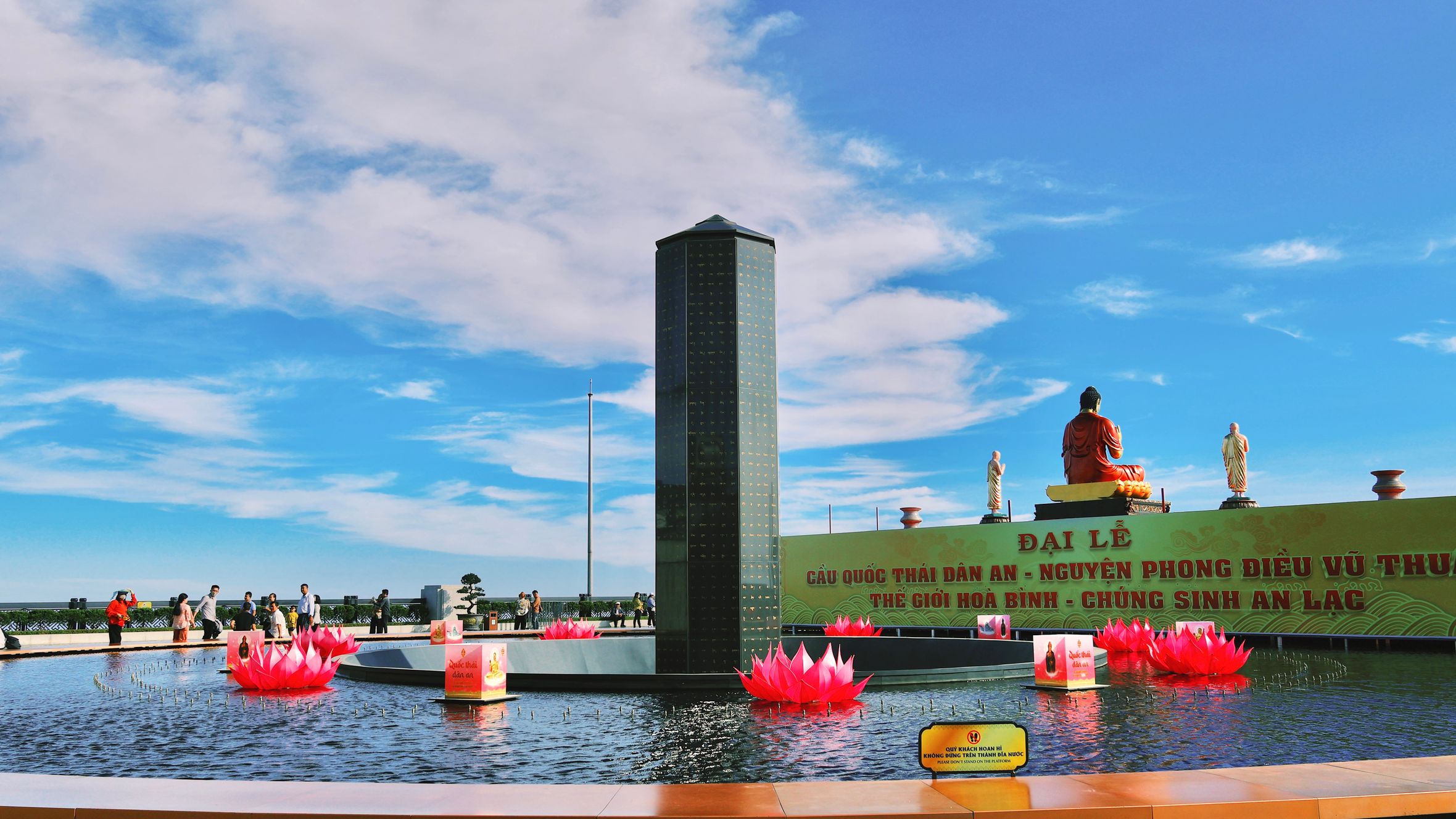
The pagodas at Ba Den are not a single temple — they are a layered accumulation of shrines, prayer halls, and small altars spread across different elevations of the mountain. The most visited is Linh Son Thanh Mau Pagoda at the base, a large, incense-thick complex where pilgrims begin and end their visits. Higher up, near the cable car terminus, the upper pagoda area gives you the views and the thinner air.
For those who want to walk rather than ride, a marked trail climbs from the base to the summit in roughly three to four hours depending on fitness. The path passes several cave shrines embedded in the rock face. It is steep in sections, exposed to sun, and genuinely tiring — bring water. Most visitors combine: walk one direction, cable car the other.

Photo by Quang Nguyen Vinh on Pexels
The Pilgrim Festival
The Ba Den mountain festival runs through the first lunar month and peaks around the full moon, drawing hundreds of thousands of visitors over several weeks. February is when you see the mountain at its most alive — crowds of families, elderly pilgrims navigating the rocky paths in formal dress, vendors selling everything from roasted corn to religious talismans. It is loud, crowded, and worth the effort if you are in Vietnam (베트남 / 越南 / ベトナム) during Tet or the weeks immediately after. Budget extra time for the cable car queue and arrive before 8 a.m.
Combining Ba Den with the Cao Dai Holy See
The best reason to make this a day trip from Saigon rather than an overnight stay is that Tay Ninh town also holds the Cao Dai Holy See — the central temple of Caodaism, a Vietnamese syncretic religion founded in the 1920s that draws on Buddhism, Taoism, Confucianism, and Christianity. The temple is genuinely one of the most visually striking religious buildings in Southeast Asia: a riot of pastel colours, dragons climbing columns, and an all-seeing eye above the altar. Noon prayers at 12:00 are open to respectful visitors.
The Holy See sits about 4 km from Tay Ninh town centre. Ba Den Mountain is roughly 11 km further northwest. A logical sequence: leave Saigon by 6:30 a.m., reach the Holy See for the noon prayer service, eat lunch in town (grilled pork rice, local-style "banh canh" with thick noodles, or anything from the market stalls near the temple), then drive to Ba Den for an afternoon cable car ride and sunset views before the 120 km return to Saigon.

Photo by Thịnh La on Pexels
Getting There
From Saigon, Tay Ninh is approximately 100 km northwest on Highway 22. By private car or booked driver, allow 2–2.5 hours each way depending on traffic through Cu Chi. Several Saigon-based tour operators run day trips combining Ba Den and the Cao Dai Holy See for around 350,000–500,000 VND per person including transport. Renting a motorbike is feasible for experienced riders but the highway stretches are fast and busy.
There is no compelling reason to stay overnight in Tay Ninh unless you plan to be at the mountain for sunrise or are travelling through to the border — the town is functional but not particularly interesting in the evenings.
Frequently Asked Questions
How long does it take to reach the Ba Den Mountain summit on foot?
The marked trail from the base to the summit takes roughly three to four hours depending on fitness. The path is steep in sections, exposed to sun, and passes several cave shrines embedded in the rock face. Bring water. Most visitors combine both options: walk one direction and take the cable car the other way to save time and energy.
What does a cable car ticket cost at Ba Den Mountain?
Return cable car tickets cost approximately 200,000-250,000 VND for adults, with reduced rates for children. The gondola covers around 1,800 metres of horizontal distance with a vertical rise of roughly 700 metres, running from the base complex up to the upper pagoda cluster near the summit. Cabins are enclosed eight-person gondolas, making the ride comfortable even in midday heat.
When is the Ba Den Mountain festival and how crowded does it get?
The festival runs through the first lunar month, peaking around the full moon in roughly late January to mid-February. It draws hundreds of thousands of visitors over several weeks, with families and elderly pilgrims filling the trails in formal dress alongside vendors selling food and religious talismans. If visiting during this period, arrive before 8 a.m. and budget extra time for cable car queues.
Practical Notes
Bring cash; most vendors and ticket counters at Ba Den do not reliably accept cards. A hat, sunscreen, and a litre of water per person are not optional if you plan to walk any section of the trail. The cable car closes in the late afternoon, typically around 5:00–5:30 p.m., so time your ascent accordingly.
Last updated · May 29, 2026 · independently researched, never sponsored.








