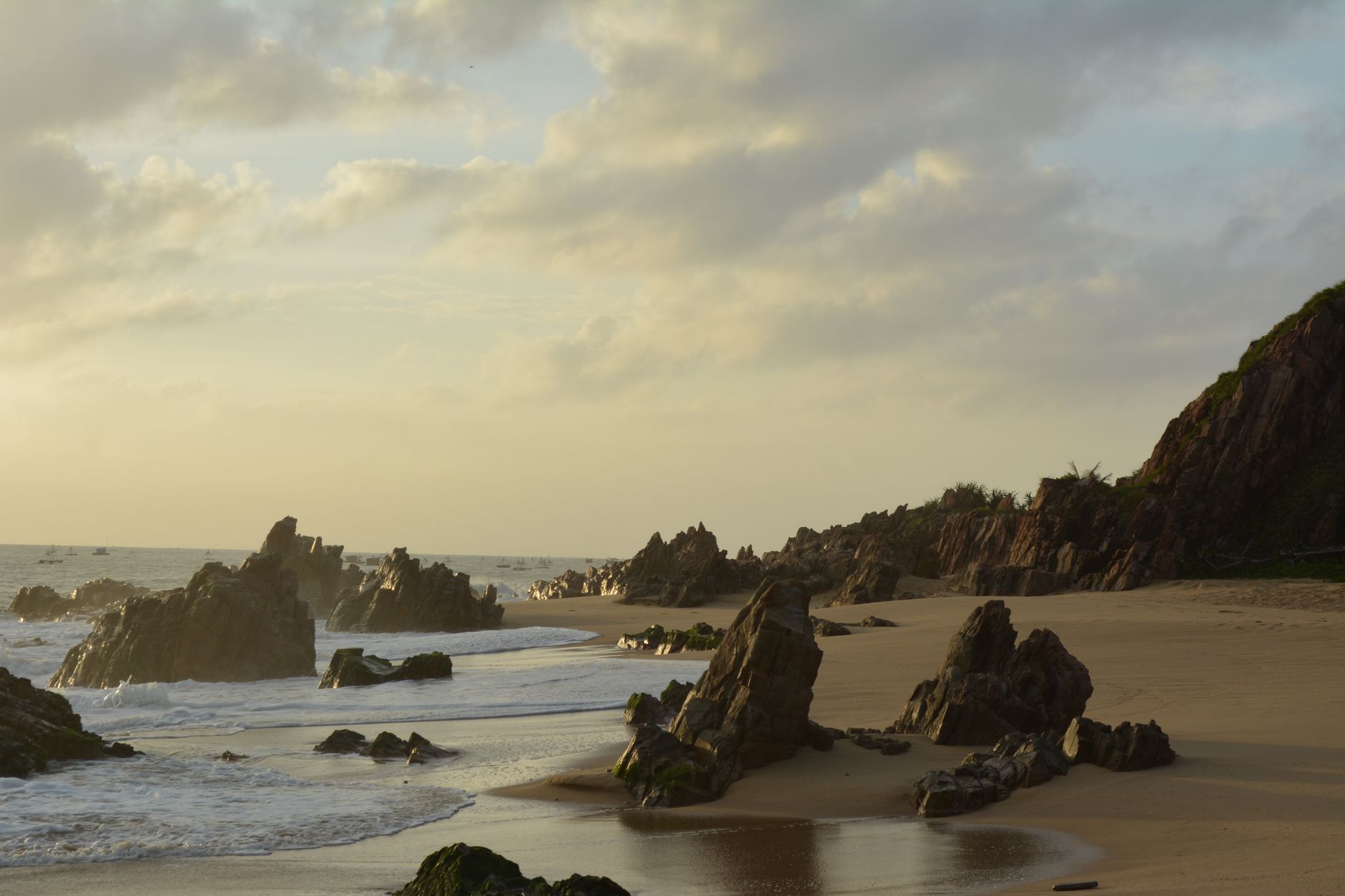
Binh Dinh doesn't get much press. It sits on the central coast, sandwiched between the better-known routes to Da Nang and Nha Trang (냐짱 / 芽庄 / ニャチャン), and most travelers pass through without stopping. That's the province's advantage: the beaches are less crowded, the food is authentic, and the pace is genuinely slow. The catch is that infrastructure is thinner than in bigger destinations, and attractions are spread out. If you know what you're after, a few days here feel like a real escape.
Top sights
Quy Nhon beach is the obvious draw. The main town beach (a few km from the city center, around Tran Hung Dao Street) is patchy but swimmable, with a mix of locals and fewer tourists than you'd find further south. During late afternoon, fishermen bring in boats and the waterfront gets lively. The water is warmest May–September; November–March can be choppy and gray. There's no dramatic scenery — it's working coast, not postcard coast.
If you want something less developed, Eo Gio (about 25 km north of Quy Nhon, near the town of Tay Son) is a rocky cove with calmer water and pines backing the beach. The road is rough and signs are sparse; asking a cyclo driver or local is easier than navigating alone. Bring water and snacks — there are no vendors. The upside: almost nobody goes there.
Cham Islands (Cu Lao Cham, about 8 km offshore) are the main attraction. Day trips leave from Quy Nhon around 7 a.m., cost 150,000–200,000 VND per person, and typically include snorkeling, swimming, and a fish-farm lunch. The coral is moderate and the water is warm; it's not Thailand-tier but it's decent. Book through your hotel or show up at the dock early. The ride takes about 30 minutes. If you have your own transport, you can hire a private boat (around 1 million VND for 4–5 people), though this is only worthwhile if you're staying a few days.
Cultural experiences and heritage
Thap Doi (Twin Towers) are what remain of a Cham Hindu temple complex, built around the 11th century. They're about 25 km southwest of Quy Nhon, in the village of An Phu. The towers are small and partly ruined, but the site is peaceful and often empty. Entry is free; bring a motorbike or hire a driver for a half-day. The nearby An Phu village is worth a walk — you'll see craftspeople making traditional ceramics and tiles. The best time to visit is early morning to avoid midday heat.
Canh Tien Grotto is a cave temple in a limestone hill about 40 km north of Quy Nhon, near Tay Son town. There's a small pagoda at the entrance and a short climb to the cave. The views of the valley are nice, but the grotto itself is modest. It's a quiet, local spot — few tourists, some pilgrims. Worth an hour if you're driving north anyway; not worth a separate trip.
Binh Dinh Museum (in central Quy Nhon, Tran Hung Dao Street) covers local history and has sections on Cham culture and the Tay Son rebellion (an 18th-century uprising that united Vietnam (베트남 / 越南 / ベトナム)). Exhibits are basic and labeling is sparse, but if you're interested in regional context it's worth 30 minutes. Admission is around 20,000 VND. Hours are typically 7:30 a.m. to 5 p.m., but check ahead; closure is common without notice.
Outdoor activities
Beyond the beach, options are limited but genuine. Motorbike rides into the countryside north of Quy Nhon—through villages, rice fields, and small passes—are the best way to see the province. Rent a bike from your hotel (100,000–150,000 VND per day) and pick a direction. The road to Tay Son and beyond is quiet and passes genuine rural landscape. Fuel up in Quy Nhon before you leave.
Fishing trips can be arranged through hotels or directly with fishermen at the dock. A half-day on a wooden "sampan" boat costs 300,000–500,000 VND per group and involves casting nets, learning about local technique, and eating fresh seafood lunch on the boat. It's gritty and real; if you want a glossy "tourist experience" this isn't it.
Kayaking around Cham Islands is offered by some hotels and boat operators, though equipment and guides vary in quality. Expect 400,000–600,000 VND for a half-day. It's scenic but weather-dependent; only viable May–September.
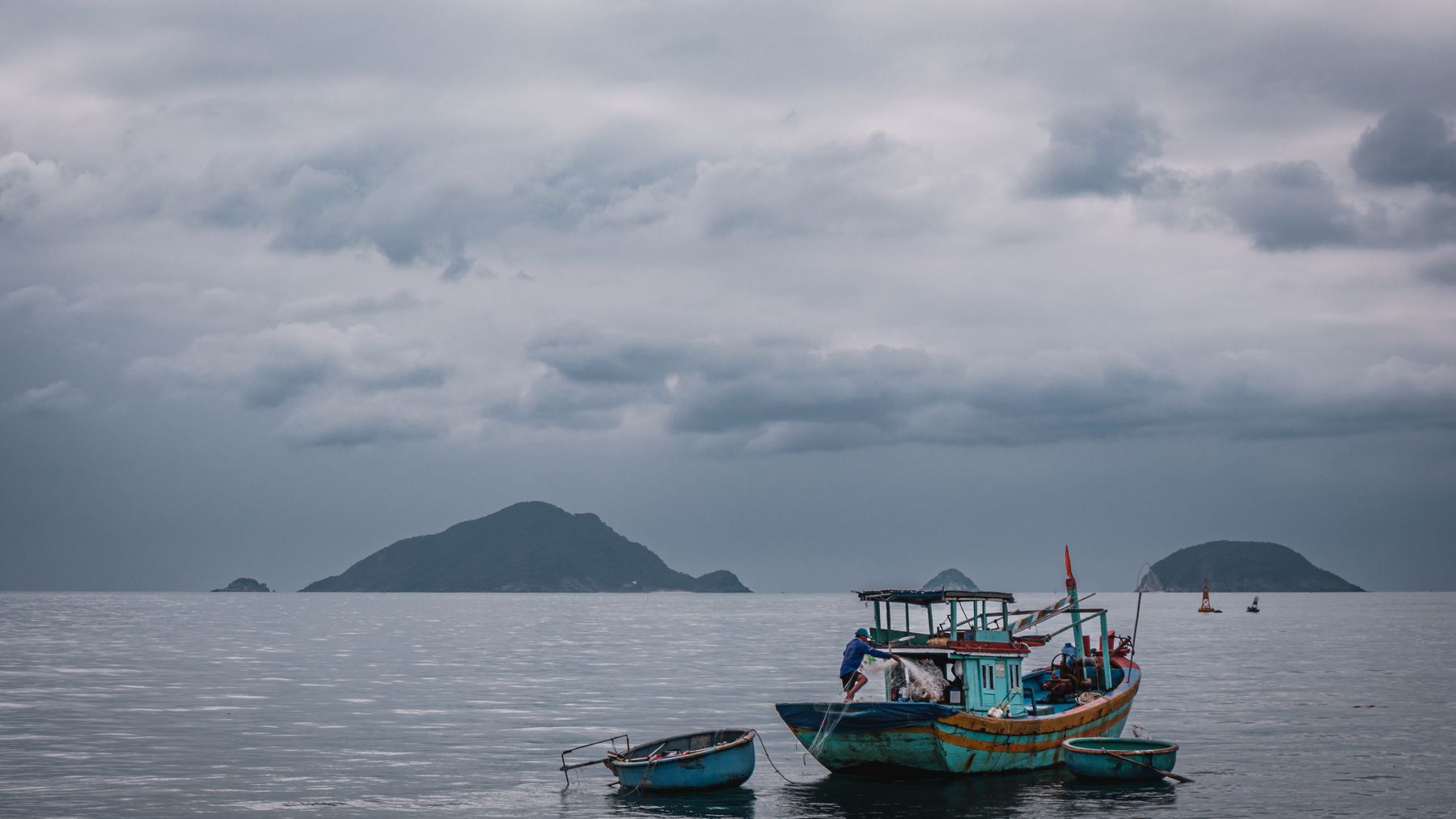
Photo by Luke Dang on Pexels
Food and drink
Binh Dinh's seafood is among the best on the central coast. Banh canh (a thick tapioca noodle soup, often with crab or prawns) is a local specialty—eat it at any small pho stall along Tran Hung Dao. Fresh grilled squid and prawns at beachside or market stalls are cheap and excellent. The evening seafood market, a few blocks from the main beach, sells fish, squid, and crab; you can buy from vendors and ask a nearby restaurant to cook it for a small fee.
Benh Xe An Phu (the main food stall area near the bus station) is where locals eat breakfast and lunch. No signs in English, but point and smile. Cost is usually under 50,000 VND per meal.
Coffee culture is quieter than in Hanoi or Saigon, but decent robusta "ca phe sua da" (Vietnamese iced coffee) is available everywhere. Ask at your hotel or any small cafe.
Day trips from Quy Nhon
- Tay Son (30 km north): the historic town at the center of the 18th-century rebellion. A motorbike ride through the countryside is the main draw; the town itself is ordinary. Go for the journey, not the destination.
- Phu Yên province (north, beyond Tay Son): beaches and quieter than Binh Dinh, though accommodation is sparse. Only worth it if you're doing a longer central coast road trip.
- Nha Trang (150 km south): a popular beach town. If you're restless after Quy Nhon, Nha Trang is 3–4 hours by bus.

Photo by Thái Nguyễn on Pexels
What to skip
Downtown Quy Nhon itself has little to do. The main streets are functional (shops, restaurants, banks) but not scenic. Once you've eaten and booked your island trip, there's no reason to stay longer in the city center.
Themed hotels and resort activities: Some guesthouses advertise "cultural tours" and "village experiences" that are thin on substance. Skip them and explore on your own bike, or ask locals for genuine recommendations.
Peak summer (July–August) brings heat, humidity, and occasional rain. November–February is drier and cooler but the water is choppy. May–June and September–October are ideal.
Practical notes
Binh Dinh is 250 km north of Nha Trang and 400 km south of Da Nang. Buses connect Quy Nhon to both; the journey takes 5–6 hours. There's a small airport with flights to Hanoi and Saigon, but buses are cheaper and more convenient. Bank ATMs are available in Quy Nhon; English-speaking staff is rare. Motorbike rentals are the best transport for exploring; roads are decent but can be rough in rural areas. Book accommodation 1–2 days ahead during peak season (May–August); off-season, rooms are plentiful and cheap (200,000–400,000 VND for a basic guesthouse). Most vendors at markets and food stalls don't speak English — bring a translation app or ask your hotel to help with written menus.
Last updated · May 29, 2026 · independently researched, never sponsored.