Binh Dinh province doesn't have the profile of Hoi An or Hue, which actually works in your favor—fewer tourists, real local life, and some genuinely good beaches and food. The catch is that public transport here runs on local schedules, not backpacker convenience. But once you understand the routing, it's straightforward.
From Hanoi
You have three realistic options.
Overnight bus is the cheapest. Hanoi has several operators running direct sleepers to Quy Nhon (the capital of Binh Dinh province) overnight—around 18-20 hours, departing around 5-7 PM, arriving early morning. Cost: 250,000–350,000 VND depending on seat class. Companies like Hoang Long, Thaco, and Tran Minh operate these routes regularly. Book through Busbud (busbud.com) or directly at the Hanoi bus station (My Dinh, Kim Ma, or Gia Lam).
Train + bus combo takes longer but is more comfortable if you don't mind a longer journey. The overnight train from Hanoi to Nha Trang (냐짱 / 芽庄 / ニャチャン) (around 18-20 hours, 200,000–400,000 VND depending on berth) gets you closer geographically. From Nha Trang, a minibus or bus to Quy Nhon is 2.5-3 hours and costs about 80,000–120,000 VND. Total time: 20-24 hours; total cost: 280,000–520,000 VND. You get sleep and a bit of scenery variation.
Flights via Da Nang are fastest but pricier. Hanoi to Da Nang is 1 hour, costing 800,000–1,500,000 VND on budget carriers (Bamboo Airways, Vietjet). From Da Nang airport, a motorbike taxi (Grab) to Quy Nhon is about 90 km, 1.5-2 hours, 200,000–300,000 VND. Total: roughly 1,000,000–1,800,000 VND and 4-5 hours door-to-door if you factor in airport time. Only worthwhile if time is more valuable than money.
From Saigon (Ho Chi Minh City)
Direct bus is the standard move. Quy Nhon is around 350 km north of Saigon, and buses make this run daily. Journey time: 7-8 hours; cost: 180,000–250,000 VND. Several operators (Hoang Long, Hung Vuong, Phuong Trang) run this route. Buses usually depart mid-afternoon and arrive late evening. Buy tickets at Saigon's main bus station (An Suong, District 12) or via Busbud.
Overnight bus is also available and often cheaper (140,000–180,000 VND) if you book in advance, though the buses are usually more cramped. Depart around 7 PM, arrive around 3-4 AM. Expect basic conditions—not the smoothest ride.
Flights to Da Nang (다낭 / 岘港 / ダナン) then onward. Saigon to Da Nang is 1-1.5 hours and costs 600,000–1,200,000 VND on budget carriers. From there, same as above: 90 km, 1.5-2 hours by Grab or rental motorbike to Quy Nhon. Only sensible if you're splitting time between Da Nang and Binh Dinh.

Photo by Nguyễn Viết Minh Lâm on Pexels
From Da Nang
This is the shortest hop and worth considering as a stopover if you're traveling north-south.
Motorbike or Grab: 90 km south along Highway 1, 1.5-2 hours, 200,000–300,000 VND via Grab (or cheaper if you rent a motorbike for 100,000–150,000 VND/day and self-drive). The coast road is straightforward and scenic—mostly flat, well-paved. Rental shops are ubiquitous in Da Nang city center.
Bus: Minibus vans depart throughout the day from Da Nang's bus stations and cost around 50,000–100,000 VND, but are slower (2.5-3 hours) and less convenient than Grab if you're traveling solo or with luggage. Useful if you're on a tight budget and don't mind waiting.
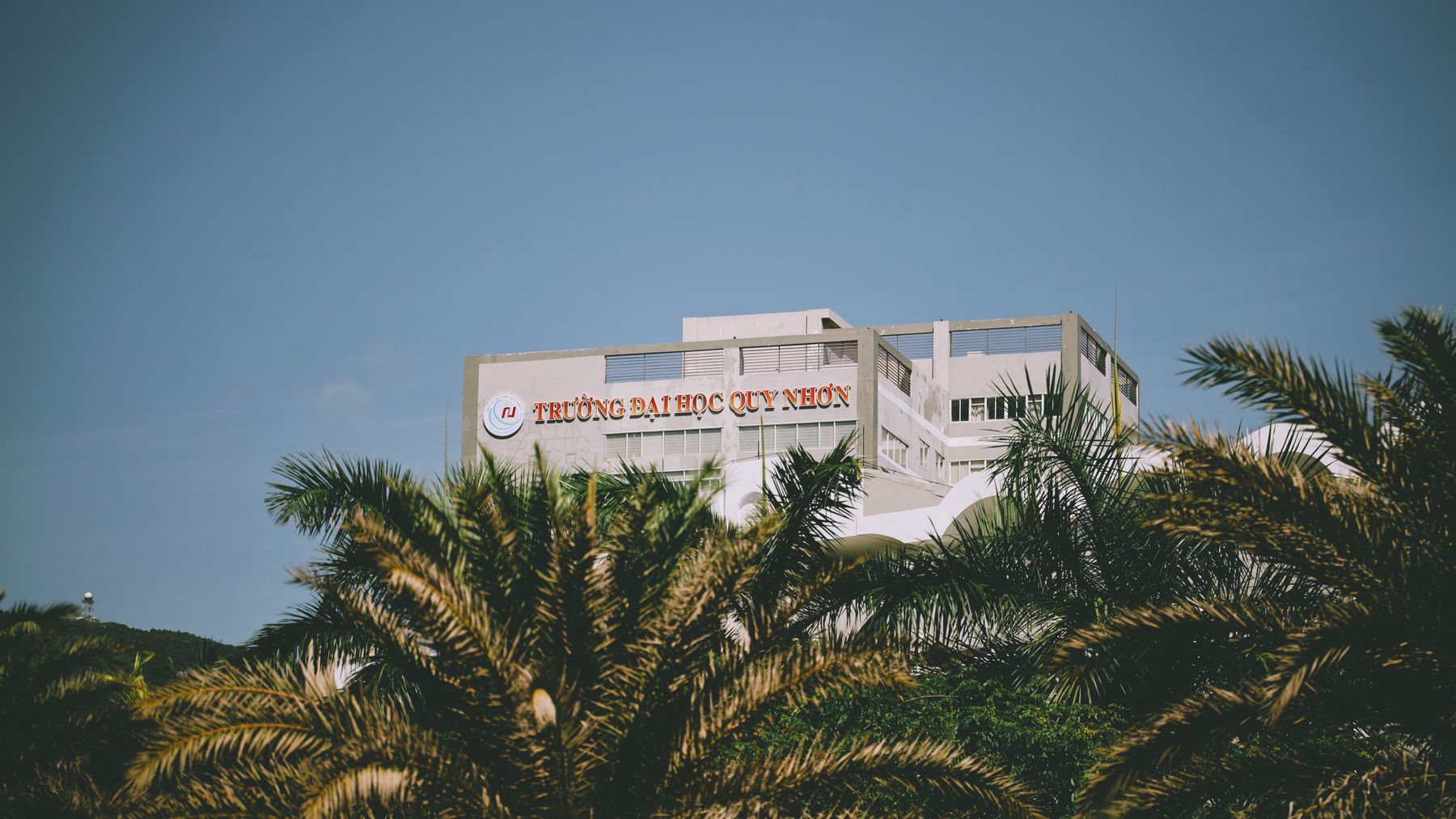
Photo by E.OHIPHOTO on Pexels
Where to Base Yourself
Quy Nhon city is the de facto hub. It has the most hotels, restaurants, and bus connections. The waterfront area around Quy Nhon Beach is where most tourists stay, with accommodation ranging from 150,000–400,000 VND/night for mid-range guesthouses and hotels. Quy Nhon is not pretty by Instagram standards—it's industrial, a working fishing port—but it's real and the food (especially fresh seafood and "banh mi") is excellent.
If you want a quieter beach base, An Phu (about 50 km south of Quy Nhon) has fewer tourists and a more laid-back vibe, but fewer restaurants and services. You'd likely need a motorbike to explore from here.
Canh Duong beach (north of Quy Nhon) is less developed and wilder—good if you're seeking solitude, but minimal infrastructure.
Practical notes
Binh Dinh isn't a major tourist loop, so booking buses online in advance is smart, especially during July-August and Tet / 越南春节 / テト). Grab is reliable here but not always available in rural areas—have a sim card or ask your hotel for phone numbers of local taxi firms. Motorbike rental is cheap and highly recommended if you're comfortable riding. The province is compact; you can base yourself in Quy Nhon and day-trip to beaches, the Tay Son battlefield site, or the nearby islands.
Last updated · May 29, 2026 · independently researched, never sponsored.