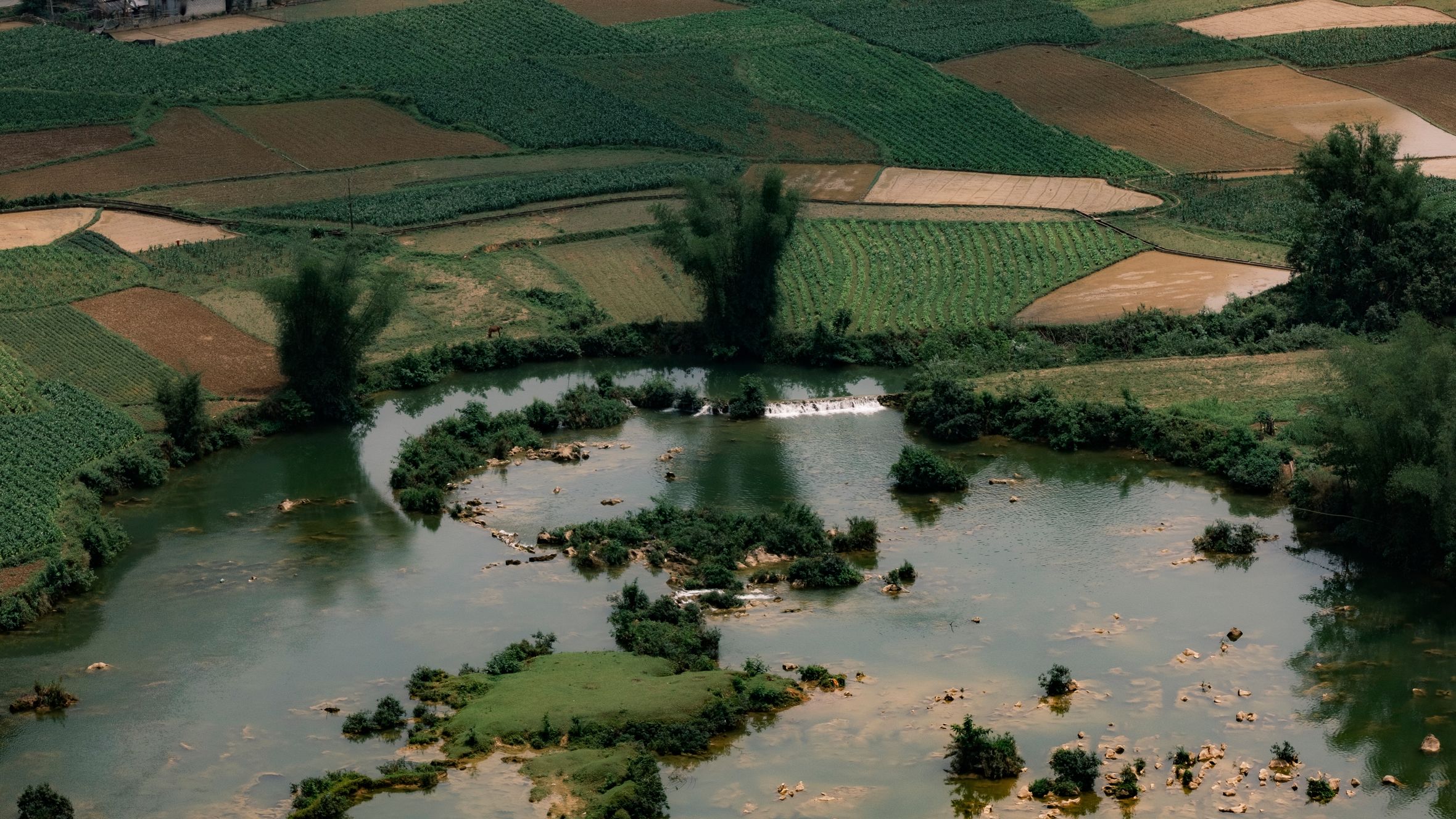
Binh Dinh doesn't get the same food-travel buzz as Hoi An or Hue, which is partly why eating here feels honest. You're getting regional specialties cooked for locals, not tourists. The province sits on the central coast, so seafood runs through almost everything—but it's the specific preparations, the rice-paper dishes, and the street-market breakfast culture that make it worth planning a food-focused day or two around.
Signature Dishes You'll Find Everywhere
The dish most locals will immediately point you to is "banh hoai"—a crispy, half-moon pancake filled with shrimp, pork belly, and bean sprouts. Unlike "banh xeo" (the southern crepe), banh hoai has a thicker, almost pastry-like wrapper and an oilier cook. It's messier to eat, unapologetic, and it cracks audibly when you bite it. You'll find it at stalls in the early morning (5–7 a.m.) in central Quy Nhon (the province's main city), usually for 25,000–35,000 VND per piece.
"Cua rang me" is another signature: crab fried with tamarind paste. The meat is sweet, the sauce is sharp and slightly caramelized, and it's the kind of dish that makes sense only if you understand coastal Vietnam's approach to balancing salt, sour, and umami. Most seafood restaurants serve it; a full plate (enough for 2–3 people) costs around 150,000–200,000 VND.
For something lighter, try "banh canh"—a thick tapioca-based noodle soup. Binh Dinh's version often features crab or shrimp stock and a generous sprinkle of crispy shallots. A bowl costs 30,000–40,000 VND at markets or street stands.
Where Locals Actually Eat
Quy Nhon Central Market (Cho Quy Nhon) is the real kitchen of the city. It opens around 5 a.m., and by 7 a.m., the breakfast rush is in full swing. You'll find banh hoai stalls, bowls of "hu tieu" (clear pork and shrimp soup), and cold "com tam" (broken rice with grilled meat and fried egg) for 25,000–45,000 VND. The market closes by mid-afternoon. Go early, bring small cash, and expect no English—but the food is straightforward and cheap. A full breakfast for two people, if you're eating rice and soup, runs 60,000–80,000 VND.
Seafood restaurants along Nguyen Hue (후에 / 顺化 / フエ) Street cater to both locals and travelers. These are the mid-range spots: clean, tiled, with plastic chairs and live fish tanks. You pick your crab, squid, or white fish, and they cook it to order (fried, steamed, or in tamarind sauce). Prices are honest by coastal standards—a large whole grilled fish (around 1.5 kg) costs 200,000–280,000 VND; live crab is sold by weight, usually 200,000–300,000 VND per kg. These places don't have English menus, but pointing works fine.
Vinh Thanh Seafood Market (about 10 km south of Quy Nhon town) is where commercial fishermen sell their daily catch. It's a working dock, not a tourist site. If you're staying longer or have a kitchen, you can buy extraordinarily fresh fish, squid, and shrimp here at wholesale prices—roughly 30–50% cheaper than restaurants. The market is open 4–9 a.m.
Regional Soups & One-Dish Meals
Binh Dinh's soup culture is underrated. "Bun rieu (분지에우 / 蟹肉米粉汤 / ブンリュウ)" (crab bisque with vermicelli) appears on every street-food menu, often with a side of "cha gio" (fried spring rolls). A bowl is 25,000–35,000 VND. The stock here tends to be lighter and more delicate than in the south.
"Mi Quang" (turmeric noodles with pork, shrimp, and crushed peanuts) is a central-Vietnam staple, and Binh Dinh does it well. Most servings are generous and cost 30,000–40,000 VND.
For breakfast or a light lunch, "com tam" (broken rice with pâté, fried egg, and a side of pork chop or grilled fish) is everywhere. It's filling, quick (10 minutes), and costs 25,000–35,000 VND.

Photo by Theodore Nguyen on Pexels
Avoid Tourist-Trap Thinking
Quy Nhon is not Hoi An or Hue. There are fewer purpose-built "tourist restaurants," and the ones that exist don't charge premium markups. The real risk is wandering into an upscale seafood place on the seafront expecting backpacker prices—you'll pay 400,000–600,000 VND per person for a full meal in those spots, which is fair for quality, but not a bargain. If you want to eat cheaply, stick to the market, street stalls, and the mid-range Nguyen Hue strips.
Restaurants with laminated photo menus are usually reliable and neutral in price. Avoid any place that aggressively waves you in from the street or quotes prices in USD instead of VND.
What to Expect Cost-Wise
- Street stall breakfast (banh hoai, soup, rice): 60,000–90,000 VND per person
- Market lunch bowl, pho): 30,000–45,000 VND
- Mid-range seafood dinner (whole grilled fish, crab, two soups, beer): 250,000–400,000 VND for two people
- Upscale seaside restaurant: 400,000–600,000 VND per person
Beverage note: "Vietnamese coffee" and "ca phe sua da" (iced coffee with condensed milk) cost 15,000–20,000 VND at cafés. Bia hoi (draft beer) is 5,000–8,000 VND per glass at stalls; bottles at restaurants are 20,000–30,000 VND.

Photo by Tuan Vy on Pexels
Night Market & Casual Eats
Quy Nhon has a small night market that sets up around 6 p.m. near the waterfront (exact location shifts seasonally, ask your hotel). You'll find grilled seafood skewers, fresh sugarcane juice, and various rice-paper rolls. Prices are rock-bottom: 10,000–20,000 VND per item. The crowd is entirely local, and the vibe is unpretentious.
Practical Notes
Visit the central market in early morning and bring VND cash—most stalls don't accept cards. Seafood restaurants along Nguyen Hue are best visited mid-morning (for lunch) or 5–7 p.m. (for dinner). If you're queasy about raw seafood or live tanks, stick to the soup and noodle stalls, which are just as good. Quy Nhon is 180 km north of Nha Trang and easily reachable by bus or motorbike; most travelers pass through on the way between central and southern Vietnam, so even a 24-hour food stop is worthwhile.
Last updated · May 29, 2026 · independently researched, never sponsored.