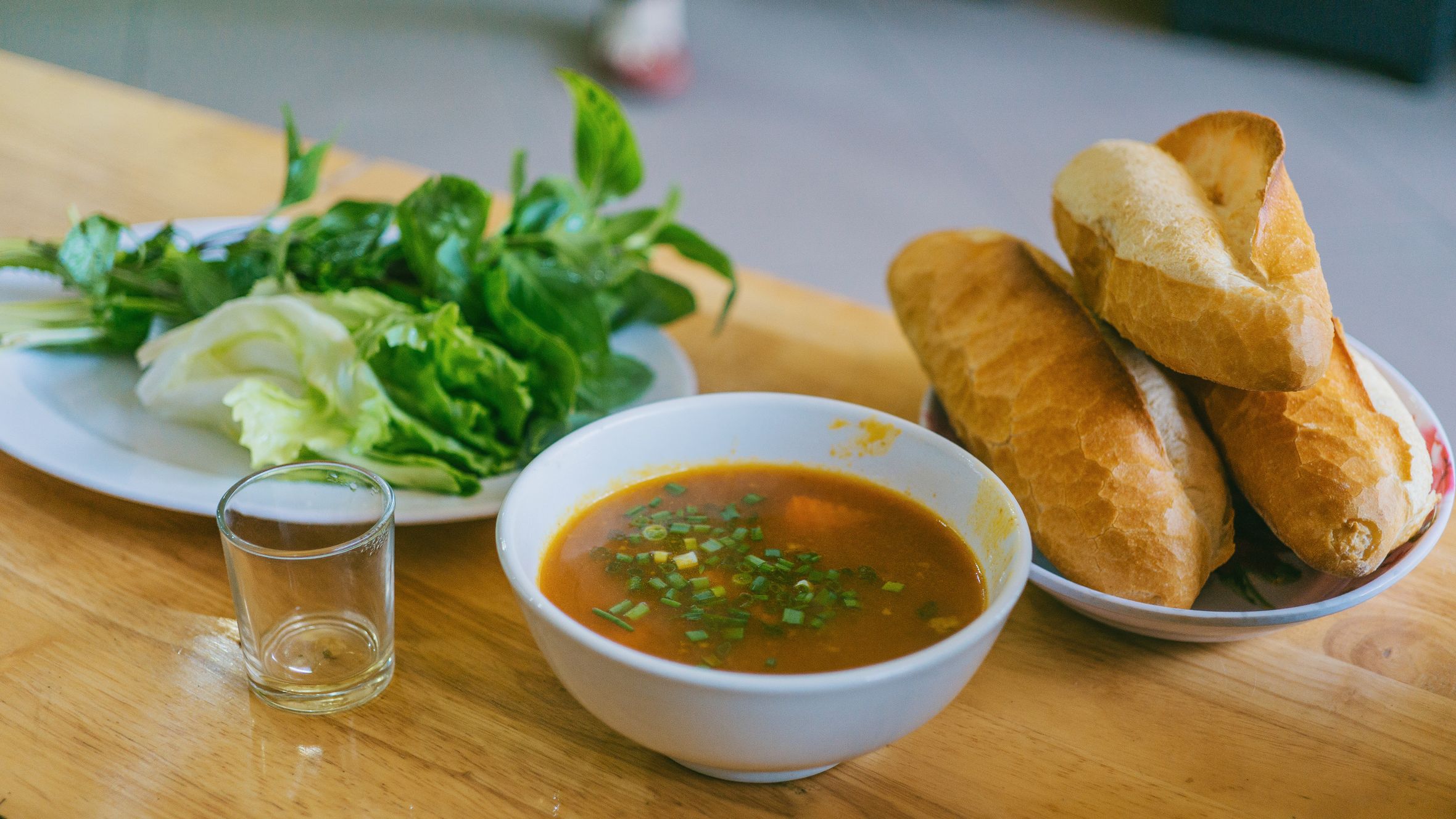
Vietnam (베트남 / 越南 / ベトナム)'s breakfast canon runs deep — pho, banh mi, bun bo hue — but "bo kho" holds a quieter, steadier place in the rotation. It's a beef stew with a rust-red broth built on lemongrass, star anise, and slow-cooked connective tissue. Eaten with a torn baguette or a tangle of flat noodles, it rewards patience in a way that lighter soups don't.
What Bo Kho Actually Is
At its core, bo kho is a braised beef stew. The name is straightforward: bo means beef, kho means to braise or reduce dry. The broth is not a quick-cook affair — a proper pot runs two to three hours minimum, sometimes overnight at low heat. The result is a concentrated, slightly thick liquid with fat pooling at the surface and meat that pulls apart with minimal resistance.
The flavour profile sits somewhere between Southeast Asian and French-colonial influence. The French left Vietnam with a bread-baking tradition and a taste for braised meat; the local kitchen answered with lemongrass, galangal, star anise, and dried chilli. The synthesis is distinctly Vietnamese and doesn't taste like anything else in the repertoire.
Key aromatics in a standard build:
- Lemongrass — bruised and tied in knots, simmered long
- Star anise — two or three whole pieces, not more
- Galangal — sliced thin, adds a piney warmth
- Annatto seeds (hat dieu mau) — infused in oil to give the broth its signature red-orange colour
- Fish sauce and a small amount of sugar for depth
- Carrots — cut into thick coins, added late enough to stay intact
The beef cut matters. Shin (bap bo) and tendon (gan bo) are the standard choice because they contain enough collagen to enrich the broth as they cook. Brisket works. Pure lean cuts do not — they go stringy before the broth gets where it needs to be.
A Short History
Bo kho's origins are genuinely debated. The dish shows up most prominently in the south — Saigon and the Mekong Delta (메콩 델타 / 湄公河三角洲 / メコンデルタ) — and is eaten widely in the north and central regions too, but with different serving customs. The southern version tends to be richer and sweeter; northern bowls lean more savoury with less added sugar.
The French-colonial influence is real but partial. Vietnam already had a tradition of simmering tough cuts of meat with spices before French colonisation; the baguette pairing came later, once wheat-flour bread became widely available in urban centres. By the mid-20th century bo kho served with a baguette was embedded in Saigon street-food culture, especially as a breakfast or early lunch option.
Chinese culinary influence — particularly the use of star anise and five-spice — also runs through the dish. Southern Vietnam's large Hoa (ethnic Chinese) community shaped a lot of the region's braised-meat cooking, and bo kho sits comfortably in that lineage alongside "hu tieu" noodle soups that share some of the same aromatic logic.

Photo by Pew Nguyen on Pexels
The Main Variants
Bo Kho Banh Mi
The most common version on the street. A bowl of stew arrives alongside a split baguette — sometimes grilled lightly, sometimes not. You tear the bread and drag it through the broth. No utensils needed for the first half of the meal. This is how most Saigon locals eat it before 9 a.m.
Bo Kho Hu Tieu
Instead of bread, the stew is ladled over "hu tieu" noodles — flat, slightly chewy rice-based noodles that absorb the broth well. Common in Saigon and throughout the Mekong Delta. Some stalls let you choose between hu tieu and mi (egg noodles). This version is more of a full meal than the bread pairing.
Bo Kho Mi
The same stew over egg noodles. Slightly richer mouthfeel because the egg noodle holds fat differently than rice noodles. More common in areas with significant Chinese-Vietnamese culinary influence.
Dry-Style Bo Kho
Less common but worth knowing. The braising liquid is reduced much further so the meat is coated in a thick, near-dry glaze rather than sitting in broth. Served as a side dish with rice, not as a standalone soup. You'll see this more in home cooking than on street stalls.
How to Order
At a dedicated bo kho stall, the menu is usually short. The main decision is your carb: banh mi (baguette), hu tieu (flat rice noodles), or mi (egg noodles). State your preference when you sit down.
Prices range from around 35,000–70,000 VND depending on the city and whether you're at a sidewalk plastic-stool stall or a proper shophouse. Saigon skews slightly higher than provincial towns.
You'll typically get a small plate of fresh garnishes — bean sprouts, fresh chilli slices, a wedge of lime, and sometimes fresh basil or sawtooth herb. Add them to taste. A drizzle of hoisin and chilli sauce is common but optional; serious bo kho doesn't need much help.
If the stew looks separated or watery when it arrives, it's been sitting too long. A fresh pot will have emulsified fat and a thick, cohesive broth. It's fine to ask if they have a fresh batch — co noi moi khong?

Photo by Trần Phan Phạm Lê on Pexels
Where to Try It
Quan Bo Kho Nguyen Thi Nho — Saigon A long-running stall on Ly Chinh Thang, District 3. Opens at 6 a.m. and regularly sells out by 10. The shin-and-tendon ratio is right, and the broth has the depth that comes from an overnight simmer. Order with banh mi and add the fresh chilli yourself.
Bo Kho Ba Tuoi — Da Nang A small shophouse near Han Market that's been running the same recipe for over two decades. The central Vietnamese version here is less sweet than the southern style and uses more galangal. Worth the detour if you're spending time in Da Nang.
Hang Bo Kho — Hanoi Old Quarter Hanoi's bo kho culture is quieter than Saigon's, but this stall near Dong Xuan Market has a loyal following among locals who want a warming bowl before the market opens. Served almost exclusively with bread here — noodle versions are less common in the north.
Practical Notes
Bo kho is primarily a morning dish — most dedicated stalls close by noon. If you want the best version, set your alarm. The broth freezes and reheats well at home, making it one of the more practical Vietnamese dishes to attempt cooking yourself; annatto seeds and lemongrass are easy to find at any wet market.
Last updated · May 29, 2026 · independently researched, never sponsored.




