Hue cooks differently from the rest of Vietnam (베트남 / 越南 / ベトナム). The city was the imperial capital for nearly 150 years, and that history shaped a cuisine that is precise, labor-intensive, and quietly obsessive about presentation. Three days here, focused entirely on food, is not excessive — it's barely enough.
Day 1 — Markets, Street Food, and the Commoner's Table
Start at Dong Ba Market
Get to Dong Ba Market before 7 a.m. The ground floor is the food section, and it's the best orientation you'll get to Hue's culinary logic. Vendors sell "banh cuon" — steamed rice rolls thinner than anything you'll find in Hanoi — alongside "nem chua", the fermented pork rolls that Hue people eat as casually as a snack. A portion of either runs 15,000–25,000 VND.
Spend an hour walking the stalls. Ask to taste before you buy. Nobody minds.
Lunch: Bun Bo Hue on Nguyen Cong Tru
If you eat one bowl of "bun bo hue" in your life, eat it in Hue. The broth is lemongrass-forward, faintly spicy, deeply savory — nothing like pho. Quan Bun Bo Hue Ba Tuyen on Nguyen Cong Tru Street is the kind of place with plastic stools, no English menu, and a line at 11 a.m. A bowl costs around 35,000 VND. The pork hock is mandatory.
Afternoon: Banh Khoai and the South Bank
Cross the Phu Xuan Bridge to the south side of the Huong River and find the cluster of small restaurants near Truong Tien Bridge that specialize in "banh khoai" — Hue's sizzling rice pancake, smaller and crispier than the southern "banh xeo (반세오 / 越南煎饼 / バインセオ)". Quan Hang Me on Phan Chu Trinh is reliable. Order with the full spread of herbs and fermented shrimp dipping sauce. Expect to pay 40,000–60,000 VND per pancake.
Evening: Com Hen at the Source
Con Hen islet, a ten-minute ride from the city center, is where Hue's "com hen" was born — a bowl of baby clams over cold rice, dressed with shrimp paste, pork crackling, peanuts, and a sharp chili oil. It sounds like an accident. It tastes like a revelation. Prices are 20,000–30,000 VND. Go before dark.
Day 2 — Cooking Class with a Former Palace Chef
Morning: The Class
Book a half-day class with Hue Traditional Cuisine Club, run out of a restored wooden house on Le Loi Street. Several instructors here have direct lineage to the imperial kitchen — one, a woman in her sixties who goes by Co Hoa, apprenticed under a cook who served the last royal household. She teaches in Vietnamese with translation, which slows nothing down.
The curriculum changes seasonally, but expect to make "banh bot loc" (chewy tapioca dumplings filled with shrimp and pork), a miniature version of "com am phu" (the so-called "hell rice" platter of Hue street food), and at least one clear broth. The class runs 8:30 a.m. to noon. Cost is around 650,000–800,000 VND per person, including ingredients and a sit-down lunch of what you made.
Afternoon: Rest, Then Imperial Tombs Context
Take the afternoon slow. If you want cultural grounding for tonight's dinner, visit the Tomb of Khai Dinh — the architectural excess there reflects the same instinct that drove imperial cuisine: no detail too small, no surface unadorned. It's about 8 km from the city center by xe om or Grab.
Evening: Dinner at Tinh Gia Vien
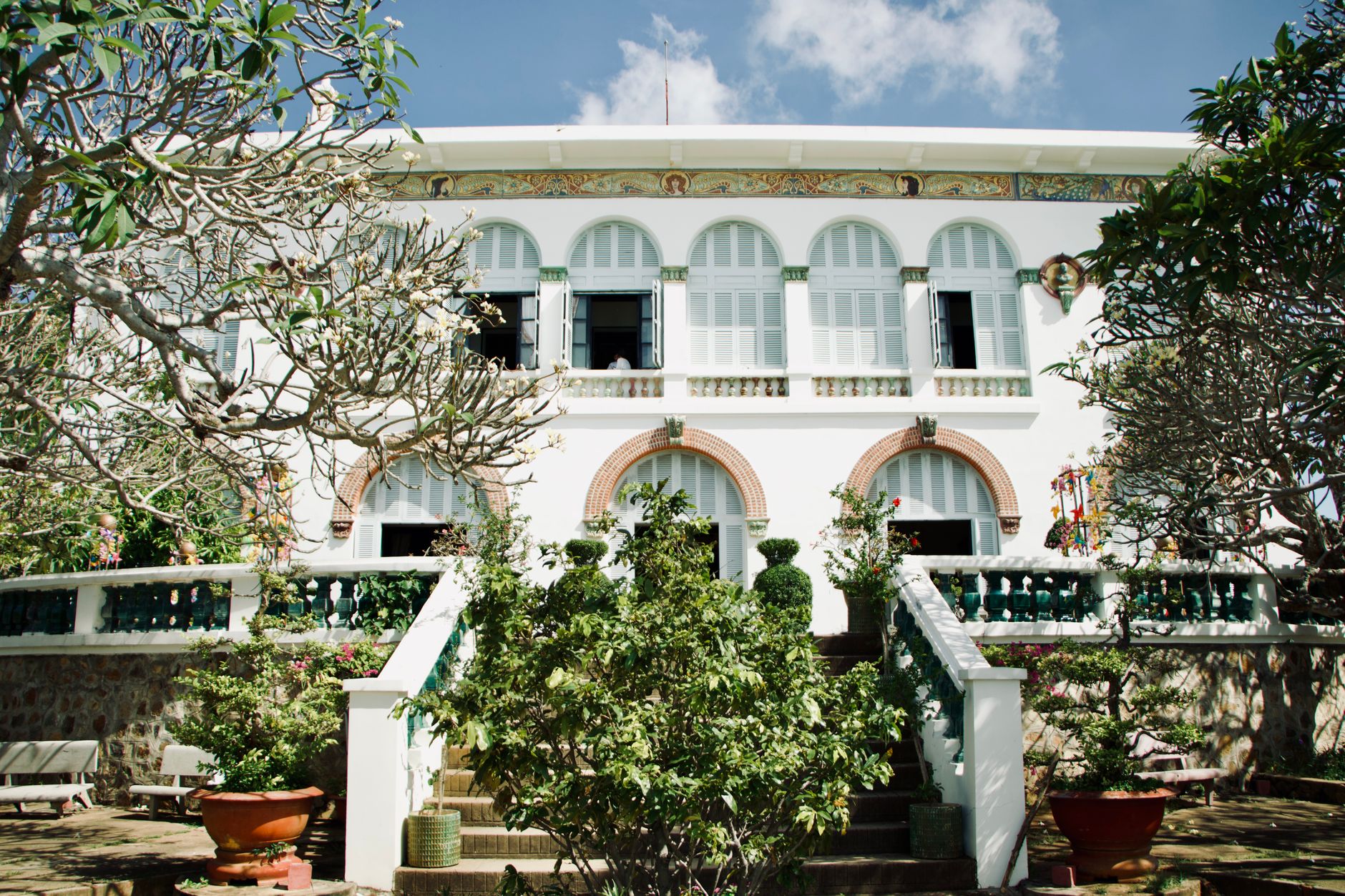
Tinh Gia Vien on Nguyen Binh Khiem Street is the most serious royal-cuisine restaurant in the city. It sits inside a 19th-century garden house and serves a fixed royal banquet menu — twelve to fifteen dishes, arriving in sequence, each plated in the traditional style that imperial kitchens required. Expect lotus-stem salad, steamed minced shrimp on sugarcane, rice paper rolls with hand-carved vegetable garnish, and at least two soups. The meal takes two hours. Budget 350,000–500,000 VND per person. Book the day before.

Photo by Pew Nguyen on Pexels
Day 3 — The Deep Cut: Temple Food and a Cooking Market Run
Morning: Vegetarian Hue at Tu Hieu Pagoda
Hue has a stronger vegetarian tradition than almost anywhere in Vietnam, tied to its Buddhist pagodas. Tu Hieu Pagoda, about 4 km from the center, serves a simple vegetarian breakfast on the 1st and 15th of each lunar month — but several small com chay (vegetarian rice) shops cluster around the pagoda entrance daily from 6 a.m. A full plate costs 25,000–35,000 VND. The food is quiet and honest: tofu, morning glory, braised jackfruit, steamed rice.
Late Morning: Second Market Run with Purpose
Go back to Dong Ba or try An Cuu Market (smaller, less tourist-facing) with a list. Buy a packet of dried "banh trang" (Hue sesame rice crackers), a jar of "tuong" (Hue fermented soybean paste), and some "ruoc" (dried shredded pork). These are the flavors you'll want to recreate at home and won't find outside the region.
Lunch: Co Hang Banh Beo
"Banh beo" — steamed rice cakes topped with dried shrimp and scallion oil — is Hue's most underrated dish. Co Hang on Nguyen Binh Khiem makes them the old way: individual ceramic cups, shrimp powder, a drizzle of rendered fat. Twenty cups for 40,000 VND. Eat them all.
Final Afternoon: Ca Hue on the River
End the trip on the water. Book a one-hour dragon boat ride on the Huong River at dusk that includes a live performance of "ca Hue" — the classical chamber music of the former imperial court, somewhere between folk song and court ritual. Boats depart near Toa Kham Pier from around 5 p.m. Cost is roughly 100,000–150,000 VND per person. The music is slow and precise, which, after three days in this city, will feel completely appropriate.
Photo by Pew Nguyen on Pexels
Practical Notes
Hue's food scene is concentrated enough that you rarely need to travel more than 3 km for anything on this list — a bicycle or a few Grab rides will cover everything. The royal restaurant meals are the only bookings worth making in advance; everything else operates on a walk-in basis. Come hungry and come early: most street food vendors sell out by 10 a.m.
Last updated · May 29, 2026 · independently researched, never sponsored.