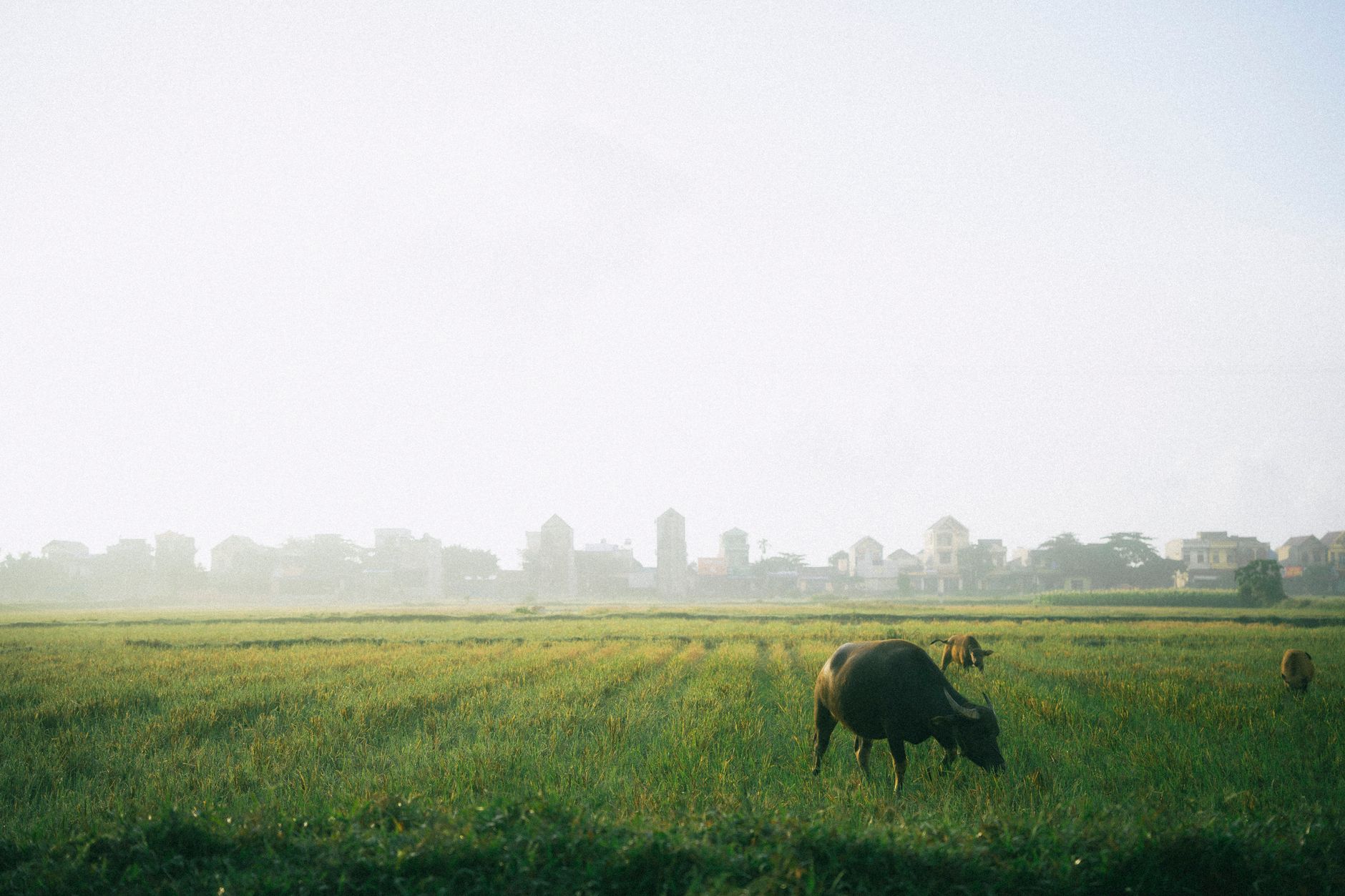
Cai Be floating market sits on a wide stretch of the Tien River in the upper Mekong Delta (메콩 델타 / 湄公河三角洲 / メコンデルタ), roughly 110 km southwest of Saigon. It's one of the region's older wholesale markets — boats have gathered here before dawn for generations — and it operates with far less tourist infrastructure than its bigger cousin in Can Tho. That's precisely the point.
What It Is and Why It Matters
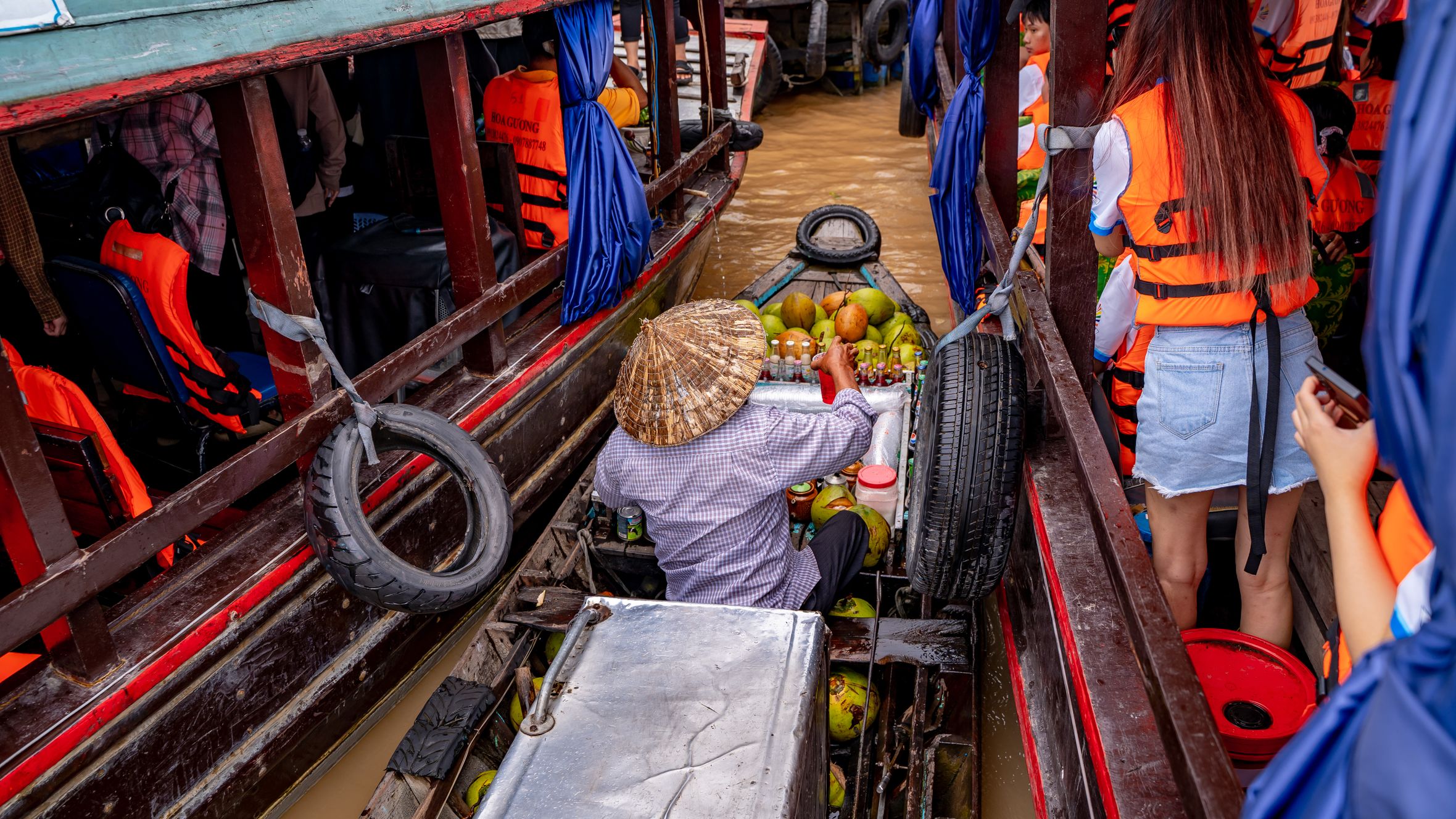
Cai Be is a wholesale floating market. Boats anchor overnight and begin trading around 5:00 AM, selling fruit, vegetables, and household goods in bulk to smaller vessels that redistribute to villages along the canals. Each boat hangs a sample of its goods on a tall pole — called a "cay beo" — so buyers can spot what's available from a distance. Pineapples on the pole means pineapples on board. Simple system, centuries old.
The market's history is tied to the Mekong Delta's canal trade networks. Cai Be town grew as a hub where goods from Dong Thap, An Giang, and Vinh Long converged before heading downstream or overland to Saigon (사이공 / 西贡 / サイゴン). While the market has shrunk over the past decade — better roads and motorbikes have pulled some trade onto land — it remains active and genuinely commercial, not a performance staged for tourists.
Why Travelers Go
Three reasons. First, it's close to Saigon — reachable as a long day trip or an easy overnight — making it more accessible than Can Tho for travelers short on time. Second, the market is still primarily a working wholesale operation. You'll share the water with traders, not tour groups lined up in matching life jackets. Third, the surrounding canal network is dense with fruit orchards, candy workshops, and rice-wine distilleries that you can visit by rowing boat, which gives you a fuller picture of delta life than the market alone.
Best Time to Visit
The dry season from December through April is the most comfortable window. Mornings are cool, river levels are manageable, and fruit harvests — especially pomelo, rambutan, and longan — are in full swing. The market peaks in activity from late December through Tet, when families across the south stock up on fruit, flowers, and sticky rice for the holiday. Visiting in the week before Tet is chaotic and wonderful, but book boats in advance.
Avoid September and October if you can. Heavy rains swell the river, some canal routes become difficult, and the market thins out.
How to Get There from Saigon
The most common route is by road. From Saigon's Mien Tay bus station, catch a bus to Cai Be town. Several operators run this route daily; the trip takes about 2.5 hours and costs 80,000–120,000 VND depending on the bus company. Futa and Thanh Buoi are reliable options.
If you're driving or hiring a car, take the Ho Chi Minh City–Trung Luong expressway, then continue on National Route 1A through My Tho and on to Cai Be. Total distance is around 110 km; figure on 2–2.5 hours with traffic.
Once in Cai Be town, you'll need a boat. Motorized sampans can be hired at the riverside near Cai Be church (the big Catholic cathedral right on the water — you can't miss it). A 2–3 hour boat trip covering the floating market plus canal visits typically runs 300,000–500,000 VND for a small boat carrying 2–4 people. Negotiate before boarding and confirm the route.
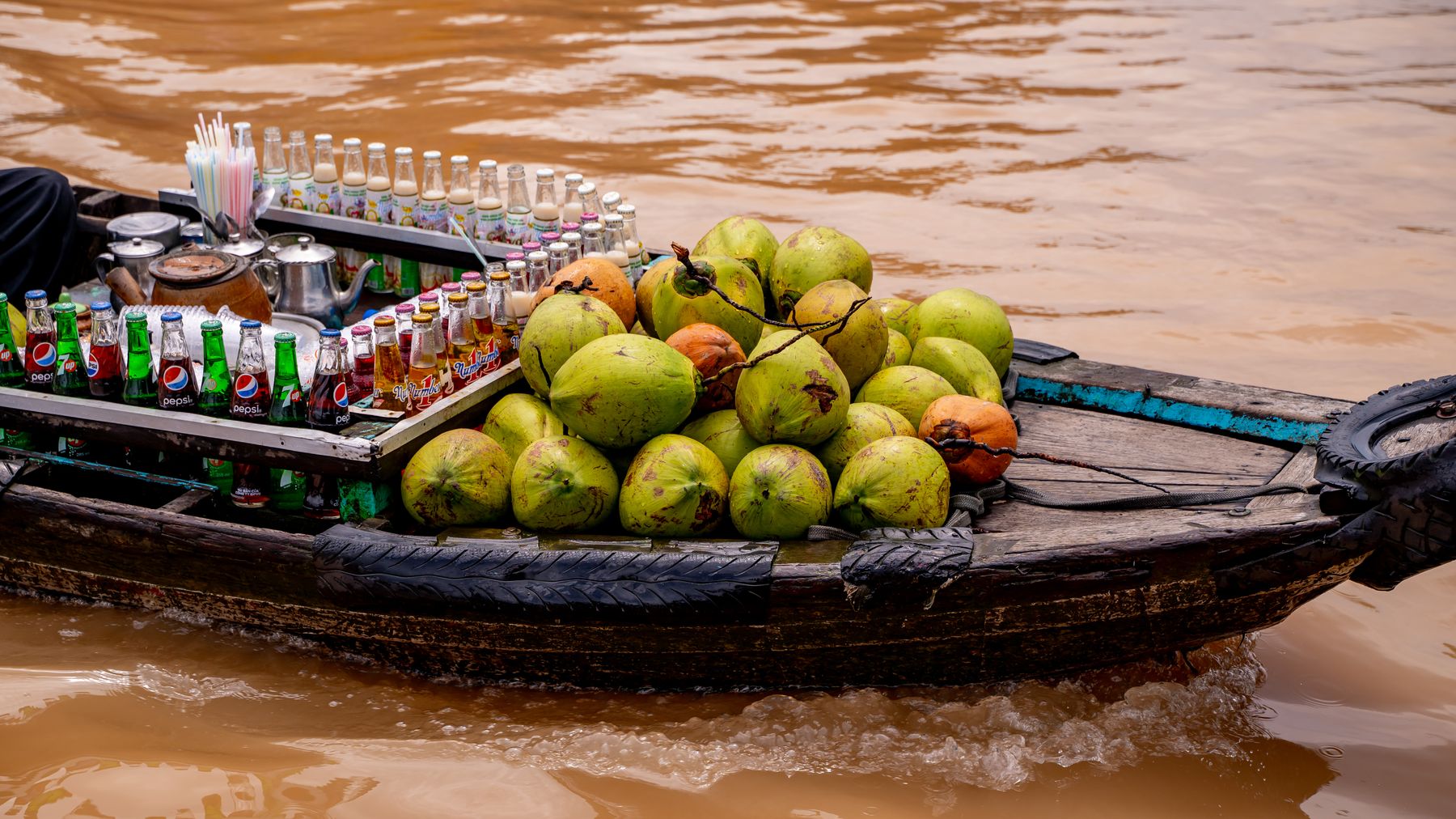
Photo by Vietnam Tri Duong Photographer on Pexels
What to Do: 5 Specific Things
1. Ride Through the Market at Dawn
Be on the water by 5:30 AM. The wholesale trading is busiest between 5:00 and 7:00 AM. After 8:00, the big boats start dispersing. Your boatman will weave between vessels loaded with watermelons, mangoes, and coconuts. You can buy fruit directly from traders — a kilo of rambutan for 15,000–20,000 VND is standard.
2. Visit a Rice-Paper or Coconut-Candy Workshop
The canals behind Cai Be town are lined with small family-run operations making coconut candy, rice paper, and popped-rice snacks. Most boat tours include a stop at one of these. You'll watch the process start to finish — coconut milk boiled with sugar, pulled, cut, wrapped in rice paper — and sample everything. It's genuinely interesting, not a tourist trap, though you'll be expected to buy a bag or two.
3. Paddle the Narrow Canals by Rowing Boat
At some point your motorized boat will transfer you to a smaller rowing sampan to navigate canals too narrow for engines. This is the best part. Water coconut palms arch overhead, fruit orchards press in on both sides, and the only sound is the paddle. Ask to stop at an orchard — many families will let you pick and eat fruit for a small fee (20,000–30,000 VND per person).
4. Walk Through Cai Be Town Market
The land-side market next to the church is worth 30 minutes. Vendors sell delta produce, dried fish, fermented "mam" paste, and local snacks. Prices are local, not tourist-inflated. Pick up dried banana or jackfruit chips for the road.
5. Cross to Dong Hoa Hiep Island
A short boat ride from the floating market, this island has old merchant houses dating to the French colonial period. A few are open to visitors. The architecture mixes Vietnamese, Chinese, and French elements — tiled floors, carved wooden screens, courtyard gardens. It's quiet and uncrowded.
Where to Eat Nearby
Ask your boatman or any local for "hu tieu" — the Mekong Delta's signature noodle soup. Cai Be's version uses pork bone broth with thin rice noodles, sliced pork, shrimp, and a handful of fresh herbs. A bowl runs 30,000–40,000 VND at market-side stalls.
Also worth seeking: "banh xeo" made delta-style, which tends to be smaller and crispier than the Saigon version, stuffed with shrimp and bean sprouts and wrapped in mustard greens. Several small restaurants along the main road in Cai Be town serve them for 15,000–20,000 VND each.
Where to Stay
Cai Be town has a handful of guesthouses and one or two mid-range hotels. Budget rooms start around 250,000–350,000 VND per night. For something more comfortable, a few homestays on the islands and along the canals offer rooms with river views and home-cooked meals for 400,000–700,000 VND including dinner and breakfast. These are the better option — you'll be on the water early without a long transfer.
If you prefer more amenities, My Tho is 30 km east and has a wider range of hotels, or you can push on to Can Tho for a full delta loop.

Photo by Vietnam Tri Duong Photographer on Pexels
Practical Tips Locals Would Tell You
- Bring cash. There are no ATMs on the water and few in the surrounding islands. Cai Be town has a couple of ATMs near the main road.
- Wear a hat and sunscreen. You're on open water with no shade from about 7:00 AM onward.
- Bring a plastic bag for your phone and wallet. Boats sit low and splashes happen.
- Agree on the boat price and itinerary before departure. Write it down if your Vietnamese is limited. Misunderstandings about stops and duration are the most common complaint.
Mistakes to Avoid
Arriving after 8:00 AM. The market is largely done by then. You'll see moored boats but miss the actual trading.
Skipping the canals. Some travelers do only the floating market and leave. The canal network is the real draw — budget at least 2 hours total on the water.
Comparing it to Cai Rang. Cai Rang floating market near Can Tho is bigger and more photogenic from a distance. Cai Be is smaller and more intimate. They're different experiences, and trying to rank them misses the point.
Practical Notes
Cai Be works well as a stop between Saigon and Can Tho if you're doing a Mekong Delta loop. Pair it with a night in a canal homestay and you get a genuine slice of delta rhythm without backtracking. Just set that alarm — the river waits for no one.
Last updated · May 29, 2026 · independently researched, never sponsored.