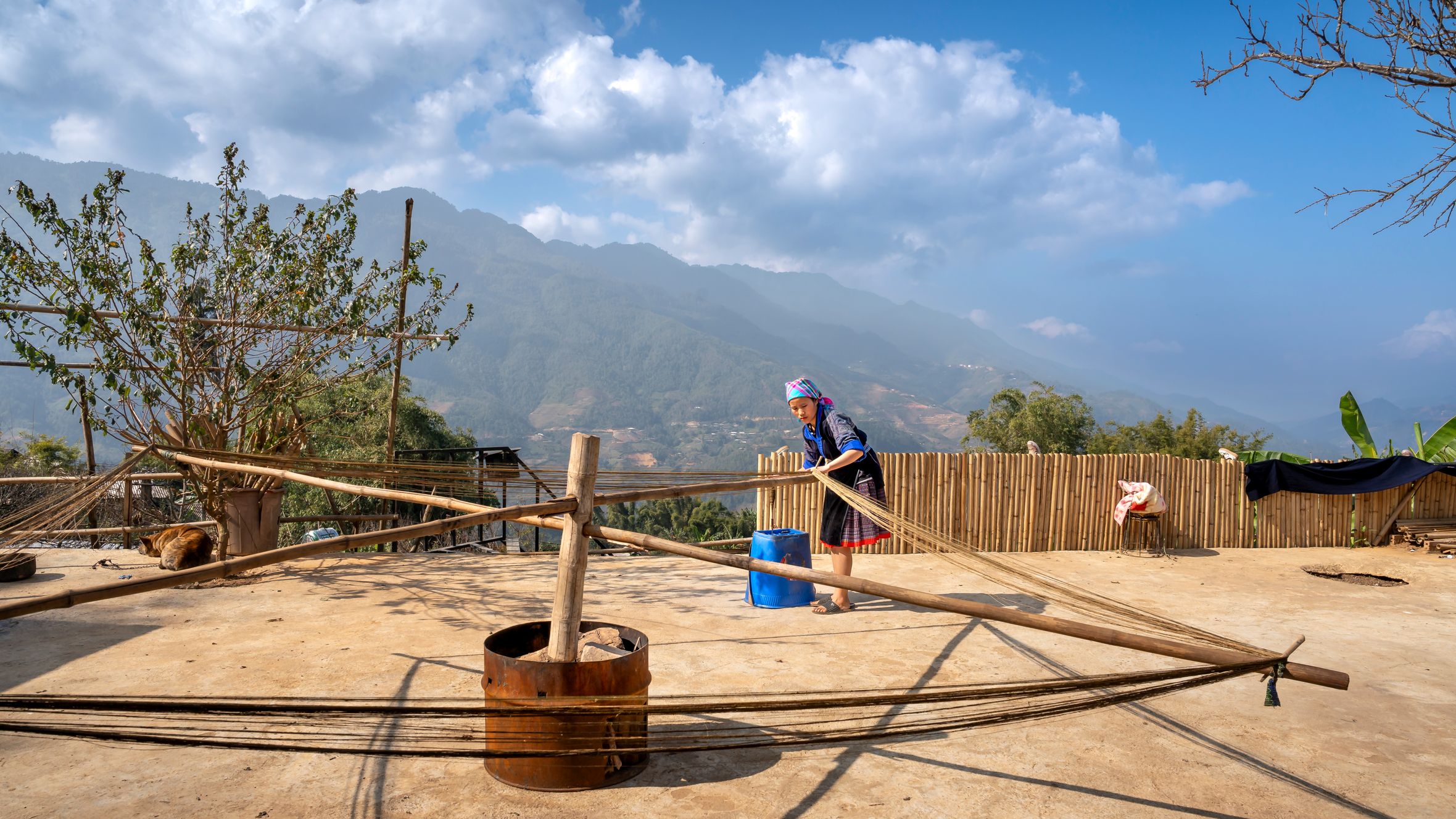
The Central Highlands (중부 고원 / 中部高原 / 中部高原) — Kon Tum, Gia Lai, Dak Lak, Dak Nong, Lam Dong — gets talked about mostly for its coffee plantations and motorbike routes. The food traditions of the Ede, Bahnar, and Gia Rai peoples barely get a mention, which is a shame, because this is some of the most distinctive cooking in Vietnam.
The Staple That Defines the Region
"Com lam" is rice cooked inside a green bamboo tube over an open fire. It sounds simple because it is, but the result is genuinely different from any other rice preparation — the bamboo imparts a faint grassiness, and the starch gets a slightly sticky, almost custard-like texture from steaming in its own sealed chamber. You crack the tube open at the table, peel back the bamboo membrane, and eat it directly from the cylinder. Around Buon Ma Thuot and Pleiku, roadside stalls sell com lam for 10,000–15,000 VND a tube, usually alongside grilled meats or pickled vegetables. In longhouse communities, it is the everyday staple, not a tourist novelty.
The Bahnar and Gia Rai typically pair com lam with smoked or dried venison, wild boar, or river fish — proteins that have been preserved without refrigeration using salt, ash, and smoke. The flavor profile is intensely savory and slightly funky in the best possible way. If you find yourself near Kon Tum, the market on Tran Phu street has vendors selling exactly this combination from early morning.
Goat, Hotpot, and the "Lau De" Question
"Lau de" — goat hotpot — is not exclusive to the highlands, but the version you get around Ninh Binh (닌빈 / 宁平 / ニンビン) or coastal provinces is different from what the Central Highlands does with goat. Here, the animal is raised in the scrubby terrain between Gia Lai and Dak Lak, and the meat is leaner, less fatty, with a more pronounced mineral edge. Highland-style lau de typically comes with fermented bamboo shoots, fresh herbs foraged from the surrounding area, and a broth that leans on lemongrass and galangal rather than the ginger-heavy versions you find in the north.
In Pleiku, a solid bowl of lau de for two costs around 180,000–250,000 VND depending on the cut. Order the ribs if they have them — they hold up better in the broth without going stringy.

Photo by Nguyen Truong Khang on Pexels
Ruou Can: Communal Drinking as Cultural Practice
"Ruou can" — literally "straw wine" — is a fermented rice or cassava wine drawn through long bamboo straws from a communal clay jar. Every Ede, Bahnar, and Gia Rai community has its own recipe, its own fermentation starter, and its own jar traditions. The alcohol content varies wildly, somewhere between 10% and 25% depending on fermentation time, and the taste ranges from lightly sour and grainy to thick and almost vinegary.
This is not something you buy in a shop. Ruou can exists in the context of ceremony — harvest festivals, house-building celebrations, weddings, the welcoming of guests. If you are invited to drink from the jar, you drink until your host signals you are done, then pass the straw. Refusing is genuinely impolite. The ritual matters more than the alcohol.
Some cultural tourism homestays in Kon Tum and Dak Lak have started incorporating ruou can into their programs for visitors, which is a reasonable introduction, though it is a filtered experience. The real thing happens around a longhouse fire in January or February, during the post-harvest period.
Vegetables, Foraged Foods, and What Gets Overlooked
The highlands diet is heavily vegetable-forward in ways that rarely get documented. Bitter leaves, wild mushrooms, banana blossom, young bamboo shoots, and various tubers make up a huge part of daily eating in Ede and Bahnar villages. These are not garnishes — they are the meal. A typical communal spread might be mostly plants, with protein as a seasoning rather than a centerpiece.
One preparation worth seeking out is fermented eggplant, which appears in several Ede cooking traditions. It is salted, weighted, and left to sour over several days, then eaten with rice or alongside grilled meats. The result is sharp and saline, somewhere between a pickle and a condiment. You will not find it on many menus in town, but village markets near Buon Ma Thuot sometimes have it sold in small plastic bags for 5,000–10,000 VND.

Photo by Thái Trường Giang on Pexels
Where to Actually Eat This Food
Buon Ma Thuot is the best base for highland minority food — it has a real market culture, a large Ede population in surrounding villages, and a few restaurants that cook genuinely traditional food rather than lowland Vietnamese with a highland backdrop. Kon Tum is smaller but has the most intact Bahnar village culture close to the city center, with a cluster of stilt-house communities a short ride across the Dak Bla River.
Avoid the resort-style "ethnic cuisine" dinners that some hotels in Da Lat package as highland culture tourism — the food is almost always standardized Vietnamese with decorative bamboo presentation. The real stuff is at the market, at roadside stalls, and in village kitchens.
Practical Notes
The Central Highlands has no single transport hub — Buon Ma Thuot, Pleiku, and Kon Tum each require separate travel planning from the coast or from Saigon. Markets in most highland towns are busiest between 5:30 and 8:00 in the morning. If you are planning to visit during a traditional festival period, January through March after the rice harvest is the most active season for communal food and ruou can ceremonies.
Last updated · May 26, 2026 · independently researched, never sponsored.



