
What it is
Dinh Tan Trao is a traditional Vietnamese communal house ("dinh") sitting in Son Duong district, Tuyen Quang province — now administratively merged with Ha Giang province. The wooden structure dates to the late 19th century and served as the venue for Vietnam (베트남 / 越南 / ベトナム)'s first National People's Congress in August 1945. Today it's a national historical relic, but it functions more like a quiet open-air museum than a crowded tourist site. The setting — a sloping clearing surrounded by old-growth forest and stilt houses — feels far removed from anything urban.
The dinh itself is a modest, single-story timber-frame building raised on wooden pillars, with a tiled roof and open sides. It's architecturally representative of Tay ethnic communal houses in the region, and its simplicity is part of the appeal. No grand gates, no marble staircases — just weathered wood and forest shade.
Why travelers go
Most visitors come for one of three reasons:
- History without crowds. Unlike major heritage sites in Hanoi or Hue, Dinh Tan Trao sees relatively few tourists. On weekdays you might have the grounds to yourself.
- The surrounding landscape. The Tan Trao historical zone covers multiple sites across a forested valley — the "cay da Tan Trao" (banyan tree), Hang Bon cave, and several Tay minority villages. It's a half-day of walking through genuinely beautiful terrain.
- A stopover between Hanoi and Ha Giang (하장 / 河江 / ハーザン). Tuyen Quang city is roughly 160 km north of Hanoi, making the area a natural break on the Ha Giang loop if you're taking the eastern route.
Best time to visit
March through May and September through November. Summers (June–August) bring heavy rain that turns forest trails muddy, and the humidity is brutal. December and January can be cool and foggy — atmospheric, but visibility drops. The anniversary period around August 16–19 sees local commemorative events, which adds energy but also school groups.
How to get there
From Hanoi: Drive or take a bus to Tuyen Quang city (about 3 hours, 160 km via CT05 expressway and QL2). From Tuyen Quang city, Dinh Tan Trao is another 40 km northwest in Son Duong district — roughly 50 minutes by motorbike or car on provincial road 185.
By motorbike: The ride from Tuyen Quang city is easy — flat to gently rolling roads through rice paddies and small towns. The last 5 km narrows but is paved.
By bus: Regular buses run Hanoi (My Dinh station) to Tuyen Quang city for around 100,000–130,000 VND. From there, you'll need a xe om (motorbike taxi) or a pre-arranged car to reach Tan Trao. Grab doesn't operate reliably this far out.
If you're heading to Ha Giang: Tan Trao sits roughly on the route between Tuyen Quang city and Ha Giang city (about 200 km further north). Factor in a 2–3 hour detour from the main highway.

Photo by Quang Nguyen Vinh on Pexels
What to do
Walk the historical zone
The Tan Trao relic site covers about 10 square km. Start at Dinh Tan Trao itself, then walk 300 meters to the famous banyan tree — a massive specimen where troops gathered in 1945. From there, follow a trail uphill (15 minutes) to Hang Bon, a small cave used as a wartime shelter. The whole loop takes 1.5–2 hours at a relaxed pace.
Visit Tay villages
The surrounding hamlets are home to Tay ethnic families still living in traditional stilt houses. This isn't a staged cultural village — people farm, dry tobacco, and go about daily life. Be respectful, ask before photographing, and buy something from a roadside stall if you stop.
Photography
The forest light filtering through canopy onto the old timber structure is genuinely photogenic, especially early morning. The banyan tree is enormous and makes a strong subject.
Where to eat
There's no restaurant scene at Tan Trao itself — just a couple of basic "com binh dan" (rice-and-dish) stalls near the parking area. Expect 40,000–60,000 VND for a plate of rice with pork, greens, and soup.
For better options, eat in Tuyen Quang city before or after your visit. Try:
- Com lam (bamboo-tube rice) — a regional specialty, sold at small restaurants along the road between the city and Son Duong.
- Thang Co soup — a Hmong-origin offal hotpot that's become common in northern highland towns. Not for everyone, but worth trying once.
- Local "bun cha" shops in Tuyen Quang city are solid — the charcoal-grilled pork style here is closer to Hanoi's version.
Vietnamese coffee is easy to find in Tuyen Quang city. Don't expect specialty cafes — this is instant-or-phin territory.
Where to stay
Tan Trao village has a couple of basic homestays (200,000–400,000 VND/night) — stilt-house accommodation with mosquito nets and shared bathrooms. Book via phone; these aren't on Booking.com.
Most travelers base in Tuyen Quang city, where you'll find:
- Budget: Nha nghi (guesthouses) from 200,000–350,000 VND. Clean enough, hot water, Wi-Fi.
- Mid-range: Muong Thanh Grand Tuyen Quang — the reliable Vietnamese hotel chain, around 600,000–900,000 VND/night with breakfast.
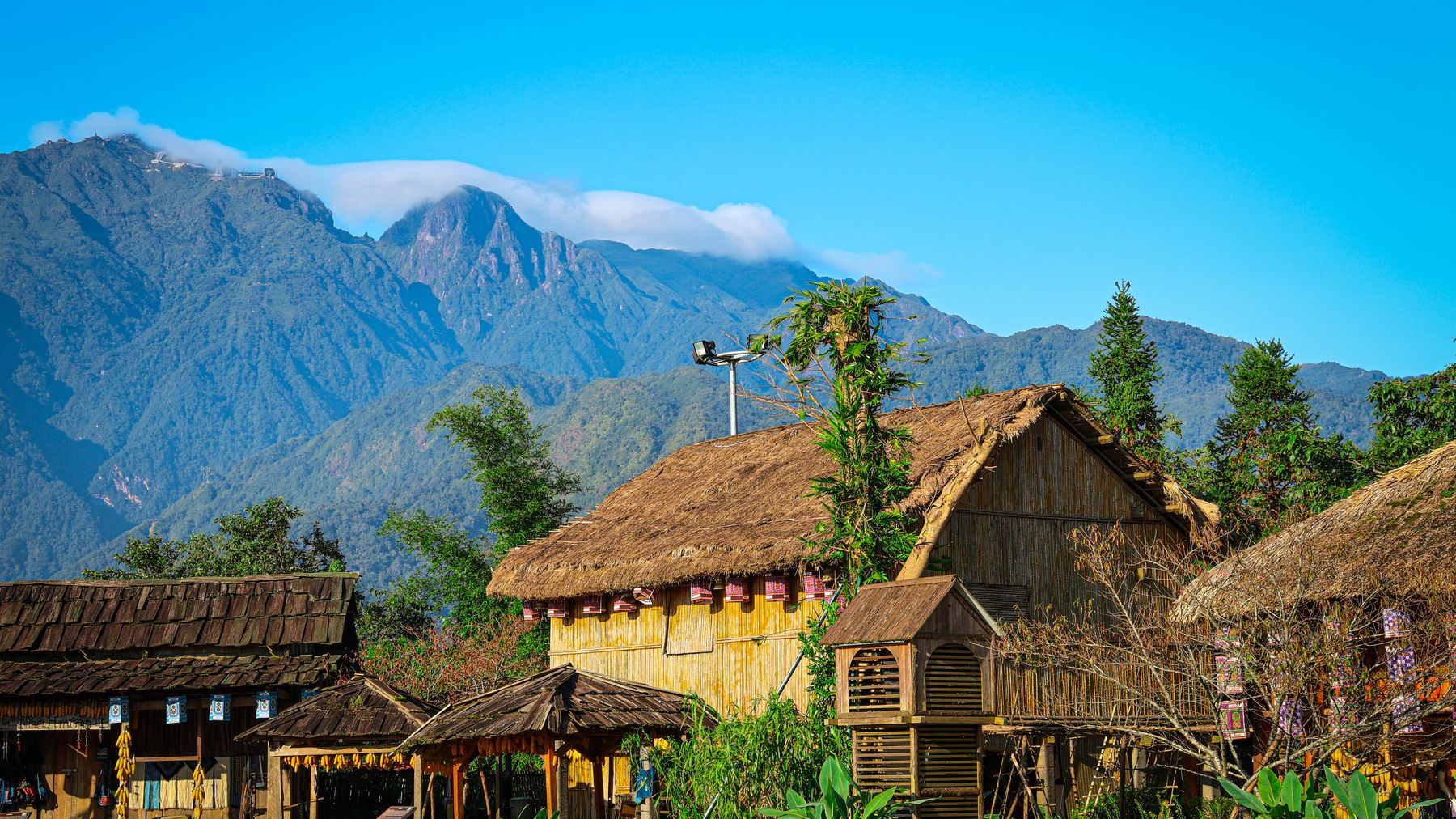
Photo by Haneul Trac on Pexels
Practical tips
- Bring cash. No ATMs at Tan Trao. Withdraw in Tuyen Quang city.
- Entrance fee: 20,000 VND (as of 2024). Parking is 5,000 VND for motorbikes.
- Wear shoes, not sandals. Forest trails get slippery even in dry season.
- Allocate half a day. You can see the main sites in 2 hours, but rushing defeats the purpose. The appeal is the quiet.
- Language: Very little English spoken here. Basic Vietnamese phrases or a translation app will help.
- Combine with Na Hang. Na Hang lake (80 km further north) is one of the most scenic spots in northern Vietnam — limestone karsts rising from turquoise reservoir water. The two make a strong 2-day trip from Hanoi.
Common mistakes
- Treating it as a day trip from Hanoi. The 3-hour drive each way plus 40 km to the site makes for an exhausting round trip. Stay a night in Tuyen Quang or combine with onward travel north.
- Expecting English signage or guides. Interpretive materials are almost entirely in Vietnamese. Read up before you go or you'll miss context.
- Skipping the forest walk. The dinh alone takes 10 minutes to see. The value is the surrounding zone — the banyan tree, the cave, the villages, the forest itself.
Practical notes
Dinh Tan Trao rewards travelers who like history, quiet, and landscape more than polished tourist infrastructure. It pairs well with a broader northern loop — Tuyen Quang to Na Hang to Ha Giang — for anyone looking to get off the banana-pancake trail without extreme logistics.
Last updated · May 29, 2026 · independently researched, never sponsored.





