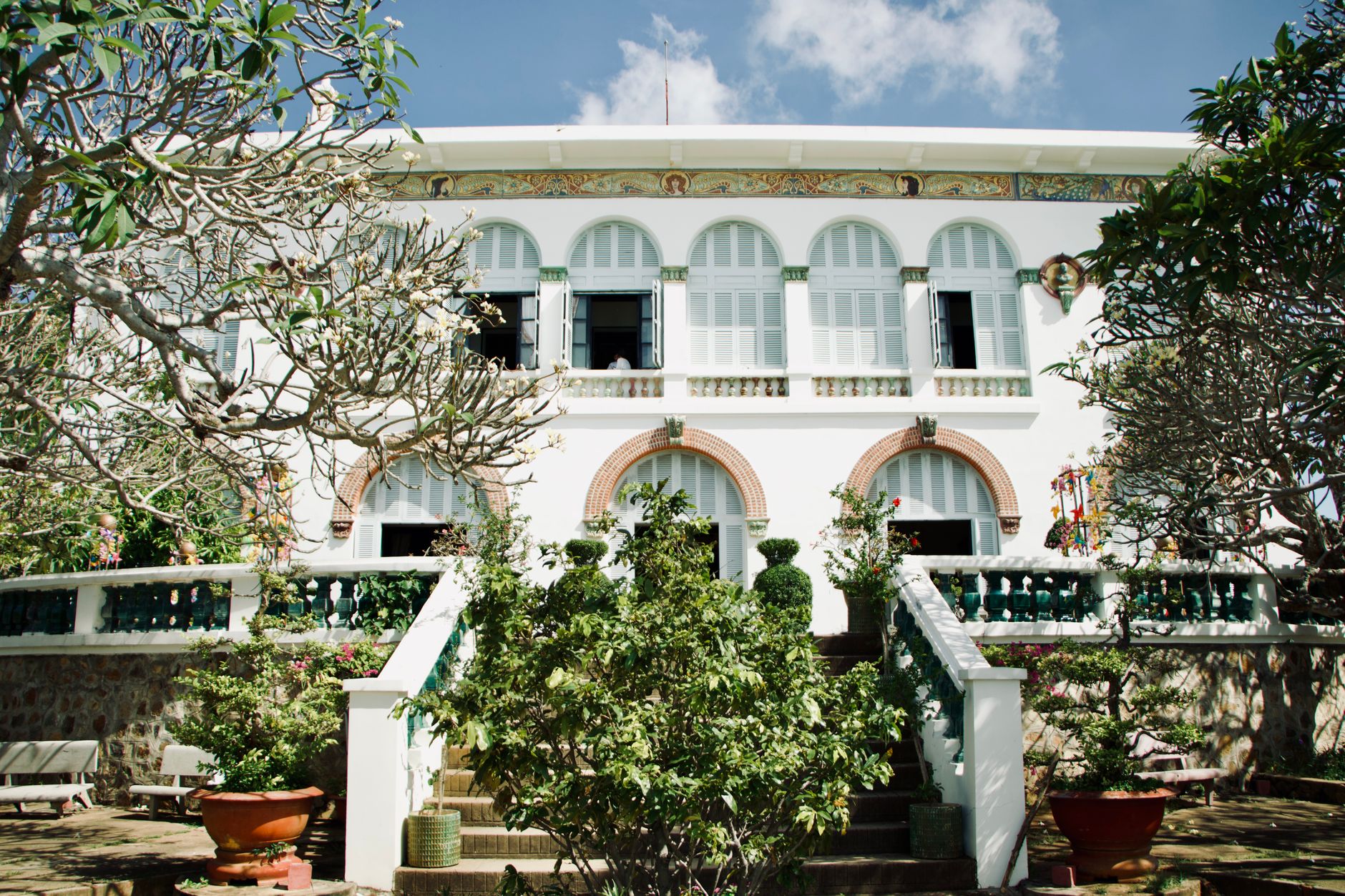
Chua Cau — the Japanese Covered Bridge — is probably the single most photographed structure in Hoi An, and one of the few buildings in Vietnam (베트남 / 越南 / ベトナム) where you can stand inside a piece of 17th-century merchant history that's still more or less intact. It's small, it takes five minutes to cross, and it's worth understanding before you go.
What it is
Chua Cau sits at the western end of Tran Phu Street in Hoi An (호이안 / 会安 / ホイアン)'s Old Town, spanning a narrow channel that connects the former Japanese merchant quarter to the Chinese trading district. The name translates roughly to "Pagoda Bridge" — there's a small temple built into its northern side, dedicated to Bac De Tran Vo, a Taoist deity believed to control weather and floods.
Japanese merchants built the original bridge around 1593-1595, during the period when Hoi An was one of Southeast Asia's busiest trading ports. The structure has been rebuilt and restored multiple times since — most recently a significant restoration completed in 2024 — but it keeps the distinctive covered wooden design with a tiled roof, stone guardian statues (a pair of dogs on one end, monkeys on the other), and the small shrine tucked into the middle.
The dog-and-monkey detail isn't random. One common explanation is that construction began in the Year of the Monkey and finished in the Year of the Dog. Another theory connects the animals to earthquake mythology. Either way, they make good landmarks when you're trying to figure out which end you're standing at.
Why travelers go
Honestly, most people visit because it's the icon of Hoi An — it's on the 20,000 VND banknote, it's on every postcard, and it's included in the Old Town ticket circuit. But there's a real reason to spend a few minutes here beyond ticking a box. The bridge is one of the last physical reminders of the Japanese trading presence in Southeast Asia, a period that ended abruptly when the Tokugawa shogunate closed Japan's borders in the 1630s. Standing on a wooden bridge that Japanese silk traders crossed four centuries ago, in a town that Vietnamese, Chinese, and Japanese merchants built together — that's a specific kind of historical texture you don't get from a museum panel.
The temple inside is tiny but atmospheric, especially if you catch it when incense is burning and the tourist flow has a gap.
Best time to visit
Hoi An's dry season runs February through August. For Chua Cau specifically, go early morning — before 8:30 AM — or after 5 PM. Midday crowds between October and March (peak tourist season) can turn the bridge into a bottleneck where you're shuffling shoulder-to-shoulder. The bridge is especially photogenic at dawn when the light hits the canal water, or during lantern-lit evenings on the 14th of each lunar month, when Hoi An holds its Full Moon Festival and the Old Town goes car-free with paper lanterns replacing electric lights.
Avoid September through November if you can. Central Vietnam's rainy season hits hard, and Hoi An floods regularly — the bridge and surrounding streets can sit under a meter of water during bad weeks.
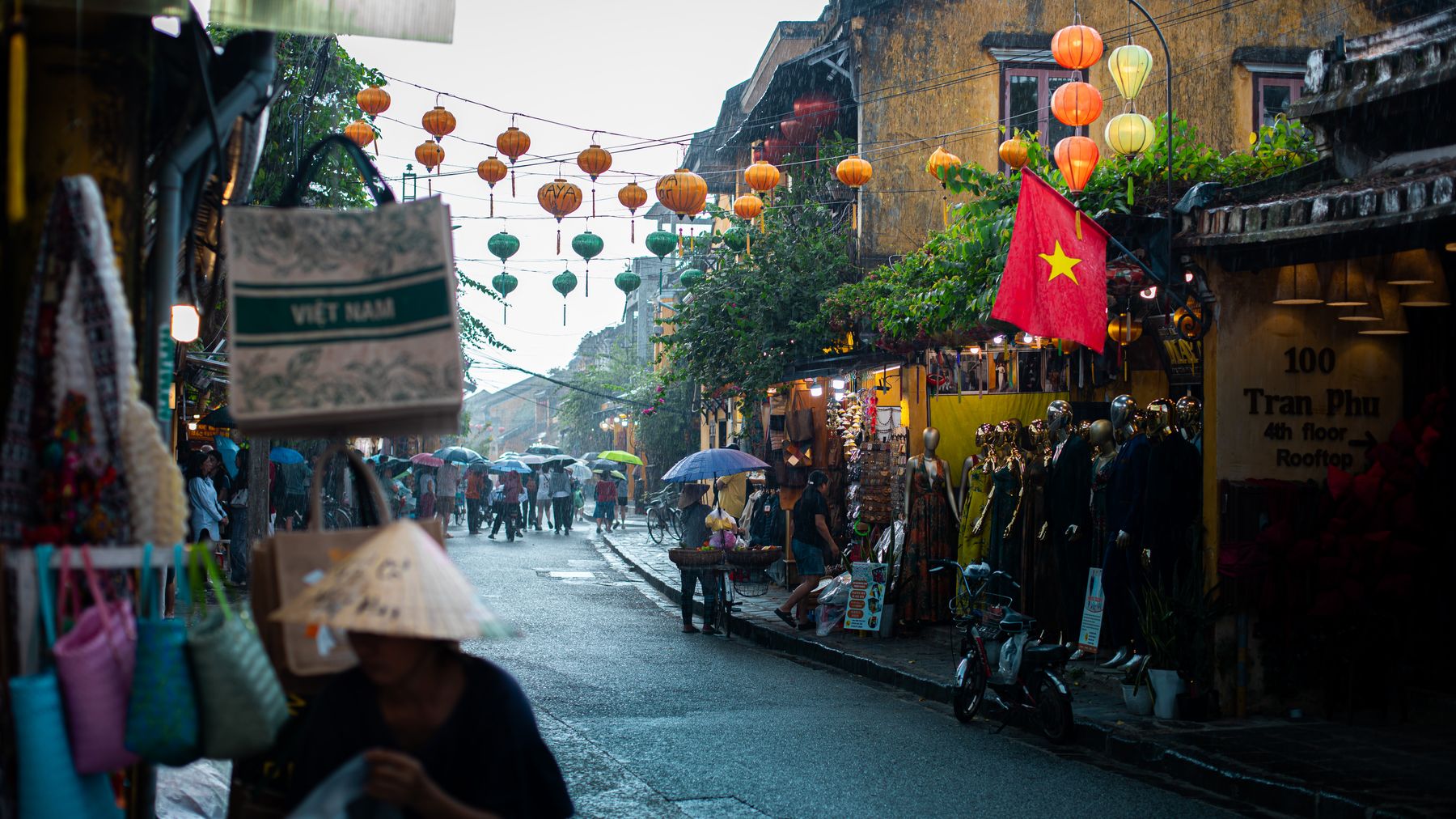
Photo by Sachith Ravishka Kodikara on Pexels
How to get there
Chua Cau is in Hoi An's Old Town, which is now administratively part of Da Nang following the recent merger. From central Da Nang, it's about 30 km south.
- Grab/taxi: 25-35 minutes depending on traffic, around 180,000-250,000 VND one way.
- Motorbike rental: Most guesthouses in Da Nang rent automatics for 120,000-150,000 VND/day. The ride down the coast road through Ngu Hanh Son (Marble Mountains area) is pleasant if you're comfortable on two wheels.
- Local bus: Bus route 1 runs between Da Nang and Hoi An for 30,000 VND, taking about 60-75 minutes. Buses leave every 20 minutes from the Da Nang bus station.
Once in Hoi An, the Old Town is pedestrian-only during most of the day. Park at one of the lots on Bach Dang or Hai Ba Trung Street (5,000-10,000 VND) and walk in. Chua Cau is at the intersection of Tran Phu and Nguyen Thi Minh Khai streets — impossible to miss.
You'll need an Old Town ticket to enter the bridge: 120,000 VND for a pass that covers five sites across the historic district.
What to do
Walk the bridge slowly
Resist the urge to speed through. Look up at the roof joinery, check out the carved wooden panels inside the temple, and read the Chinese characters on the entrance arches. The monkey and dog statues at each end are smoother than they should be — decades of tourists rubbing them for luck.
Visit the temple shrine
Step into the small shrine on the north side. It's a functioning place of worship, not just a display. If incense is available, you can light a stick. Keep your voice down.
Photograph from the canal side
The best angle of Chua Cau isn't from the bridge itself — it's from the south bank of the canal along Nguyen Thi Minh Khai Street, or from one of the cafes on Bach Dang with a river view. Late afternoon light from the east side gives the bridge a warm glow without harsh shadows.
Combine with the Old Town ticket circuit
Your 120,000 VND pass includes access to assembly halls, old merchant houses, and the Museum of Trade Ceramics. The Phuc Kien Assembly Hall (Fujian Chinese congregation) and Tan Ky Old House are the two most worthwhile — both within 200 meters of the bridge.
Catch the Full Moon Lantern Night
If your dates line up with the 14th of the lunar month, the area around Chua Cau transforms. Street vendors sell paper lanterns, boats with candles float on the Thu Bon River, and the bridge itself gets a different character under soft light.
Where to eat nearby
Hoi An has its own food identity. Within a 10-minute walk of Chua Cau:
- "Cao lau" — thick rice noodles with pork, herbs, and croutons, traditionally made with water from the Ba Le well. Try it at Trung Bac on Tran Phu Street, about 40,000 VND a bowl.
- "Banh mi" — Hoi An's version is arguably Vietnam's best. Banh Mi Phuong on Hoang Dieu Street is the famous one (Anthony Bourdain visited), but Madam Khanh at 115 Tran Cao Van does an equally good version with less of a queue. Around 25,000-30,000 VND.
For a sit-down meal, the "com tam" and rice plates at the small family restaurants along Tran Phu are honest and cheap — 50,000-80,000 VND for a full plate.

Photo by Sachith Ravishka Kodikara on Pexels
Where to stay
- Budget: Guesthouses in the An Hoi peninsula (across the river from Old Town) run 250,000-400,000 VND/night. Walking distance to Chua Cau.
- Mid-range: Boutique hotels along Hai Ba Trung and Le Loi streets, 800,000-1,500,000 VND/night, often with pool and breakfast included.
- Higher-end: Riverside hotels on Bach Dang with Old Town views start around 2,500,000 VND/night.
Practical tips locals would tell you
- The Old Town ticket is technically checked at major sites, but enforcement varies. Buy one anyway — the money funds preservation of a UNESCO-listed town.
- Wear shoes you can slip on and off easily. You'll remove them entering the temple and several other Old Town buildings.
- The bridge is tiny. If you arrive and it's packed, walk 100 meters in any direction, get an "egg coffee" or a cold drink, and come back in 20 minutes.
- Hoi An tailors will approach you constantly near the bridge. A polite "no, thank you" works. No need to engage.
Common mistakes to avoid
- Only visiting by day. Chua Cau at night, lit up with yellow lights reflecting on the water, is a completely different experience.
- Skipping the temple inside. Most visitors walk through the bridge, take a photo, and leave. The shrine is the reason it's called Chua (pagoda) and not just Cau (bridge).
- Coming at peak hours without a ticket. The queue to buy Old Town passes at midday can waste 15-20 minutes. Buy yours early at the ticket offices on Hoang Dieu or Bach Dang.
- Treating Hoi An as a day trip afterthought. One night minimum lets you see the Old Town after the day-trippers leave, when the lanterns come on and the streets finally breathe.
Last updated · May 29, 2026 · independently researched, never sponsored.