Chua Ham Long sits on the slope of Ham Long Mountain in what was historically part of Bac Giang province, now folded into the greater Bac Ninh administrative area after a merger. It's one of the older Buddhist pagodas in the Red River Delta — not a tourist attraction that buses pull up to, but a genuinely quiet religious site that rewards the short detour from Hanoi.
What it is and why it matters
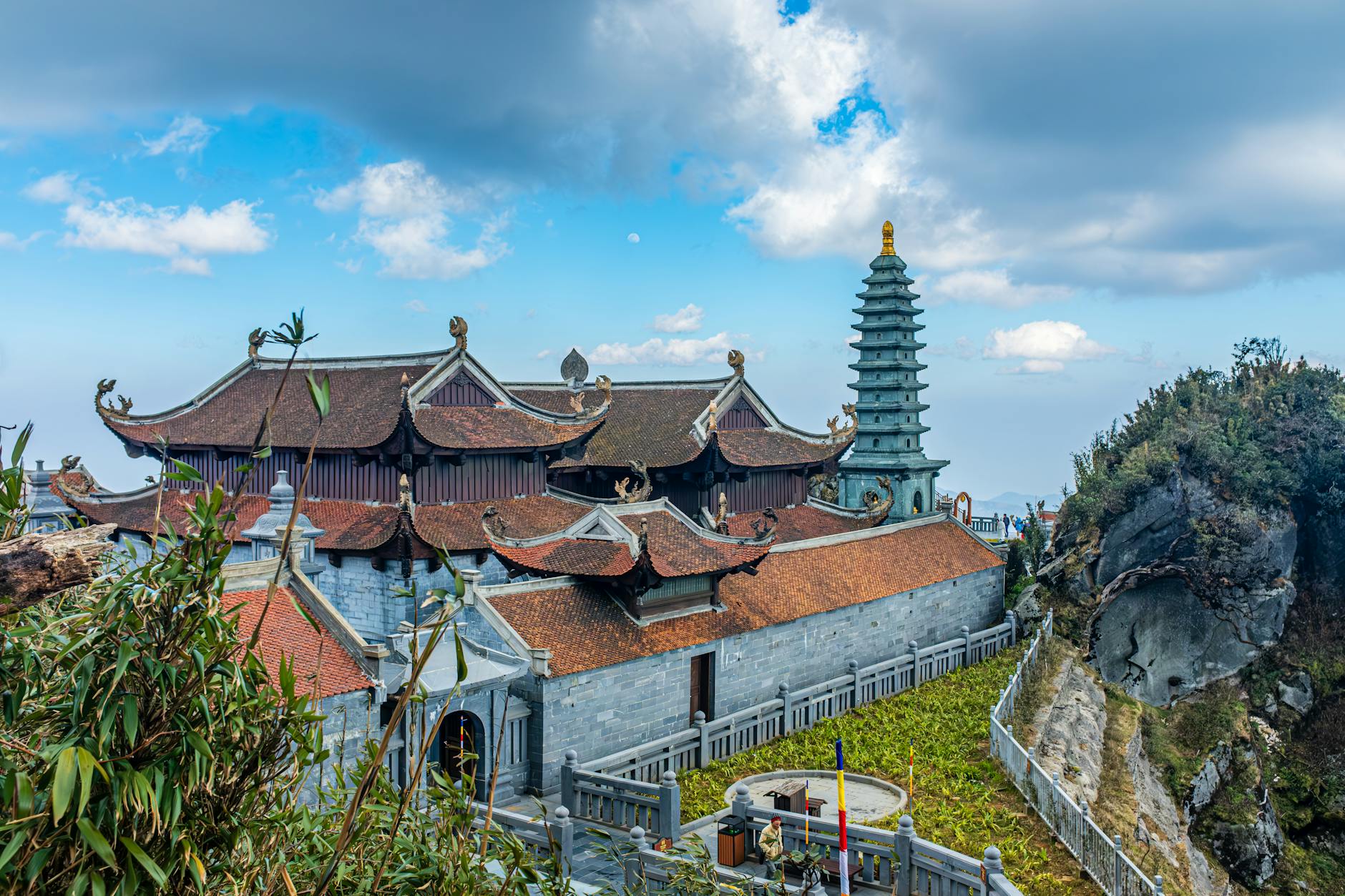
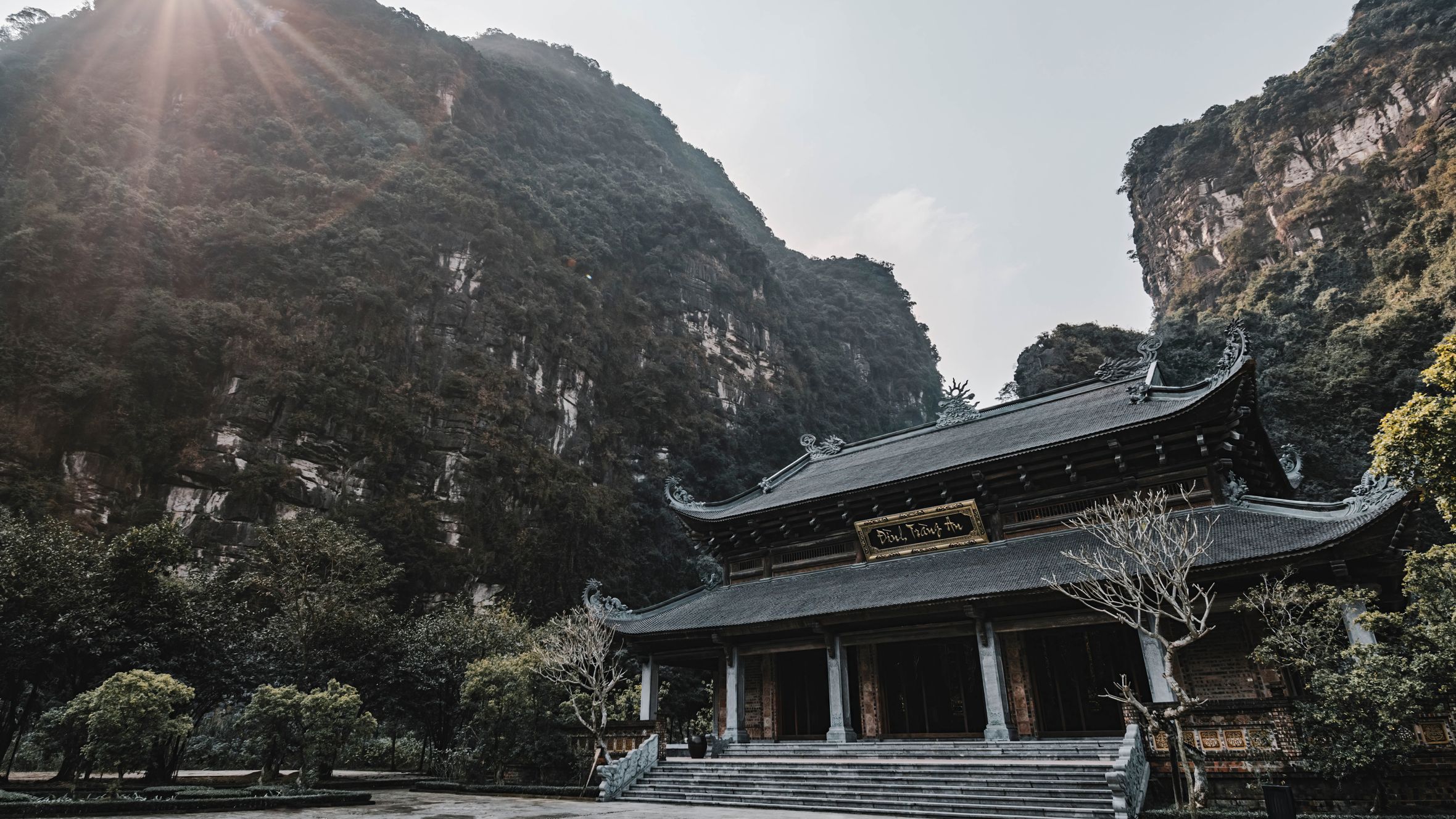
Chua Ham Long — roughly translating to "Dragon's Jaw Pagoda" — takes its name from the shape of the limestone outcrop it's built into. The pagoda dates back several centuries, with most historians placing its origins in the Ly or Tran dynasty period, though the structures you see today reflect restorations from the Le and Nguyen eras. The complex includes a main worship hall, a triple-gate entrance, several shrines set into natural rock cavities, and a bell tower partially embedded in the hillside.
What sets it apart from other northern pagodas is the integration with the rock itself. Some chambers are half-cave, half-built, with altars placed inside natural limestone alcoves. The complex also has old steles — stone tablets recording donations and restorations — that give it a layered, lived-in feel rather than a polished renovation look.
This area of Bac Ninh province is historically tied to "quan ho" folk singing traditions, and the surrounding villages still carry traces of that cultural identity, even if the pagoda itself is primarily Buddhist.
Why travelers go
Most visitors are Vietnamese Buddhists on pilgrimage circuits through the northern provinces, especially during the first and third lunar months. For foreign travelers, the draw is simpler: it's a well-preserved pagoda in a natural limestone setting, close enough to Hanoi for a half-day trip, and almost entirely free of crowds on weekdays. If you've already seen Tran Quoc Pagoda and the Temple of Literature in Hanoi and want to understand what a rural northern pagoda feels like without heading all the way to Ninh Binh (닌빈 / 宁平 / ニンビン), this is a solid option.
Best time to visit
The pagoda is open year-round, but two windows stand out.
February through April (post-Tet through spring) is when the pagoda sees the most activity. Pilgrims visit during the spring festival season, the hillside is green, and the weather is cool enough — 18-24°C — that climbing the stone steps isn't punishing. If you time it around the Quan Ho folk singing festival in Bac Ninh (usually the 13th day of the first lunar month), you can combine both in one trip.
September through November is drier and quieter. Fewer visitors, comfortable temperatures, and the light through the limestone karst is particularly good in the late afternoon. Avoid June through August if you can — the heat and humidity make the stone stairs slippery and the climb unpleasant.
How to get there from Hanoi
Chua Ham Long is roughly 45-50 km northeast of central Hanoi (하노이 / 河内 / ハノイ), depending on your route.
By motorbike or car: Take National Highway 1A north toward Bac Ninh city, then continue northeast on provincial roads toward the Ham Long area. The ride takes about 1.5 hours from Hanoi's Old Quarter on a motorbike, less if traffic cooperates. A Grab car from Hanoi runs around 350,000-450,000 VND one way.
By bus: Catch a bus from My Dinh or Gia Lam bus station heading to Bac Ninh city (around 30,000-50,000 VND, 1-1.5 hours). From Bac Ninh city, you'll need a local xe om (motorbike taxi) or Grab for the remaining 15-20 km to the pagoda — expect 60,000-100,000 VND.
There's no direct public transport to the pagoda itself, so having your own wheels or arranging a driver simplifies the logistics.

Photo by Karolina on Pexels
What to do
Walk the full complex, not just the main hall
Most visitors head straight to the main worship area and turn around. Don't. The pagoda complex extends into the hillside through a series of paths connecting smaller shrines, rock-cut chambers, and lookout points. Budget 60-90 minutes to walk the full circuit at a comfortable pace.
Visit the cave shrines
Several altars are placed inside natural limestone cavities behind and above the main hall. These are dimly lit, cool inside even in summer, and have a very different atmosphere from the open-air sections. Watch your head on low rock ceilings.
Read the steles
If you can read Vietnamese (or bring a friend who can), the stone steles around the complex record centuries of donations, restorations, and community history. They're essentially the pagoda's autobiography, carved in stone.
Climb to the hilltop
A path leads from the pagoda up to the top of Ham Long Mountain. It's not a long hike — maybe 20 minutes — but it gives you a wide view over the surrounding rice paddies and villages. Bring water.
Sit and listen
This sounds vague, but it's genuine advice. The pagoda is quiet enough on weekdays that you can hear birds, wind through the trees, and the occasional bell. That silence is the whole point for many visitors. Give it ten minutes.
Where to eat nearby
The immediate area around the pagoda doesn't have restaurants aimed at tourists. Your best bet is to eat in Bac Ninh city, either on the way in or out.
Look for "banh cuon" — steamed rice rolls — which Bac Ninh province does exceptionally well. The sheets are thinner than the Hanoi version, often filled with minced pork and wood ear mushroom, served with fried shallots and dipping sauce. Stalls near Bac Ninh's central market serve plates for 25,000-40,000 VND.
Also worth trying is "bun thang" if you spot it — a delicate Hanoi-adjacent noodle soup with shredded chicken, egg, and pork that shows up in northern towns like this. A bowl runs 35,000-50,000 VND.
Where to stay
Most travelers visit Chua Ham Long as a day trip from Hanoi, which makes the most sense given the proximity. If you want to stay overnight in Bac Ninh city to explore the wider province:
- Budget: Local nha nghi (guesthouses) near the bus station, 200,000-350,000 VND/night. Basic but clean.
- Mid-range: Hotels along the main roads in Bac Ninh city, 400,000-800,000 VND/night. Air conditioning, hot water, Wi-Fi — the usual.
- Higher-end options are limited. Bac Ninh isn't a tourism hub, so don't expect resort-style accommodation.

Photo by Quang Nguyen Vinh on Pexels
Practical tips locals would tell you
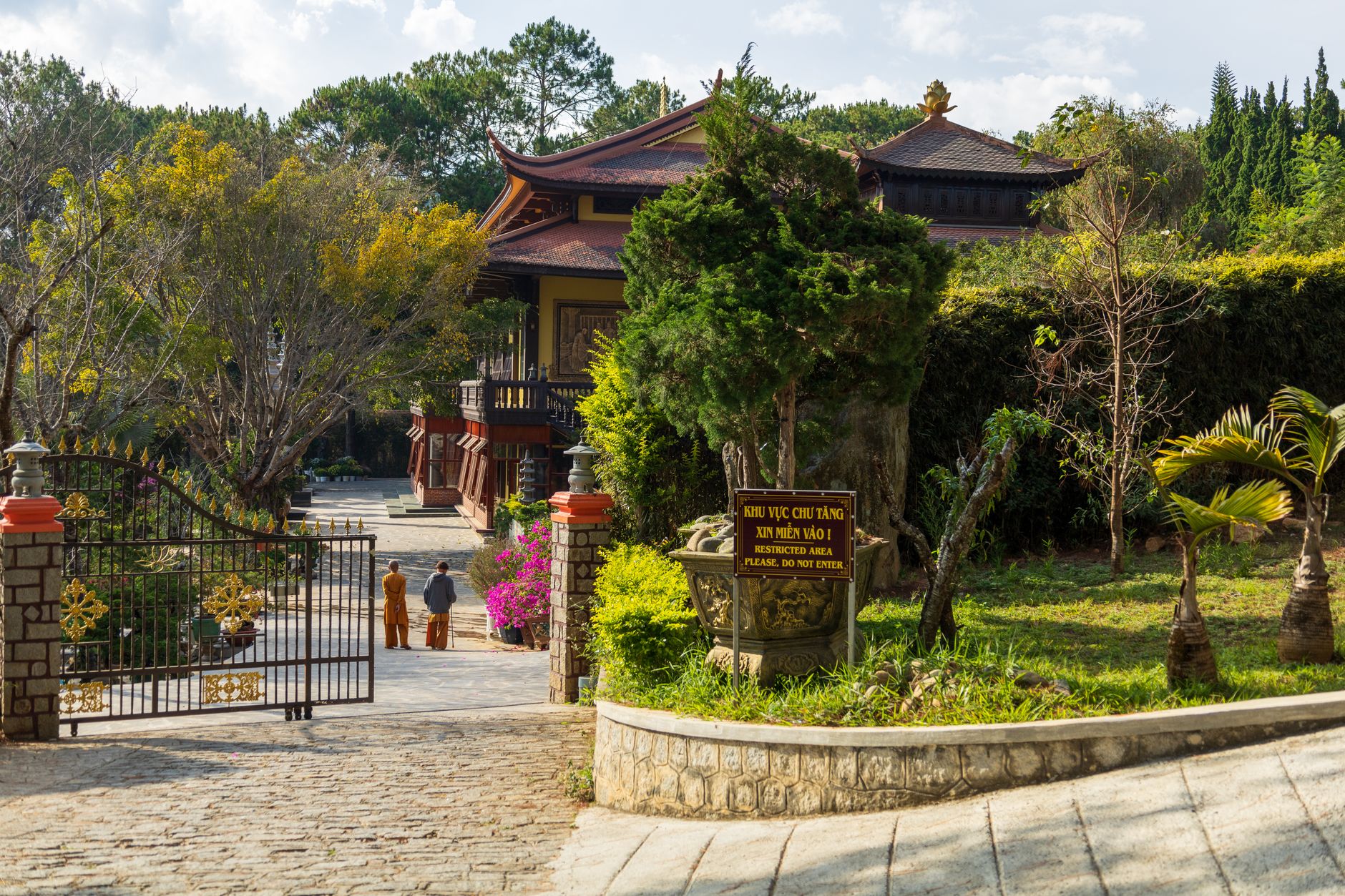
- Dress modestly. This is an active place of worship, not a ruin. Cover your shoulders and knees. Remove shoes before entering any worship hall.
- Bring cash. There are no ATMs at the pagoda and no card payment anywhere nearby. Small denominations (10,000-50,000 VND notes) are useful for offerings or donations.
- Go on a weekday. Weekend and festival-day crowds change the character of the place entirely.
- Wear shoes with grip. The stone paths get slick after rain, and the climb to the hilltop is uneven.
Common mistakes to avoid
- Rushing it. People drive out, snap photos of the main gate, and leave in 20 minutes. The pagoda's best parts — the cave shrines, the hilltop — require you to actually walk around.
- Coming without water or sun protection. There's no convenience store at the pagoda. Bring what you need.
- Trying to combine it with too many other stops. Bac Ninh province has several pagodas and cultural sites, but cramming four into one day turns a contemplative visit into a highway tour. Pick two at most.
Practical notes
Chua Ham Long doesn't charge an entrance fee, though donation boxes are present. The pagoda is accessible year-round during daylight hours — roughly 6:00 to 17:30. If you're combining this with a broader northern Vietnam loop through Ninh Binh or Ha Long Bay, Bac Ninh slots in easily as a morning stop on the way out of Hanoi.
Last updated · May 26, 2026 · independently researched, never sponsored.