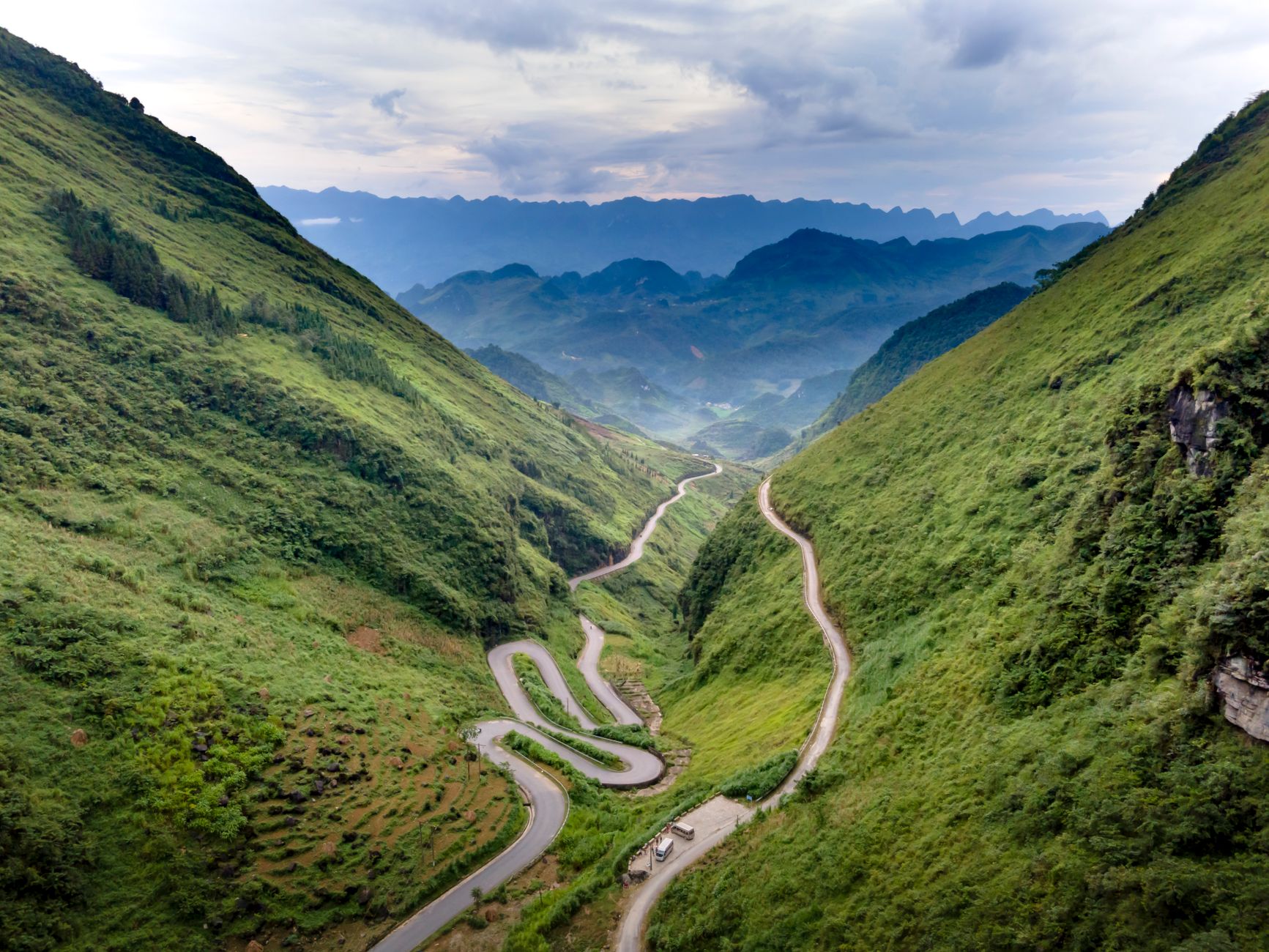
Most travelers who hear "Perfume Pagoda" think of the one outside Hanoi — the sprawling complex in My Duc district that draws millions during spring festival season. But Chua Huong Tich in Ha Tinh province is the older site, and arguably the more interesting one if you care about atmosphere over infrastructure. It sits on the slopes of Hong Linh mountain in the Nghe Tinh region of north-central Vietnam (베트남 / 越南 / ベトナム), a landscape of limestone karst, dense green canopy, and very few other foreigners.
What it is
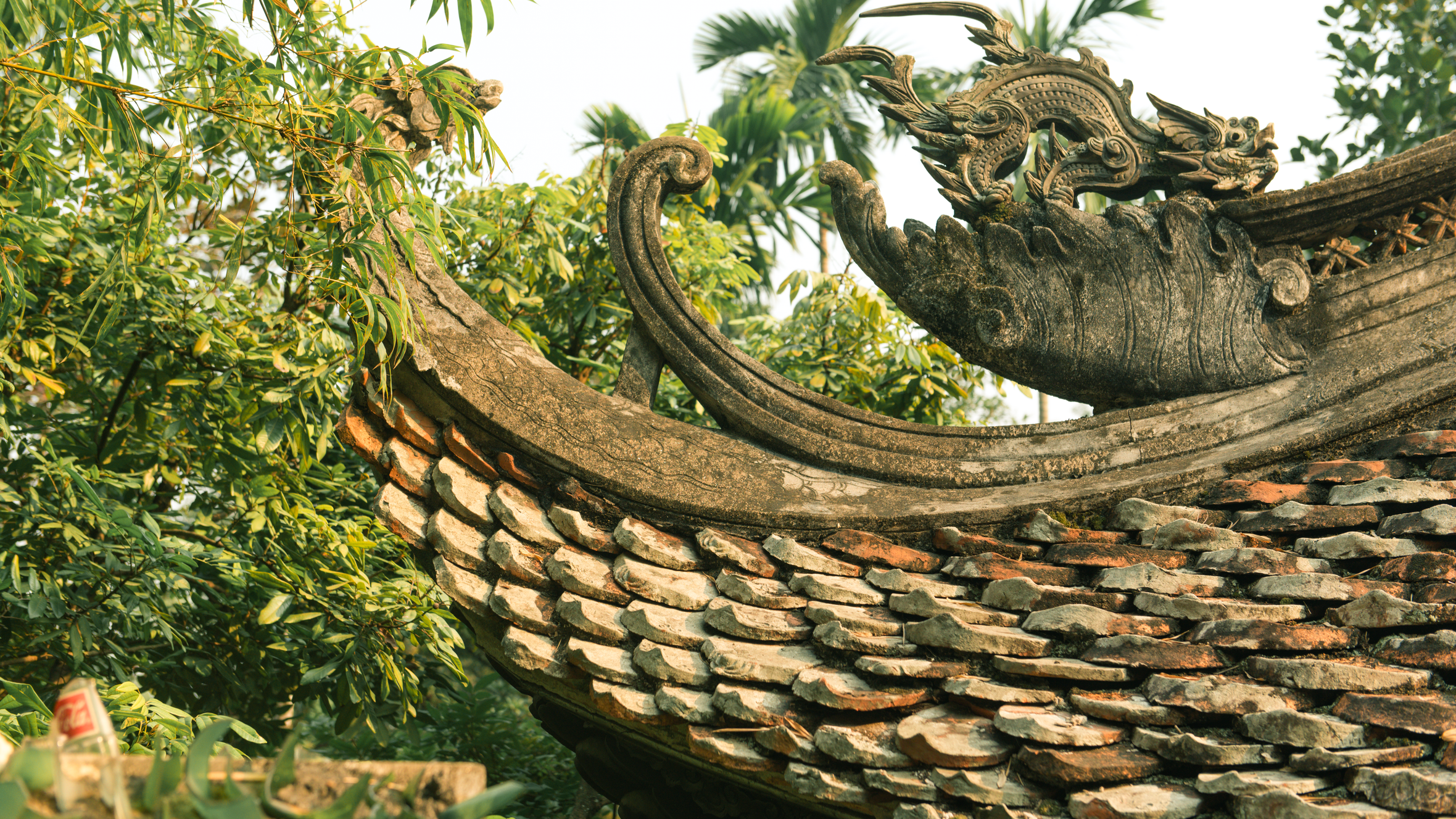
Chua Huong Tich (sometimes written Huong Tich Pagoda) dates back centuries, with origins tied to Buddhist practice in the Tran and Le dynasties. The pagoda sits inside a natural cave on Hong Linh mountain, roughly 650 meters above sea level. The cave itself is the main event — a deep limestone grotto with stalactites, Buddhist statues carved into rock, and the smell of incense so embedded in the stone you'd think the mountain was built from it.
Local tradition holds that this was the original Huong Tich before the more famous Hanoi (하노이 / 河内 / ハノイ) version was established. Whether or not the historical claim holds up to scrutiny, the site has real age to it. Stone inscriptions inside the cave date to the 18th century, and the surrounding temple complex has been rebuilt and maintained through multiple periods of conflict and neglect.
Why travelers go
Three reasons, mostly. First, the hike. The trail from the base up to the cave takes roughly 60-90 minutes depending on your pace and fitness. It passes through forest, past smaller shrines, and along stone steps that locals have maintained for generations. Second, the cave itself is genuinely impressive — large enough to hold several hundred people during festival days, cool even in summer, and filled with natural formations that Buddhist monks have been naming and venerating for centuries. Third, it's quiet. Outside of the spring pilgrimage season, you might share the trail with a handful of local worshippers and nobody else.
Best time to visit
The spring pilgrimage season runs from the 1st to the 3rd lunar month (roughly February to April). This is when the site is most alive — incense smoke, chanting, families making the trek together. If you want the cultural experience, come during this window, ideally on a weekday to avoid the densest crowds.
For hiking comfort, October through March is best. Ha Tinh summers are brutal — 35-40°C with heavy humidity — and the trail has limited shade in exposed sections. The rainy season peaks from August to October, making the stone steps slippery and the trail muddy. November through February gives you cooler air (18-24°C) and dry footing.
How to get there
Ha Tinh city is the nearest hub. From Hanoi, you can take a train to Ha Tinh station (roughly 6-7 hours on the Thong Nhat line, tickets around 250,000-400,000 VND depending on class) or a bus from Nuoc Ngam station (5-6 hours, 180,000-250,000 VND). Flights aren't practical — the nearest airport is Vinh, about 50 km north of Ha Tinh city.
From Ha Tinh city, Chua Huong Tich is about 15 km northwest, in Thien Loc commune, Can Loc district. A "xe om" (motorbike taxi) costs roughly 80,000-120,000 VND one way. Grab works inconsistently here — book a car if it's available, but have a backup plan. If you're renting a motorbike in Ha Tinh (around 120,000-150,000 VND per day), the ride takes about 30 minutes on provincial roads that are paved but narrow.

Photo by HONG SON on Pexels
What to do
Hike to the main cave
The primary trail starts at the base complex and climbs through forest to the Huong Tich cave entrance. Budget 60-90 minutes up, 40-60 minutes down. Wear proper shoes — the stone steps get worn smooth and there are uneven sections. Bring water; there's no reliable vendor on the trail itself.
Explore the cave interior
Once inside, take time to let your eyes adjust. The cave extends deeper than most visitors expect. Stalactite formations have been given names by monks over the centuries — your guide or a posted sign will point out shapes said to resemble dragons, lotus flowers, and Buddhist figures. The main altar sits deep inside, where the air is noticeably cooler.
Visit the surrounding temple complex
The base area has a cluster of smaller temples and a courtyard where monks live and practice. It's a working religious site, not a museum. If you're respectful — shoes off, shoulders covered, quiet voice — you're welcome to sit and observe.
Walk the Hong Linh ridgeline
If you have energy after the cave, a secondary trail continues along the ridge with views over the coastal plains toward the sea. It's not marked well, so ask at the base if conditions are good. The extra hour of walking is worth it for the perspective.
Attend a spring festival ceremony
If you visit during pilgrimage season, the opening ceremony on the 18th of the 2nd lunar month is the most significant. Expect drums, processions, and a density of incense smoke that borders on theatrical.
Where to eat nearby
The base area has a few food stalls selling standard Vietnamese fare — rice plates, noodle soup, snacks. Nothing exceptional, but fine for refueling. Back in Ha Tinh city, seek out "cu doi" — a local sweet treat made from a type of peanut native to the region, pressed into blocks or rolled into balls. It's a Ha Tinh specialty you won't find easily elsewhere.
For a proper meal, Ha Tinh does excellent "banh canh" — thick tapioca noodles in a pork or crab broth. The versions here tend to be thicker and more rustic than what you'll find further south. Street stalls near the central market sell bowls for 25,000-35,000 VND.
Where to stay
There's no accommodation at the pagoda itself. Ha Tinh city has a range of options:
- Budget: Nha nghi (guesthouses) near the bus station, 200,000-350,000 VND per night. Basic but clean.
- Mid-range: Local hotels on Tran Phu street, 400,000-700,000 VND. Air-con, hot water, Wi-Fi.
- Upper mid-range: Newer business hotels on the main road, 800,000-1,200,000 VND. Nothing fancy, but comfortable enough.
Don't expect international-standard hotels. Ha Tinh isn't a major tourist city, and that's part of its appeal.

Photo by Quang Nguyen Vinh on Pexels
Practical tips locals would tell you
- Bring incense and small offerings if you want to pray at the altar. You can buy bundles at the base for 10,000-20,000 VND.
- Start the hike early — by 6:30 or 7:00 AM. The afternoon heat, even in cooler months, makes the climb harder than it needs to be.
- Dress modestly. This is an active Buddhist site, not a tourist attraction with a gift shop. Long pants and covered shoulders are expected inside the cave and temple areas.
- Cash only. There are no ATMs at the site, and card payments don't exist here. Bring enough VND for transport, food, and offerings.
Common mistakes to avoid
- Confusing this with Hanoi's Chua Huong. They're entirely different sites, 300 km apart. Double-check your transport bookings.
- Underestimating the hike. It's not Everest, but it's not flat either. Flip-flops and no water is a recipe for a miserable afternoon.
- Skipping Ha Tinh city entirely. Most travelers blow through on the way to Hue or Phong Nha. Ha Tinh is worth at least an overnight — the food is good, the pace is slow, and you'll see a part of Vietnam that hasn't been shaped by tourism.
Practical notes
Chua Huong Tich works best as a day trip from Ha Tinh city, combined with a night or two exploring the province. If you're traveling the north-central coast between Hanoi and Hue, it's a worthwhile detour that adds maybe half a day to your itinerary. Just bring good shoes and get there early.
Last updated · May 29, 2026 · independently researched, never sponsored.