The Mekong Delta (메콩 델타 / 湄公河三角洲 / メコンデルタ) has dozens of craft villages, but few let you walk straight into a working production line, taste the product warm off the slab, and leave with a bag of sweets for under 50,000 VND. That's the deal at the coconut candy villages now consolidated under Vinh Long province.
What it is
Coconut candy — "keo dua" — is a chewy, slightly sticky sweet made from coconut milk, sugar, and malt, cooked down in large woks and hand-cut into small rectangles. The craft has roots going back generations in the coconut-growing regions of the Mekong Delta, where families turned surplus coconut into a shelf-stable product they could sell at market.
Following the administrative merger of Ben Tre into Vinh Long province, the villages that once sat on the Ben Tre side of the river now fall under Vinh Long's jurisdiction. The candy-making process hasn't changed. Families still cook in open-air kitchens along the riverbank, wrap each piece by hand, and sell directly to visitors who arrive by boat or motorbike.
You'll find several workshops clustered along the canals near An Binh Island and the surrounding islets. Some are small family operations with five or six workers; others are slightly larger outfits that add flavors like durian, pandan, chocolate, or "ca phe sua da" (coffee with condensed milk).
Why travelers go
It's one of the more honest craft-village experiences in southern Vietnam (베트남 / 越南 / ベトナム). Nobody's putting on a show — you're watching people do what they do every day. The whole loop from raw coconut to wrapped candy takes about 30 minutes to observe, and the workers are generally happy to let you try your hand at cutting or wrapping.
It also slots neatly into a broader Mekong Delta day trip. Most visitors combine the candy village with a floating market visit, fruit orchards, and a boat ride through narrow palm-lined canals.
Best time to visit
November through March is the dry season, which means fewer surprise downpours during your boat ride. Mornings are best — workshops fire up early, and the light through the palm canopy is good before 10 a.m. The candy-making happens year-round, but production picks up significantly before Tet, when families across Vietnam buy coconut candy as gifts. Visiting in January means you'll see the workshops at full capacity, with stacks of finished product everywhere.
Avoid major public holidays if you dislike crowds. Tet / 越南春节 / テト) itself (late January or early February) shuts most workshops down for a week.
How to get there
From Saigon, the most common route is a bus to Vinh Long city — about 130 km, roughly 2.5 to 3 hours depending on traffic. Phuong Trang (Futa) buses run frequently from Mien Tay bus station; tickets cost around 100,000–130,000 VND.
From Vinh Long city, you have two options:
- By boat: Head to the riverfront near Vinh Long market and hire a small motorboat. A shared tourist boat to An Binh Island and the surrounding islets costs about 80,000–150,000 VND per person for a half-day loop that includes candy village stops. Private boats run 400,000–600,000 VND for the whole vessel.
- By motorbike: Cross the bridge to An Binh Island and follow signs to the candy workshops. The ride from Vinh Long center takes about 20 minutes. Renting a motorbike locally costs 120,000–150,000 VND per day.
If you're coming from Can Tho, it's about 90 minutes by bus or car.

Photo by Alberto Capparelli on Pexels
What to do
Watch the full production process
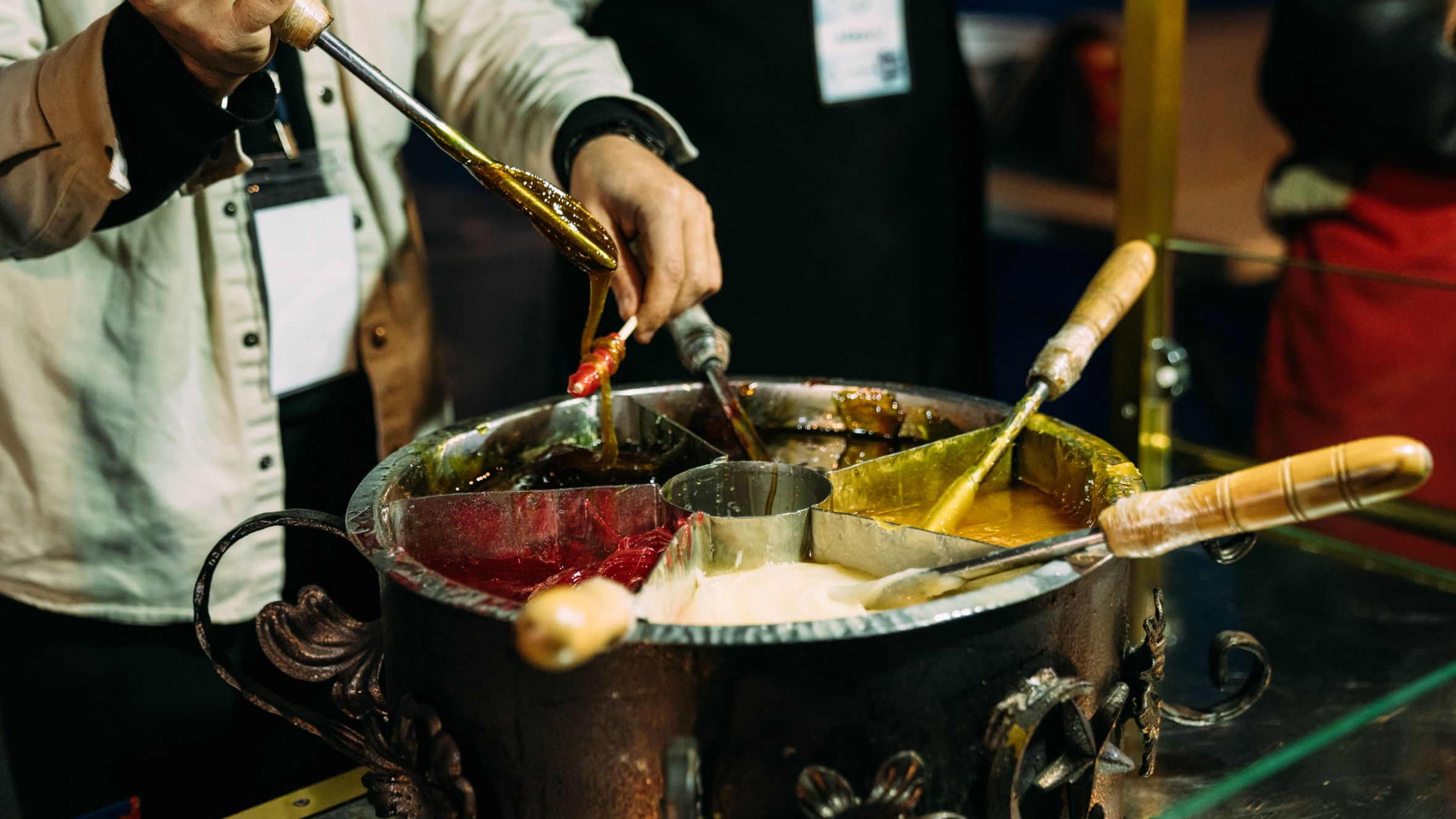
Start at one of the larger workshops where you can see every stage: coconut meat being grated, milk extracted, the mixture boiled down in wide iron woks over wood fires, then poured onto marble slabs, flattened, and sliced. The caramelization smell is intense. Workers move fast — a good cutter produces hundreds of pieces per hour.
Try wrapping candy yourself
Most workshops let visitors sit down and wrap a few pieces in the thin rice paper and then the outer cellophane. It's harder than it looks. The candy is still warm and sticky, and the wrappers are small. Nobody expects perfection — it's just a good way to spend ten minutes.
Taste test the flavors
Beyond the classic plain coconut, look for durian, pandan, peanut, and chocolate varieties. Some workshops also make coconut cookies and a thicker coconut toffee. Sampling is free. A 500-gram bag typically costs 30,000–50,000 VND depending on the flavor.
Ride through the canal network
The narrow waterways around An Binh Island are worth exploring by rowboat or small motorboat. Coconut palms arch overhead, and you'll pass fruit orchards, small temples, and the occasional hammock-strung cafe. This is the quieter, less-trafficked part of the Mekong Delta compared to the bigger tourist circuits near My Tho.
Visit a fruit orchard
Several orchards near the candy villages let visitors pick and eat seasonal fruit — longan, rambutan, mangosteen, jackfruit depending on the month. Entry is usually 30,000–50,000 VND with all-you-can-eat fruit included.
Where to eat nearby
"Hu tieu" is the signature noodle soup of the Mekong Delta, and Vinh Long has its own solid version — clear pork broth, thin rice noodles, sliced pork, and shrimp. Look for small shopfront places in Vinh Long city center rather than tourist-oriented restaurants on the islands. A bowl runs 30,000–45,000 VND.
Also worth seeking out: "banh xeo" made Mekong-style, which means oversized, ultra-crispy, and stuffed with shrimp, bean sprouts, and pork. Locals eat them wrapped in leafy greens and herbs with a sweet-sour dipping sauce. Most local restaurants along the main road into town serve a decent version for 25,000–40,000 VND per crepe.
Where to stay
Vinh Long city has a handful of guesthouses and mid-range hotels. Budget rooms start at 200,000–300,000 VND per night. For something slightly nicer, riverside hotels in the 500,000–800,000 VND range offer decent rooms with balcony views over the Mekong.
A few homestays operate on An Binh Island itself. These are basic — expect a fan room, mosquito net, and home-cooked dinner — but the setting is peaceful. Prices run 250,000–400,000 VND including breakfast.

Photo by Vietnam Tri Duong Photographer on Pexels
Practical tips
- Bring cash. Card payments are rare in the villages and on boats.
- Wear shoes you don't mind getting muddy if visiting during or just after rain. The paths between workshops are unpaved.
- If you're booking a boat tour through a hotel or travel office in Vinh Long, confirm whether candy village stops are included — some itineraries skip them in favor of longer fruit orchard visits.
- Bargaining on candy prices is unnecessary. They're already cheap, and the margins for these families are thin.
Common mistakes
Don't try to do this as a rushed day trip from Saigon with a floating market, candy village, fruit orchard, and cooking class all crammed in. You'll spend more time in a van than actually seeing anything. Either stay overnight in Vinh Long or pick two activities and do them properly.
Don't assume all workshops are the same. The smaller family operations tend to be more interesting and less rehearsed than the bigger ones that cater to bus tours. Ask your boat driver to stop at one of the quieter spots along the canal.
Practical notes
Vinh Long is an easy overnight trip from Saigon or a logical stop between Saigon and Can Tho. The candy villages work best as one piece of a broader Mekong Delta itinerary rather than a standalone destination. Budget half a day for the boat ride and workshop visits, and leave room to just sit by the canal with a coconut and do nothing for a while.
Last updated · May 29, 2026 · independently researched, never sponsored.