What makes Buon Ma Thuot's "com lam" special
"Com lam" (sticky rice baked inside bamboo tubes) exists all over Vietnam (베트남 / 越南 / ベトナム), but the highland version here has a particular character. The rice is denser, sometimes mixed with corn or broken rice that gives it a grainier texture. You'll often see roasted salt packets served on the side instead of the sweetened soy dipping sauce you find in Hanoi or Saigon. Locals here treat it less as a novelty snack and more as a genuine breakfast or light lunch staple.
Buon Ma Thuot's elevation (around 500 m above sea level) and cooler mornings mean com lam is cooked year-round, not just a wet-season thing. The bamboo comes from the surrounding Central Highlands (중부 고원 / 中部高原 / 中部高原) forests, so it's fresher and thinner-walled than imports from further south.
The spots locals recommend
Com Lam 19 Quang Trung
A small stall on Quang Trung Street near the old French quarter. Open 6 a.m. to 11 a.m. only—once they sell out, they're gone. The owner, a woman in her 60s, has been making com lam here for 25 years. She uses a mix of sticky rice and regular long-grain rice, which creates a slightly crumbly texture that regulars swear by. Price: 25,000–30,000 VND per tube. Order the plain version with roasted salt, or ask for the egg variant (she'll split a quail egg inside the bamboo before baking). No seating; grab and go.
Why locals eat here: consistency and the salt-to-rice ratio. She doesn't oversalt like some vendors, and the bamboo is thin enough that the rice inside stays creamy.
Com Lam Buon Ma Thuot (Phan Boi Chau location)
A slightly more established setup with two plastic tables and a bench. They open at 5:30 a.m. and operate until around 1 p.m. This is the place people bring visitors—it's recognizable and reliable, though not as "undiscovered" as 19 Quang Trung. They offer more variety: plain com lam, corn-mixed com lam, and a version with minced pork stirred in. Price: 20,000–35,000 VND depending on the fill. The corn variant is popular in the cooler months (October–March) when it tastes less heavy.
Why locals eat here: the pork-filled version is harder to find elsewhere, and their bamboo is consistently thin and tender. Also, they brew decent filter coffee if you want to sit for 10 minutes.
Com Lam Nong Trai (Night Market, Ly Thai To)
Situated inside the night market on Ly Thai To Street, this is where you go if morning stalls are sold out or if you want com lam for lunch. Open from 10 a.m. to 8 p.m., so it's less time-pressured than the dawn vendors. They make smaller tubes (cheaper, faster to eat) and keep them warm in a bamboo steamer. Price: 15,000–25,000 VND. The rice here is slightly sweeter—they add a touch of coconut cream—so it appeals to people who find the plain version too austere.
Why locals eat here: accessibility and the sweeter profile if you're in the mood. Not as purist as the street stalls, but reliable and less crowded than morning venues.
Com Lam Ong Co (Highway 14, just outside town)
About 5 km north of central Buon Ma Thuot, on the way to the coffee plantations. A roadside shack with a few plastic stools and a view of hills. They open at 6 a.m. and close by noon. The owner sources bamboo locally and makes com lam in very small batches (10–15 tubes at a time). Because it's outside town and less touristy, the price is slightly lower: 18,000–28,000 VND. The rice texture here is the crumbliest—less sticky, more like buttered rice.
Why locals eat here: it's on the way to Dak Lak Province plantations, so motorbike commuters grab it for breakfast. Word-of-mouth place, not in any guidebook.
Com Lam at Tay Nguyen Market (early morning)
Inside the main market (Tay Nguyen Central Market, District 1). A section of three vendors set up around 5:30 a.m. They sell to market workers and farmers, so quality and freshness are high. Prices here are the most competitive: 15,000–22,000 VND per tube. The atmosphere is chaotic but authentic—you're eating elbow-to-elbow with people buying vegetables and meat.
Why locals eat here: cheapest, freshest, and a real cross-section of who eats com lam in Buon Ma Thuot. Not scenic, but genuine.
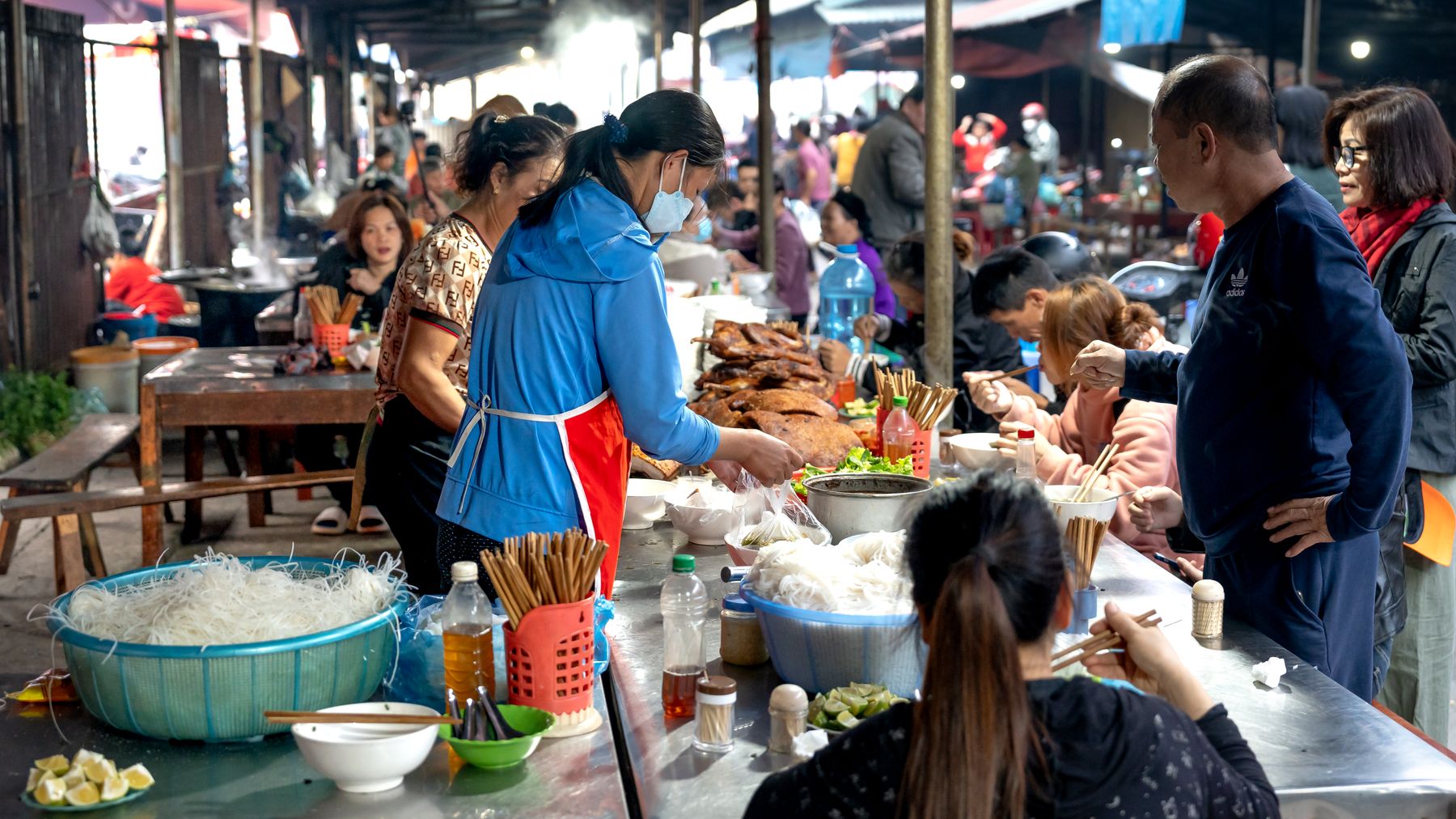
Photo by Quang Nguyen Vinh on Pexels
How to order and what to ask for
If you speak basic Vietnamese, ask for "Com lam voi muoi" (plain com lam with salt) to get the purest version. If the vendor has variants, ask about "Com lam tranh" (mixed variants—corn, pork, etc.).
Because com lam is made to order in most spots, be prepared to wait 5–10 minutes. The bamboo has to be pulled from the cooker, cooled slightly, and split open with a small paddle or knife. Vendors will often ask how much you want (one tube, two tubes?)—one is plenty unless you're very hungry.
Accept the salt packet they offer. Don't assume you need a dipping sauce. The roasted salt is the traditional pairing, and it lets the rice flavor come through. If they offer coconut cream or sweetened soy, that's a variant—not wrong, just different.
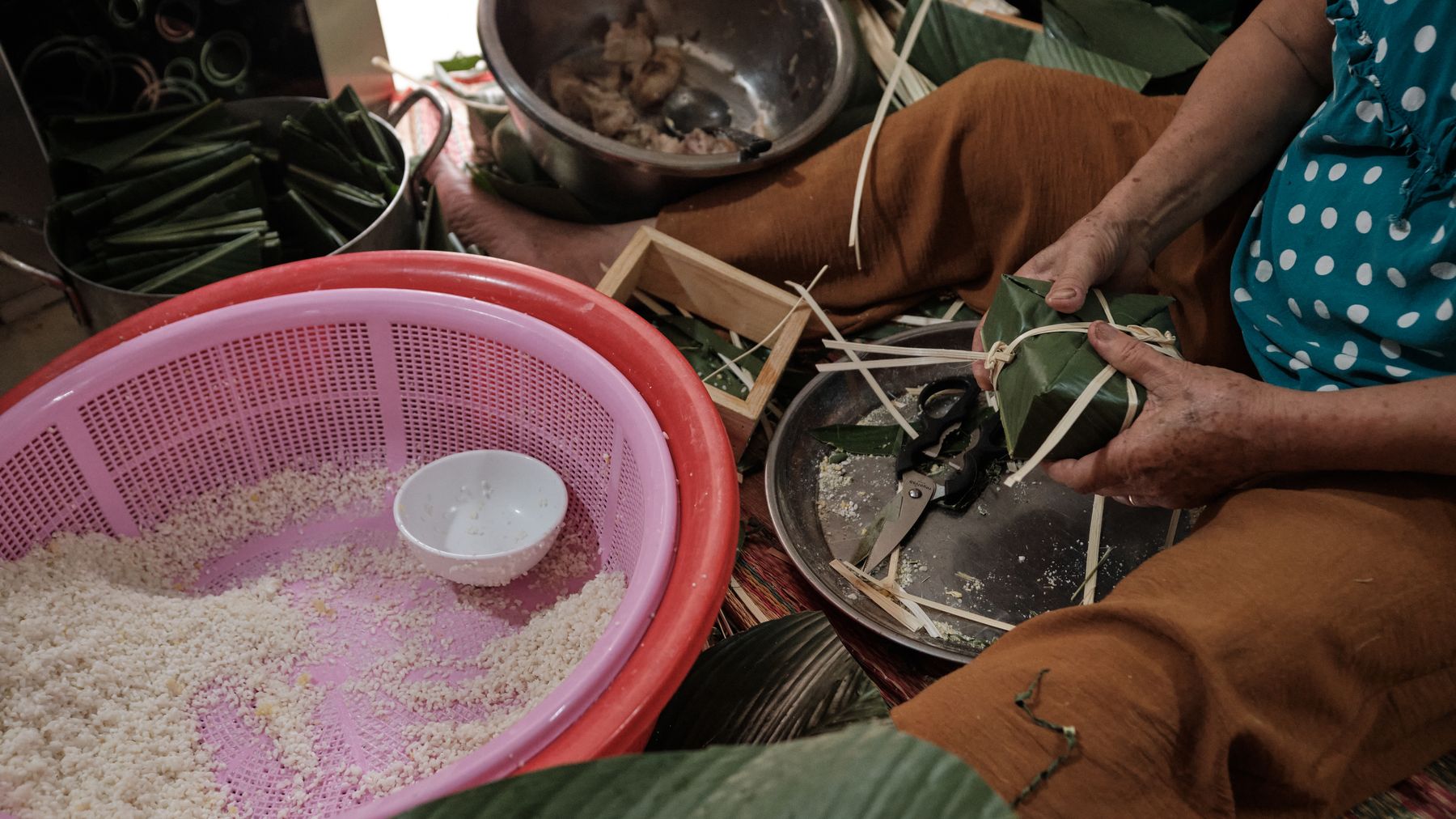
Photo by Nguyen Truong Khang on Pexels
When to go
Early morning (5:30–7 a.m.): Best for the plainest, least-adulterated com lam. Street vendors have the freshest bamboo and rice. This is when locals eat it, so crowds are mixed and unfussy. Temperature is cool, so the rice tastes less heavy.
Mid-morning (7–11 a.m.): Still good, though some street stalls are sold out by 9 a.m. Market and permanent stalls still have stock.
Lunch (11 a.m.–2 p.m.): Limited supply. Only market and seated venues are still open. Rice may be slightly less fresh because tubes are kept warm in steamers.
Evening: Only night-market vendors and a few permanent spots serve it. Less ideal, because com lam cools down and becomes denser—not unpleasant, but not as intended.
Seasonal note: Com lam is available year-round in Buon Ma Thuot, but it's slightly more popular and fresher-tasting in cooler months (October–February). Summer tubes can taste a bit flabby because heat affects the bamboo steaming.
Cost and practical notes
Expect to pay 15,000–35,000 VND per tube, depending on size, fill, and location. A tube is roughly equivalent to a small bowl of rice—enough for breakfast or a snack, but not a full meal. Pairing with a coffee or tea is common. Total spend for com lam + drink: 30,000–60,000 VND.
Most stalls are cash-only. Bring small notes. If you're not sure how to eat it, watch a local: you'll split the bamboo, use a small spoon or chopsticks to push the rice out, salt it, and eat. No special etiquette.
Come with an open mind about texture and simplicity. Com lam is not fancy, and Buon Ma Thuot versions are plainer than sweet-rice versions in tourist areas. That's the point—it's a working person's food, made to fuel a morning in the highlands.
Last updated · May 26, 2026 · independently researched, never sponsored.