What it is and why it matters
The Christ the King statue — "Tuong Chua Kito Vua" — stands on Nui Nho (Small Mountain) at the southern tip of Vung Tau, arms stretched wide over the East Sea. At 32 meters tall on a 10-meter pedestal, it's one of the tallest Christ statues in Asia, slightly taller than Rio's Cristo Redentor if you count the base. Construction started in 1974 and wasn't completed until 1993. The statue is hollow inside, with a narrow internal staircase that climbs all the way to the outstretched arms.
Vung Tau (붕따우 / 头顿 / ブンタウ) has long been the default beach escape for Saigon residents — close enough for a day trip, cheap enough for a weekend. The statue is the city's most recognizable landmark, visible from the beach below and from boats pulling into the harbor. It draws a mix of Catholic pilgrims and curious travelers, and on weekends the path up gets genuinely crowded.
Why travelers go
The main draw is the climb and the view from the top. You're not here for a museum experience or deep history — you're here to sweat up 800-odd steps through coastal scrubland, then stand at the feet of a massive concrete figure with a panoramic view of Vung Tau's coastline, the port, and the open water. On clear days, you can see container ships lining up on the horizon.
The interior staircase is the real surprise. It's tight — single-file in places — and spirals up through the statue's torso to a small opening at shoulder level. Standing inside the arms of a 32-meter statue, looking out through narrow slits at the sea below, is a genuinely unusual experience.
Best time to visit
The dry season from November through April is the safe bet. Skies are clearer, humidity is more bearable, and the steps aren't slick with rain. December to February is the sweet spot — temperatures hover around 27-30°C instead of the 34°C+ you'll get in April.
Avoid weekends and public holidays if you can. Saturday and Sunday mornings bring families from Saigon (사이공 / 西贡 / サイゴン) by the busload. A Tuesday or Wednesday morning means you might have the internal staircase nearly to yourself.
The site opens at 6:30 AM and closes at 5:00 PM. Arrive by 7:00 AM to beat the heat and the crowds. Late afternoon works too, but you'll be racing the closing time.
How to get there from Saigon
Vung Tau is roughly 95 km southeast of central Saigon. You have three practical options:
Hydrofoil (fastest, most fun)
Greenlines DP operates high-speed ferries from Bach Dang Wharf in District 1 to Vung Tau. The ride takes about 1 hour 30 minutes. Tickets run 250,000-350,000 VND one way depending on seat class. Book a day ahead on weekends — they sell out.
Bus
Futa Bus and Kumho Samco run coaches from Mien Dong bus station. Journey time is 2-2.5 hours depending on traffic. Tickets cost 80,000-130,000 VND. The Futa limousine service picks up from various points around the city and is worth the small premium.
Motorbike or car
Take the Ho Chi Minh City - Long Thanh - Dau Giay expressway, then Route 51 south. About 2 hours by car without traffic, though Friday evening departures can stretch that to 3+. A Grab car runs roughly 800,000-1,200,000 VND one way.
From Vung Tau's center, the statue is at the end of Ha Long Street on the Nui Nho peninsula. A local xe om (motorbike taxi) from the hydrofoil terminal costs around 30,000-50,000 VND, or grab a Grab bike for about the same.

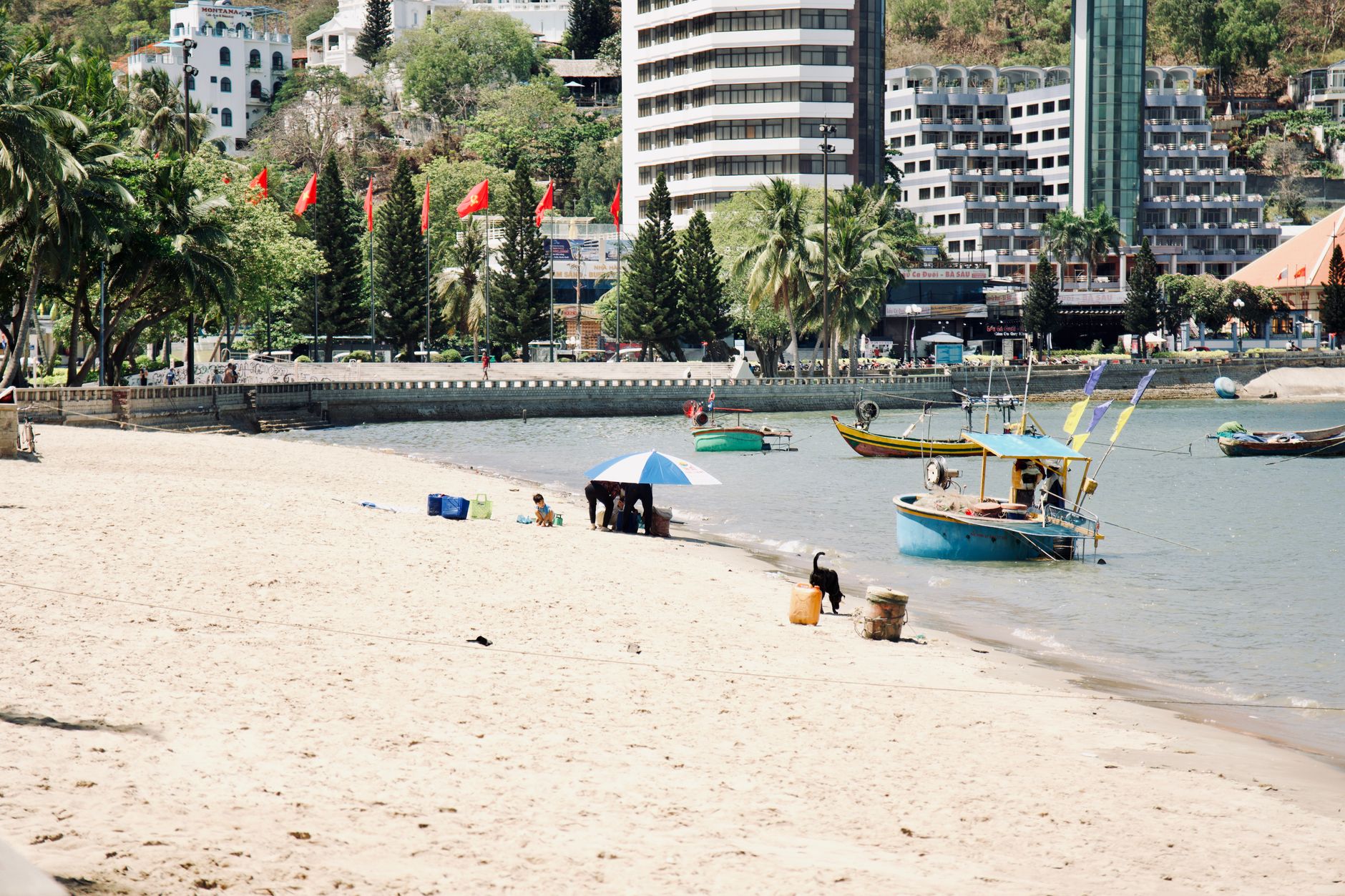
Photo by Cầu Đường Việt Nam on Pexels
What to do
Climb the 811 steps. The path starts from the base entrance on Ha Long Street. It's paved but steep in places. Wear proper shoes — flip-flops on sweaty concrete steps are a recipe for a bad day. The climb takes 20-30 minutes at a comfortable pace.
Go inside the statue. At the base platform, you'll find the entrance to the internal staircase. It winds up through 133 interior steps to the shoulder viewpoint. The passage is narrow and can feel claustrophobic — if tight spaces aren't your thing, the exterior platform view is almost as good.
Walk the coastal path. Before or after the climb, take the trail that loops around the lower slopes of Nui Nho. It connects to Bai Dau (Mulberry Beach) on one side and offers views of the fishing harbor. About 2 km round trip.
Visit the Niet Ban Tinh Xa pagoda. On the neighboring Nui Lon (Big Mountain), about 15 minutes away by motorbike, this Buddhist temple has a large reclining Buddha and quieter grounds. Good contrast to the Christ statue crowds.
Stop at the lighthouse. The old Vung Tau Lighthouse sits on Nui Nho as well, a short detour from the statue path. Built during the French colonial period, it's one of the oldest lighthouses in Vietnam and offers its own 360-degree view.
Where to eat nearby
Vung Tau is seafood territory. After the climb, head to Ganh Hao Street — a strip of open-air seafood restaurants where you pick your fish, crab, or prawns from tanks and they cook it however you want. A solid meal for two runs 300,000-500,000 VND.
For something specific to the area, look for "banh khot" — small crispy turmeric pancakes topped with shrimp, eaten with herbs and fish sauce. Banh Khot Goc Vu Sua on Nguyen Truong To Street is a local institution. A plate of 10-12 costs around 50,000-70,000 VND.
If you're heading back toward the ferry terminal, grab a "banh mi" from one of the carts near the market on Truong Cong Dinh Street. Vung Tau's version tends to be heavier on pate and chili than the Saigon style.
Where to stay
Budget guesthouses near Bai Truoc (Front Beach) start around 250,000-400,000 VND per night. Mid-range hotels along Thuy Van Street (Back Beach) run 600,000-1,200,000 VND. A few resort-style places near Long Hai or Ho Tram, further up the coast, go for 1,500,000-3,000,000 VND if you want something quieter.
For a day trip from Saigon, you don't need to stay at all — take the early hydrofoil out, climb the statue, eat seafood, and catch the afternoon ferry back.

Photo by Theodore Nguyen on Pexels
Practical tips locals would tell you
- Dress modestly. It's a religious site. Shoulders and knees covered, or you'll be turned away at the gate. They sometimes have loaner wraps, but don't count on it.
- Bring water. There are vendors at the base but nothing on the climb itself. A liter minimum.
- Entry is free. No ticket, no fee. Just show up.
- Shoes off inside. You'll be asked to remove footwear before entering the statue interior. Socks help on the hot concrete.
- The steps are uneven. Some are taller than others. Watch your footing, especially coming down.
Common mistakes to avoid
Don't come at midday. The climb is fully exposed in the middle section, and noon sun plus humidity will flatten you. Morning or late afternoon only.
Don't skip the interior climb. Most visitors look at the statue from below, take a photo, and leave. The inside is the whole point — it's what makes this different from just looking at a big statue.
Don't plan Vung Tau on a Saturday in summer. Half of Saigon has the same idea. The roads clog, the beaches pack out, and the statue path turns into a queue. Weekdays or dry-season weekends are far more pleasant.
Practical notes
Vung Tau works well as a day trip from Saigon or a one-night beach break. The statue takes about 2 hours total including the climb, interior visit, and photos. Pair it with a seafood lunch and some beach time, and you've got a full day without rushing.
Last updated · May 29, 2026 · independently researched, never sponsored.