Hanoi's best edible souvenirs aren't sold in airport gift shops. They come from narrow lanes in the Old Quarter, from family workshops that have been doing the same thing for three generations, and from seasonal harvests that only happen in autumn. Here's what's actually worth packing.
Com Vong — Green Rice from Vong Village
"Com" (young green rice, or "com vong" when referring to the Vong village variety specifically) is one of those things Hanoi (하노이 / 河内 / ハノイ) people get slightly emotional about. Harvested in September and October from glutinous rice paddies in Vong village — now absorbed into the western suburbs of Hanoi, around 8 km from Hoan Kiem — the grains are picked young, then roasted slowly over low heat until they turn a pale, dusty green with a grassy, faintly sweet smell.
You can find com sold in small paper packages or woven bamboo trays along Hang Than street and at stalls near Me Tri. Expect to pay around 60,000–100,000 VND per 200g depending on the grade. Fresh com doesn't travel especially well — it dries out within a few days — but vacuum-sealed versions are available and hold for several weeks. If you're buying for someone who cooks, fresh com is extraordinary stirred into a bowl of ripe banana and coconut cream, or eaten plain by the pinch.
Com season is short. Outside September–November, what you find is usually the dried shelf-stable version, which is fine but not the same thing.
Banh Com Hang Than — The Green Cake from One Street
Hang Than street, in the northern edge of the Old Quarter, is the address for "banh com" — small square cakes made from com, filled with sweetened mung bean paste and sometimes a sliver of candied winter melon, wrapped in green banana leaf. They're soft, mildly sweet, with a chew that falls somewhere between mochi and a dense rice cake.
Several shops on Hang Than make banh com, but Nguyen Ninh (no. 11 Hang Than) is the one that gets mentioned most consistently by Hanoians, not tourists. A box of 6 runs about 45,000–60,000 VND. They keep for two to three days at room temperature, longer refrigerated. Carry them in your hand luggage — they're fragile in checked bags.
These are a genuinely Hanoi-specific thing. You'll find approximations elsewhere in Vietnam (베트남 / 越南 / ベトナム), but banh com made with real Vong com, from a Hang Than shop, tastes different enough that it's worth making the trip to the street.
Lotus Tea — But the Real Kind
"Tra sen" (lotus tea) is Hanoi's most storied drink ingredient, and one of the city's most copied exports. The genuine article is made by packing green tea leaves inside lotus flowers overnight — sometimes for multiple nights — so the tea absorbs the floral scent. A single batch of high-grade tra sen can involve hundreds of flowers and weeks of labor, which is why 100g of the serious stuff costs 500,000–1,500,000 VND or more.
The cheaper versions you'll see everywhere (50,000–80,000 VND tins at tourist shops) are usually sprayed with lotus fragrance rather than slow-scented the traditional way. Not terrible, but not the same. If you want the real thing, look at specialty tea shops in the Old Quarter — Dinh Tien Hoang street and the lanes around Hang Gai have reputable sellers — or ask at Dong Xuan Market for vendors who can tell you the origin.
Loose-leaf tra sen travels well, stays fresh for months sealed, and packs light. It's the one Hanoi food souvenir that survives long-haul flights without issue.
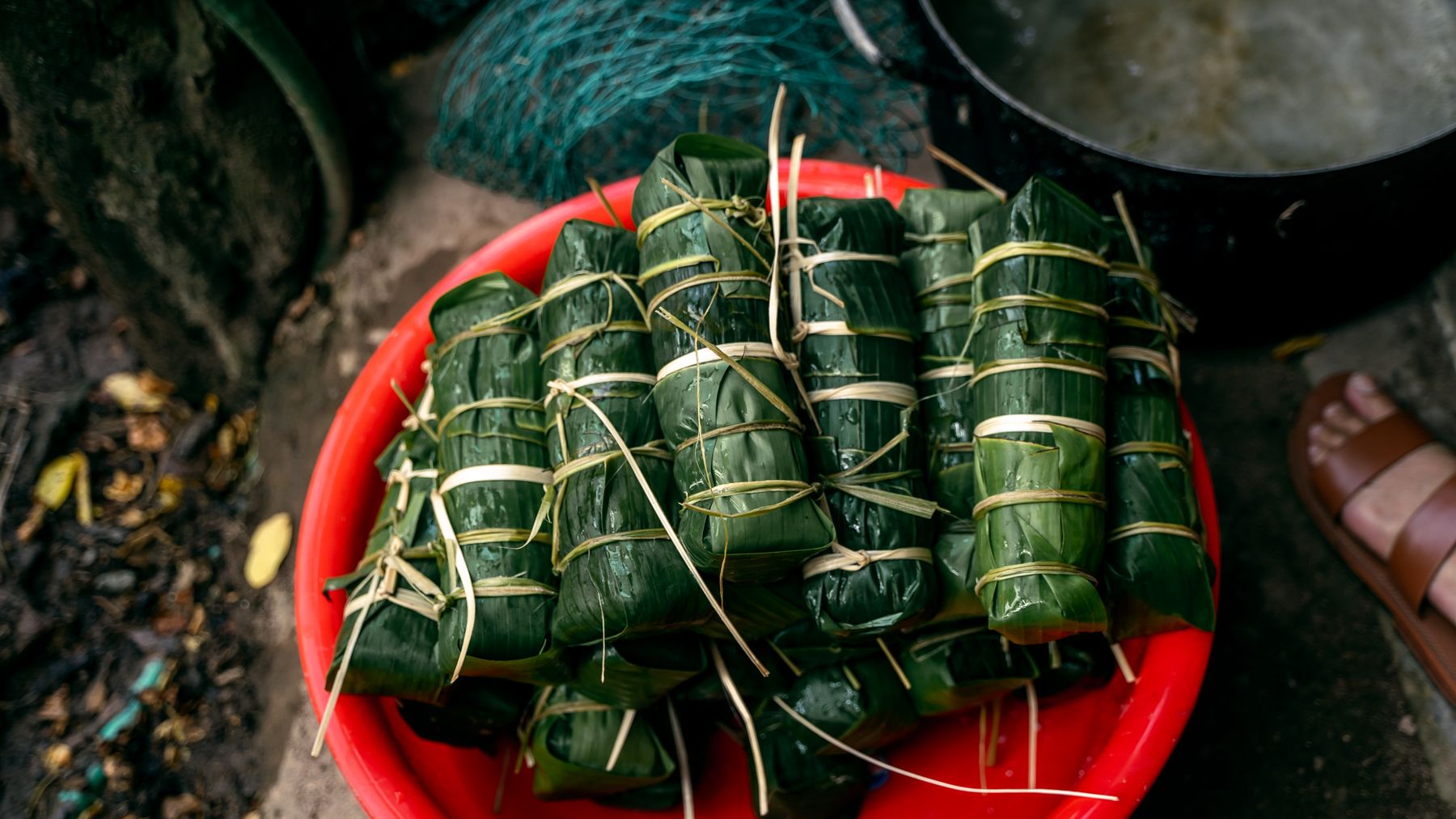
Photo by Vietnam Tri Duong Photographer on Pexels
Nem Chua — Fermented Pork, Handle with Care
"Nem chua" (Vietnamese fermented pork rolls) from Hanoi differ slightly from the southern versions — the northern style tends to be less sweet, with more pronounced sourness and a firmer texture. They're sold in small rolls wrapped in banana leaf, often with a chili tucked inside.
Here's the honest caveat: nem chua is a perishable fermented product. It keeps two to three days at room temperature, up to a week refrigerated. Taking it across international borders in checked luggage risks both spoilage and customs confiscation. It's a great gift if you're traveling within Vietnam, or if your flight home is short and you're confident about the recipient's fridge situation. For international travel, skip it unless you're eating it on the plane.
For local gifting — bringing something back from Hanoi to Saigon, Da Nang, or Hue — nem chua from the Old Quarter shops is a solid move.
Banh Chung — Buy It at Tet, Not Year-Round
"Banh chung" (square sticky rice cake filled with pork and mung bean, wrapped in dong leaves) is technically available in Hanoi year-round, but it's a Tet food. Buying it in July and handing it to someone as a Hanoi souvenir will get you a politely confused reaction. If you happen to be in Hanoi in late January or early February, banh chung purchased from a maker who wraps and boils their own — rather than a repackaged commercial version — is a meaningful thing to bring home. Dong Xuan Market vendors usually have several options during the Tet season.

Photo by Nguyen Ngoc Tien on Pexels
What to Skip
Instant pho packets with a Hanoi label, generic "Vietnamese coffee" tins sold in tourist shops near Hoan Kiem, and anything in a tin decorated with the One Pillar Pagoda that doesn't name a specific producer. These exist to fill suitcases, not to represent what the city actually tastes like.
Practical Notes
Hang Than street is walkable from the Old Quarter's northern edge — about 10 minutes on foot from Dong Xuan Market. For lotus tea, budget time to compare two or three shops and ask questions; a seller who can't explain their sourcing is a sign to walk on. Sealed dry goods like tea and dried com travel internationally without issue; fresh cakes and fermented pork are domestic gifts only.
Last updated · May 29, 2026 · independently researched, never sponsored.