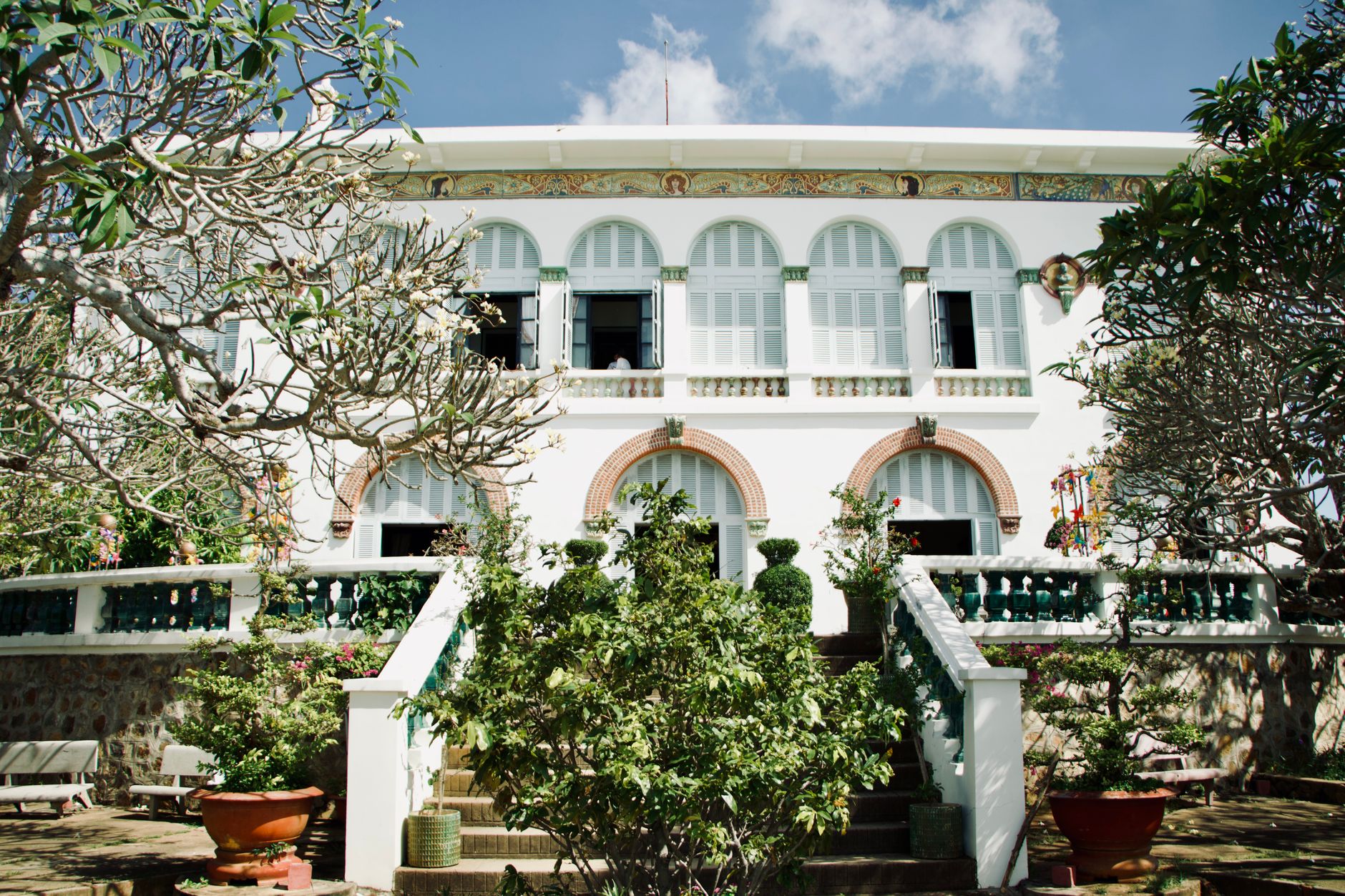
Hue does a lot of things well, but "banh loc" — soft, translucent tapioca dumplings stuffed with whole shrimp and pork belly, dressed in rendered onion oil and a punchy fish sauce — might be the dish that best captures what this city's food is about: restrained, precise, a little obsessive about texture.
The dumpling wrapper is made from tapioca starch, which gives it that characteristic chew and near-translucency when steamed or boiled. Inside: a whole shell-on shrimp and a small piece of braised pork. You eat it with a dipping sauce cut with lime and chili. That's the whole dish. The variation between a great bowl and a mediocre one comes down to wrapper thickness, shrimp freshness, and the quality of that onion oil — and the gaps between places are wider than you'd expect.
Here's where to go, what to pay, and one place that's coasting on its reputation.
Quan Banh Loc Ba Cu — The Benchmark
If you eat banh loc at one place in Hue (후에 / 顺化 / フエ), make it Ba Cu. The stall has been operating off Nguyen Binh Khiem street near the An Cuu market area for decades, and the owner's daughter now runs most of the day-to-day. The wrappers here are thinner than the tourist-district versions — almost see-through — and the shrimp inside are noticeably fresher, with a snap rather than a mush. A plate of six dumplings runs around 30,000–35,000 VND. Open roughly 6:30 AM to 11 AM; they sell out, so arrive before 9 if you can.
Banh Loc La Chuoi — The Banana Leaf Version
There are two main styles in Hue: plain steamed ("banh loc tran") and the banana-leaf wrapped version ("banh loc la"). If you haven't tried the leaf-wrapped kind, it's worth a detour. The banana leaf imparts a faint grassy fragrance during steaming and keeps the dumpling moister. A small stall on Chi Lang street — no formal name, just look for the woman with the steamer cart near the intersection with Tran Cao Van — sells them at 5,000 VND per piece. She's usually set up between 7 AM and noon.
Quan Co Tuyen — Best for the Dipping Sauce
A small shopfront on Nguyen Du street, Co Tuyen is known among locals less for the dumplings themselves — which are solid but not exceptional — and more for the dipping sauce. The nuoc cham here is darker and more savory than most, with a higher fish sauce ratio and barely any sweetener. It suits people who find the standard Hue dipping sauce too sweet. Price is around 35,000 VND for a serving of eight. Opens at 7 AM, closes when sold out, usually around 1 PM.

Photo by Pew Nguyen on Pexels
Hang Me Me — Good for Banh Loc Alongside Other Dishes
If you want to eat banh loc as part of a broader Hue breakfast spread — alongside "banh nam" (flat steamed rice cakes) and "banh it tran" (glutinous rice dumplings) — Hang Me Me on Truong Dinh street is the move. It's busier and more chaotic than the dedicated stalls, but the variety is useful if you're traveling with people who want options. Banh loc here comes in at 30,000 VND for six pieces. Opens at 6 AM, which makes it a good early stop before the Citadel.
Lac Thien / Lac Thanh Area Stalls — Skip This
This is the honest part. The cluster of stalls around the Lac Thien and Lac Thanh restaurant area near Dinh Tien Hoang street has been on every tourist list for years — partly because of the family's history and partly because of aggressive recommendation by guesthouses nearby. The banh loc here is fine, but it's priced at 50,000–60,000 VND for a serving that locals would pay 30,000 for elsewhere, the wrappers are thicker and slightly gummy, and the shrimp quality has slipped noticeably in recent years. You can eat there without regret if you're already in the area, but don't plan your morning around it.
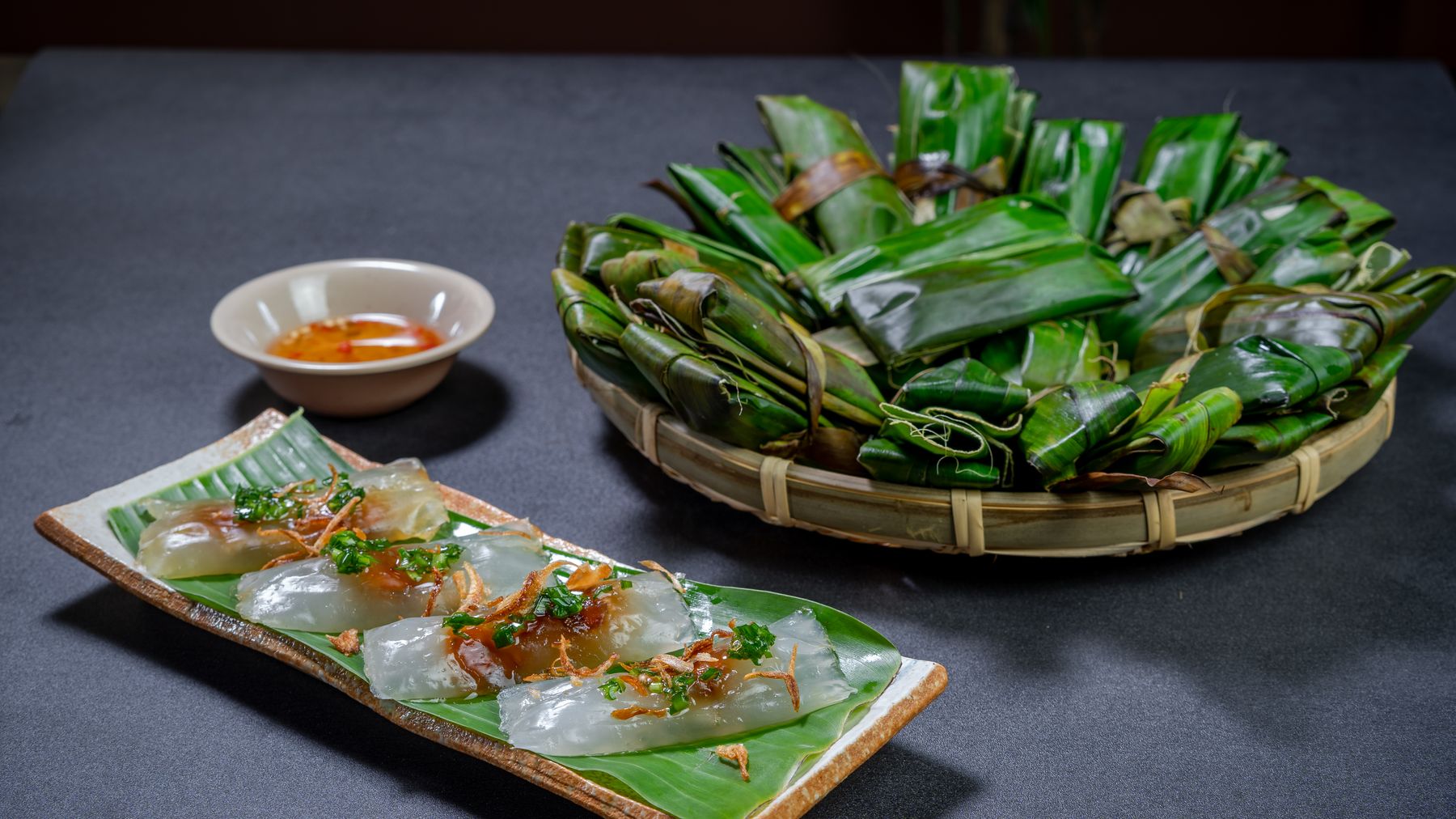
Photo by Hải Nguyễn on Pexels
Banh Loc Nuong — The Grilled Outlier
Some stalls near the Dong Ba market area offer a grilled version, "banh loc nuong," where the banana-leaf-wrapped dumpling is finished over charcoal. It's not traditional in the strictest sense, but the slightly charred exterior and smoky wrapper are hard to argue with. A vendor near the market's north entrance sells them at 6,000 VND per piece. Worth trying as a second stop if you've already done a steamed version earlier in the day.
What Makes Hue Banh Loc Different
Hue has a broader repertoire of rice and tapioca-based small dishes than almost anywhere else in central Vietnam (베트남 / 越南 / ベトナム) — a legacy of the imperial court's obsession with elaborate, small-portioned food. Banh loc sits alongside dishes like "banh beo" (steamed rice cakes topped with dried shrimp) and "banh nam" as part of a family of snacks that locals eat for breakfast or as a mid-morning meal, not as street food novelties. The tapioca wrapper here uses a specific ratio of tapioca to rice flour that differs from Saigon or Hanoi versions — Hue bakers lean harder into tapioca, which gives the chew its particular elasticity.
The onion oil drizzle — moz hanh, rendered from thinly sliced shallots — is non-negotiable. If a place skimps on it, the dish falls flat.
Practical Notes
Most banh loc stalls in Hue are morning-only operations; plan to eat between 7 AM and 11 AM or you'll find half of them sold out. Budget 30,000–40,000 VND per serving at a local stall. If you're based near the Citadel, the Nguyen Binh Khiem and Nguyen Du area spots are an easy 10–15 minute walk south.
Last updated · Aug 15, 2026 · independently researched, never sponsored.