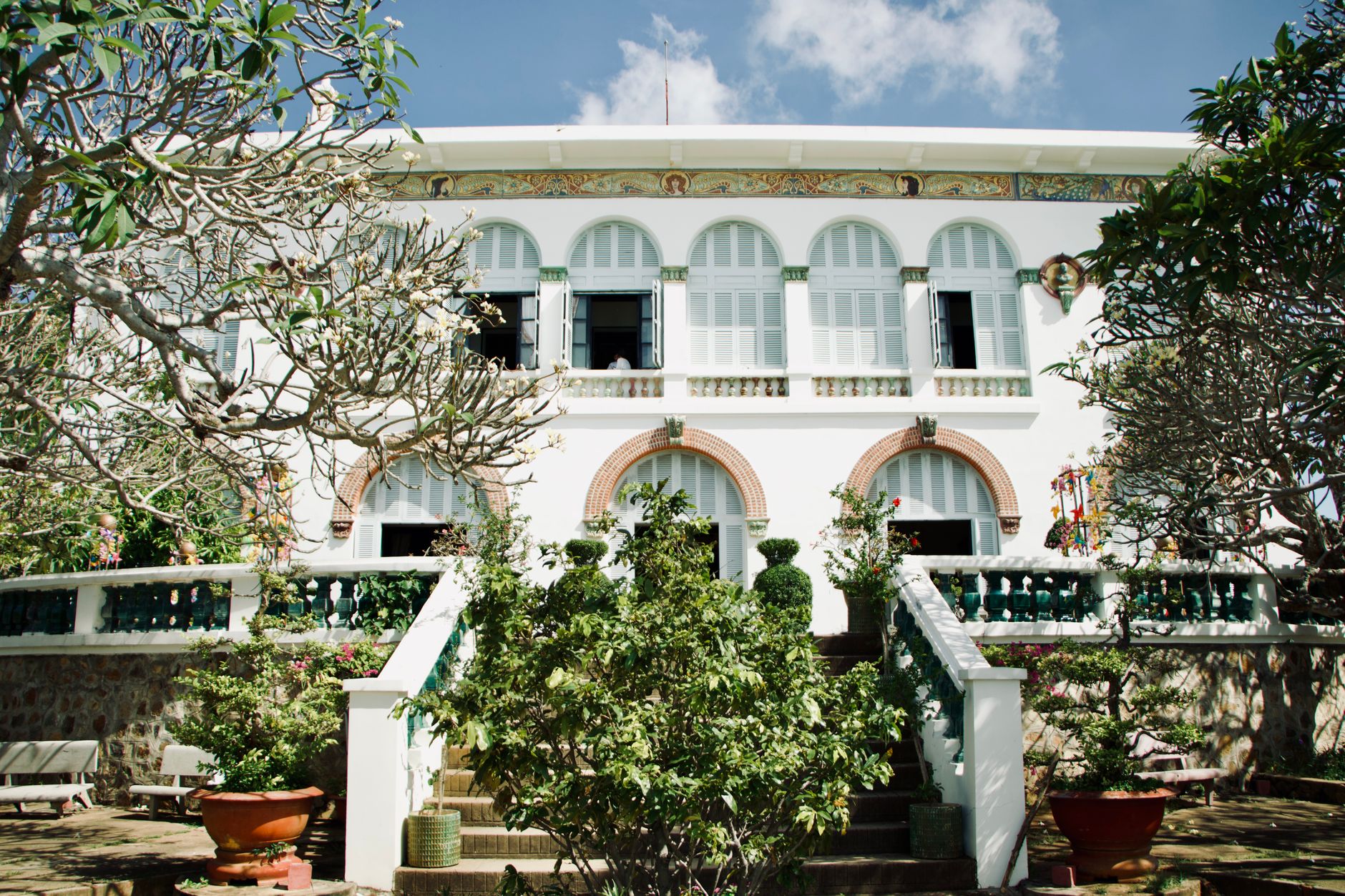
Hue has a reputation for fiery food — "bun bo hue", fermented shrimp paste, peppery broths. But the city's dessert culture is just as serious, rooted in royal-court traditions and neighbourhood stalls that have barely changed in decades. This route covers five stops across the city, each one a different register of sweet.
Stop 1 — Che Hen: The Sweet-Soup Baseline
Start on Hung Vuong Street, where a cluster of "che" stalls operates from around 2pm until they sell out — usually by 8pm. Che is the catch-all term for Vietnamese sweet soup, and Hue (후에 / 顺化 / フエ)'s version leans more complex than what you'll find in Saigon or Hanoi. Look for "che dau vang" (split mung bean with coconut cream and pandan jelly), "che bot loc" (tapioca pearls with banana in a translucent wrapper), and "che hat sen" (lotus seed in a thin ginger syrup).
A bowl runs 15,000–25,000 VND depending on what you order. The stalls here don't have English menus — just point at whatever looks good in the tray. Sit on a plastic stool, eat slowly, and order a second bowl.
Stop 2 — Dong Ba Market: Banh Cakes and Mooncakes
Dong Xuan Market gets all the attention from tourists in the north, but Dong Ba Market in Hue is the real working food market of the city. Head to the covered section near the river entrance where vendors sell traditional "banh" by the piece.
"Banh it tran" — small, dark rice-flour dumplings filled with mung bean and shrimp — are technically savoury, but the sweet version with just bean paste blurs the line agreeably. "Banh phu the", sometimes called husband-and-wife cake, is the one to prioritise: a translucent, slightly chewy square made from tapioca starch, filled with mung bean and coconut, folded in a palm-leaf parcel. It's delicate and not very sweet by most standards, which is exactly the point.
If you're visiting in the weeks around the Mid-Autumn Festival ("Tet (뗏 (베트남 설날) / 越南春节 / テト) Trung Thu"), the market fills with mooncake vendors. Hue-style mooncakes tend toward the baked variety with lotus paste or mixed-nut fillings — richer and denser than the flaky southern versions. Prices start at around 20,000 VND per piece for market stalls; branded boxes from established shops can run 150,000–400,000 VND per box.

Photo by Nguyễn Thị Thảo Hà (Ha Nguyen) on Pexels
Stop 3 — Tinh Tam Lake Area: Lotus-Seed Snacks
About 1.5 km northwest of Dong Ba, the area around Tinh Tam Lake has a handful of low-key snack sellers who specialise in lotus-based sweets — which makes sense given that lotus cultivation has been central to Hue's food culture for centuries. Look for roasted lotus seeds sold in paper cones (around 10,000 VND) and "mua hat sen" — fresh lotus seeds eaten raw and slightly sweet, available from May to August.
While you're in the area, it's worth knowing that lotus tea, a scent-infused tea made by packing green tea leaves inside lotus flowers overnight, is closely associated with Hue's imperial past. Several small tea houses near here serve it for 30,000–50,000 VND a cup, usually alongside a plate of sesame rice crackers or "mut" (candied fruit).
Stop 4 — Vo Thi Sau Street: The Che Ice Cream Hybrid
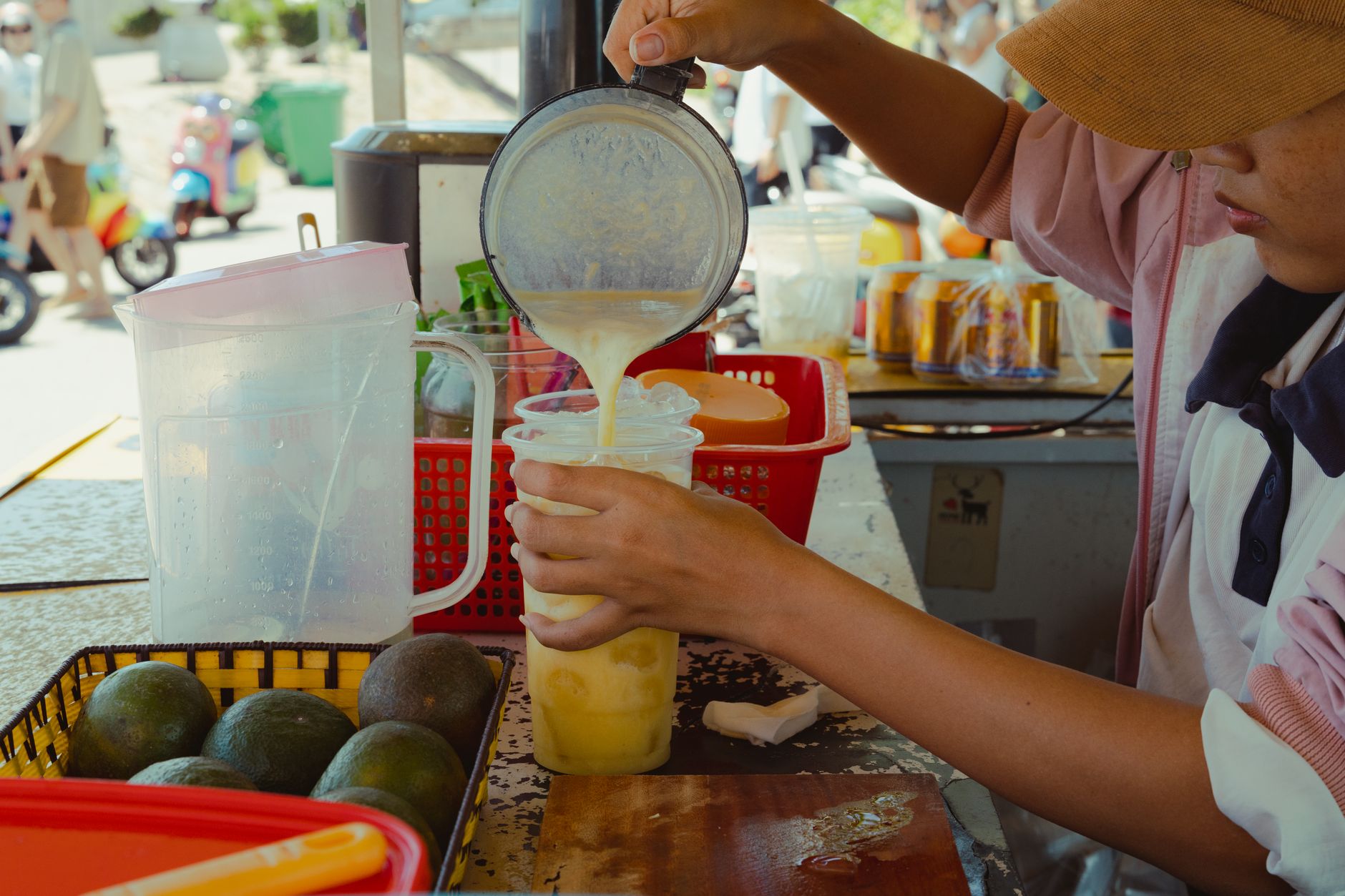
On Vo Thi Sau Street, a 10-minute walk from the Imperial Citadel, you'll find "kem che" — a layered dessert cup that stacks shaved ice, two or three types of che, coconut milk, and a scoop of pandan or coconut ice cream on top. It's an informal, no-fuss thing sold from push-carts and small shopfronts, and it's what most locals are eating on a hot afternoon rather than anything more elaborate.
This is a good place to try "che bap" (sweet corn che) if you haven't already — it sounds odd but it's one of the more approachable styles for first-timers. A full kem che cup costs 20,000–35,000 VND.

Photo by Jimmy Liao on Pexels
Stop 5 — Diep Son or Similar Modern Dessert Cafe: The Contemporary Layer
Hue has developed a small but solid tier of modern dessert cafes over the last few years, aimed at younger locals rather than tourists. Places like Diep Son (on Nguyen Cong Tru Street) serve matcha "banh" hybrids, taro-filled mochi, and Vietnamese coffee affogatos alongside traditional items. The aesthetic is Instagram-friendly, the prices are slightly higher (40,000–70,000 VND per item), and the air-conditioning is a welcome end to an afternoon on foot.
These cafes often do their own versions of "banh chung"-inspired sweets around Tet — glutinous rice and mung bean in updated form. Worth a visit if you want to see how Hue's food culture is being reinterpreted rather than just preserved.
Practical Notes
Do this route on foot or by bicycle — the five stops form a loose loop of roughly 4–5 km through the city centre. Late afternoon (from 3pm) is the best window: the street stalls are open, the heat has dropped slightly, and you won't be competing with lunch crowds. Bring small bills; most stalls don't have change for anything larger than 100,000 VND.
Last updated · May 29, 2026 · independently researched, never sponsored.