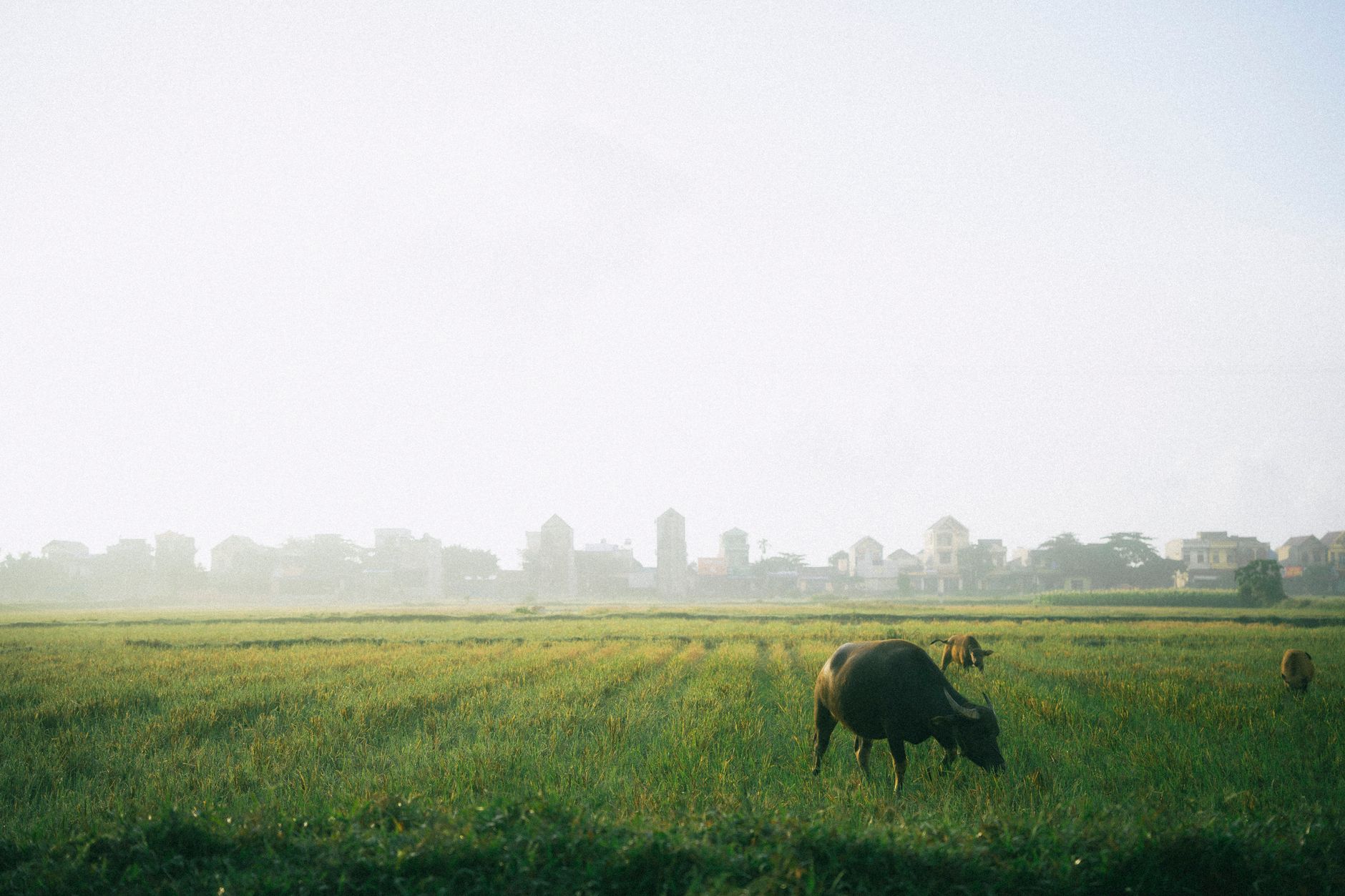
Long Xuyen sits on the west bank of the Mekong, about 190 km from Saigon, and most travelers drive straight past it on the way to Chau Doc or Ha Tien. That's a mistake. As the capital of An Giang province, it has a food culture anchored to the rhythms of the river — freshwater fish, fermented condiments, and a morning market energy that winds down before 9 a.m. if you're not paying attention.
Start at Cho Long Xuyen Before Sunrise
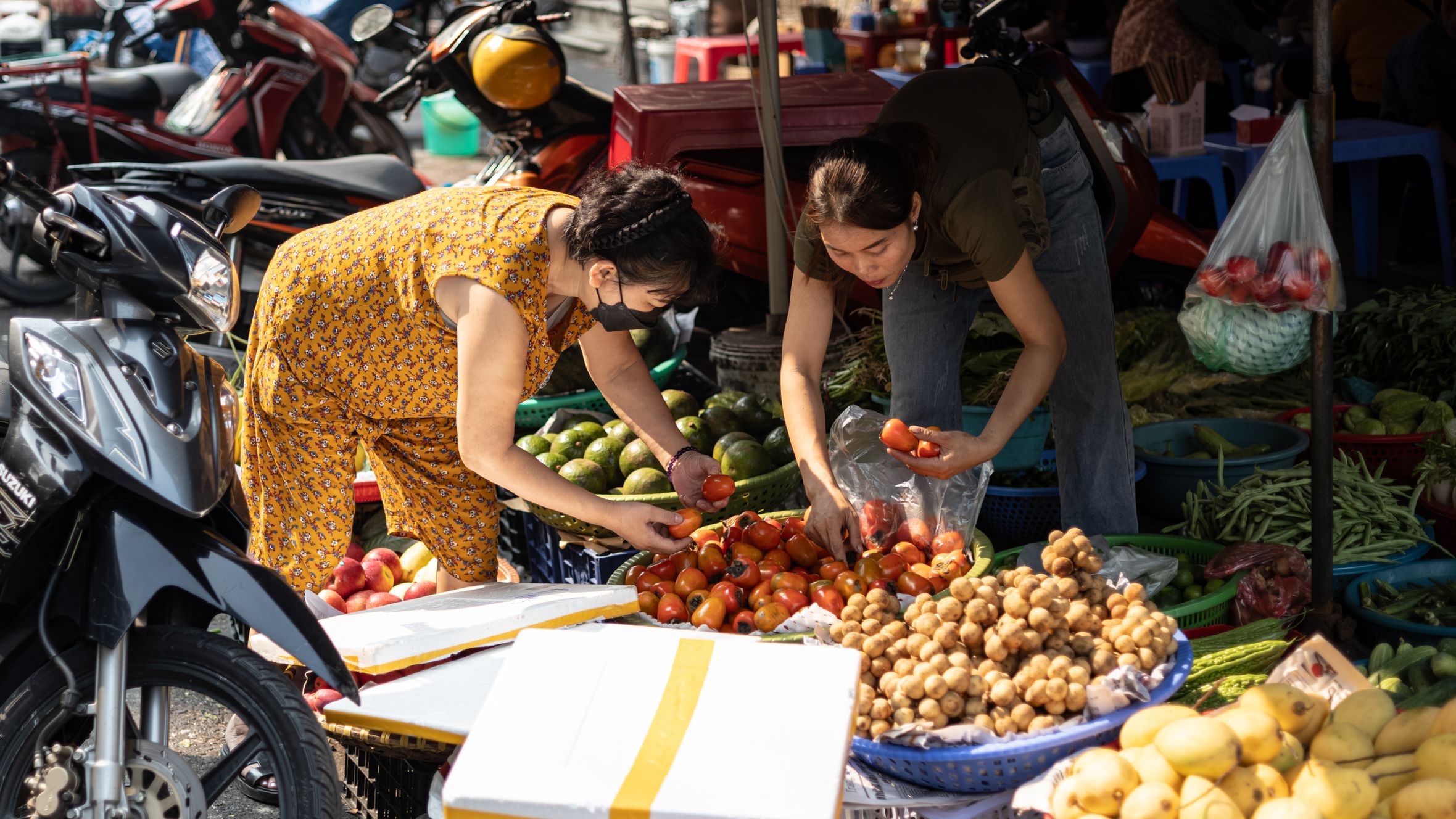
Long Xuyen Market (Cho Long Xuyen) on Nguyen Hue Street is the obvious starting point. The outer ring of the market is where the serious eating happens. Vendors set up on low plastic stools under fluorescent lights, and by 5:30 a.m. the best bowls are already going fast.
What you're here for first is "bun ca" — rice vermicelli in a light, slightly sweet fish broth, topped with chunks of freshwater fish, usually snakehead or catfish, with a few slices of fried tofu and a fistful of fresh herbs. The An Giang version leans toward a clear broth rather than the tomato-tinted style you'll find up north. It's subtle in a way that takes one or two bowls to appreciate. A serving runs 25,000–35,000 VND.
If the stall has a handwritten sign mentioning "ca loc," stay put. Snakehead fish (ca loc) is the prestige ingredient of the Mekong Delta (메콩 델타 / 湄公河三角洲 / メコンデルタ), and An Giang's snakehead comes from flooded rice fields rather than aquaculture ponds — the difference in flavor is real.
Ca Loc Nuong: The Dish That Defines An Giang
"Ca loc nuong" — grilled snakehead fish — is the dish locals are most proud of, and for good reason. The whole fish is packed in a thick layer of salt and grilled directly over charcoal until the skin chars and the flesh steams inside. You eat it the way you'd eat a Delta-style spring roll: peel off pieces of fish, layer them onto rice paper with fresh herbs, cucumber, green banana, star fruit, and roll it up before dipping in a fermented fish sauce called "mam nem" thinned with pineapple juice.
It takes practice to get the rolling right. Don't worry about it. The point is the fish.
For ca loc nuong, skip the market and look for dedicated restaurants near the riverfront on Tran Hung Dao or along the An Long canal stretch south of the city center. Expect to pay 150,000–250,000 VND for a whole fish serving two people comfortably.
Hu Tieu and the Khmer-Chinese Overlap
An Giang has a significant Khmer and ethnic Chinese population, and that shows up at the table. "Hu tieu" here takes a slightly different form than the Saigon (사이공 / 西贡 / サイゴン) or My Tho versions — the broth often incorporates dried squid and shrimp for depth, and the garnishes tend to include more bean sprouts and less pork fat. You'll find it served dry (kho) or in soup, and the dry version with a small bowl of broth on the side is worth ordering at least once.
The Chinese-Khmer influence also shows up in the availability of "banh canh" with crab (banh canh cua) at the market — a thicker noodle soup that's more commonly associated with central Vietnam but appears here in a distinctly southern, sweeter form.

Photo by Quang Nguyen Vinh on Pexels
Mam: Fermented and Unapologetic
No discussion of An Giang food is complete without "mam," the province's fermented fish paste tradition. An Giang is one of the primary production regions for mam in Vietnam, and the varieties on offer at Cho Long Xuyen are worth spending time with even if you're not buying.
Mam ca loc (fermented snakehead), mam ca sat (a smaller species), and mam ruoc (shrimp paste) all appear. Vendors often offer small samples. The smell is confrontational. The flavor, once you get past the nose, is umami in its most concentrated form.
Mam is a key ingredient in several local dishes — including a lau mam (fermented fish hotpot) that's the definitive An Giang communal meal. You'll need to seek out a sit-down restaurant rather than a market stall for lau mam. It's not fast food. Budget 80,000–120,000 VND per person at a local spot.
Banh Mi and Afternoon Eating
The town has a solid "banh mi" culture that picks up in the afternoon. The Long Xuyen style leans toward a generous smear of pork liver pate with pickled daikon, cucumber, and a ladle of soy-dark gravy — closer to the Saigon style than anything you'd find in Da Nang or Hoi An. Vendors set up near Nguyen Hue and Tran Hung Dao intersections from about 3 p.m.
For something to wash it all down, iced "ca phe sua da" from a pavement stall costs 15,000–20,000 VND and is brewed properly strong — An Giang residents drink their coffee seriously.

Photo by Vietnam Tri Duong Photographer on Pexels
Getting Around and Timing
Long Xuyen is most easily reached by bus from Saigon's Mien Tay station (about 3.5 hours, 90,000–110,000 VND). There are also buses from Can Tho (roughly 1.5 hours). Once in town, xe om or Grab bikes handle everything — the market district, the riverfront, and the restaurant clusters are all within a few kilometers of each other.
Arrive on an empty stomach and do the market before 8 a.m. By mid-morning the best stalls are sold out.
Practical Notes
Long Xuyen works well as a single overnight stop if you're moving between Can Tho and Chau Doc — the town has several clean, affordable guesthouses near the market for 250,000–450,000 VND a night. The food scene is almost entirely in Vietnamese with no English menus, so pointing and a few phrases go a long way. Bring small bills; most stalls don't carry change for 200,000 VND notes.
Last updated · May 29, 2026 · independently researched, never sponsored.