
What Rung Thong Yen Minh actually is
Rung Thong Yen Minh is a sprawling pine forest that carpets the hills around Yen Minh town in the northeastern highlands. The trees here — mostly Pinus kesiya — were planted decades ago as part of reforestation programs, and they've since grown into dense, quiet woodland that blankets the ridgelines on both sides of the main road. The forest sits at roughly 1,000-1,200 meters elevation, which keeps it noticeably cooler than the lowlands year-round.
For years this was just the scenery you drove through on the way to Dong Van or the Ma Pi Leng area. But the forest has gradually become a destination on its own, especially for domestic travelers from Hanoi looking for something low-key. There's no ticket booth, no tourist infrastructure to speak of — just pine trees, red-dirt trails, and fog rolling through the canopy most mornings.
Why travelers actually come here
The short answer: atmosphere. Rung Thong Yen Minh doesn't compete with Ha Giang's dramatic karst peaks or terraced valleys. What it offers instead is a kind of quiet that's hard to find elsewhere in northern Vietnam (베트남 / 越南 / ベトナム) — the sound of wind through pine needles, the smell of resin, soft ground underfoot. It's a place to slow down between longer driving days.
Photographers come for the early morning light filtering through the trees, especially when mist is low. Motorbike tourers treat it as a rest stop or camping spot along the Ha Giang loop. And a growing number of Hanoi (하노이 / 河内 / ハノイ) weekenders drive up specifically for the forest, pitch a tent, make camp coffee, and leave the next day.
Best time to visit
The forest looks good year-round, but timing matters for comfort.
October through December is the sweet spot. Skies clear up after the monsoon, temperatures hover around 12-18°C during the day, and the light is excellent — low and golden through the pines. Mornings are cold enough to see your breath.
January and February bring the coldest weather. It can drop below 5°C at night, and frost isn't uncommon. If you're camping, bring serious insulation. The upside: almost no other visitors.
March through May warms up gradually and wildflowers appear along the forest floor. Pleasant for walking but hazier skies.
June through September is monsoon season. The forest is intensely green and atmospheric, but trails get muddy and leeches come out. Road conditions between Tuyen Quang city and Yen Minh can deteriorate. Rideable, but expect delays.
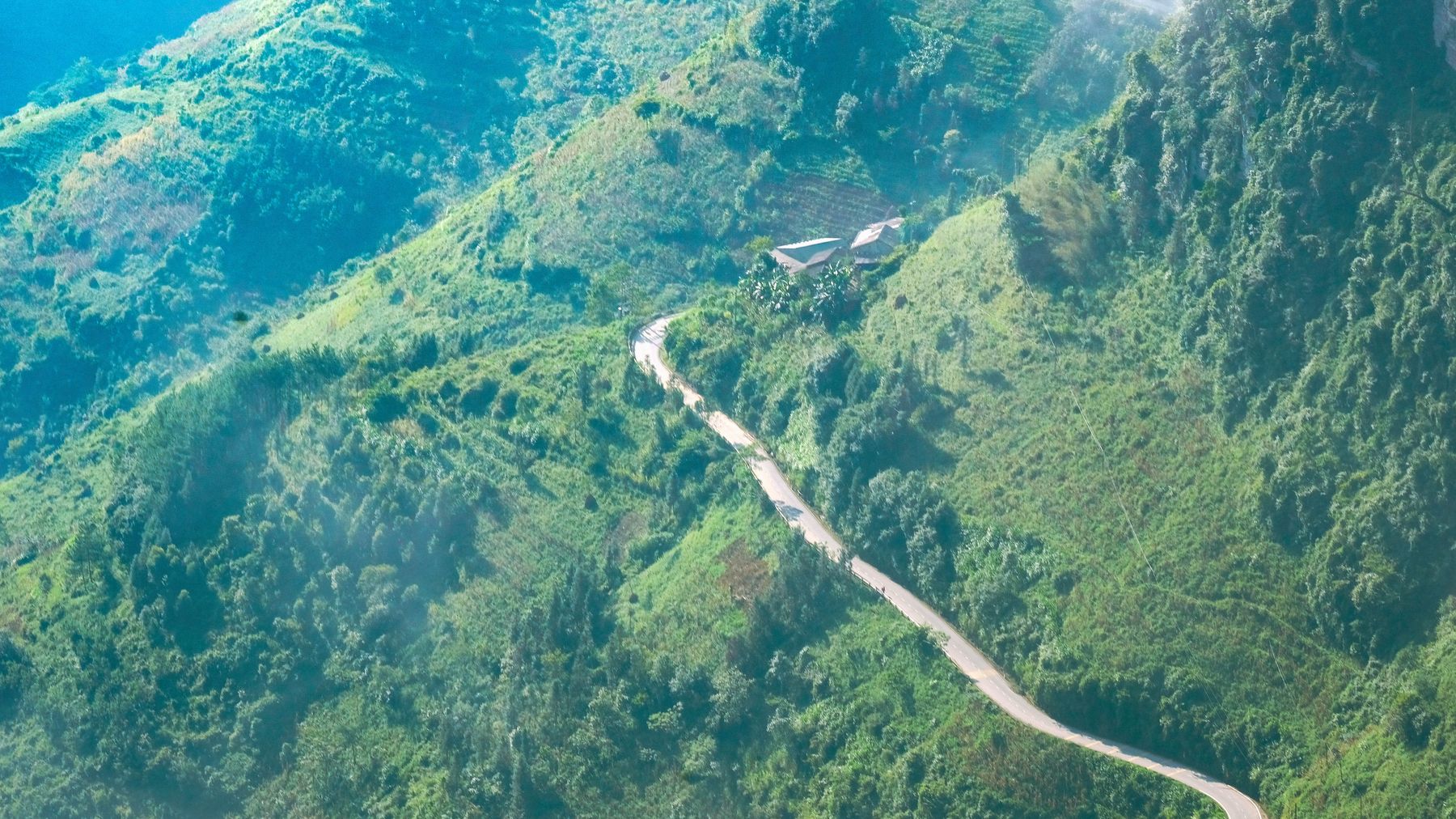
Photo by Du Tử Mộng on Pexels
How to get there
The practical starting point is Tuyen Quang city, which sits about 160 km south of Yen Minh town.
From Hanoi to Tuyen Quang: buses depart from My Dinh bus station roughly every hour. The ride takes about 3-3.5 hours and costs 120,000-150,000 VND. You can also drive — it's around 130 km via the expressway and QL2.
From Tuyen Quang city to Yen Minh: this is the longer leg. By motorbike, figure 4.5-5.5 hours covering roughly 160 km on QL2 and mountain roads heading north through Ha Giang city and onward. The road quality is decent but winding, with sharp elevation changes past Ha Giang city. If you're not riding yourself, arrange a car through your hotel in Tuyen Quang — expect to pay 1,500,000-2,000,000 VND for a private transfer. There's no convenient direct bus to Yen Minh from Tuyen Quang; you'd need to transit through Ha Giang city, where local buses continue to Yen Minh (about 90 minutes, 80,000 VND).
Most travelers doing the Ha Giang loop pass through Yen Minh naturally — the pine forest is right along the route, impossible to miss about 3-5 km before you reach Yen Minh town center.
What to do
Walk the forest trails
No marked hiking routes exist, but worn paths lead into the trees from several points along the main road. The most accessible entry is about 3 km north of Yen Minh town, where you'll see motorbikes parked along the shoulder and a visible trail heading uphill. Thirty minutes of walking gets you deep enough to lose sight of the road. Wear proper shoes — the ground is uneven, rooty, and slippery when wet.
Camp overnight
Flat ground among the pines makes for excellent camping. Bring your own gear — there's nowhere to rent locally. The best spots are slightly uphill from the road, where the trees thin out enough for a tent but still provide wind cover. No facilities, no water source — pack in everything and pack out your trash. Fires are technically prohibited during dry season, and locals will tell you so.
Catch the morning fog
Set an alarm. Between 5:30 and 7:00 AM, especially from October through December, mist rolls through the canopy and the light does something genuinely special. This is the image you've seen on Vietnamese social media. It lasts maybe 45 minutes before the sun burns it off.
Drive to Yen Minh Sunday market
If your visit falls on a Sunday, the weekly market in Yen Minh town is worth a couple of hours. Hmong, Tay, and Dao communities come down from surrounding villages to trade produce, livestock, and textiles. It's a working market, not a tourist setup — arrive before 9 AM for the full scene.
Side trip to Dong Van or Lung Cu
Yen Minh sits at the gateway to the Dong Van Karst Plateau. From here, Dong Van town is about 45 km north (1.5 hours by motorbike), and the landscape shifts from pine forest to exposed limestone. If you have an extra day, pushing onward to the Ma Pi Leng pass makes sense.
Where to eat nearby
Yen Minh town has a handful of local rice-and-noodle shops along the main street. Look for "pho" — the northern highland version here uses a slightly different broth than Hanoi bowls, often with stronger star anise. A bowl runs 30,000-40,000 VND.
The local specialty worth seeking is "thang co", a Hmong organ soup that's an acquired taste — rich, herbal, made from horse or buffalo innards simmered for hours. The Sunday market is the best place to try it. A portion costs around 25,000-35,000 VND. Not for everyone, but it's real regional food that you won't find down south.
For something simpler, grilled corn and roasted sweet potatoes sold by vendors near the market are reliable and cheap (10,000-15,000 VND).

Photo by Lam Kiên on Pexels
Where to stay
Yen Minh town has basic guesthouses — clean enough, hot water, Wi-Fi — in the 200,000-350,000 VND range per night. Don't expect much beyond a bed and a bathroom. A few homestays have appeared on the road between Yen Minh and Dong Van, charging 300,000-500,000 VND including dinner and breakfast. Book ahead on weekends during October-December, when domestic visitors spike.
If you'd rather have more options, Ha Giang city (about 90 minutes south) has proper hotels in the 400,000-800,000 VND range and is a natural base for the region.
Practical tips locals would tell you
- Bring layers. The temperature difference between Tuyen Quang city and Yen Minh can be 10°C or more. A packable down jacket earns its weight from October onward.
- Fill your fuel tank in Ha Giang city or Yen Minh town. Gas stations thin out heading north toward Dong Van.
- Cash only. ATMs exist in Yen Minh town but sometimes run dry on weekends. Bring enough dong from Hanoi or Ha Giang city.
- Phone signal is patchy inside the forest. Viettel has the best coverage in the highlands; Mobifone and Vinaphone drop out in spots.
Mistakes to avoid
- Rushing through. Most Ha Giang loop riders blast past the pine forest without stopping. If you've come this far, give it at least an afternoon and a morning.
- Camping without cold-weather gear in winter. Nighttime temperatures in December and January can genuinely approach freezing. A summer sleeping bag won't cut it.
- Leaving trash. There's no cleanup crew. The forest stays clean because most visitors so far have been respectful. Keep it that way.
- Expecting a resort experience. This isn't Sapa or Da Lat. Infrastructure is minimal, and that's the point. Come prepared and you'll enjoy it far more.
Last updated · May 29, 2026 · independently researched, never sponsored.





