What Minh Chau Beach actually is
Minh Chau Beach sits on the eastern side of Quan Lan Island, part of the Bai Tu Long Bay archipelago in Quang Ninh province. It's a roughly 1.5 km crescent of pale sand backed by casuarina trees, facing the open Gulf of Tonkin rather than the sheltered limestone karst waters most people associate with Ha Long Bay. The village behind the beach — Minh Chau commune — is small, quiet, and still largely a fishing settlement. Tourism infrastructure exists but hasn't overwhelmed the place yet.
Quan Lan Island has been inhabited for centuries and once served as a trading port during the Tran Dynasty (13th–14th century). You can still find the remains of Quan Lan communal house and a few old temples on the island. But most travelers come here for the sand and the sea, not the history.
Why travelers go
Minh Chau Beach draws people who want a proper beach day without the resort-town atmosphere of places like Phu Quoc or the crowds around Ha Long Bay (하롱베이 / 下龙湾 / ハロン湾)'s more popular stops like Cat Ba. The water is clean, the sand is fine-grained, and most of the year you can walk for 20 minutes along the shoreline and count the other people on one hand.
It's also a good antidote to the tour-boat circuit. Bai Tu Long Bay gets far fewer visitors than its famous neighbor, and Quan Lan Island sits at the outer edge of even that. If you're already in Quang Ninh and want two or three days of doing very little, this is a solid pick.
Best time to visit
Aim for May through September. June to August is peak season — water temperature is warm, skies are mostly clear between rain showers, and the island feels alive. May and September sit on either side: fewer people, slightly less predictable weather, but still perfectly swimmable.
Avoid December through February. The northeast monsoon pushes cold, grey weather across the gulf, water temperatures drop, and many guesthouses scale back or close. March and April are transitional — warming up but often foggy, which can delay or cancel speedboat services.
How to get there from Hanoi
The journey from Hanoi takes roughly 5–6 hours total, split between road and sea.
Step 1: Hanoi (하노이 / 河内 / ハノイ) to Cai Rong port (Van Don). Buses from My Dinh or Bai Chay bus stations run to Cai Rong. A direct limousine van costs around 250,000–350,000 VND and takes about 3.5–4 hours depending on traffic. You can also drive or hire a private car — the route follows the Ha Long Expressway most of the way.
Step 2: Cai Rong to Quan Lan Island. Speedboats depart from Cai Rong port, usually with morning departures (around 8:00–8:30 AM) and an afternoon run (around 1:00–2:00 PM). The ride takes 45–60 minutes. Tickets cost approximately 100,000–150,000 VND one way. There's also a slower wooden ferry that takes about 2 hours and costs less, but the schedule is less reliable.
From Quan Lan pier, Minh Chau Beach is about 8 km east. Rent a motorbike at the pier for 100,000–150,000 VND per day, or hop on one of the xe om (motorbike taxis) waiting at the dock for around 40,000–50,000 VND.

Photo by HONG SON on Pexels
What to do
Swim and walk the beach
The obvious one. Minh Chau's beach is long enough that you can find a stretch to yourself even on busy weekends. The water is shallow for a good 30–40 meters out, which makes it forgiving for less confident swimmers. There's no real undertow in summer, though always check with locals if the weather looks rough.
Ride around the island
Quan Lan Island is small enough to loop on a motorbike in a couple of hours. The roads are mostly paved, though some stretches near the southern coast are rougher. Stop at Quan Lan Beach (the other main beach, closer to the pier), ride through the fishing villages, and check out the old Quan Lan communal house — a modest but atmospheric Tran Dynasty-era site with a few carved dragons and faded murals.
Watch the squid boats at night
From the beach after dark, you can see the lights of squid-fishing boats dotting the water. They use bright green and white lights to attract squid to the surface. It's one of those small, unremarkable things that somehow sticks with you.
Catch sunrise
Minh Chau faces east. If you're an early riser, the sunrise over the gulf is worth the 5:00 AM alarm. The casuarina trees frame the light in a way that photographs well without trying too hard.
Hike to Son Hao Beach
Son Hao is a smaller, wilder beach south of Minh Chau, reachable by a short motorbike ride and then a walk through the trees. It's less maintained — no lounge chairs, no vendors — which is either a plus or a minus depending on what you're after.
Where to eat nearby
Seafood is the main event. The guesthouses along Minh Chau Beach and back in the village serve whatever came off the boats that morning — grilled clams, steamed crab, stir-fried squid with garlic. Prices are reasonable by tourist standards: a full seafood spread for two runs 300,000–500,000 VND at most local spots.
Two things worth seeking out specifically:
- "Sam" (horseshoe crab salad): Quan Lan is known for this. The meat is mixed with herbs, lime, and chili. It's an acquired taste and texture, but it's local and you won't find it easily elsewhere. Make sure you eat it at a reputable place — sam preparation matters.
- Fresh "goi cuon" with local shrimp: Some of the family-run restaurants make spring rolls with small gulf shrimp caught that day. Simple, clean, good with a cold beer.
Speaking of beer — "bia hoi" isn't really an island thing here, but you'll find standard Vietnamese beers (Bia Ha Noi, Bia Saigon) everywhere for 15,000–25,000 VND a can.
Where to stay
Accommodation on Minh Chau is mostly guesthouses and small homestays. Don't expect resort-level polish.
- Budget (200,000–400,000 VND/night): Basic fan rooms in village homestays. Clean enough, cold water showers, usually includes a thin mattress and mosquito net.
- Mid-range (500,000–900,000 VND/night): Air-conditioned rooms in newer guesthouses closer to the beach. Some include breakfast. Minh Chau Beach Resort is the most established option in this range.
- Higher-end: There isn't much. A few newer properties have opened with nicer rooms in the 1,000,000–1,500,000 VND range, but luxury travelers should adjust expectations accordingly.
Book ahead for weekends in July and August. Midweek, you can usually just show up.
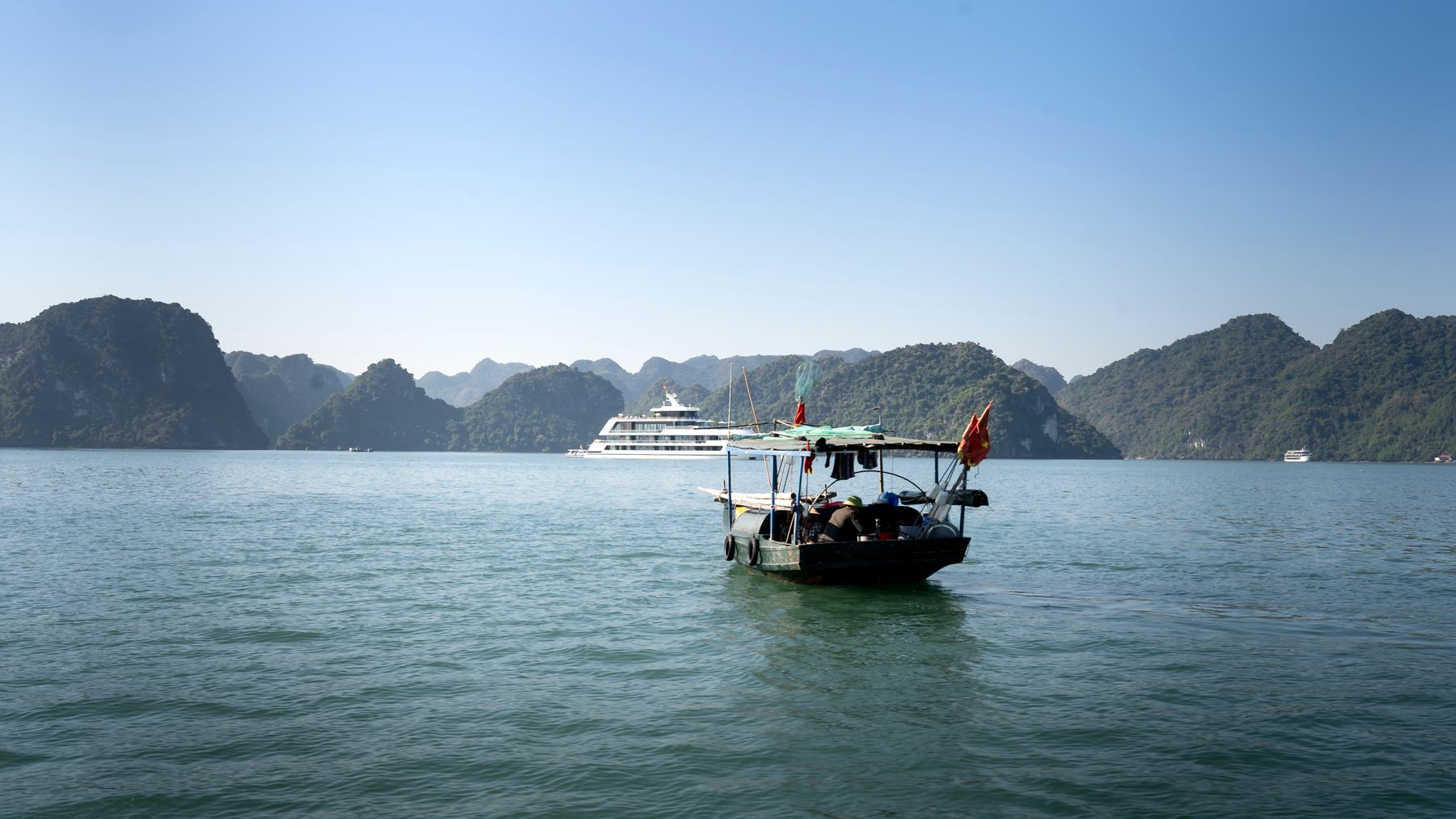
Photo by Quang Nguyen Vinh on Pexels
Practical tips locals would tell you
- Bring cash. There are no ATMs on the island. A few places accept bank transfers via app, but don't count on it.
- Sunscreen and insect repellent. The casuarina shade helps, but the beach is exposed. Sand flies can be aggressive at dusk.
- Check the boat schedule the night before. Speedboat times shift seasonally and sometimes get cancelled in bad weather. Your guesthouse owner will know the current schedule.
- Rent the motorbike at the pier, not the beach. More selection, slightly cheaper, and you'll want it immediately anyway.
Common mistakes to avoid
- Trying to day-trip from Ha Long Bay. The logistics don't work well. Quan Lan Island rewards at least one overnight, ideally two.
- Assuming restaurants are open late. Most kitchens close by 8:30–9:00 PM. Eat dinner early or buy snacks.
- Skipping Son Hao. Minh Chau is the main draw, but Son Hao is a 10-minute ride away and offers a completely different feel. Worth the detour.
- Coming in winter expecting a beach trip. It will be grey, windy, and 16°C. Fine for exploring the island, but not for swimming.
Practical notes
Minh Chau Beach works best as a 2–3 day side trip from Hanoi or as an extension to time spent around Ha Long Bay. It's not a place with a long activities list — it's a place where doing little is the point. Budget around 1,500,000–2,500,000 VND per day including accommodation, food, and transport on the island.
Last updated · May 26, 2026 · independently researched, never sponsored.