What Mui Ke Ga actually is
Mui Ke Ga is a rocky headland jutting into the East Sea about 30 km south of Phan Thiet city. The cape's defining feature is a 35-meter lighthouse built by the French in 1899 — one of the oldest functioning lighthouses in Southeast Asia. The tower sits on a granite island connected to the mainland by a short stretch of reef that you can walk across at low tide.
The name translates roughly to "Rooster's Crest Cape," after the jagged rock formations along the shoreline. Unlike the resort-lined coast further north toward Mui Ne (무이네 / 美奈 / ムイネー), Ke Ga remains mostly undeveloped. Fishing villages dot the surrounding coastline, and the area attracts weekend visitors from Saigon more than international tourists.
Why travelers go
Three reasons, honestly:
-
The lighthouse itself. It's a genuine piece of French-colonial coastal infrastructure, not a reconstruction. You can climb the spiral staircase inside for a panoramic view of the coast. The granite island setting makes it more photogenic than most lighthouses you'll find in Vietnam (베트남 / 越南 / ベトナム).
-
The rocks. The shoreline is a chaos of weathered granite boulders — some the size of cars, stacked and eroded into strange formations. If you're into landscape photography or just enjoy scrambling over coastal geology, this is better than any manicured beach.
-
The quiet. On weekdays, you might have the cape almost to yourself. There's no jet-ski rental counter, no bumping beach club. Just wind, waves, and fishing boats.
Best time to visit
The dry season runs from November through April. January to March is ideal — less rain, lower humidity, and the sea is calmer for the walk across to the lighthouse island.
Avoid September and October. The monsoon makes the crossing to the lighthouse impossible on many days, and the fishing boats that ferry visitors won't go out in rough surf. Weekends year-round bring day-trippers from Saigon, so aim for Tuesday through Thursday if you want solitude.
How to get there
The nearest major hub is Phan Thiet, about 30 km to the north.
From Saigon: Take a bus from Mien Dong station to Phan Thiet (4-4.5 hours, around 150,000-200,000 VND). Alternatively, drive — it's roughly 180 km via the CT.08 expressway, now cutting the trip to about 2.5 hours by car.
From Phan Thiet to Mui Ke Ga: Hire a motorbike (around 150,000 VND/day from guesthouses in town) and ride south along the coastal road DT719. The route takes 40-50 minutes and passes through fishing hamlets and dragon fruit plantations. A Grab car from Phan Thiet runs about 250,000-350,000 VND one way, though availability can be patchy this far south.
If you're coming from Mui Ne, it's roughly 50 km — about an hour by motorbike heading south through Phan Thiet and continuing along the coast.
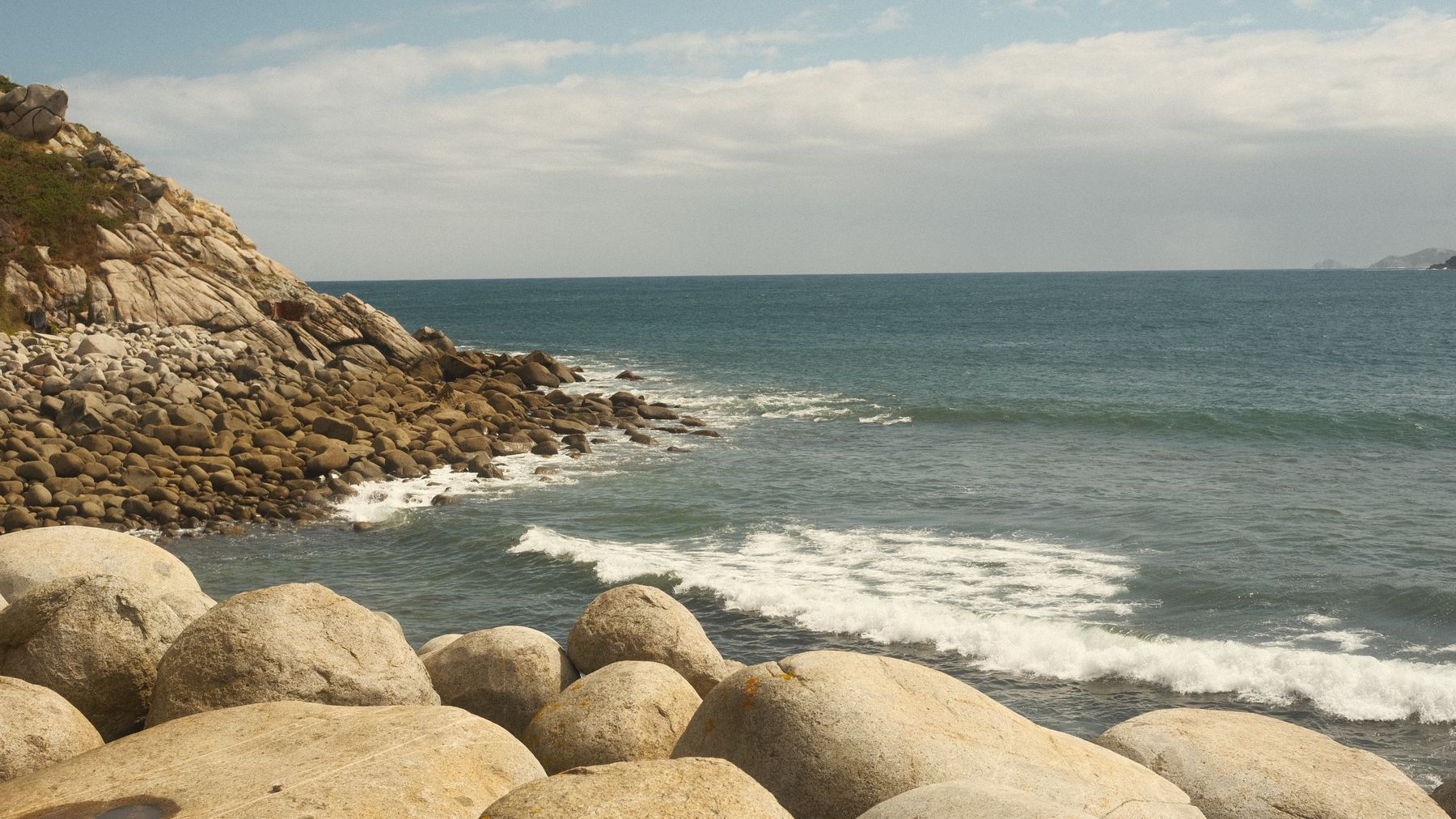
Photo by Amaia Garcia on Pexels
What to do
Walk to the lighthouse at low tide
The reef connecting the mainland to the lighthouse island is exposed for a few hours around low tide. Check tide tables before going (ask your hotel or look up Tien Thanh tide charts). The crossing is maybe 200 meters over slippery rock and coral — wear shoes with grip, not flip-flops. Entry to the lighthouse grounds costs 20,000 VND. Climbing the tower is an additional 10,000 VND.
Hire a boat
If the tide isn't cooperating, local fishermen run small boats from the beach to the island for around 50,000-80,000 VND per person. The ride takes five minutes and gives you a different perspective on the rock formations from the water.
Explore the boulder coastline
Walk south from the main beach access point along the shoreline. The granite formations stretch for about 2 km. Early morning light (6:00-7:30 AM) hits the rocks at a low angle that makes the textures pop — photographers take note.
Visit Tien Thanh fishing village
The small village just north of the cape is a working fishing settlement. Boats come in around 5:00-6:00 AM with the night's catch. Nobody's packaging this as a "tour" — just show up, stay out of the way, and watch. The round basket boats ("thung chai") are still in daily use here.
Swim (carefully)
There are sandy patches between the rocks suitable for swimming, but currents can be strong. Stick to the sheltered coves on the north side of the cape. There are no lifeguards.
Where to eat nearby
Seafood is the obvious play. Small family-run restaurants line the road approaching the cape, serving whatever came off the boats that morning.
Look for "banh canh" — thick tapioca noodle soup — served here with crab or fish. It's a regional staple and costs 35,000-50,000 VND per bowl. Grilled squid and steamed clams are sold at beachside stalls for 80,000-150,000 VND per plate depending on size and season.
Don't expect menus in English. Point-and-order works fine. Freshness is rarely an issue this close to the water.
Where to stay
Budget (400,000-700,000 VND/night): Basic guesthouses and homestays in the Tien Thanh area. Clean rooms, fans or AC, nothing fancy. Good enough for a night or two.
Mid-range (1,000,000-2,000,000 VND/night): A handful of small resorts have opened along the coast near the cape — pool, sea view, restaurant on-site. These book up on weekends, so reserve ahead for Saturday nights.
High-end (3,000,000+ VND/night): Limited options directly at Ke Ga. For luxury, you'd need to stay in the Mui Ne resort strip and day-trip down.

Photo by Quang Vuong on Pexels
Practical tips locals would tell you
- Tide timing is everything. If you show up at high tide without a boat arrangement, you're just staring at the lighthouse from shore. Plan around low tide — it changes daily.
- Bring sun protection. There's almost no shade on the rocks or the lighthouse island. Hat, sunscreen, water.
- Cash only. No ATMs at the cape itself. The nearest reliable ATM is in Phan Thiet. Bring enough dong for the day.
- Fuel up before you ride. If you're on a motorbike, fill the tank in Phan Thiet. Petrol stations thin out heading south.
Common mistakes to avoid
- Wearing flip-flops on the reef crossing. The rock is sharp and slippery with algae. People cut their feet every week. Bring proper sandals or water shoes.
- Arriving mid-afternoon on a weekend. Tour groups from Saigon hit around 2-4 PM on Saturdays. Come early morning or skip weekends entirely.
- Assuming you can Grab back easily. Ride-hail coverage is unreliable here. If you didn't drive yourself, arrange return transport in advance or be prepared to wait.
- Expecting a beach day. This isn't a lounging-on-sand destination. The appeal is rocks, lighthouse, and atmosphere. If you want a swimming beach, Mui Ne is better suited.
Practical notes
Mui Ke Ga works well as a half-day trip from Phan Thiet or Mui Ne, or as an overnight if you want sunrise on the rocks. Pair it with a drive along the coastal road for a full day of scenery that doesn't require a tour group or a guide.
Last updated · May 29, 2026 · independently researched, never sponsored.