What it is
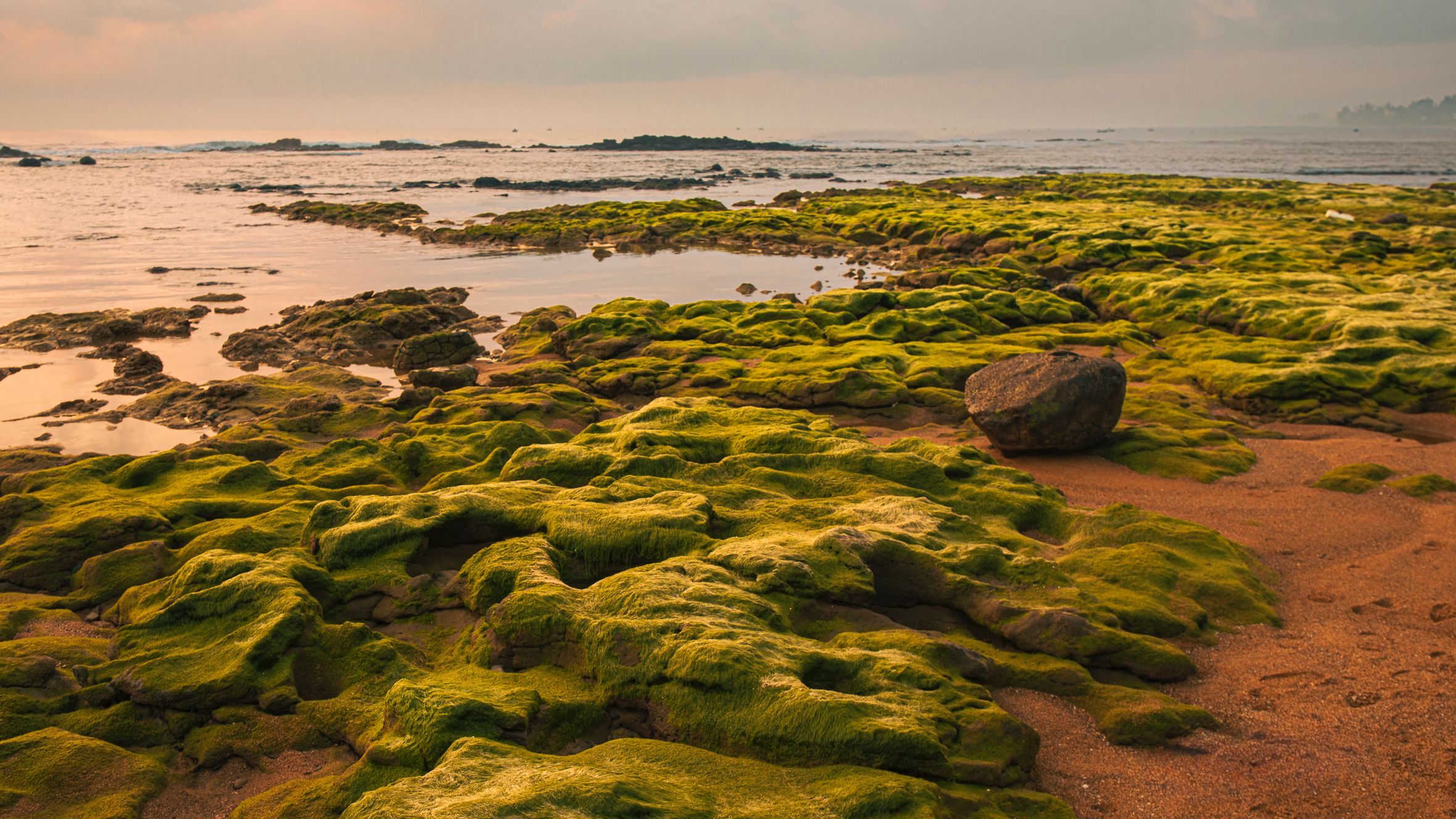
Bai Da Co Thach is a stretch of coastline in Tuy Phong district — now part of the expanded Lam Dong province — where thousands of volcanic rocks sit scattered across the shore. For most of the year, it looks like a plain rocky beach. But between late March and mid-May, a layer of green algae coats the stones, turning the entire shoreline into something that looks almost artificial in its color intensity. The rocks themselves range from fist-sized to the width of a car, worn smooth by decades of tidal erosion.
Locals have used this beach for generations — fishing boats still launch from the northern end. The name roughly translates to "ancient stone beach," and some of the rock formations do look deliberately placed, though they're entirely natural.
Why travelers go
The honest answer: photography. Bai Da Co Thach during algae season is one of the most visually unusual coastal landscapes in Vietnam (베트남 / 越南 / ベトナム). The contrast between bright green moss, dark volcanic rock, and white surf draws photographers from Saigon and beyond. Outside of algae season, the appeal drops significantly — it's a quiet, undeveloped beach with interesting rock formations but not much infrastructure.
The other draw is solitude. This isn't Mui Ne (무이네 / 美奈 / ムイネー). There's no resort strip, no kite-surfing schools, no Russian restaurant row. It's a working fishing coast with a natural spectacle attached.
Best time to visit
The window is narrow: late March through mid-May, with peak green coverage typically in April. The algae grows during the transition between dry and wet seasons when water temperatures and sunlight hit the right balance.
Within that window, aim for days around the full moon or new moon — lower tides expose more rocks and more green. Arrive at sunrise (around 5:15-5:30 AM in April) for the best light and fewest people. By 8 AM on weekends during peak season, you'll be sharing the rocks with dozens of photographers and their tripods.
Outside March-May, the algae dries out or washes away. You'll still see interesting rock formations, but the main visual draw is gone.
How to get there
The nearest major hub is Phan Thiet, about 90 km to the south. From there:
- Motorbike: The most practical option. Head north on the QL1A highway, then turn east toward the coast at Lien Huong town. Total ride time: about 1.5 hours. Rental bikes in Phan Thiet run 150,000-200,000 VND/day.
- Taxi/Grab: A one-way car from Phan Thiet costs roughly 500,000-700,000 VND. Grab availability this far north is inconsistent — book a round trip or arrange a wait.
- From Saigon: Direct drive is about 280 km, roughly 5-6 hours by car or bus. Take a sleeper bus to Lien Huong (around 200,000 VND) and arrange local transport for the final 10 km to the beach.
The access road to Bai Da Co Thach is paved but narrow. There's a small parking area near the beach — 10,000 VND for motorbikes, 20,000 VND for cars.

Photo by Tuấn Vũ on Pexels
What to do
Walk the rock field at low tide
The main event. The moss-covered area stretches roughly 1 km along the shore. Wear shoes with grip — wet algae on smooth rock is genuinely slippery. Take your time picking across the boulders. The best formations are at the southern end where larger rocks create pools between them.
Catch the sunrise
The beach faces east, so sunrise lights up the green rocks directly. Position yourself among the mid-sized boulders where waves still wash over — the motion of water across green stone is the shot everyone's after. Get there 20 minutes before sunrise to find your spot.
Visit the fishing village
At the north end of the beach, round basket boats ("thung chai") line the sand. Fishermen head out before dawn and return mid-morning. It's a working village, not a tourist attraction — be respectful, don't shove cameras in faces, and buy something if you linger.
Explore the rock pools
At low tide, pools between boulders trap small fish, crabs, and sea urchins. Kids love this. Adults too, honestly. The pools at the far southern end are deepest and most varied.
Climb the coastal hill
A short trail at the southern end leads up to a rocky overlook. It's maybe 15 minutes of scrambling, but gives you a wide-angle view of the entire green rock field below. Best in early morning light.
Where to eat nearby
Don't expect restaurant rows. Options are limited but decent:
- Seafood shacks along the access road: Simple places serving grilled fish, steamed clams, and "banh canh" with crab — a thick tapioca noodle soup that's a regional staple here. A full seafood meal for two runs 200,000-350,000 VND.
- Lien Huong town (10 km inland): More variety. Look for "com tam" — broken rice with grilled pork — at the market area. Plates go for 35,000-50,000 VND.
Bring water and snacks if you're arriving at dawn. Nothing opens at the beach before 7 AM.
Where to stay
Accommodation near Co Thach is basic:
- Guesthouses near the beach: Simple fan rooms, 200,000-400,000 VND/night. Don't expect hot water or English-speaking staff. Co Thach Resort is the only semi-established option right at the beach.
- Lien Huong town: A few more "nha nghi" (local guesthouses) with slightly better amenities, 250,000-500,000 VND.
- Phan Thiet / Mui Ne: If you want comfort, stay in Mui Ne and make Co Thach a day trip. Hotels there range from 400,000 VND budget rooms to multi-million VND resorts.
Most serious photographers stay overnight near the beach to catch sunrise without a pre-dawn drive.

Photo by Quang Nguyen Vinh on Pexels
Tips locals would tell you
- Check tide charts before going. Low tide exposes the rocks; high tide covers them. A wasted trip is showing up at high tide and seeing only waves.
- Wear water shoes or old sneakers, not flip-flops. The algae is beautiful but treacherous underfoot.
- Bring a plastic bag for your phone/camera if you're walking among the rocks where waves reach. Salt spray and splashes are constant.
- Sunscreen matters even at dawn — you'll stay longer than planned, and by 8 AM the sun is already strong.
- Fill your fuel tank in Lien Huong. There's nothing at the beach itself.
Common mistakes
- Visiting outside algae season and being disappointed by a plain rocky beach.
- Arriving mid-morning on a weekend in April and finding the rocks covered with Instagram posers in "ao dai" rather than algae.
- Wearing nice shoes — they will get wet, salty, and potentially ruined.
- Not checking the tide and showing up when the rocks are submerged.
- Expecting facilities — there are no ATMs, no convenience stores, and phone signal can be patchy right at the beach.
Practical notes
Bai Da Co Thach rewards planning more than most Vietnamese destinations. Get the timing right — April, low tide, sunrise — and it delivers. Get it wrong and you've driven 90 km for some wet rocks. Check tide tables online the night before, set an alarm, and bring proper footwear. That's really all it takes.
Last updated · May 29, 2026 · independently researched, never sponsored.