What Ho Ta Dung actually is
Ho Ta Dung is a man-made reservoir in Dak Som commune, Dak Glong district, in what is now part of expanded Lam Dong province (formerly Dak Nong). The lake formed after the Ta Dung hydroelectric dam was completed in 1984, flooding a valley and creating a 22,000-hectare body of water dotted with over 40 small islands. The surrounding area sits at roughly 600-700m elevation, cooler than lowland Vietnam (베트남 / 越南 / ベトナム) but warmer than Da Lat.
Locals sometimes call it "Ha Long Bay of the Central Highlands (중부 고원 / 中部高原 / 中部高原)" — which is marketing-speak, but not entirely wrong. The islands are forested humps rising from green water, and on a clear morning the resemblance is there.
Why travelers go
Ho Ta Dung draws people for a few specific reasons:
- The landscape. Dozens of islands, calm water, mountain backdrop. It photographs well at dawn when mist sits low on the surface.
- Camping culture. This is one of the more popular wild-camping spots in Vietnam's highlands. Groups bring tents and set up on island shorelines or lakeside clearings.
- Quiet. Compared to Da Lat (about 130km away), Ho Ta Dung barely registers on the international tourist radar. You'll mostly encounter Vietnamese weekenders and a handful of backpackers.
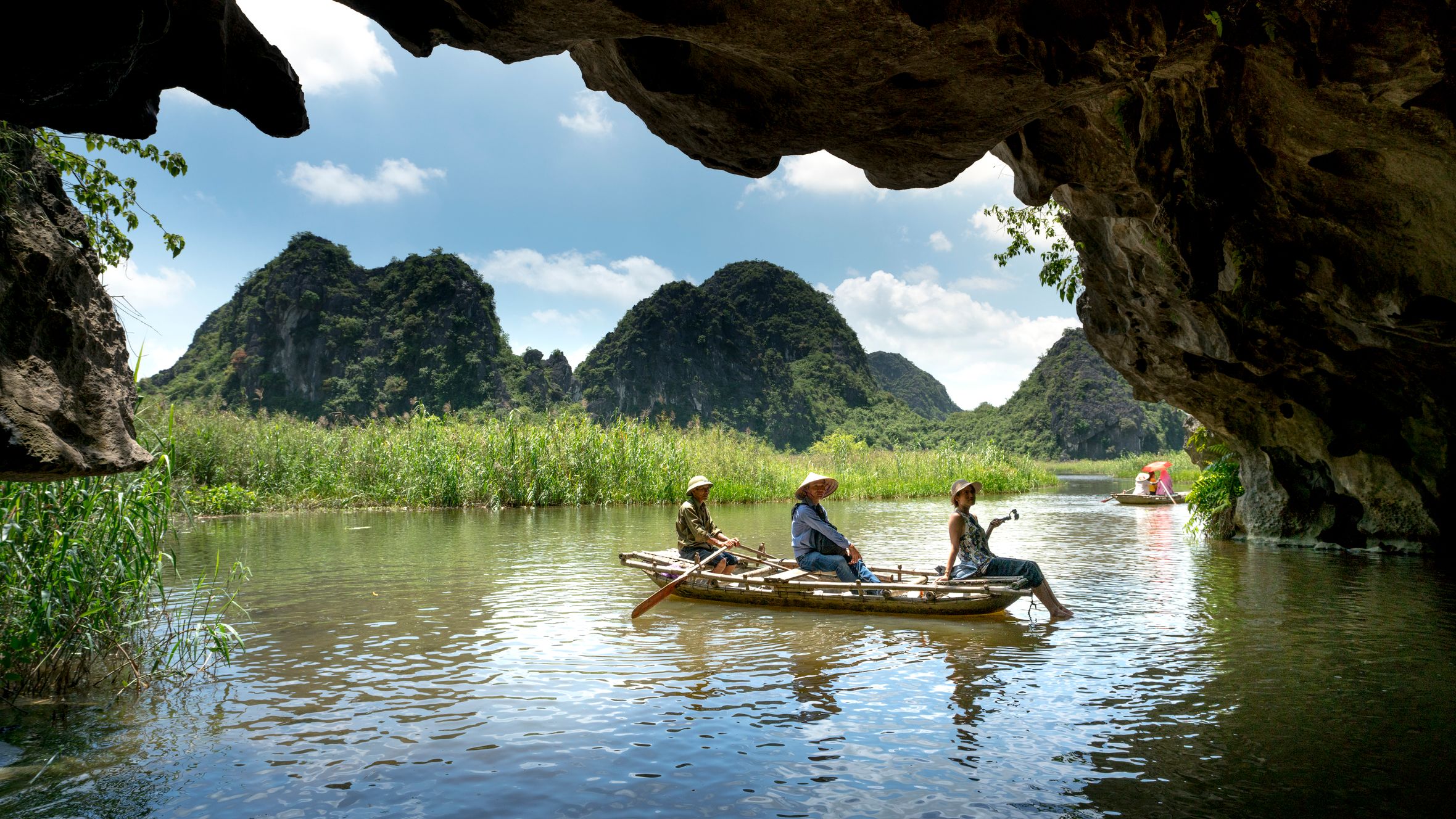
- Kayaking and boat trips. Renting a kayak or hiring a local boat to weave between islands is the main activity.
Best time to visit
The dry season runs from November to April. December through March gives you the clearest skies and lowest chance of afternoon storms. Water levels are highest after the rainy season ends (October-November), which means the lake looks fullest and the islands are most photogenic.
Avoid June through September if you plan to camp — heavy rain can roll in fast, and some access roads get muddy. Weekdays year-round are quieter; weekends (especially long weekends and Tet holiday) bring crowds from Saigon and Da Lat.
How to get there
From Da Lat
Drive south on QL28 toward Dak Nong town, then follow signs to Ta Dung. Total distance is about 130km, roughly 3-3.5 hours by motorbike or car. The road is paved but winding through highland passes — not difficult, just slow.
From Saigon
Take the route toward Bao Loc on QL20, then continue north through Di Linh and onto QL28. Total distance is approximately 280km, around 6-7 hours by car without extended stops. Some travelers break the trip in Bao Loc or Da Lat.
From Buon Ma Thuot
Head south on QL14 to Gia Nghia (Dak Nong town), then east to Ta Dung. About 120km, 2.5-3 hours.
There's no public bus directly to the lake. You'll need your own motorbike, a rented car, or a private transfer. Motorbike rental in Da Lat runs 120,000-180,000 VND/day for a semi-auto.

Photo by Katie Tran on Pexels
What to do
Boat trips and kayaking
Local operators at the main pier offer boat tours around the islands for 150,000-300,000 VND per person depending on group size and duration. Kayak rental runs about 100,000-150,000 VND per hour. The standard route loops past 5-7 islands over 2-3 hours.
Camping
Several designated camping spots sit along the lakeshore and on a couple of accessible islands. You can bring your own gear or rent tents from local vendors (around 200,000-400,000 VND for a two-person tent). Campfires are common in the evenings. Bring a headlamp, insect repellent, and a sleeping pad — ground gets cold after midnight at this elevation.
Hiking
Ta Dung National Park surrounds the lake. Trails through the forest aren't well-marked, so hiring a local guide (around 300,000-500,000 VND for a half-day) is worth it if you want to explore beyond the shoreline. The forest is dense, subtropical, with some birdwatching potential.
Sunrise photography
The classic shot is from the viewpoint above the lake looking east. Get there by 5:30 AM during dry season. Mist lifts off the water around 6:00-6:30 AM.
Where to eat
Options near Ho Ta Dung are limited. A few local "com binh dan" (rice-and-dish) stalls operate near the entrance area, serving basic highland fare: grilled chicken, wild boar (heo rung), bamboo-shoot soup, and rice. Expect 40,000-70,000 VND per meal.
If you're camping, bring your own supplies from Gia Nghia town (30km away) — there's a market there with fresh produce, instant noodles, and grilling meat. Some camping groups bring portable stoves and cook "lau" (hotpot) lakeside, which is honestly the best meal you'll have here.
For proper restaurant food, you'll need to drive back to Gia Nghia or plan a stop in Bao Loc, which has decent Vietnamese coffee shops and "com tam" spots.
Where to stay
Camping (most popular)
Free if you bring your own tent. Some organized campsites charge 50,000-100,000 VND per person for access to basic facilities (toilet, flat ground).
Homestays
A few homestays have popped up within 5-10km of the lake. Basic rooms with shared bathrooms run 200,000-400,000 VND per night. Don't expect hotel-level amenities — these are family homes with extra rooms.
Gia Nghia town
If you want a proper bed, Gia Nghia (30km away) has guesthouses and mini-hotels in the 250,000-500,000 VND range. Nothing fancy, but you get hot water, wifi, and air conditioning.
Photo by tu nguyen on Pexels
Practical tips
- Bring cash. There are no ATMs at the lake and no card payment anywhere nearby. Stock up in Gia Nghia or Da Lat.
- Phone signal is patchy. Viettel works best in this area, but don't rely on maps loading once you're lakeside.
- Mosquitoes get aggressive after 4 PM. Long sleeves and DEET are non-negotiable if you're camping.
- Trash situation: Pack out everything you bring in. The lake has a litter problem from weekend campers — don't add to it.
- Fuel up before leaving Gia Nghia. There's no gas station near the lake entrance.
Common mistakes
- Arriving without camping gear or a booking. There's almost nothing to rent on-site during weekdays. Either bring a tent or confirm a homestay in advance.
- Underestimating travel time. The roads look short on Google Maps but they're winding highland routes. Add 30-60 minutes to whatever your phone says.
- Skipping Gia Nghia market. If you plan to cook at camp, the market has everything you need and prices are low. Buying snacks at tourist-facing stalls near the lake costs 2-3x more.
- Going only for the afternoon. The lake is fine in daytime, but sunrise is the reason to stay overnight. If you only do a day trip, you'll miss the best part.
Final note
Ho Ta Dung works best as a 2-day, 1-night trip paired with a longer Central Highlands loop — combine it with a few days in Da Lat for the full highland experience. It's not a place with a long activity list. You go, you float, you camp, you wake up to mist on the water. That's the whole point.
Last updated · May 29, 2026 · independently researched, never sponsored.