What it is and how it got here
Nha Tho Nui — literally "Mountain Church" — is a Catholic church built into a granite outcrop on Thai Nguyen Street in central Nha Trang (냐짱 / 芽庄 / ニャチャン). The French priest Louis Vallet oversaw its construction between 1928 and 1933, and the Gothic-style bell tower has anchored the city's skyline ever since. Locals also call it Nha Tho Da, the Stone Church, because the entire structure was built from hand-cut stone blocks quarried from the hill itself.
The church sits within the Nha Trang Diocese compound, which includes a grotto shrine, a clock tower with three bronze bells cast in France, and a series of stone steps that climb the hillside. It's a working parish — Mass runs daily — so it's a living part of the neighborhood, not a museum piece.
Why travelers go
Nha Tho Nui is the most photographed building in Nha Trang that isn't a resort. The combination of dark grey stone, arched stained-glass windows, and a hilltop position overlooking the train station and surrounding rooftops makes it genuinely photogenic without needing a filter. The interior is cool, quiet, and stripped back — no gilding, no excess. Just stone walls and light pouring through colored glass.
It's also free. In a city where most attractions charge 50,000–150,000 VND admission, walking up a stone staircase and sitting in a century-old church costs nothing.
Best time to visit
Nha Trang's dry season runs from January through August, with the clearest skies typically in March through June. That's the best window for photography — morning light between 6:00 and 8:00 AM hits the east-facing facade cleanly, and there are almost no tourists at that hour.
Avoid October and November if you can. Nha Trang's short rainy season dumps most of its annual rainfall in those two months, and the steep stone steps up to the church get slippery. The church compound itself stays open year-round, but rain and grey skies flatten the views.
If you're visiting during Christmas or Easter, expect the church and surrounding streets to be packed with parishioners and decorated heavily. It's atmospheric but not the time for a quiet visit.

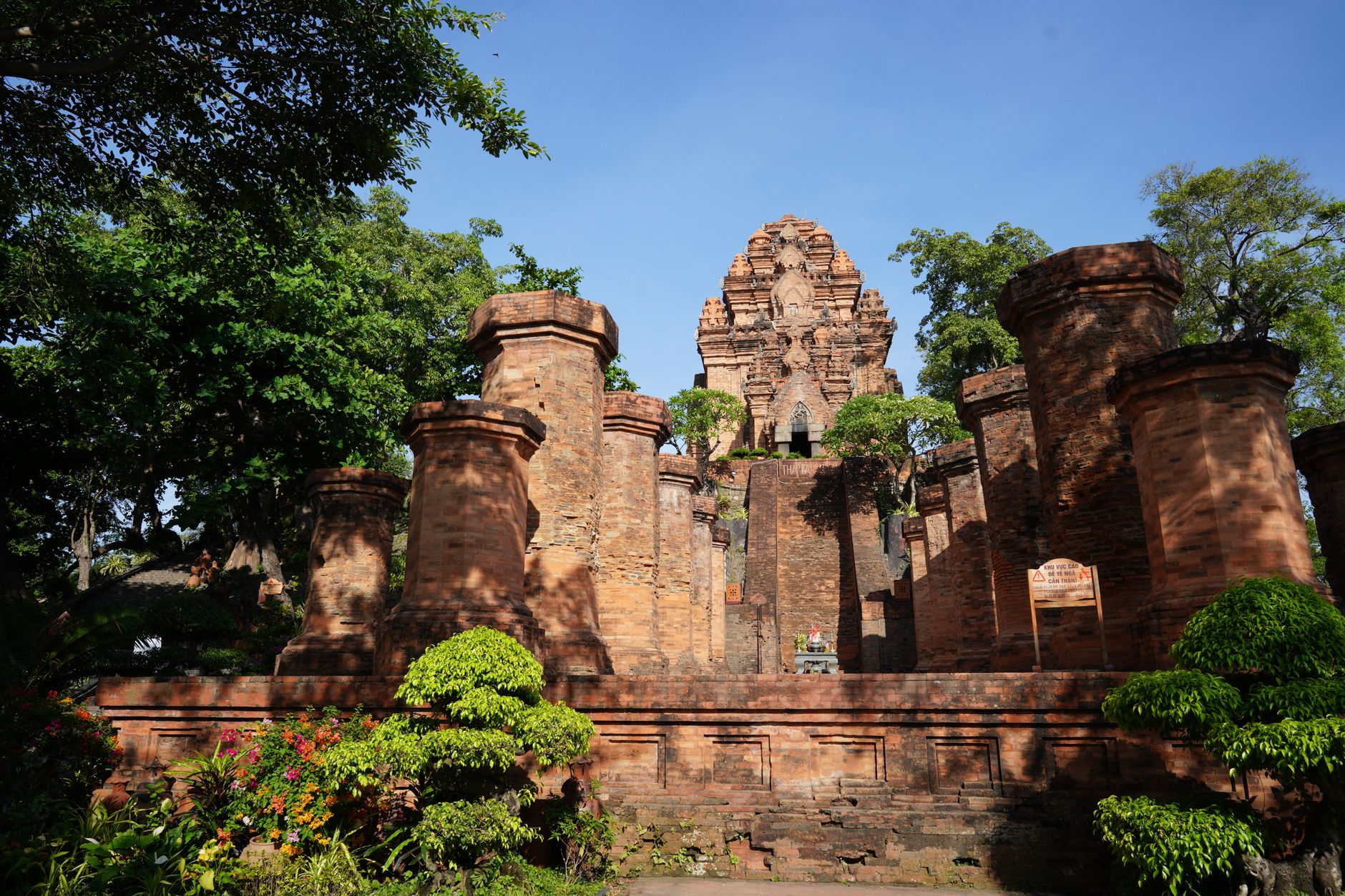
Photo by Tong Quan on Pexels
How to get there
Nha Tho Nui is about 1 km from Nha Trang's main beachfront strip along Tran Phu, and roughly 500 meters from the Nha Trang train station. From most beach hotels, it's a 10-minute walk or a 15,000–20,000 VND Grab bike ride.
If you're arriving from further afield — say, from Da Nang or Saigon — the Reunification Express stops at Nha Trang station, which is practically at the foot of the church hill. A sleeper berth from Saigon runs about 450,000–650,000 VND and takes roughly 7 hours overnight. Flights from Hanoi or Saigon land at Cam Ranh Airport, about 35 km south; a taxi into central Nha Trang costs around 350,000–400,000 VND, or you can take the airport shuttle bus for 60,000 VND.
What to do
Walk the stone staircase
The main approach is a flight of 53 stone steps from Thai Nguyen Street up to the church entrance. It's a short climb, maybe two minutes, but the view back toward the train station and the surrounding neighborhood improves with every step. The staircase itself is part of the original 1930s construction.
Go inside the church
The nave seats about 600 and is open to visitors outside of Mass times. The interior architecture is straightforward Gothic revival — pointed arches, ribbed vaulting, stone columns. The stained-glass windows were replaced after war damage, but the replacements are well done and cast colored light across the stone floor on sunny mornings. Keep quiet, dress modestly (cover shoulders and knees), and you're welcome.
Visit the grotto shrine
Behind the main church, a path leads to a small grotto with a statue of the Virgin Mary set into the rock face. It's a peaceful spot shaded by frangipani trees, usually empty except for a few locals praying. The grotto overlooks the back side of the hill and gives a different perspective on the surrounding city.
Check the bell tower
The clock tower holds three bells, the largest weighing over 2 tons, imported from France in the early 1930s. You can't climb the tower, but you can hear the bells ring on the hour and before Mass. Standing at the base and looking straight up gives you a sense of the scale — the tower reaches about 38 meters.
Photograph the exterior at golden hour
Late afternoon light, around 4:30–5:30 PM, warms the grey stone and makes it almost glow. The western side of the compound catches this light best. Early morning is better for the front facade, but sunset is better for mood.
Where to eat nearby
The streets around the train station have solid local food. Walk five minutes south on Thai Nguyen and you'll hit a cluster of "banh canh" stalls — thick tapioca noodle soup served with fish cake or crab, typically 35,000–50,000 VND a bowl. Nha Trang's version of banh canh uses a broth made from local fish, and it's noticeably different from what you'd get in Hue or Saigon (사이공 / 西贡 / サイゴン).
For something more substantial, head east toward the beach and look for a "com tam" spot — broken rice with grilled pork, a fried egg, and pickled vegetables. There's a reliable place on Yersin Street near the intersection with Thai Nguyen, open from 10:00 AM through late evening, plates running 40,000–55,000 VND.
Nha Trang is also a strong seafood city. The cluster of restaurants along Tran Phu near Loc Tho Market does grilled squid, steamed clams, and shrimp hotpot at reasonable prices — budget 150,000–250,000 VND per person if you eat well.

Photo by Tuan Vy on Pexels
Where to stay
Nha Trang has accommodation at every price point. Near the church, budget guesthouses along Thai Nguyen and Yersin Streets run 200,000–400,000 VND per night for a clean room with AC and Wi-Fi. Mid-range hotels along Tran Phu — the beachfront boulevard — start around 600,000–1,200,000 VND. The resort strip north of the city center, around Hon Tre Island, is where the five-star properties sit, but that's a different trip entirely.
Staying near the train station puts you within walking distance of the church, the central market, and the Po Nagar temple complex — all manageable on foot.
Practical tips locals would tell you
- Mass times are typically 5:00 AM and 5:00 PM on weekdays, with additional services on Sundays. Don't walk through the nave during a service; wait outside or come back later.
- The church compound closes its main gate around 5:30 PM most days. Arrive before then.
- Wear shoes with grip. The stone steps and pathways are polished smooth from decades of foot traffic and get genuinely slick when wet.
- There's no admission fee and no ticket booth. If someone on the street tries to sell you a "church ticket," keep walking.
Common mistakes to avoid
- Showing up at midday. The hilltop has almost no shade, the stone radiates heat, and the light is flat and harsh. Come early or late.
- Wearing beach clothes. Nha Trang is a beach town, but this is a working church. Tank tops and short shorts will get you asked to leave, or at least earn disapproving looks.
- Skipping it because it's "just a church." The architecture and the hilltop position genuinely reward the 10-minute detour. It's one of the few French-colonial structures in Nha Trang that still feels intact and purposeful.
- Combining it with Po Nagar in a rushed morning. The Cham temple complex is about 2 km north. Both deserve at least 45 minutes each. Don't sprint through either one.
Last updated · May 26, 2026 · independently researched, never sponsored.