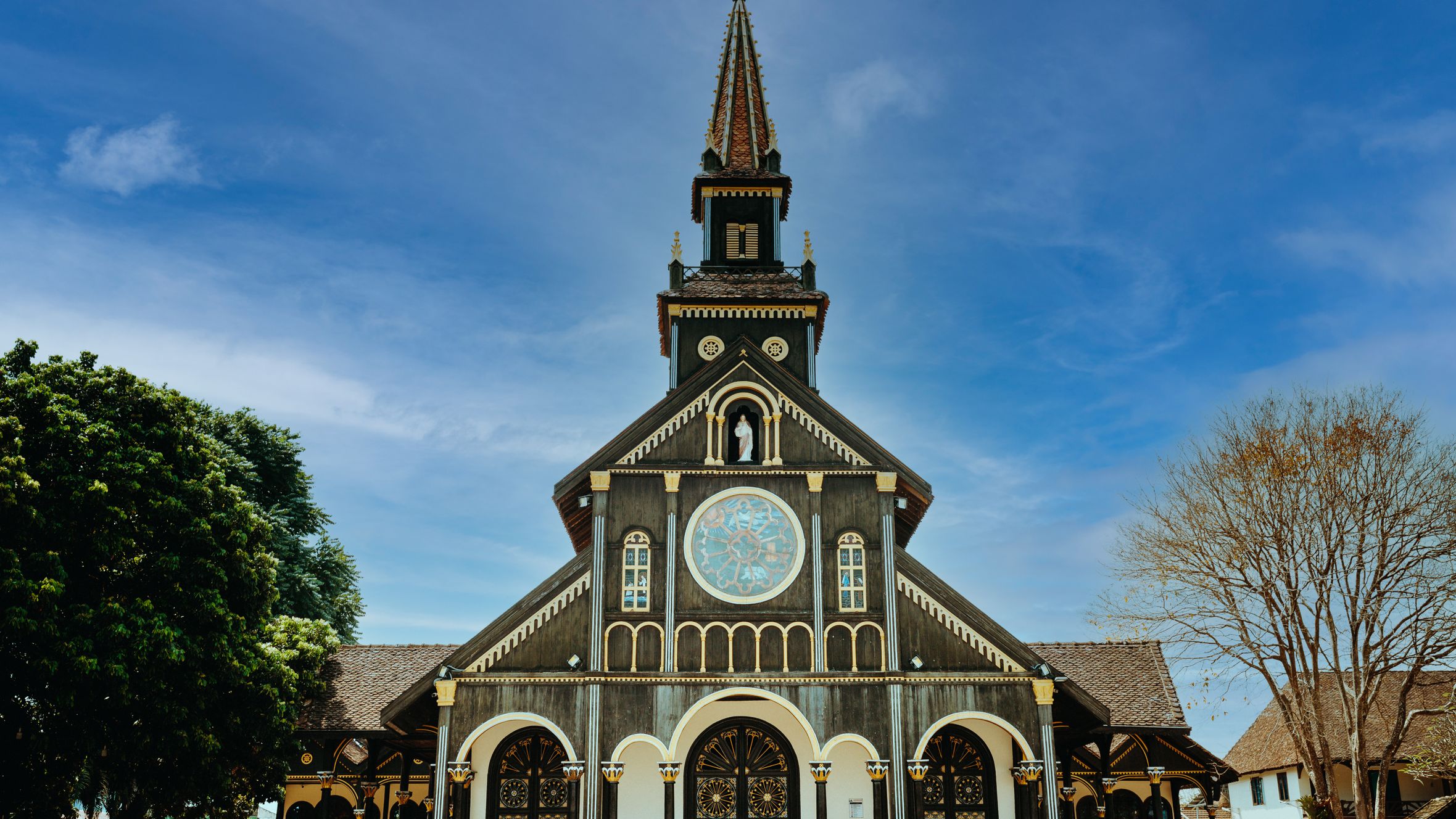
What it is and why it matters
Sitting on Nguyen Hue Street in the center of Kon Tum city, Nha Tho Go — the Wooden Church — is a Catholic church built in 1913 by French missionaries using a construction method that still impresses: the entire structure was assembled from local hardwood without a single nail. Iron bolts and wooden joinery hold the whole thing together. The architect, a French bishop named Jean-Baptiste Guerlach, deliberately blended Roman Gothic design with Bahnar communal house aesthetics — the steeply pitched roof and exposed timber framing owe as much to the "rong" houses of the local ethnic minorities as they do to European cathedrals.
The church survived both the French and American wars largely intact. It's been repaired and maintained over the decades, but the bones are original. For a building over a hundred years old in a region that sees heavy monsoon rains, that's remarkable.
Why travelers go
Kon Tum doesn't sit on most tourist itineraries, which is part of its appeal. The Wooden Church draws visitors for a few honest reasons: the architecture is genuinely unusual — you won't find anything like it elsewhere in Vietnam — and the surrounding grounds are peaceful without being overrun. Photographers love the stained glass windows, which cast colored light across the dark wood interior in the mornings. It's also a useful anchor point for exploring the broader Central Highlands (중부 고원 / 中部高原 / 中部高原), a region that feels markedly different from the coast. The pace here is slower, the air is cooler at elevation, and the ethnic minority culture — Bahnar, Jarai, Sedang communities — gives the area a character distinct from Hue or Da Nang.
Best time to visit
The dry season from November through April is the most comfortable window. December to February offers cool mornings (15-20°C) and clear skies — ideal for photography inside the church when the stained glass catches the low sun. March and April warm up but stay dry.
Avoid September and October if you can. The monsoon hits the Central Highlands hard, roads to outlying villages can get muddy, and the humidity makes everything feel heavier. The church itself is open year-round, but you'll enjoy the town more when it's not raining sideways.
How to get there
The nearest major hub is Da Nang (다낭 / 岘港 / ダナン), roughly 300 km north. From Da Nang, you have two practical options:
By bus: Direct sleeper buses run daily from Da Nang's central bus station to Kon Tum. The ride takes about 6-7 hours and costs 180,000-250,000 VND depending on the operator. Hung Thanh and Truong Thanh are reliable companies on this route. Buses typically depart early morning or late evening.
By motorbike: If you're riding the Ho Chi Minh Highway (QL14), Kon Tum is a natural stopping point between Da Nang and the deeper highlands around Buon Ma Thuot or Pleiku. The road from Da Nang climbs through some genuinely beautiful mountain passes. Budget a full day.
From Pleiku, it's only 50 km — about an hour by bus (40,000-60,000 VND) or motorbike. Pleiku has a small airport with flights from Saigon and Hanoi, so that's the fastest way in if you're coming from a distance.
Once in Kon Tum city, the church is central. A taxi from the bus station runs about 20,000-30,000 VND, or it's a 10-minute walk.
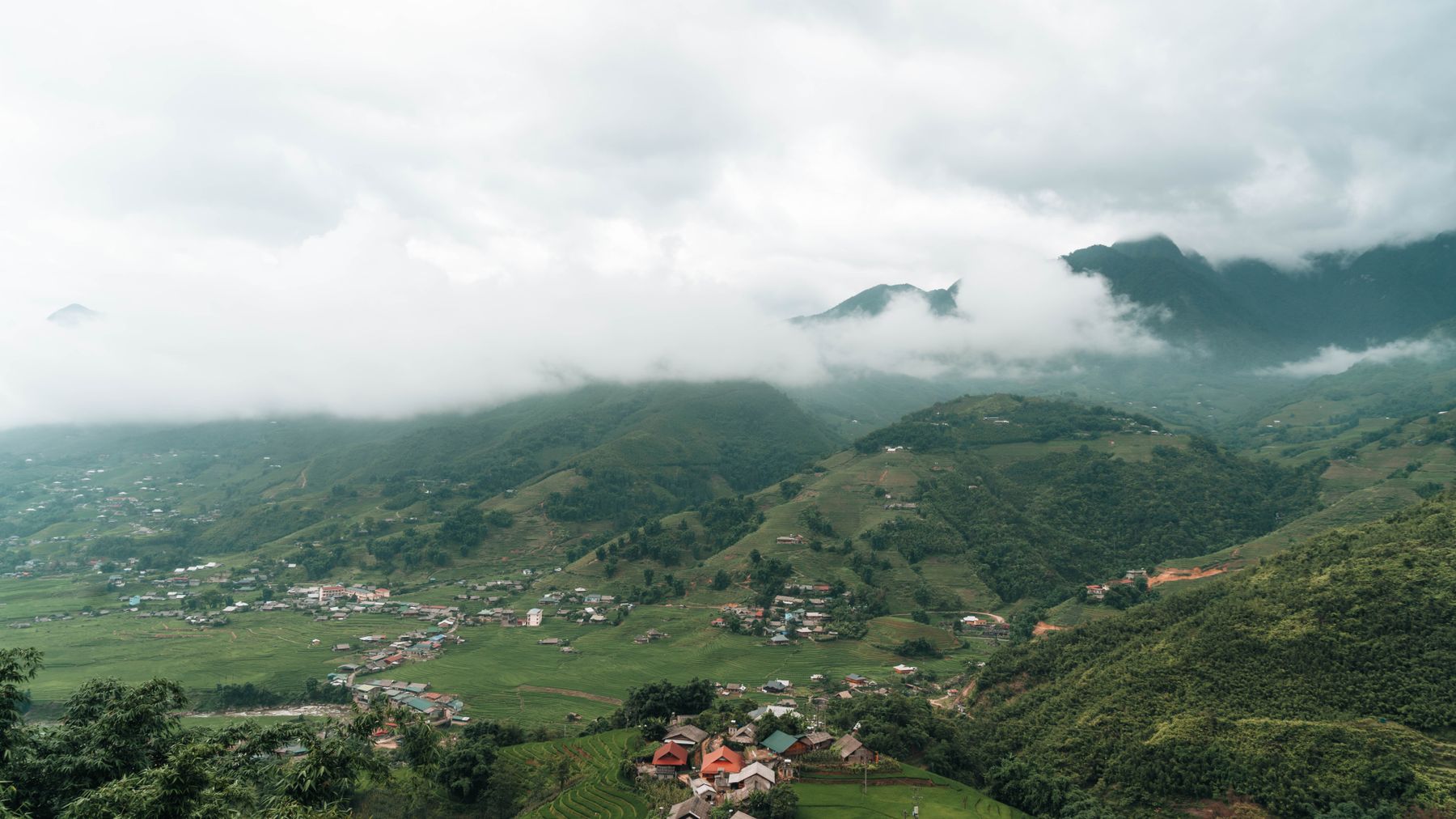
Photo by Quang Vuong on Pexels
What to do
Walk the church interior and seminary grounds
The church is open to visitors outside of mass times (typically early morning and late afternoon). Step inside to see the carved wooden altar, the Bahnar-influenced decorative motifs along the nave, and those stained glass panels. Behind the church, a small seminary campus has additional French-era buildings and quiet gardens. You can walk the grounds freely — just keep voices low.
Visit the Bahnar communal house replica
Directly adjacent to the church compound, there's a traditional Bahnar "rong" house — the tall, steep-roofed communal structure that clearly influenced the church's design. Seeing the two buildings side by side makes the architectural crossover click. The rong house contains a few displays on local ethnic minority culture.
Cross the Dak Bla River to Kon Klor suspension bridge
About 5 km east of the church, the Kon Klor suspension bridge spans the Dak Bla River and connects to a Bahnar village on the other side. The bridge itself is a landmark — painted in bold colors and long enough to sway slightly underfoot. Cross it, walk into the village, and you'll see traditional stilt houses and (if you time it right) community gatherings. Late afternoon light here is excellent.
Explore the local market
Kon Tum's central market, a short walk from the church, is a working market rather than a tourist one. Ethnic minority vendors sell forest vegetables, dried meats, "com lam" (rice cooked in bamboo tubes), and "ruou can" (rice wine drunk from a communal jar through bamboo straws). It's a good place to pick up local coffee — the Central Highlands is Vietnam's coffee-growing heartland, and beans here are cheap and fresh. If you're a fan of vietnamese coffee, this is where it literally comes from.
Day trip to surrounding villages
Rent a motorbike (120,000-150,000 VND/day from most guesthouses) and ride out to villages like Kon Kotu or Kon Rbang within 10-15 km of town. These are living communities, not staged tourism — ask before photographing and bring small gifts if you're invited into homes.
Where to eat nearby
Kon Tum isn't a food destination on par with Hue or Hoi An, but it has its own specialties. Look for "goi la" — a DIY dish where you wrap grilled meats, rice noodles, herbs, and fermented sauces in a dizzying variety of forest leaves. Some restaurants offer 30+ types of leaves. Dac San Goi La on Phan Dinh Phung Street is a reliable spot — a full spread runs about 150,000-200,000 VND for two.
"Com lam" with grilled pork or chicken is the other thing to try. Street vendors near the market sell portions for 20,000-30,000 VND.
Where to stay
Kon Tum has limited accommodation compared to coastal cities. Budget guesthouses near the church run 200,000-350,000 VND per night — clean enough, usually with air conditioning and hot water. Indochine Kon Tum Hotel is a step up at around 500,000-800,000 VND, with decent rooms and a central location. There's no real luxury market here. If you need a pool and spa, Pleiku has slightly more options, but staying in Kon Tum puts you walking distance from everything.

Photo by Duy Nguyen on Pexels
Practical tips locals would tell you
- Dress modestly when entering the church. Shoulders and knees covered — it's an active place of worship, not a museum.
- Mornings before 9 AM are best for interior photography. The east-facing stained glass lights up the nave.
- ATMs exist in Kon Tum but can be unreliable. Bring cash from Da Nang or Pleiku.
- If you're riding a motorbike in the highlands, carry rain gear even in dry season. Weather shifts fast at elevation.
- The local Bahnar and Sedang communities are generally welcoming, but always greet village elders before wandering around.
Common mistakes to avoid
Don't plan just a quick stop. Kon Tum rewards an overnight stay — the church is a 20-minute visit, but the town and surrounding villages need at least a full day. Don't assume you can grab a bus out at any hour; departures are limited, so check schedules the day before. And don't skip the "goi la" because it looks unfamiliar — it's the single most distinctive meal in the region.
Practical notes
Kon Tum works well as part of a Central Highlands loop: Da Nang to Kon Tum to Pleiku to Buon Ma Thuot, then down to Da Lat. The Wooden Church alone wouldn't justify a long detour, but paired with the highland scenery, minority villages, and the region's coffee culture, it anchors a rewarding few days off the usual coastal route.
Last updated · May 29, 2026 · independently researched, never sponsored.





