Son La Prison — "Nha Tu Son La" — sits on a hilltop in the center of Son La city, a quiet provincial capital in the northwest highlands about 300 km from Hanoi. Built by the French colonial administration in 1908, it held political prisoners through the 1940s. Today it operates as a museum and memorial, and it's one of the few reasons most travelers pause in Son La on their way to or from the northwest loop.
What it is
The prison complex occupies the top of Khau Ca hill, overlooking the town and the surrounding valley. What remains is a partial reconstruction — much of the original structure was bombed during the First Indochina War in 1952. You'll see the old cellblocks, solitary confinement rooms, a section of the original perimeter wall, and a museum building with photographs, documents, and artifacts from the prison's decades of operation.
The site also includes a mature peach tree — "cay dao" — that has become a symbol of Son La province. You'll see it on local branding everywhere, from the provincial logo to souvenir packaging.
A visit takes about 60–90 minutes if you read the exhibit panels carefully. There's signage in Vietnamese and English, though the English translations are uneven in places.
Why travelers go
Most people visiting Son La are in transit. The city is a natural overnight stop on the Hanoi–Dien Bien Phu route, or a waypoint on the larger Ha Giang–northwest loop that runs through Mai Chau, Moc Chau, Son La, and onward. The prison is the single most significant historical site in the city and worth the hour detour, especially if you have any interest in Vietnam (베트남 / 越南 / ベトナム)'s colonial history.
It's a quieter, less tourist-oriented counterpart to Hoa Lo Prison in Hanoi (하노이 / 河内 / ハノイ). You won't find crowds here — on most days you'll share the site with a handful of Vietnamese visitors and maybe one or two other foreign travelers.
Best time to visit
Son La sits at around 700 m elevation, so the climate is milder than the lowlands. The best months are October through April, when it's dry and cool — temperatures range from 10–22°C. January and February can get genuinely cold at night, so bring a jacket.
Avoid June through August if you can. The northwest gets heavy rain during monsoon season, and the mountain roads between Hanoi and Son La can be rough with fog and occasional landslides. The prison site itself is fine in rain, but the hillside paths get slippery.
If you're visiting during Tet, the peach tree on the grounds is usually in bloom — worth timing if you're already in the area.

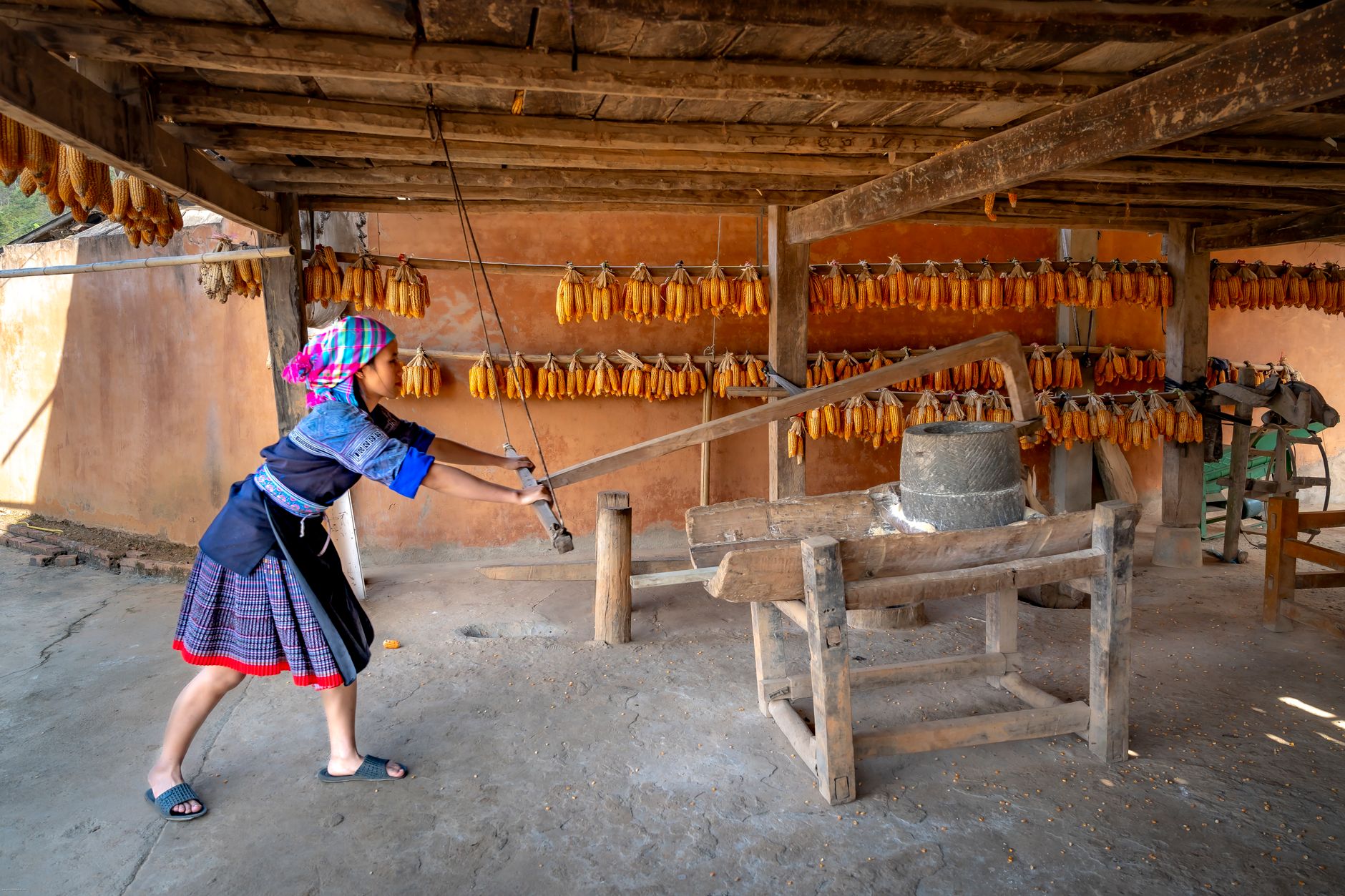
Photo by Q. Hưng Phạm on Pexels
How to get there
From Hanoi, Son La is roughly 300 km northwest along National Route 6 (QL6).
By bus
Sleeper buses run from Hanoi's My Dinh bus station to Son La city. The trip takes 5–6 hours and costs 200,000–280,000 VND depending on the operator. Hai Van and Hung Thanh are two reliable lines. Buses depart throughout the day, with the most frequent departures in the morning and evening.
By motorbike
If you're riding the northwest loop, Son La is a standard stop. From Mai Chau it's about 160 km (4–5 hours on mountain roads). From Moc Chau, it's 120 km (2.5–3 hours). QL6 is paved the entire way but has sharp switchbacks and heavy truck traffic in some sections.
Getting to the prison from town
The prison is on Khau Ca hill, about 1 km from the center of Son La city. You can walk it in 15 minutes or take a "xe om" (motorbike taxi) for 15,000–20,000 VND.
What to do
Walk the cellblocks
The reconstructed detention areas give a clear sense of the conditions prisoners lived in — cramped stone cells, leg shackles mounted into the floor, and dark solitary confinement rooms. It's affecting without being overdone.
Visit the museum building
The on-site museum displays photographs, personal items, and documents from the prison era. Labels are bilingual. Allow 30 minutes here — the collection is small but well-curated.
See the peach tree
The old peach tree in the prison courtyard is genuinely famous across Vietnam. It was reportedly planted by a prisoner and has survived since the 1940s. Whether or not you care about the symbolism, the courtyard is a good spot to sit and look out over the valley.
Walk the hilltop
The grounds around the prison include a small garden and several memorial markers. The view from the top of Khau Ca hill covers the whole Son La valley — a good orientation point before you explore the town.
Check the lookout tower
The French-built watchtower at one corner of the complex is still standing and gives the best elevated view of the surrounding area.
Where to eat nearby
Son La isn't a food destination, but there are two local specialties worth finding.
"Pa pinh top" — a whole fish stuffed with herbs, wrapped in banana leaf, and grilled over charcoal. It's a Thai ethnic-minority dish common throughout the northwest. Several small restaurants on Truong Chinh street near the market serve it for 80,000–120,000 VND per fish.
"Thit trau gac bep" — smoked buffalo meat, dried slowly over a wood fire. You'll see it hanging in shops around the central market. It's chewy, salty, and pairs well with rice or beer. A bag of sliced smoked buffalo runs about 150,000–200,000 VND and makes a decent road snack for the onward ride.
For a sit-down meal, the row of "com binh dan" (everyday rice) shops on To Hieu street near the bus station offers full plates for 35,000–50,000 VND.

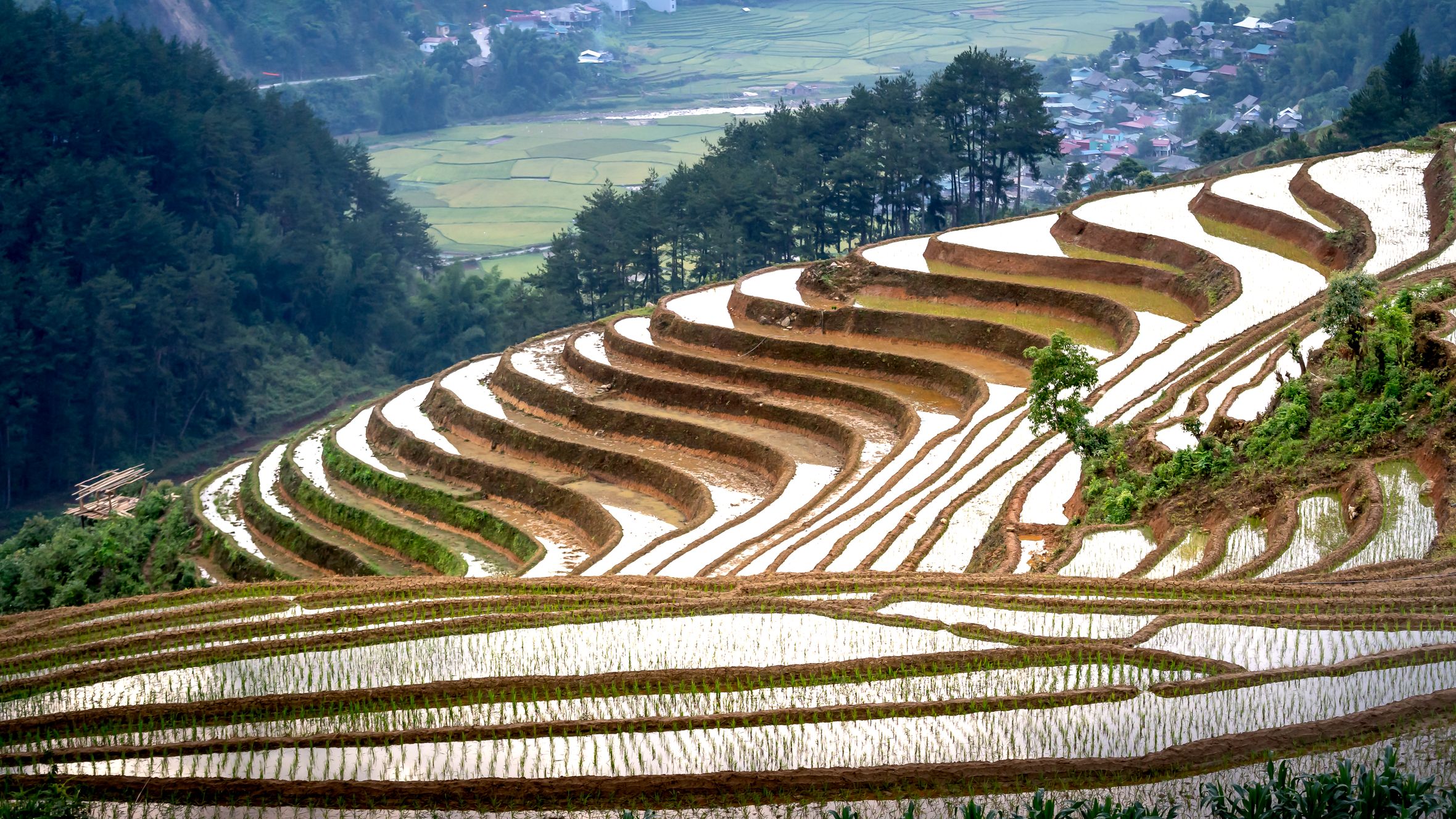
Photo by Quang Nguyen Vinh on Pexels
Where to stay
Son La has simple hotels and guesthouses, nothing fancy.
- Budget: Local nha nghi (guesthouses) along To Hieu street run 150,000–250,000 VND/night. Basic but clean enough for one night.
- Mid-range: Trade Union Hotel (Khach san Cong Doan) and a few newer mini-hotels near the center charge 400,000–600,000 VND. Air conditioning, hot water, Wi-Fi.
- Homestays: If you're arriving from or heading toward Mai Chau, consider staying in a Thai stilt-house homestay in one of the villages outside town instead. More character, similar price.
Practical tips
- Entrance fee: 20,000 VND for foreigners as of early 2024.
- Opening hours: 7:30–11:00 and 13:30–17:00 daily. Closed during lunch — plan accordingly.
- Wear decent shoes. The path up the hill is concrete steps but can be slick after rain.
- Bring cash. There's no card payment at the site, and ATMs in Son La sometimes run dry on weekends.
- Combine with Moc Chau. The tea hills and dairy farms of Moc Chau are 120 km southeast and make a natural pairing on the same route.
Mistakes to avoid
- Skipping Son La entirely. A lot of riders blast through on the way to Dien Bien Phu. An hour here is worth the stop.
- Arriving during the lunch closure. The 11:00–13:30 break is strictly enforced. If you pull into town at noon, eat first.
- Not budgeting enough time for the roads. QL6 looks short on the map, but the mountain sections are slow. Add an hour to whatever Google Maps tells you.
Last updated · May 26, 2026 · independently researched, never sponsored.