The Tay and Nung are Vietnam (베트남 / 越南 / ベトナム)'s two largest ethnic minority groups, concentrated across Cao Bang, Lang Son, Bac Kan, and Ha Giang provinces. Their food doesn't travel well to city restaurants, which is exactly why it's worth going to find it.
What Shapes the Cuisine
The northeast highlands sit at a different altitude and latitude than Sapa or the far northwest — less dramatic on a map, but colder in winter, and historically more connected to southern China across the border passes. That geography shows up on the plate. Pork, freshwater fish, sticky rice, and foraged vegetables are the backbone. Fermentation and smoking are the dominant preservation methods, not because they're trendy but because the mountains demanded it before refrigeration arrived and still make sense now.
Tay and Nung cooking isn't spicy in the way Hue food is spicy. The heat, when it exists, comes from fresh chilies on the side or from "mac khen", a wild Sichuan-adjacent pepper that grows in the highlands and adds a citrusy, numbing edge to grilled meats and dipping sauces.
Banh Chung Gu — The Shorter, Fatter Version
"Banh chung" as most visitors know it is the square sticky-rice cake wrapped in dong leaves, associated with Tet across the whole country. In Tay communities, the version called "banh chung gu" (sometimes written banh chung den, or black sticky rice cake) is made from sticky rice soaked in ash water, which turns it a deep purple-black before steaming. The filling is typically fatty pork and mung bean, same as the lowland version, but the outer rice has a nuttier, slightly earthy flavor and a chewier texture.
In Cao Bang markets during Tet season — and sometimes year-round in towns like Tra Linh or Quang Uyen — you'll find these stacked by the dozen, wrapped in tight banana-and-dong bundles. They keep for several days without refrigerating. Price is typically 20,000–35,000 VND each from market vendors.
Banh Khao — The One That Takes Patience
"Banh khao" is a dry, compressed rice cake made from roasted glutinous rice flour, sugar, and sesame, pressed into small wooden molds and left to set. The texture sits somewhere between a shortbread and a rice cracker — crumbly, sweet, faintly smoky from the dry-roasting step. It's not a dramatic dish. It's the kind of thing you eat with tea in someone's house, or buy wrapped in paper at a Lang Son market stall for 5,000–10,000 VND per piece.
Making it properly requires roasting the rice in a dry pan until it's fully fragrant, then milling it fine — a process most households still do by hand or with a small electric mill. The molds are carved from hardwood and passed between generations. If you visit a Tay village during any festival period, there's a reasonable chance someone will press a few of these into your hand before you leave.
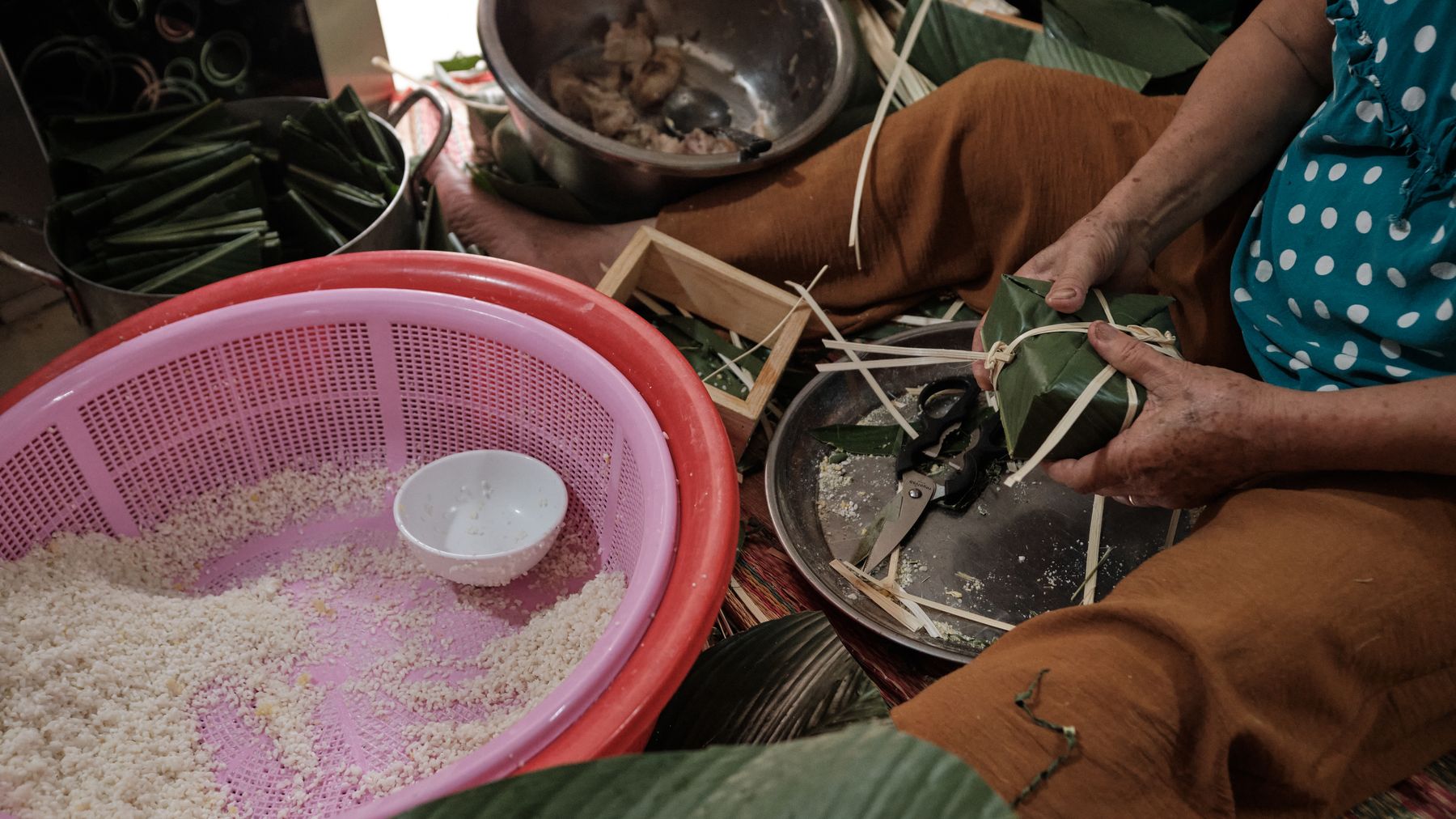
Photo by Nguyen Truong Khang on Pexels
Pickled Bamboo and Fermented Pork
Fermentation runs through this cuisine at every level. "Mang chua" — sour bamboo shoots — are harvested young, sliced or left whole, and packed in brine for weeks. They end up sharp, slightly funky, and indispensable in soups and braised pork dishes. The flavor is more assertive than the mild pickled bamboo you might encounter in pho broth — closer to a proper sour pickle.
"Nem chua (넴쭈어 / 酸肉肠 / ネムチュア)" exists across Vietnam, but the Tay and Nung version tends to be made with a higher ratio of pork skin to meat, wrapped in fig leaves rather than banana leaves, and fermented faster in the cool highland air. Locals eat it with raw garlic and fresh chili. You'll find it at roadside stalls along the Cao Bang loop, often sold in clusters of five or six rolls.
Smoked pork — "thit lon cap nach", the free-range pig raised in highland villages and cold-smoked over hardwood for days — is the prestige protein. It gets sliced thin and eaten with sticky rice, or diced into stir-fries with fermented black beans and wild greens. The smoke flavor is real and deep, not the mild liquid-smoke suggestion you sometimes get in city versions of highland food.
Where to Actually Eat This
Hanoi has a handful of restaurants billing themselves as minority cuisine spots, but the honest answer is: go to the source. The Cao Bang loop — a two or three-day motorbike circuit through Cao Bang province — passes through Tay and Nung villages where home-style cooking is available at small guesthouses and market stalls. Lang Son city, about 155 km northeast of Hanoi, has a permanent covered market (Dong Kinh Market) where Nung vendors sell banh khao, smoked meats, and pickled vegetables daily.
Bac Ha in Lao Cai province, better known for its Sunday market, also has Tay vendors alongside the better-publicized Flower Hmong food. Arrive early — the good stalls are packed up by 10 a.m.
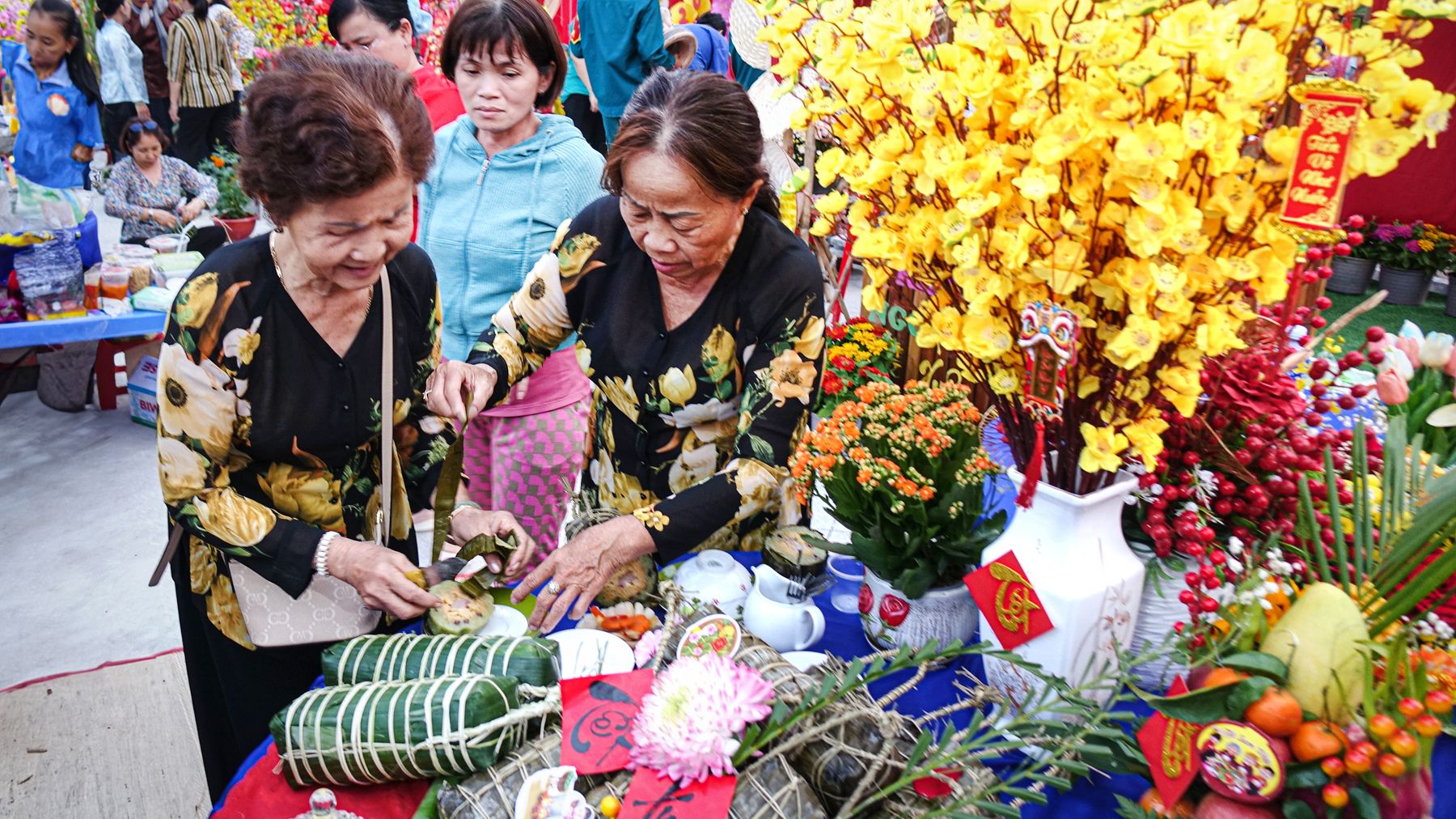
Photo by Vyvan BÙI VY VÂN on Pexels
A Note on Sticky Rice
Nearly every meal in Tay and Nung communities is built around sticky rice rather than jasmine rice. It's steamed in conical bamboo baskets, served hot, and eaten by hand — pinched into small balls and used to scoop up whatever else is on the table. The rice itself, when grown in highland paddies at elevation, has a fragrance and stickiness that lowland varieties don't quite match. If you eat nothing else from this list, eat the sticky rice.
Practical Notes
The best access to Tay and Nung food is on a self-guided motorbike trip through Cao Bang or Lang Son, ideally outside peak summer weekends when guesthouses fill fast. Basic Vietnamese gets you far enough in market interactions — English is rare outside tourist towns. Budget around 80,000–150,000 VND per meal at guesthouse restaurants; market snacks run far cheaper.
Last updated · May 29, 2026 · independently researched, never sponsored.



