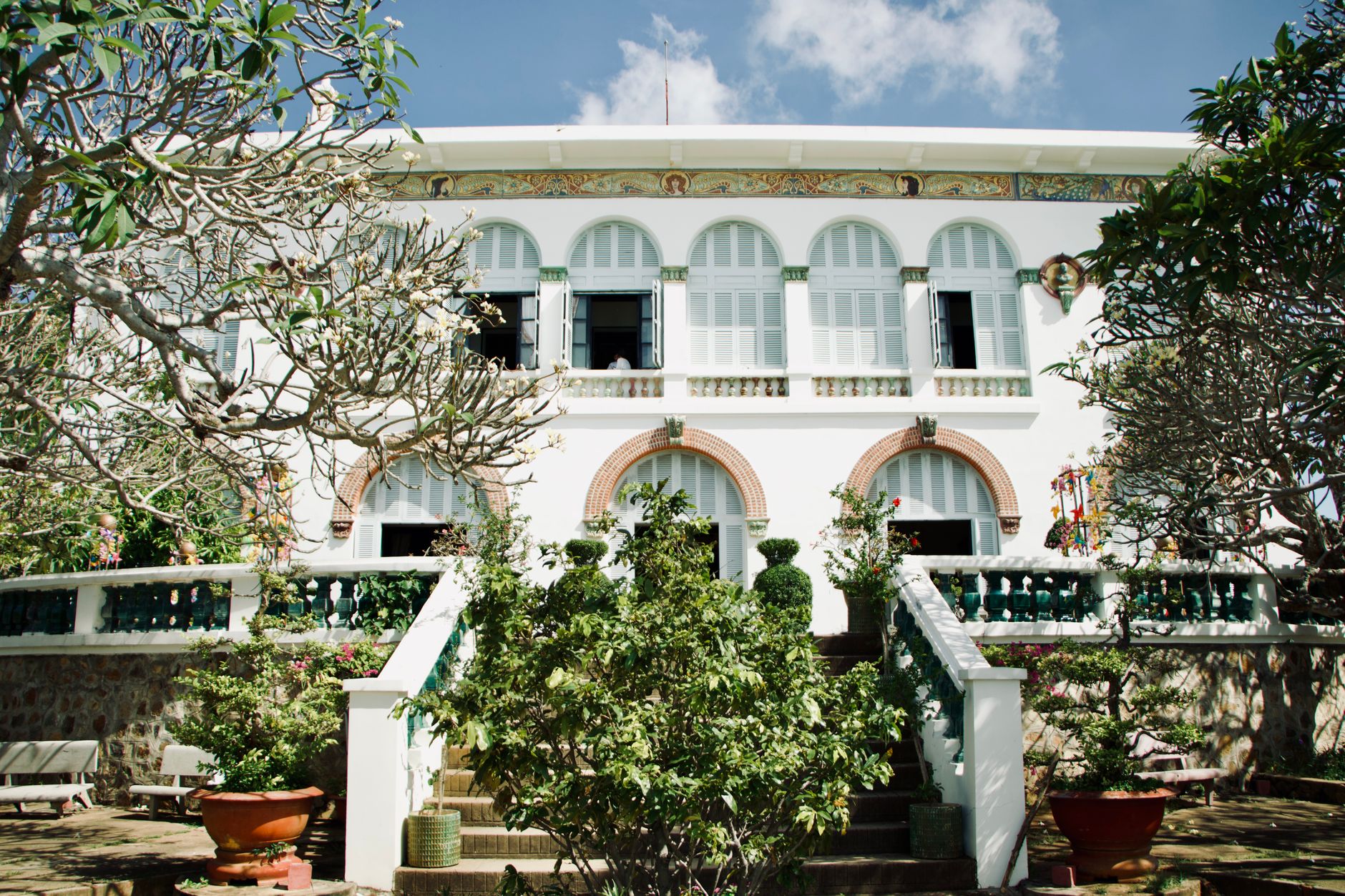
The Museum of Cham Sculpture in Da Nang — known locally as "Bao Tang Cham" — sits on a quiet stretch of Bach Dang Street along the Han River. It holds around 500 artifacts from the Champa kingdom, which controlled much of central Vietnam from roughly the 2nd to 15th centuries. If you have even a passing interest in history, this is the single best indoor attraction in Da Nang.
What it is and why it matters
French archaeologists established the museum in 1915, making it one of the oldest in Southeast Asia. The building itself — a blend of French colonial and Cham-inspired architecture — was designed by Henri Parmentier, who spent decades documenting Cham ruins across central Vietnam.
The collection spans roughly a thousand years of Cham art: sandstone altars, Hindu and Buddhist statuary, elaborate pediments pulled from temple sites at My Son, Dong Duong, Tra Kieu, and other ruins scattered between Da Nang (다낭 / 岘港 / ダナン) and Hue. You'll find Shiva, Vishnu, Ganesha, and Devi figures alongside distinctly Cham pieces like the Tra Kieu altar — one of the finest examples of Cham carving ever recovered.
For travelers who later visit My Son or Po Nagar, seeing the museum first gives real context. The ruins at those sites are largely bare foundations; the sculptural details ended up here.
Best time to visit
Da Nang's dry season runs from March through August, and mornings are best for the museum — it opens at 7:00 AM, and you'll have the galleries mostly to yourself before 9:00. The building has limited air conditioning in some wings, so the cooler morning hours are more comfortable. Avoid midday visits from May to July when temperatures regularly hit 35°C and the older galleries feel stuffy.
Rainy season (September through January) doesn't affect the museum itself, but the garden courtyard — which has some larger sculptures — is nicer in dry weather.
How to get there
The museum is at 02 Thang 9 Street (also marked as Bach Dang in some maps), about 1.5 km south of Da Nang Cathedral and the city center.
- From Da Nang International Airport: 4 km, roughly 15 minutes by taxi. A Grab car costs 40,000–60,000 VND.
- From Hoi An: 30 km northeast. A Grab car runs about 250,000–300,000 VND one way, or you can take the yellow public bus (route 1) for 30,000 VND — it drops you on Bach Dang Street, a two-minute walk from the entrance.
- From Hue (후에 / 顺化 / フエ): 100 km south via the Hai Van Pass road or tunnel. Most travelers come by train (2.5 hours, from 65,000 VND for a hard seat) arriving at Da Nang station, which is 1 km from the museum.
Admission is 60,000 VND for adults. There's no separate fee for cameras.

Photo by ㅤ quang vinh ㅤ on Pexels
What to see inside
The Tra Kieu Altar
This 7th-century sandstone pedestal is the museum's star piece, carved with scenes from the Ramayana. The detail work — dancers, musicians, mythological creatures — is sharp enough that you can make out individual fingers and facial expressions after 1,400 years. It's in the Tra Kieu Gallery on the ground floor.
The Dong Duong Collection
Room 3 houses Buddhist sculptures from the Dong Duong monastery complex, which was the spiritual center of Cham Buddhism in the 9th century. The bronze Tara figure here is striking — it's one of the few Cham bronze pieces that survived.
The My Son Gallery
Sandstone linga, yoni altars, and Shiva statues from My Son dominate this section. If you're planning a trip to My Son, spend time here first. You'll recognize the stylistic details when you see the empty pedestals at the ruins.
The Garden Courtyard
Larger pieces — full-size makara roof ornaments, guardian lion sculptures, and architectural fragments — line the outdoor courtyard. The scale makes more sense outdoors; you get a feel for how these pieces functioned on actual temple facades.
The Upstairs Extension
Added in 2011, the upper floor has multimedia displays and some newer acquisitions. It's less atmospheric than the original galleries but has better English-language signage and a decent timeline of Champa's rise and decline.
Budget 60–90 minutes for a thorough visit. The English captions in the older galleries are minimal, so consider the audio guide (available at the front desk for 20,000 VND) or read up on Champa beforehand.
Where to eat nearby
The museum is a short walk from several local spots. Head two blocks east to Bach Dang Street along the river for "mi quang" — Da Nang's signature turmeric noodle dish with pork, shrimp, herbs, and a small amount of rich broth. Mi Quang 1A on Hai Phong Street (1.2 km north) is a reliable local pick, with bowls running 35,000–45,000 VND.
For something quicker, "banh mi" carts line Nguyen Chi Thanh Street, a five-minute walk from the museum entrance. A loaded sandwich costs 15,000–25,000 VND.
Afterward, if you want iced coffee, look for any small cafe advertising "ca phe sua da" — the stretch of Bach Dang near the Dragon Bridge has several with river-facing seats.
Where to stay
The museum is in central Da Nang, so most hotels are within easy reach.
- Budget: Guesthouses around Nguyen Chi Thanh and Bach Dang streets start at 250,000–400,000 VND per night.
- Mid-range: Hotels along the Han River with decent rooms go for 600,000–1,200,000 VND.
- Beach hotels: My Khe Beach is 3 km east. Rooms with ocean views run from 1,500,000 VND upward.
Staying near the river puts you within walking distance of both the museum and Da Nang's restaurant strip.

Photo by Anh Huynh Tuan on Pexels
Practical tips locals would tell you
- Go early. The museum opens at 7:00 AM and closes at 5:00 PM. The first hour is practically empty.
- Pair it with My Son. Most organized day trips to My Son leave Da Nang around 8:00 AM. Visit the museum the day before so the ruins make more sense.
- Bring a light layer. The newer upstairs galleries have strong air conditioning; the older ground-floor rooms don't.
- The gift shop is decent. Small Cham-style reproduction carvings and books on Champa history are sold near the exit — better quality than the tourist shops on Bach Dang.
Mistakes to avoid
- Skipping it for the beach. A lot of travelers treat Da Nang as a beach-and-"banh xeo" stop. The museum takes under two hours and is genuinely one of the better small museums in Southeast Asia.
- Visiting after My Son. The sculptures here come from My Son and other ruin sites. Seeing them first makes the ruins far more interesting — not the other way around.
- Relying on the English signage alone. The original gallery labels are sparse. The audio guide or a quick Wikipedia read on Champa history before you go fills in major gaps.
- Rushing through the courtyard. The outdoor pieces are easy to walk past, but the scale of the makara carvings and guardian figures is the closest you'll get to understanding how Cham temples actually looked when intact.
Practical notes
The museum is closed on Mondays. Nearest ATMs are on Bach Dang Street, 200 meters north. If you're heading to Hoi An afterward, the bus stop for route 1 is directly outside on Bach Dang — no need to go back to the main bus station.
Last updated · May 29, 2026 · independently researched, never sponsored.