Ten days, three regions, twenty-five dishes. This route runs south to north — or flip it if you're flying into Hanoi — and treats every city as a dedicated eating stop rather than a scenic backdrop.
Day 1 — Saigon: The Southern Classics
Start at Ben Thanh Market before the tour groups arrive. Grab a "banh mi" from Huynh Hoa on Le Thi Rieng — 35,000 VND, stuffed to the point of structural failure. Walk it off along Pham Ngu Lao, then find a plastic stool on Nguyen Trung Truc for a plate of "com tam" (broken rice with grilled pork chop and shredded skin) around 50,000 VND. Lunch is "goi cuon" (fresh spring rolls) at Phuoc Thanh on Tran Hung Dao — two rolls for 20,000 VND, dip them in peanut sauce, not fish sauce.
Day 2 — Saigon: Noodles, Pancakes, and Pork Rolls
Breakfast is "hu tieu (후띠우 / 粿条 / フーティウ)" (clear pork-and-seafood noodle soup) — find a cart in the alleys off Ly Chinh Thang in District 3. This is the dish Saigon does better than anywhere else, and the broth should be lighter than pho. Midday, cross to a "banh xeo" (sizzling crepe) spot on Dinh Cong Trang — the crepe arrives the size of a hubcap, filled with shrimp, pork, and bean sprouts. Tear it into a lettuce wrap with fresh herbs. Evening: "cha gio" (fried pork rolls) at any street stall in Cho Lon, Saigon's Chinatown district. The version here uses taro in the filling.
Day 3 — Mekong Delta Day Trip, then fly to Da Nang
A morning run to Can Tho (two hours by road) gives you "banh canh (반깐 / 粗米粉汤 / バインカイン)" (thick tapioca noodle soup) with crab at the floating market area — 60,000 VND for a bowl that barely fits a fist. Then back to Saigon, afternoon flight to Da Nang. Night flight, no dinner required — you'll eat enough tomorrow.
Day 4 — Da Nang and the Road to Hoi An
Da Nang is a transport hub more than a food capital, but it earns its place for "mi quang" (turmeric-tinted noodles with pork, shrimp, and a shallow broth). Go to Mi Quang Ba Mua on Tran Binh Trong — 40,000 VND. The dish needs crumbled rice crackers and fresh herbs on top or you're doing it wrong. Afternoon, hire a motorbike and ride 30 km south to Hoi An.

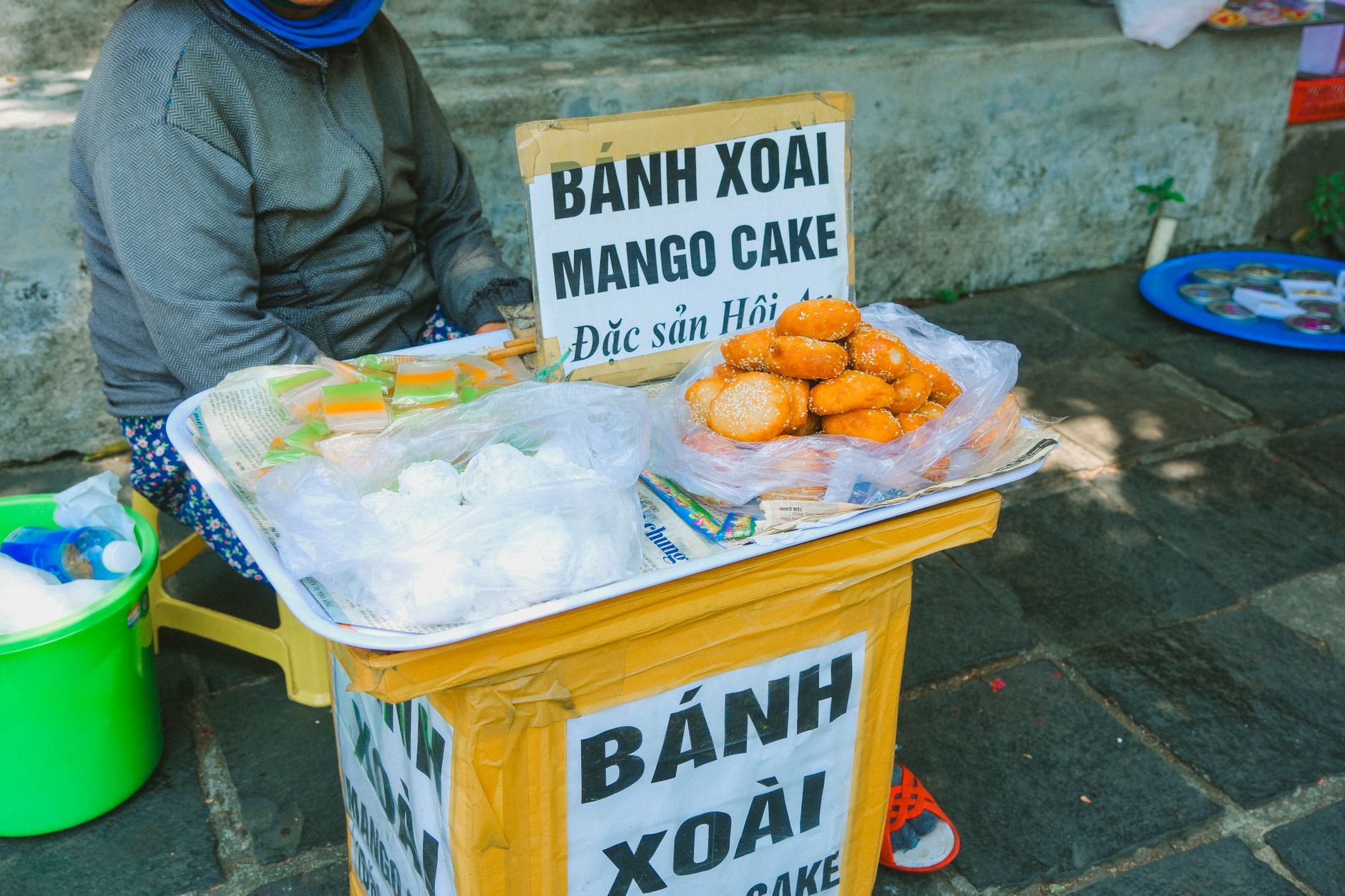
Photo by Pragyan Bezbaruah on Pexels
Day 5 — Hoi An: Two Dishes This Town Owns
Hoi An has one dish it will defend with its life: "cao lau" (thick wheat noodles with pork, croutons, greens, and a near-dry sauce). The noodles are made with water from a specific local well — that's not marketing, it actually changes the texture. Eat it at Thanh Cao Lau on Tran Phu, 45,000 VND. Second dish: "banh cuon" (steamed rolled rice crepes with minced pork and wood ear mushroom) at any of the corner stalls near the covered Japanese Bridge. Lighter and more delicate than it looks; order two portions.
Day 6 — Hue: Central Vietnam's Serious Food City
The four-hour bus ride from Hoi An through the Hai Van Pass is worth the view. Hue is Vietnam's most food-obsessed city per square kilometer. Start with "bun bo hue" — the spicy, lemongrass-heavy beef noodle soup that blows pho out of the water in this city. Go to Bun Bo O Bep on Chi Lang, 45,000 VND. Afternoon: "banh chung" (sticky rice cake with mung bean and pork, wrapped in banana leaf) from a street vendor near the Citadel. It's denser than it looks — half a cake is enough. Evening: "nem chua" (fermented pork rolls) from a shop on Hung Vuong. Eat them cold, wrapped in a betel leaf with garlic and chili.
Day 7 — Hue: The Broth-Based Remainder
Day two in Hue is for "bun rieu" (crab and tomato noodle soup) — the tomato base makes it one of the more distinctive broths in the Vietnamese lineup. Find it on the morning street market near Dong Ba Market, 35,000 VND. This is also the city to try "banh canh cua" (crab-packed thick noodle soup), distinct from the Mekong version in its richer broth. Afternoon train north to Hanoi — the overnight sleeper saves a hotel night.

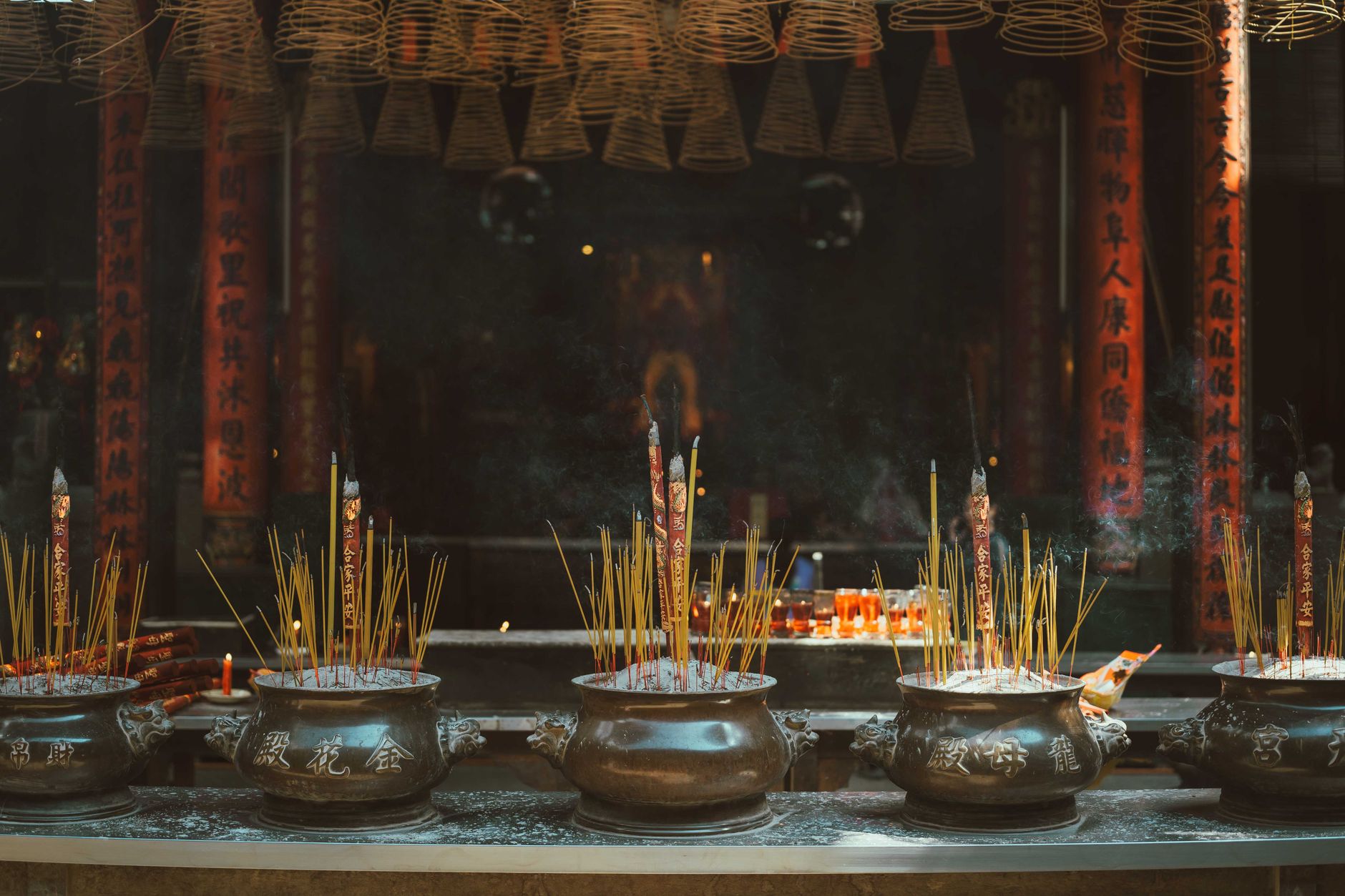
Photo by Nimit N on Pexels
Day 8 — Hanoi: The Northern Anchors
Arrive Hanoi morning, drop bags, head directly to a pho shop. Pho Gia Truyen on Bat Dan is the standard reference — 60,000 VND, beef broth cooked for twelve hours, flat noodles, sliced brisket and tendon. No garnish plate, no sriracha. This is northern pho. By midday, find "bun cha" (grilled pork patties and belly served with cold vermicelli and dipping broth) near Hang Manh. The correct method is to dip the noodles into the broth bowl, not pour it over. Afternoon: walk the Old Quarter, stop at Dong Xuan Market for "bun thang" (a delicate chicken-and-egg noodle soup traditionally made from Tet leftovers) — 45,000 VND.
Day 9 — Hanoi: Drinks and the Dish the Old Quarter Protects
Breakfast is "banh cuon" again, but the Hanoi version — steamed rolls without filling, served with cha lua (pork sausage) and a clear dipping broth. Bun on Thanh Nien Road is a reliable spot. Then coffee: a "ca phe sua da" (iced milk coffee) is fine anywhere, but Hanoi is also where you try "egg coffee" — ca phe trung — at Giang Cafe on Nguyen Huu Huan. It's a warm custard of whisked egg yolk and condensed milk over espresso. Strange and correct. Afternoon: "cha gio" in the northern style (smaller, crispier, rice paper rather than wheat) from a vendor in Hoan Kiem district.
Day 10 — Ninh Binh, then Back
Two hours south of Hanoi, Ninh Binh earns a day stop for one specific dish: "com chay" (scorched rice cakes) served with stir-fried goat and mushroom sauce. It's hyper-regional, around 80,000 VND at any of the restaurants on Hoang Dieu. This is not on every Vietnam itinerary, which is exactly the point. Return to Hanoi by mid-afternoon, which leaves time to find a bia hoi corner near Long Bien Bridge — Hanoi's fresh-draft beer, poured at 7,000 VND a glass, drunk on a plastic stool until the light goes bad.
Practical Notes
Budget 150,000–250,000 VND per day on food alone — this trail eats cheap on purpose. Book overnight trains Hue–Hanoi at least three days ahead, especially in peak season (December–February). The best eating hours are 7–9am for breakfast dishes like pho and bun cha, which often sell out before noon.
Last updated · May 29, 2026 · independently researched, never sponsored.