Wise works better in Vietnam (베트남 / 越南 / ベトナム) than most travelers expect — but only if you load VND before you land, not after you touch an ATM.
The VND Balance Feature
This is the single most important thing to understand. Wise lets you hold Vietnamese dong directly in your account before you arrive. Go into the Wise app, convert your home currency to VND, and that balance sits there ready to use.
Why does this matter? Because when you pay at a merchant or withdraw cash, Wise spends from your VND balance first — no conversion happens at the point of transaction, which means no conversion fee. The exchange rate you locked in during the top-up is the mid-market rate Wise used at that moment. On a 10-million VND withdrawal, that difference versus a dynamic currency conversion can save you 300,000–500,000 VND.
If you don't pre-load VND and your account only holds USD or EUR, Wise will convert on the fly at the mid-market rate, which is still decent — but you lose the ability to time your conversion.
Using the Card at Vietnamese ATMs
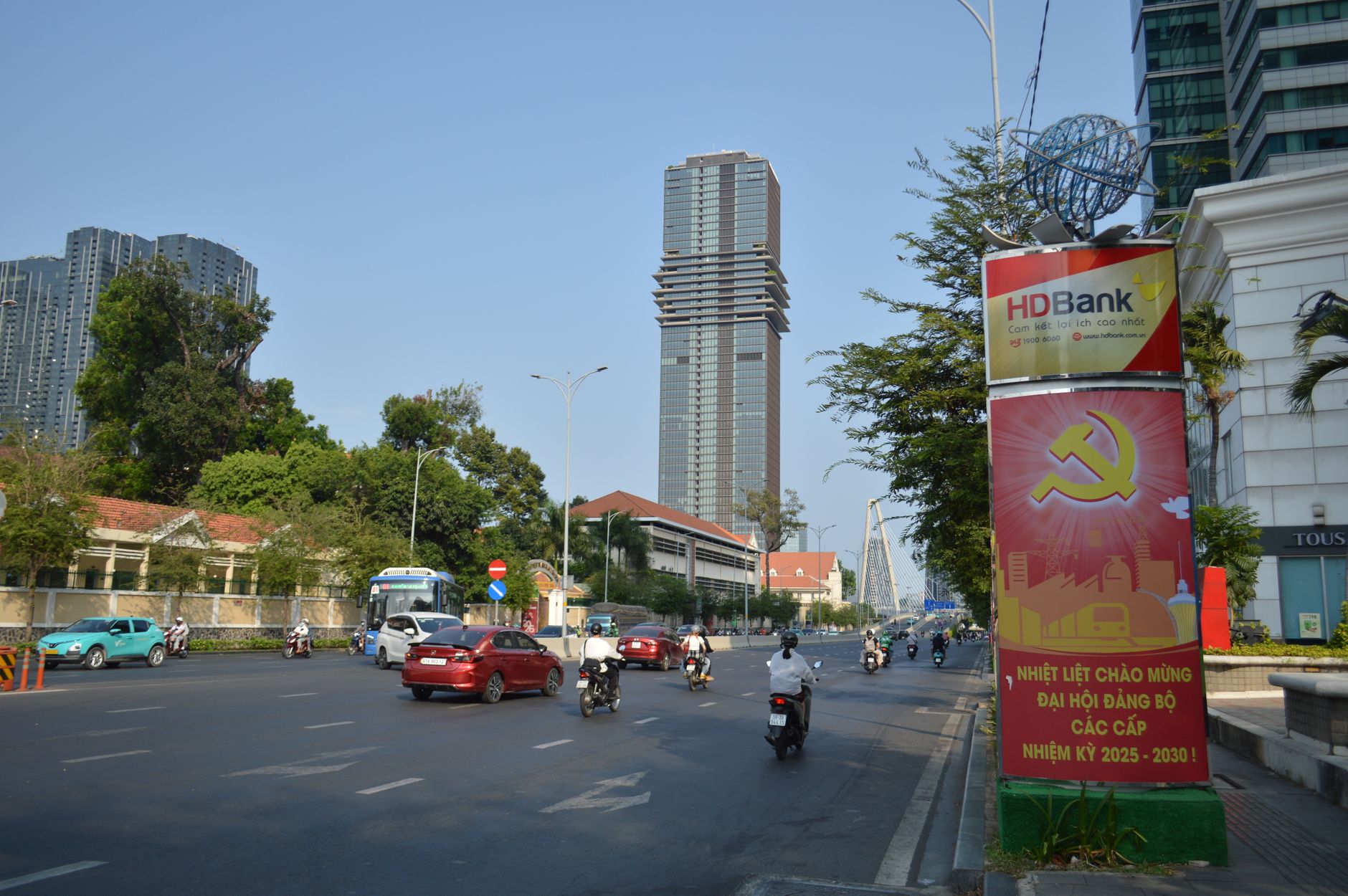
Vietnam's ATM network is reliable in cities. In Hanoi's Old Quarter, Saigon's District 1, Hoi An, and Da Nang you'll find machines every few hundred meters. Outside those centers — think rural Ha Giang or the island roads of Phu Quoc — stock up before you go.
Banks to look for:
- Vietcombank — widespread, generally reliable, accepts most foreign cards
- Techcombank — good uptime, modern machines
- BIDV — solid coverage outside major cities
- Vietinbank — common in central and northern provinces
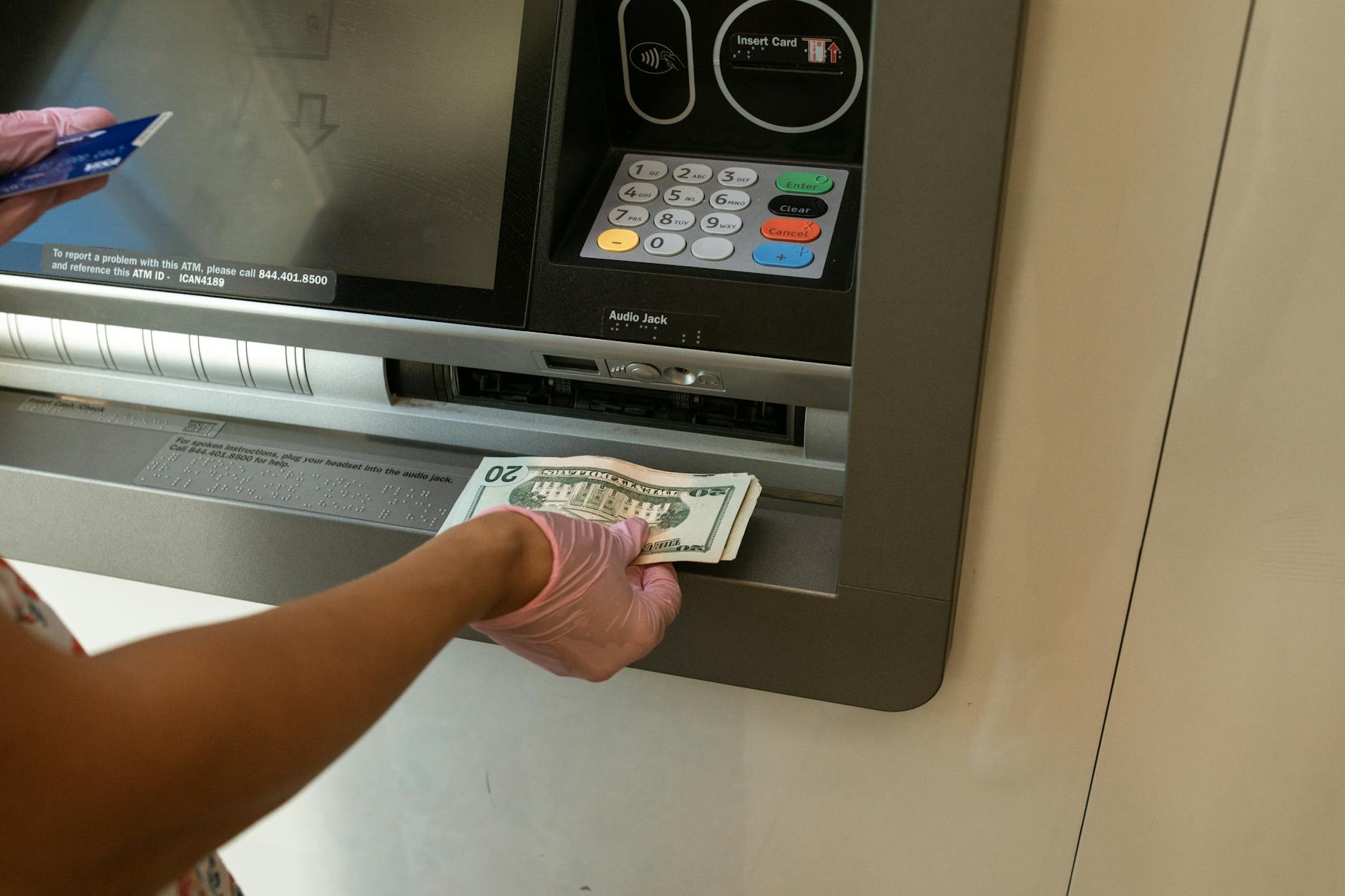
Avoid the small "Cashplus" or "Euronet" branded ATMs you sometimes see in tourist areas. They charge high operator fees (often 85,000–110,000 VND per transaction on top of whatever your bank charges) and tend to offer dynamic currency conversion prompts designed to confuse you.
Always decline the ATM's offer to convert for you. When the screen asks "Would you like to be charged in USD?" — choose VND. Always VND. That prompt is Dynamic Currency Conversion (DCC); the machine's rate is typically 3–5% worse than Wise's.
Wise itself charges no fee for the first two ATM withdrawals per month up to a combined $100 USD equivalent. After that, there's a 1.75% fee on the amount withdrawn plus a small flat fee (around $1.50). For a trip of two to three weeks, most travelers can stay under the threshold with a mix of ATM cash and card payments.
Card Payments at Merchants
Vietnam is more cash-dependent than many travelers assume, especially for street food and markets. You're not paying for "banh mi" at a pavement stall with a card. But mid-range restaurants, hotel checkouts, supermarkets like WinMart and Co.opmart, and most convenience stores (Circle K, GS25, Bach Hoa Xanh) accept Visa/Mastercard without issue.
Wise runs on Mastercard in most markets. It's accepted wherever you see the Mastercard logo, which covers the majority of point-of-sale terminals in urban Vietnam.
If a merchant terminal asks whether to charge in USD or VND — same rule as the ATM: always VND.

Photo by Sewupari Studio on Pexels
Fee Structure at a Glance
| Situation | What you pay | |---|---| | Paying at merchant, VND balance loaded | 0% | | Paying at merchant, no VND balance (auto-convert) | ~0.5–0.6% (Wise mid-market conversion fee) | | ATM withdrawal, within monthly free tier | 0% | | ATM withdrawal, above free tier | 1.75% + ~35,000 VND flat | | ATM operator surcharge (bank's own fee) | 0–85,000 VND depending on bank |
Vietcombank and BIDV machines typically don't charge their own surcharge for foreign cards, but this changes. Check the screen before confirming.
How It Compares to Revolut
Revolut is popular with European travelers but has real friction points in Vietnam. The free plan limits fee-free ATM withdrawals to £200/month before a 2% fee kicks in, and Revolut's weekend markup on currency conversion has caught people out. More practically, Revolut's customer support is harder to reach from Southeast Asia time zones when something goes wrong.
Wise's fee structure is more transparent, its exchange rate doesn't shift on weekends, and the ability to pre-load VND specifically is a cleaner solution for Vietnam's cash economy. If you're already a Revolut user with a paid plan and comfortable with it, there's no urgent reason to switch. But if you're starting fresh or doing a first Southeast Asia trip, Wise is the simpler default.

Photo by Arnie Chou on Pexels
Setup Checklist Before You Fly
- Verify your identity in the app (required before the card works for ATM withdrawals)
- Order the physical card at least 1–2 weeks before departure; digital card works for in-app payments but not ATMs
- Add your home currency funds, then convert a chunk to VND
- Enable the card for international use in app settings
- Note Wise's 24/7 in-app support number in case the card is swallowed by a machine
Bottom Line
Pre-load VND, decline DCC every time, and stick to bank ATMs rather than independent machines. Done right, you'll pay close to zero in fees across a typical two-week trip. Keep a small buffer of cash for markets, street food, and anywhere that hasn't seen a card terminal yet — which in Vietnam, is still plenty of places.
Last updated · May 30, 2026 · independently researched, never sponsored.