它的背景与重要性
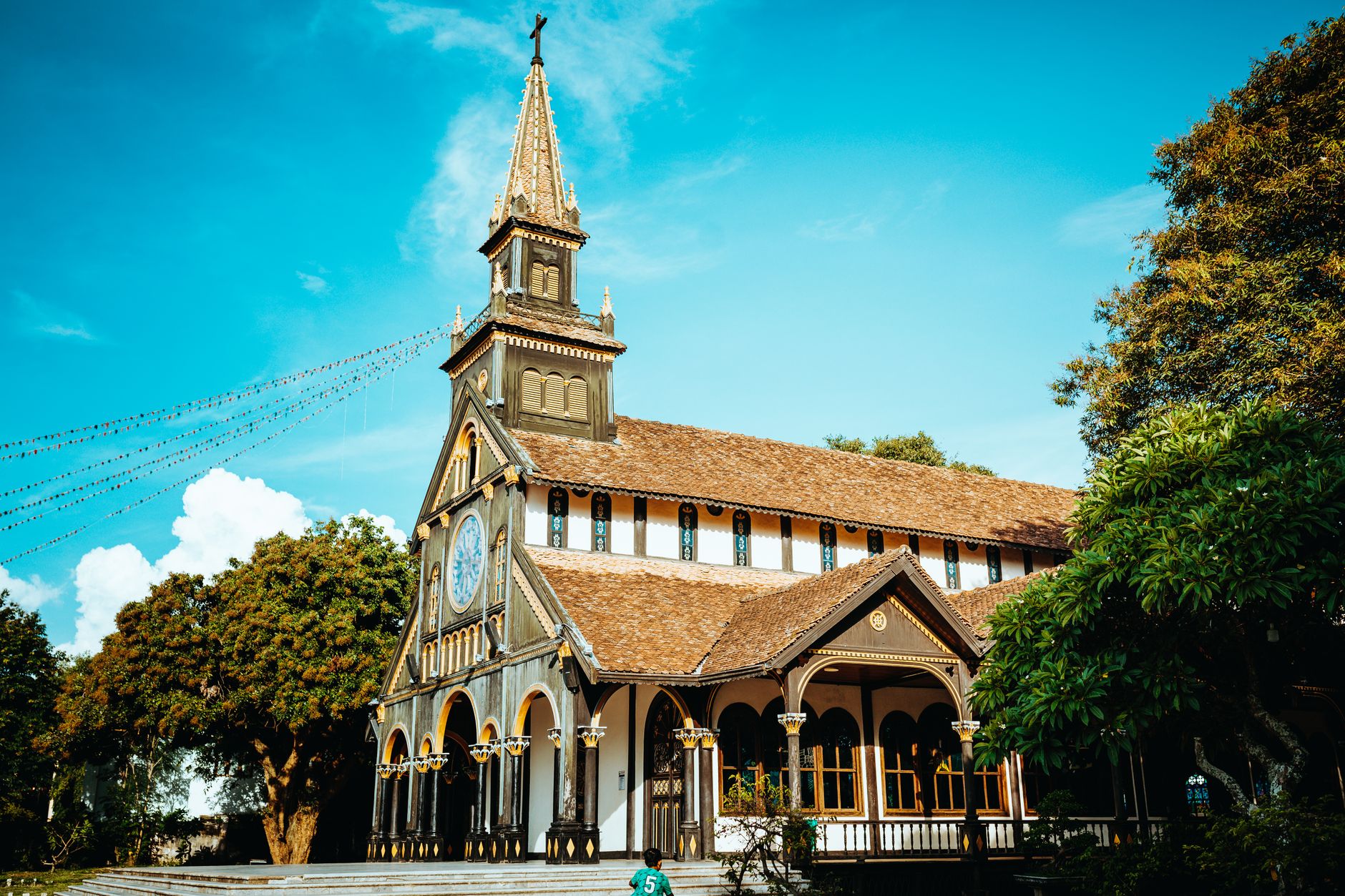
Toa Giam Muc Kon Tum(Kon Tum主教府)是一座以木制教堂为核心的天主教建筑群,由法国传教士和当地Ba Na工匠于1913年至1918年间建造。整座建筑没有使用一根钉子。建造者采用了传统的Ba Na木材互锁技术,将硬木梁柱精准地榫接在一起。得益于这种精湛的工艺,该建筑在经历了一个多世纪的战争、风暴和中部高原的潮湿气候后,依然屹立不倒。
主教堂有时被称为Kon Tum木教堂(Nha Tho Go Kon Tum),旁边还有一座神学院、一家孤儿院以及一个展示高地原住民文化的小型博物馆。它是越南为数不多的将欧洲罗马式教堂建筑与Ba Na民族设计真正融合的地方之一——这并非为了打造旅游景点,而是当地社区真实的建造方式。
Kon Tum市位于越南中部高原,历史上属于Kon Tum省。经过近期的行政区划调整,更广泛的区域现在归属于扩建后的Quang Ngai省。该建筑群仍位于Kon Tum市区内,坐落在靠近Dak Bla河的Nguyen Hue街上。
为什么值得一游
大多数途经中部高原的人,都是在往返于Da Nang或Hue与Da Lat周边的南部高地之间。Kon Tum是这条路线上的天然中转站,而主教府则是镇上最具特色的建筑。
但这里吸引人的不仅仅是建筑。这座建筑群是一扇了解Ba Na、Gia Rai等高地社区的窗口。在Kon Tum,这些原住民文化无处不在,却很少向外人深入解读。院内的小型民族博物馆展示了传统的纺织品、乐器和祭祀用品,如果您不打算雇导游或徒步前往偏远村庄,这里将是了解当地文化最好的入门场所之一。
最佳游玩时间
Kon Tum有两个季节:旱季(11月至次年4月)和雨季(5月至10月)。最佳旅游月份是12月至次年3月——白天温暖,气温在25–28°C左右,夜晚凉爽,几乎不下雨。此时的风景因刚过去的雨季而显得郁郁葱葱,同时道路干燥,易于通行。
尽量避开9月和10月。那是降雨高峰期,虽然教堂本身不受影响,但通往附近Ba Na村庄的土路会变成红色的泥泞。
星期天早晨非常值得一去:当地的Ba Na天主教社区会举行弥撒,并用他们自己的语言演唱赞美诗。这不是一场表演,而是真实的宗教仪式,所以如果您参加,请安静地坐在后排。
如何前往
距离最近的主要交通枢纽是**Da Nang**,沿QL14E和AH17公路向北行驶约290 km。
- 从Da Nang乘巴士: Da Nang中心汽车站每天都有直达巴士。车程约5.5–6小时,票价在150,000–200,000 VND左右。有多家客运公司运营此路线;可以在车站或通过Vexere应用程序购票。
- 摩托车: 从Da Nang出发,途经Kham Duc和Ho Chi Minh公路前往Kon Tum,是越南中部最棒的摩托车骑行路线之一——沿途有山口、咖啡种植园,而且一旦离开海岸线,交通流量就非常小。建议预留一整天的时间。
- 从Hue出发: 距离约320 km。乘坐巴士需要7–8小时,需要在Da Nang换乘,如果有直达车也可乘坐。
- 从Pleiku(Gia Lai)出发: 位于其以南仅50 km处。当地巴士班次频繁,车程约1小时,票价不到50,000 VND。Pleiku还有一个国内机场,有来自Hanoi和Saigon的航班。
抵达Kon Tum市区后,主教府就位于Nguyen Hue街,距离市中心约1 km。乘坐“xe om”(摩托车出租车)或Grab的费用为10,000–15,000 VND。

照片由 Dương Nhân 拍摄,来自 Pexels
游玩推荐
1. 漫步木制教堂
教堂内部光线昏暗、凉爽,散发着老木头的气味。抬头看看——天花板的结构完美展现了Ba Na的榫卯工艺。彩色玻璃窗是在法国制作的,但墙上的装饰图案却将天主教的图像与Ba Na的几何图案巧妙融合。建议留出20–30分钟的时间细细品味。
2. 参观民族博物馆
博物馆虽小,但内容非常丰富。展品涵盖了Ba Na长屋的构造、中部高原的“cong chieng”(锣文化)、编织图案以及祭祀习俗。免费入场。通常在上午和下午早些时候开放——不要在午餐时间去,那时通常会关门。
3. 跨越Dak Bla河前往Kon Klor吊桥
这座步行吊桥位于教堂以东约3 km处,连接着对岸的一个Ba Na村庄。吊桥本身非常上镜——漆着鲜艳的颜色,在宽阔的棕色河面上微微摇晃。在对岸,您可以看到一座传统的“rong”(公共房屋),其陡峭的屋顶极具特色。
4. 漫步神学院庭院
主教堂后面的神学院花园安静、阴凉,通常空无一人。这里有一个石窟和几座同样是木制建筑风格的古老建筑。这是一个适合坐下来静静休息的好地方。
5. 捕捉黄金时刻的光影
教堂朝东。傍晚的阳光会照在教堂的背面和侧面,温暖的光线透过彩色玻璃窗,非常值得一看——建议在旱季的下午4:00–4:30左右到达。
附近美食推荐
Kon Tum的饮食偏向高地风味。有两样东西一定要尝尝:
- “Com lam”——在炭火上用竹筒烤制的糯米饭。在Nguyen Hue街沿线和市场附近的小摊上有售。每筒大约15,000–20,000 VND。通常搭配烤猪肉或水牛肉干一起食用。
- “Goi la”——一种DIY的卷饼菜肴,包含几十种不同的树叶、香草、米纸、细米粉和各种肉类。Dak Bla河附近的餐厅专门供应这道菜。两人份的丰盛套餐大约需要150,000–200,000 VND。这顿饭互动性强、吃法随性,将是您在越南吃过的最具特色的美食之一。
至于越南咖啡,Kon Tum周围遍布咖啡种植园。任何一家当地咖啡馆都会供应浓郁、新鲜烘焙的咖啡——比您在大多数旅游小镇喝到的要好得多。
住宿推荐
- 经济型(200,000–400,000 VND/晚): Nguyen Hue街和Phan Dinh Phung街上的基础宾馆。足够干净,有空调和热水。但不要指望店主会说英语。
- 中档型(500,000–900,000 VND/晚): 市中心附近有几家较新的酒店,房间条件不错。Indochine Kon Tum Hotel是一个可靠的选择。
- 民宿: Dak Bla河对岸的村庄里有一些Ba Na社区民宿。可以向当地旅游局或您入住的宾馆打听——这些在Booking.com上是找不到的。

照片由 Duy Nguyen 拍摄,来自 Pexels
当地人的实用建议
- 在教堂穿着要得体。遮住肩膀和膝盖。这里是一个活跃的礼拜场所,而不是博物馆。
- 携带现金。 Kon Tum有自动取款机,但许多小餐馆和所有市场摊位都只收现金。
- 学习两个词: “Xin chao”(你好)和“cam on”(谢谢)。Kon Tum的外国游客远少于Hoi An或Da Nang——入乡随俗的一点小努力会带来很大的帮助。
- 建筑群免费入场,但欢迎捐款。教堂入口附近有一个捐款箱。
避免常见误区
- 走马观花。 人们有时会把它当作一个只停留15分钟的拍照点。但实际上,博物馆、花园和横跨河流的吊桥很容易就能让您逛上半天。
- 完全跳过Kon Tum。 许多游客从Da Nang直接飞驰到Da Lat。Kon Tum值得您住上一晚——这里很安静,食物与沿海地区不同,而且这种高地文化是您在Hue或Hoi An找不到的。
- 只参观教堂。 整个建筑群都很有意义。请走遍整个庭院。
实用须知
Kon Tum是越南中部一个游客较少的角落,适合放慢脚步细细品味。主教府是这里的核心,但小镇本身——河畔漫步、高地美食、近在咫尺的Ba Na村庄——使其成为在沿海和南部高地之间停留一两晚的绝佳选择。
最后更新 · May 29, 2026 · 独立调研,无任何赞助。