ATK Dinh Hoa — short for An Toan Khu, or "Safe Zone" — is a cluster of wartime sites spread across the forested hills of Dinh Hoa district in Thai Nguyen province. If you're interested in Vietnam (베트남 / 越南 / ベトナム)'s 20th-century history beyond the well-trodden Cu Chi Tunnels circuit, this is one of the more rewarding places to visit in the north.
What It Is and Why It Matters
During the resistance war against French colonial forces in the late 1940s and early 1950s, Vietnamese revolutionary leaders operated from a network of hidden bases in the mountains north of Hanoi (하노이 / 河内 / ハノイ). ATK Dinh Hoa was the most important of these — a remote headquarters where military strategy was planned and government operations continued under the jungle canopy. The site sprawls across several communes in Dinh Hoa district, covering roughly 100 hectares of hilly terrain dotted with reconstructed huts, tunnels, meeting halls, and command posts.
What makes ATK different from a typical museum is scale. You're not walking through a single building — you're moving through a landscape. Bamboo-walled shelters sit along stream banks, connected by footpaths through dense vegetation. It feels less like a curated exhibit and more like stepping into the geography of a particular moment in history.
Why Travelers Go
Most visitors are Vietnamese — school groups, families, history enthusiasts. Foreign travelers are rare here, which is part of its appeal. There's no tourist infrastructure to speak of, no souvenir gauntlet, no entrance queue. You get the site more or less to yourself on a weekday.
Beyond the history, the setting is genuinely appealing. Dinh Hoa district sits at the edge of where the Red River Delta starts crumpling into the northern highlands. The drive up is through tea plantations and small Tay and Nung ethnic-minority villages. If you're heading toward Bac Kan or Ba Be Lake, ATK slots in naturally as a half-day stop.
Best Time to Visit
September through November is ideal — the rains taper off, the air is cooler, and the forest is still green. March through May works too, though it can get hazy. Avoid June through August if you can; the trails get muddy and leeches come out in the wet undergrowth. December and January are chilly up here — temperatures can dip below 10°C at night — but mornings are crisp and the site is especially quiet.
Photo by Võ Văn Tiến on Pexels
How to Get There from Hanoi
ATK Dinh Hoa is about 160 km north of Hanoi, roughly a 3.5-hour drive. The most practical route:
- By motorbike or car: Take the Hanoi–Thai Nguyen expressway (QL3 new road) to Thai Nguyen city, then follow QL3 old road north through Dai Tu district into Dinh Hoa. The last 40 km from Thai Nguyen city is on provincial roads — decent tarmac, some winding sections. If you're riding a motorbike, budget 4 hours from central Hanoi.
- By bus: Catch a bus from My Dinh or Gia Lam station to Thai Nguyen city (around 70,000–90,000 VND, 2 hours). From Thai Nguyen bus station, local buses run to Dinh Hoa town (Cho Chu), about 50 km further north, for roughly 40,000 VND. From Cho Chu, you'll need a "xe om" (motorbike taxi) the final 10 km to the main ATK site — expect to pay 50,000–80,000 VND.
- By private car/taxi from Hanoi: A day-trip hire runs around 1,500,000–2,000,000 VND round trip, depending on your negotiation skills and the car.
No train service reaches Dinh Hoa.
What to Do — 5 Specific Things
1. Walk the Ho Chi Minh Residence Complex
The main cluster of thatched-roof huts along Khuon Tat stream is the centerpiece. A reconstructed stilt house, a working area, and a simple kitchen sit under a canopy of old trees. It's modest and small — a good reminder of how bare-bones wartime conditions were.
2. Visit the Tunnel and Shelter Network
Several tunnels and hillside shelters are open to walk through. They're less elaborate than the Cu Chi Tunnels but give you a sense of how the terrain itself was used as defense. Bring a flashlight — some sections are unlit.
3. Explore the Surrounding Tea Hills
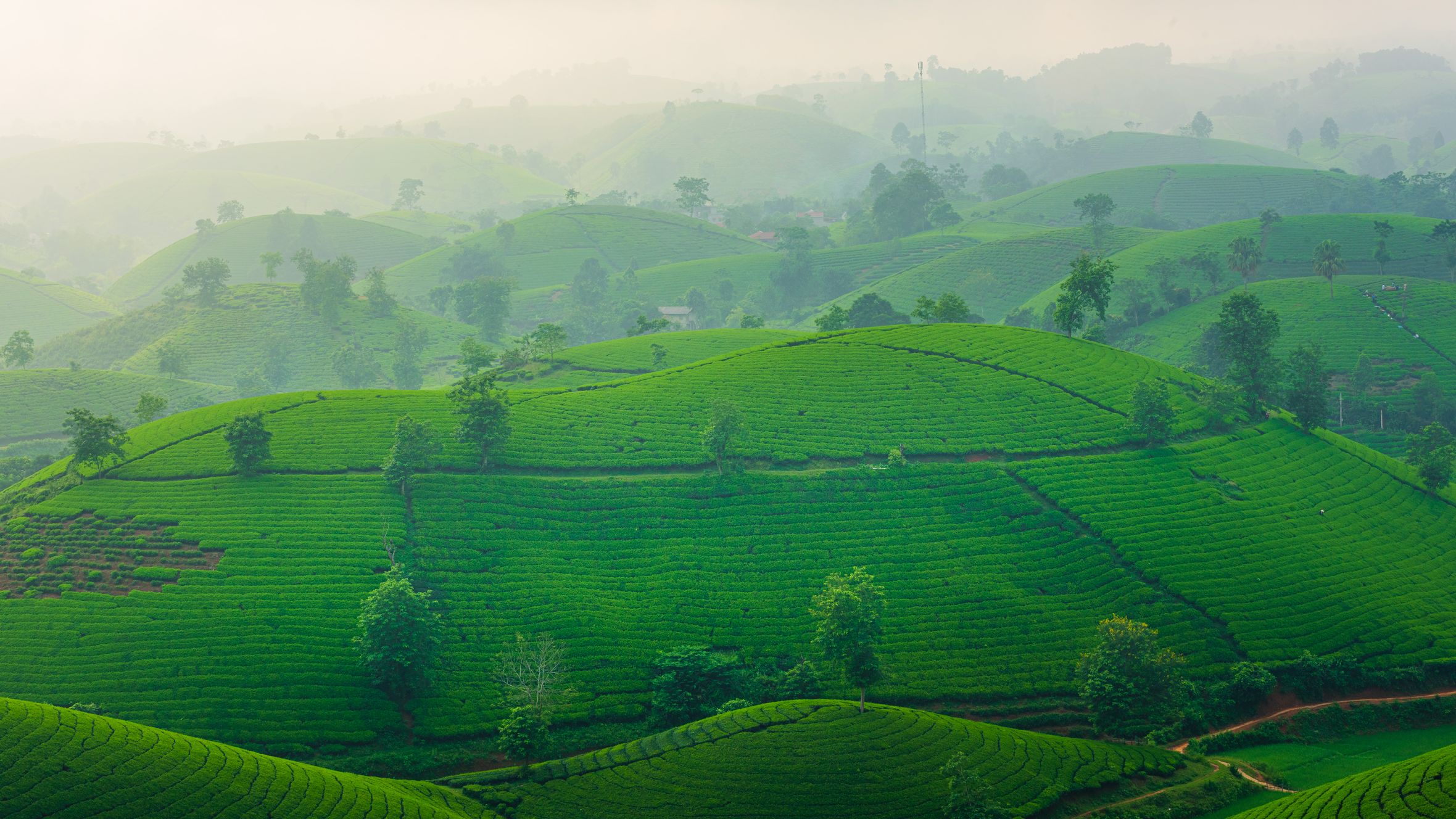
Thai Nguyen is Vietnam's most famous tea-producing province. The hills around Dinh Hoa are covered in "che" (tea) plantations, and small family operations will let you watch the drying and rolling process. Thai Nguyen green tea makes a good, lightweight souvenir.
4. Stop at the ATK Museum in Cho Chu
A small museum in Cho Chu town has maps, photographs, and artifacts. It won't take more than 30–45 minutes, but it gives useful context before you head to the actual sites. Signage is mostly in Vietnamese — Google Translate's camera mode helps.
5. Drive Out to Nui Coc Lake
About 25 km south of Dinh Hoa, Nui Coc Lake is a large reservoir surrounded by pine-covered hills. It's a decent lunch stop or a place to stretch your legs if you're driving back toward Thai Nguyen city. Boat trips run around 100,000–200,000 VND per person.
Where to Eat Nearby
Dinh Hoa isn't a food destination, but you eat well enough. Look for local "com binh dan" (everyday rice plates) in Cho Chu town — grilled pork, greens, tofu, rice, the works, for 30,000–50,000 VND.
The regional specialty worth trying is "banh coong," a small, round rice cake cooked in a mold and topped with minced pork or shrimp — common in Thai Nguyen and Bac Kan but hard to find elsewhere. Street vendors in Cho Chu market sell them in the morning for 3,000–5,000 VND each.
If you detour through Thai Nguyen city on the way back, the riverside restaurants along the Cau River serve solid "pho" and decent "bun cha."
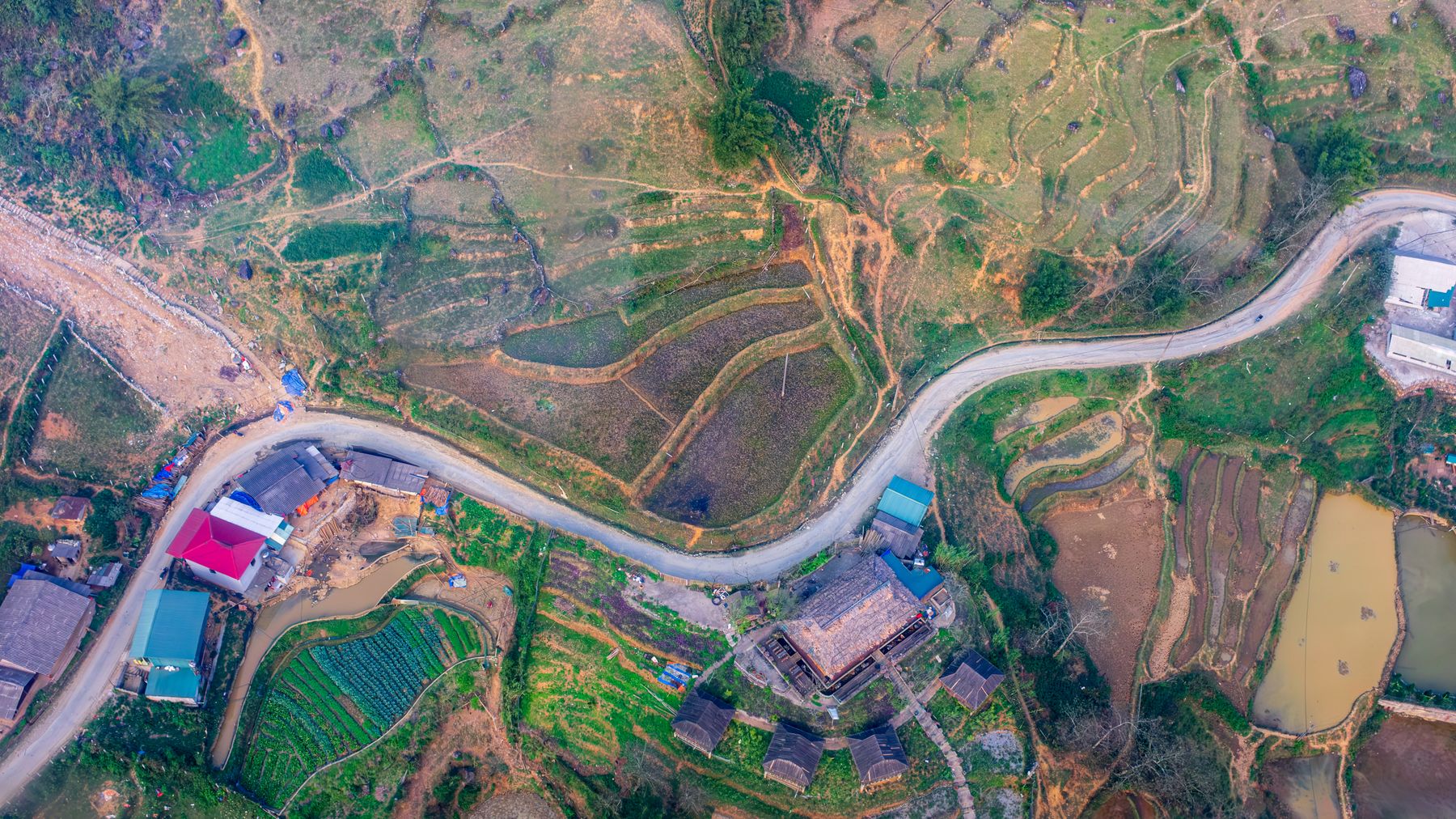
Photo by Kirandeep Singh Walia on Pexels
Where to Stay
Most travelers do ATK as a day trip from Hanoi or as a stop en route north. If you want to overnight:
- Cho Chu town: A handful of basic guesthouses ("nha nghi") for 200,000–350,000 VND/night. Clean enough, don't expect frills.
- Thai Nguyen city: More options here — budget hotels from 300,000 VND, mid-range places around 500,000–800,000 VND. Dong A Hotel and Viet Trung Hotel are reliable mid-range picks.
- Homestays: A few families in the Dinh Hoa area offer homestay rooms, mostly catering to Vietnamese visitors. Ask at the museum or ATK entrance for current contacts.
Practical Tips
- Wear proper shoes. The paths between sites are unpaved and uneven, especially after rain.
- Bring water and snacks. There's no convenience store at the site itself.
- A basic level of Vietnamese — or a translation app — goes a long way. English signage is minimal, and guides are almost exclusively Vietnamese-speaking.
- Entry to the main ATK complex is free. The museum may charge a small fee (10,000–20,000 VND).
Mistakes to Avoid
- Underestimating the spread. ATK isn't one neat compound. Sites are scattered across several kilometers. You need wheels — a motorbike, bicycle, or car — to cover it properly. Walking between all of them in a day isn't realistic.
- Showing up without context. Read a bit about the First Indochina War before you go, or the site will just look like huts in the woods. Even a quick Wikipedia skim helps.
- Skipping Thai Nguyen tea. You're in the tea capital of Vietnam. Stop at a roadside tea shop on the drive back, drink a pot, and buy a bag. It costs almost nothing and tastes better here than anywhere else in the country.
Last updated · May 17, 2026 · independently researched, never sponsored.