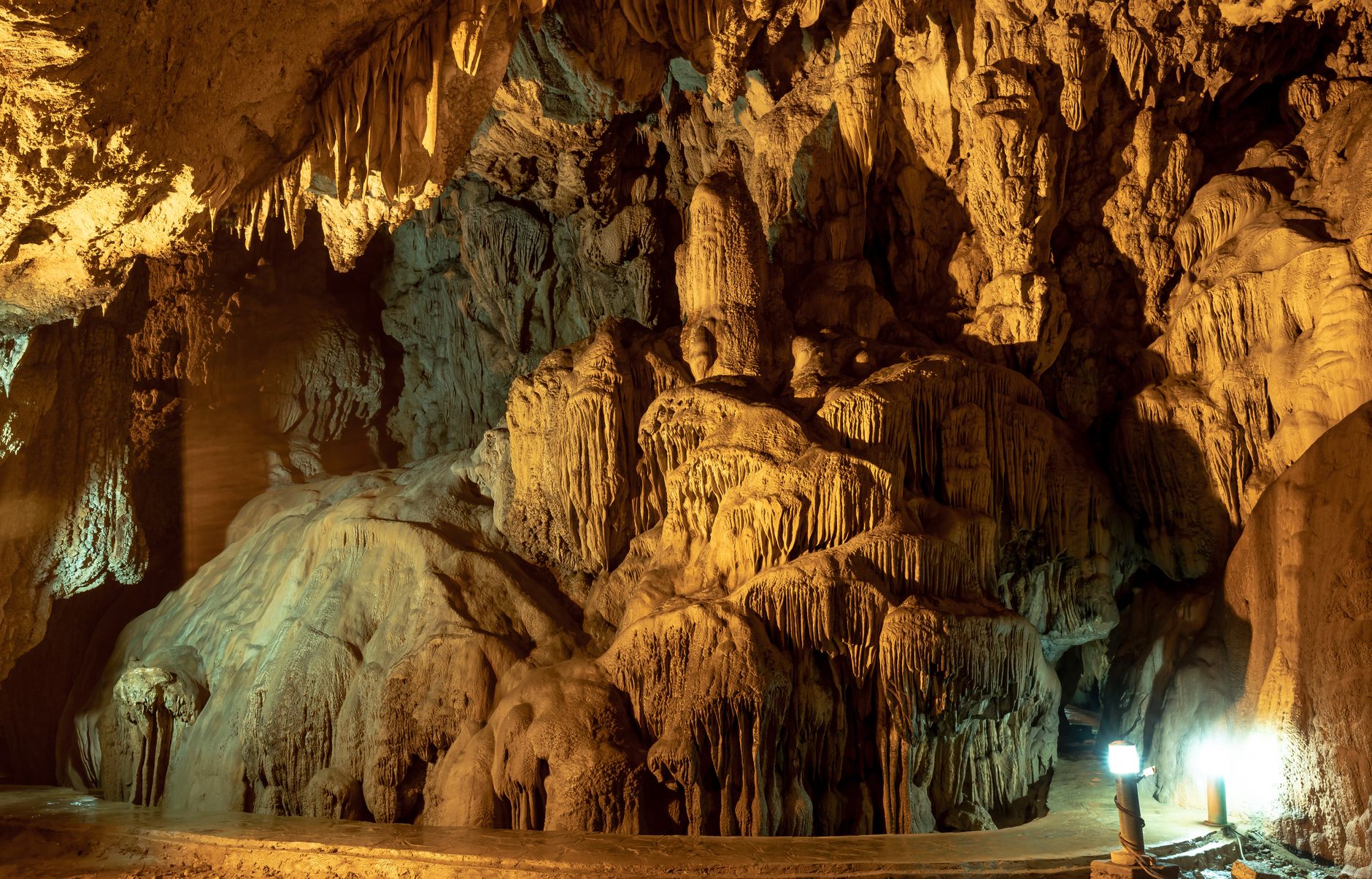
Dong Puong sits in the karst mountains of what used to be Bac Kan province before the area was merged into greater Thai Nguyen. It's a large limestone cave — not a show cave with colored lights and handrails, but a raw, quiet space where you can hear water dripping off stalactites the size of your arm. If you're in the north and want something beyond Hanoi's day-trip circuit, this is worth the detour.
What it is
Dong Puong is a natural limestone cave carved into the hills roughly 130 km north of Thai Nguyen city, in the mountainous zone that borders the old Bac Kan boundary. The cave stretches several hundred meters into the hillside, with chambers that open up to surprising heights. Stalactites and stalagmites have been forming here for millennia, and because visitor numbers stay low, most of the formations are intact — no broken tips, no graffiti.
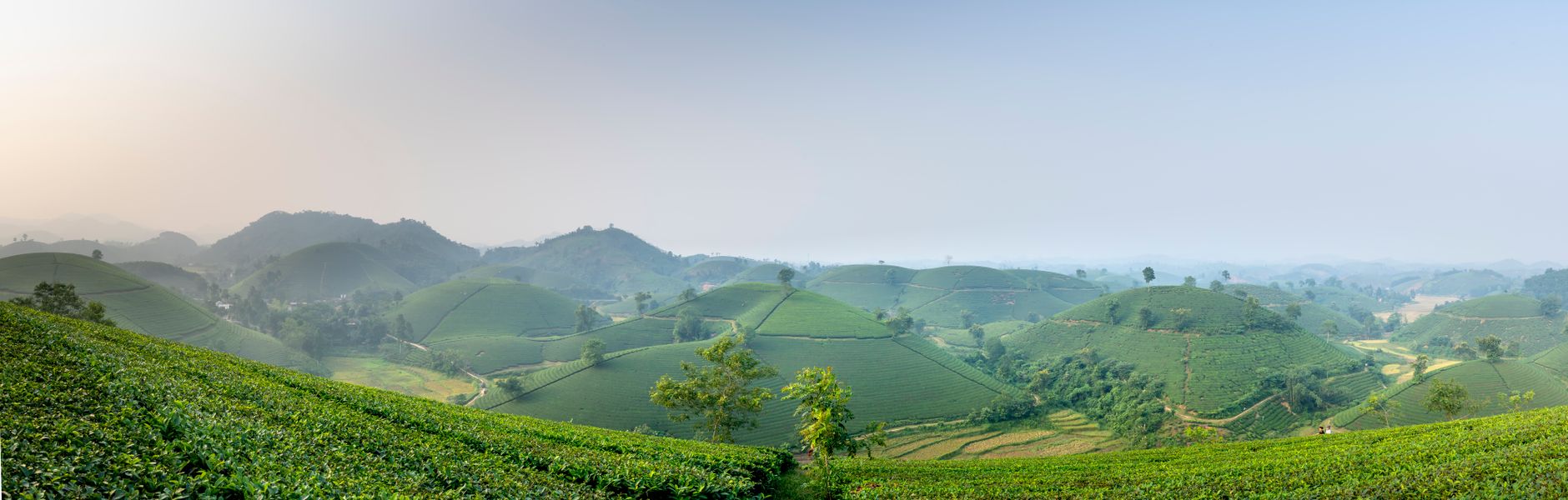
The surrounding landscape is classic northern Vietnam (베트남 / 越南 / ベトナム) karst: green rice paddies backed by sheer limestone walls, small Tay and Nung villages with stilt houses, and roads that wind through valleys where fog sits until mid-morning. The cave itself has been known to local communities for generations, used historically as shelter during wartime and as a site for local spiritual practices.
Why travelers go
Honestly, most don't — and that's the draw. Dong Puong doesn't appear on mainstream tourist itineraries. You won't find tour buses or souvenir shops at the entrance. People who come here are usually motorbike travelers heading between Thai Nguyen and the Ha Giang loop, or domestic visitors from nearby towns on weekend outings.
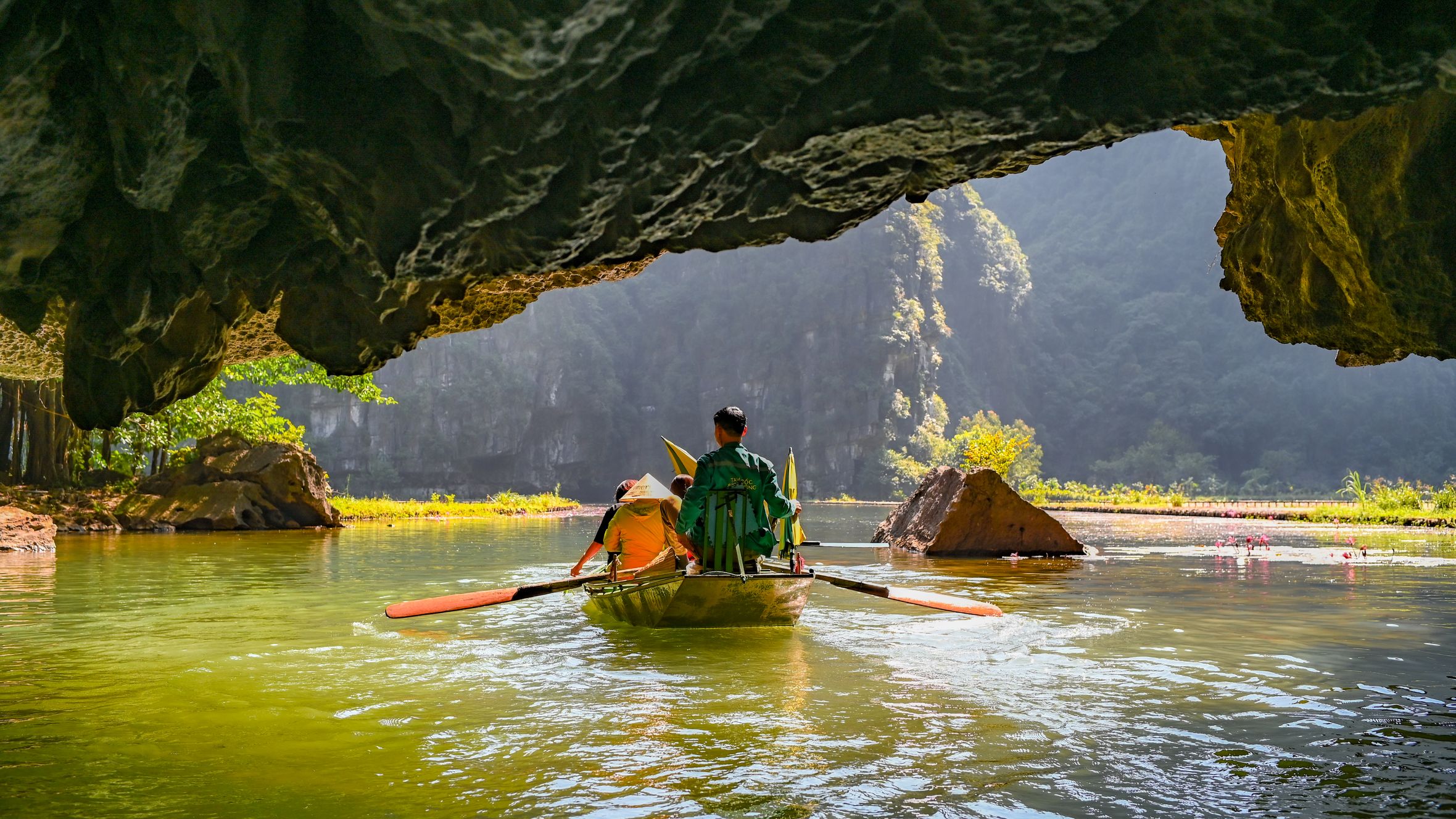
The appeal is straightforward: a genuinely uncrowded cave in a scenic valley, with the kind of quiet that's hard to find at more accessible sites like those around Ninh Binh (닌빈 / 宁平 / ニンビン) or Ha Long Bay. If you've been to Phong Nha and loved the caves but not the crowds, Dong Puong offers a fraction of the scale but also a fraction of the hassle.
Best time to visit
October through March gives you the most comfortable conditions. The dry season means less mud on the trail to the cave entrance, cooler temperatures (15-22°C at elevation), and clearer skies for the surrounding scenery. December and January can get properly cold up here — bring a decent jacket, especially for mornings.
Avoid July and August if you can. Heavy rain turns the access paths slippery, and water levels inside the cave can rise enough to block deeper chambers. April and May are fine but increasingly humid.
How to get there
From Hanoi, you have two realistic options.
By motorbike: Take QL3 north to Thai Nguyen city (about 80 km, 2 hours), then continue north on QL3 toward the old Bac Kan border. The total ride from Hanoi to Dong Puong is roughly 200 km and takes 4.5-5 hours with stops. This is the best way to do it — the road is decent, the scenery north of Thai Nguyen gets progressively better, and you can stop at tea plantations along the way.
By bus + xe om: Catch a bus from Hanoi's My Dinh bus station to Thai Nguyen city (70,000-90,000 VND, 2 hours). From Thai Nguyen, you'll need to arrange onward transport — either a local bus heading north toward Cho Don or a xe om (motorbike taxi). Budget 200,000-350,000 VND for a xe om from Thai Nguyen city to the cave area, depending on your negotiation skills.
There's no direct tourist shuttle. This is local-transport territory.

Photo by Quang Nguyen Vinh on Pexels
What to do
Explore the cave itself
Bring your own flashlight — a proper one, not just your phone. The main chamber is accessible without climbing gear, but the floor is uneven and can be wet. Give yourself at least an hour to walk through slowly. The rear sections have the most impressive formations, where stalactites nearly meet their stalagmite counterparts.
Walk the valley
The area around Dong Puong is worth a morning on foot. Rice paddies, small streams, and limestone cliffs make for good walking. There's no marked trail system, but the paths between villages are easy to follow. You'll pass stilt houses where people are usually happy to wave you through.
Visit a Tay village
Several Tay minority villages dot the valley. If you're respectful and approach with a smile, locals are generally welcoming. You might be offered "che" (tea) — accept it. This region is part of the broader Thai Nguyen tea country, and even small households often have good leaf.
Stop at a tea plantation on the drive up
Thai Nguyen province produces some of Vietnam's most respected green tea. On QL3 north of the city, you'll pass plantation after plantation. Many sell direct — 100,000-200,000 VND gets you a generous bag of fresh tea. It's a better souvenir than anything you'll find in a tourist shop.
Catch the morning mist
If you overnight nearby, wake up early. The valleys here fill with fog that burns off by 9 or 10 AM, and it's one of those scenes that makes the long ride worth it.
Where to eat nearby
Don't expect restaurants. The nearest proper town with eateries is 15-20 km away. Look for local "com binh dan" (everyday rice) shops — a plate of rice with pork, greens, and broth runs 30,000-45,000 VND.
Two things worth seeking: "pho chua" (sour pho), a regional specialty with a tangy broth quite different from the Hanoi version of "pho" you're probably used to; and "banh cuon" made fresh in the mornings at market stalls in nearby small towns, stuffed with minced pork and wood ear mushroom.
Where to stay
Accommodation is basic. Your options:
- Homestays in nearby villages: 150,000-300,000 VND per night. Simple rooms, shared facilities, often includes dinner and breakfast. This is the best way to experience the area. Ask around when you arrive — "nha nghi" signs point the way.
- Guesthouses in the nearest town: 200,000-400,000 VND. Clean enough, hot water usually available, no frills.
- Thai Nguyen city hotels: If you'd rather have reliable comfort, base in Thai Nguyen city and day-trip to the cave. Budget hotels run 300,000-500,000 VND; mid-range places with air-con and breakfast go for 600,000-900,000 VND.
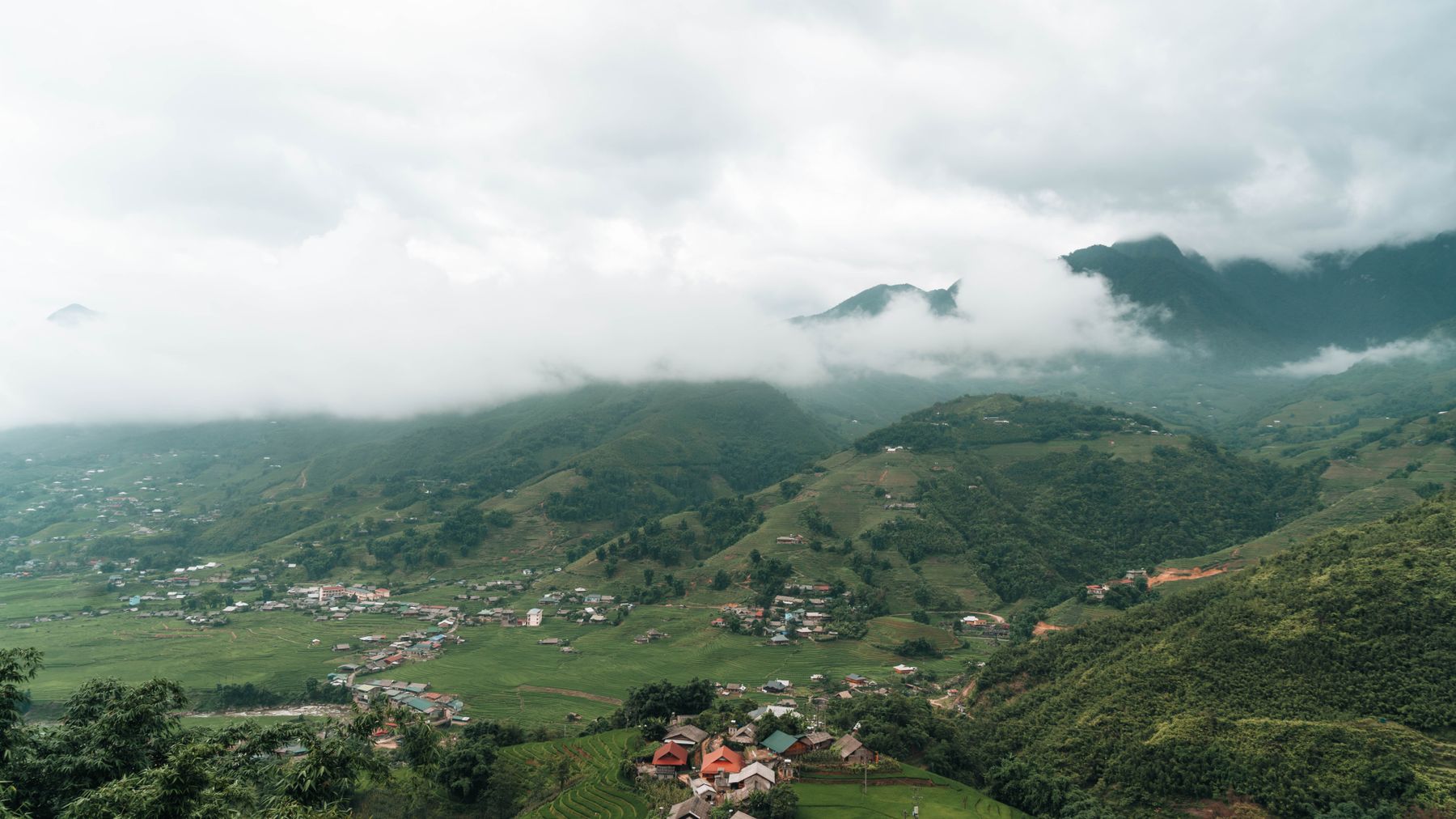
Photo by Quang Vuong on Pexels
Practical tips locals would tell you
- Bring water and snacks. There's no shop at the cave.
- Wear shoes with grip. Flip-flops inside a wet cave is a bad idea.
- Carry cash. Card payment doesn't exist out here.
- If you're on a motorbike, fill up in Thai Nguyen city. Fuel stations get sparse further north.
- A basic Vietnamese phrase goes a long way. "Xin chao" (hello) and "cam on" (thank you) are enough to change the reception you get.
- Respect the cave — don't break formations, don't leave trash. The reason this place is still in good shape is that not many people come here.
Common mistakes to avoid
- Trying to do it as a day trip from Hanoi. You can, technically, but 10 hours of driving for a cave visit isn't fun. Stay a night near the cave or in Thai Nguyen.
- Showing up without a light source. This isn't a tourist cave with installed lighting.
- Expecting English signage or guides. There are none. Download offline maps before you leave Thai Nguyen.
- Visiting after heavy rain. The cave can flood and the access path becomes treacherous.
Practical notes
Dong Puong works best as part of a longer northern loop — combine it with a few days exploring Thai Nguyen's tea country, then continue north toward Ha Giang or loop back through the hills to Hanoi. It's not a destination you plan a whole trip around, but as a stop on a motorbike route through the north, it's the kind of place you remember.
Last updated · May 29, 2026 · independently researched, never sponsored.