Dinh Thay Thim sits on the coast about 7 km southwest of La Gi town, backed by low sand dunes and casuarina forest. It's not a place most foreign travelers have heard of — but among Vietnamese pilgrims and domestic tourists, it draws serious crowds during its annual festival. The rest of the year, you'll likely have the grounds almost to yourself.
What it is
Dinh Thay Thim is a shrine — a "dinh," which functions somewhere between a communal house and a temple — dedicated to a couple known as Thay and Thim. The story goes that they were a Taoist healer and his wife who fled persecution from the Nguyen lords in the early 19th century and settled near what is now La Gi. After their deaths, locals began venerating them as protective spirits. The shrine was built in their honor and has been expanded and restored multiple times since.
The architecture is modest compared to the grand temples you'd find in Hue or Hanoi, but it has a distinctive coastal character. The main hall faces the sea, flanked by dragon-topped pillars and painted murals depicting the Thay Thim legend. Just behind the shrine complex, a stretch of wild beach runs south — rough sand, driftwood, fishing boats pulled up on shore. It's a working coastline, not a resort strip.
Why travelers go
Most foreign visitors end up here as a side trip while traveling between Mui Ne (무이네 / 美奈 / ムイネー) and the southern coast. The reasons are simple: it's a genuine local religious site with no entrance fee, the surrounding beach is undeveloped and quiet, and the Thay Thim festival (if you time it right) is one of the more intense folk religious events in the central-south coastal region.
For anyone interested in Vietnamese folk religion — spirit worship, incense rituals, communal processions — this is a more accessible and less commercialized example than many sites closer to Saigon or Da Nang.
Best time to visit
The Thay Thim Festival falls on the 14th–16th of the ninth lunar month (usually October or early November). During the festival, the shrine fills with pilgrims, ritual performances, and offerings. Expect crowds, noise, and color. If you want to see the ceremony, it's worth planning around these dates.
Outside of festival time, the best months are December through April — dry season along this stretch of coast. May through September brings rain and occasionally rough seas, though the shrine itself is fine to visit year-round. Mornings are cooler and better for wandering the beach.
How to get there
From Mui Ne (Phan Thiet), La Gi is about 60 km south along the coast. You can hire a motorbike taxi or rent your own bike in Mui Ne — the ride takes roughly 1.5 hours along QL55, which is paved and scenic in stretches. A private car or taxi costs around 500,000–700,000 VND one way.
From Saigon (Ho Chi Minh City (호치민시 / 胡志明市 / ホーチミン市)), La Gi is about 170 km southeast. Buses from Ben Xe Mien Dong run to La Gi and take around 3.5–4 hours; tickets are 100,000–150,000 VND. From La Gi town center, Dinh Thay Thim is another 7 km south — grab a "xe om" (motorbike taxi) for about 30,000–50,000 VND, or ride your own bike.
There's no direct public bus to the shrine itself, so you'll need your own wheels for the last stretch.
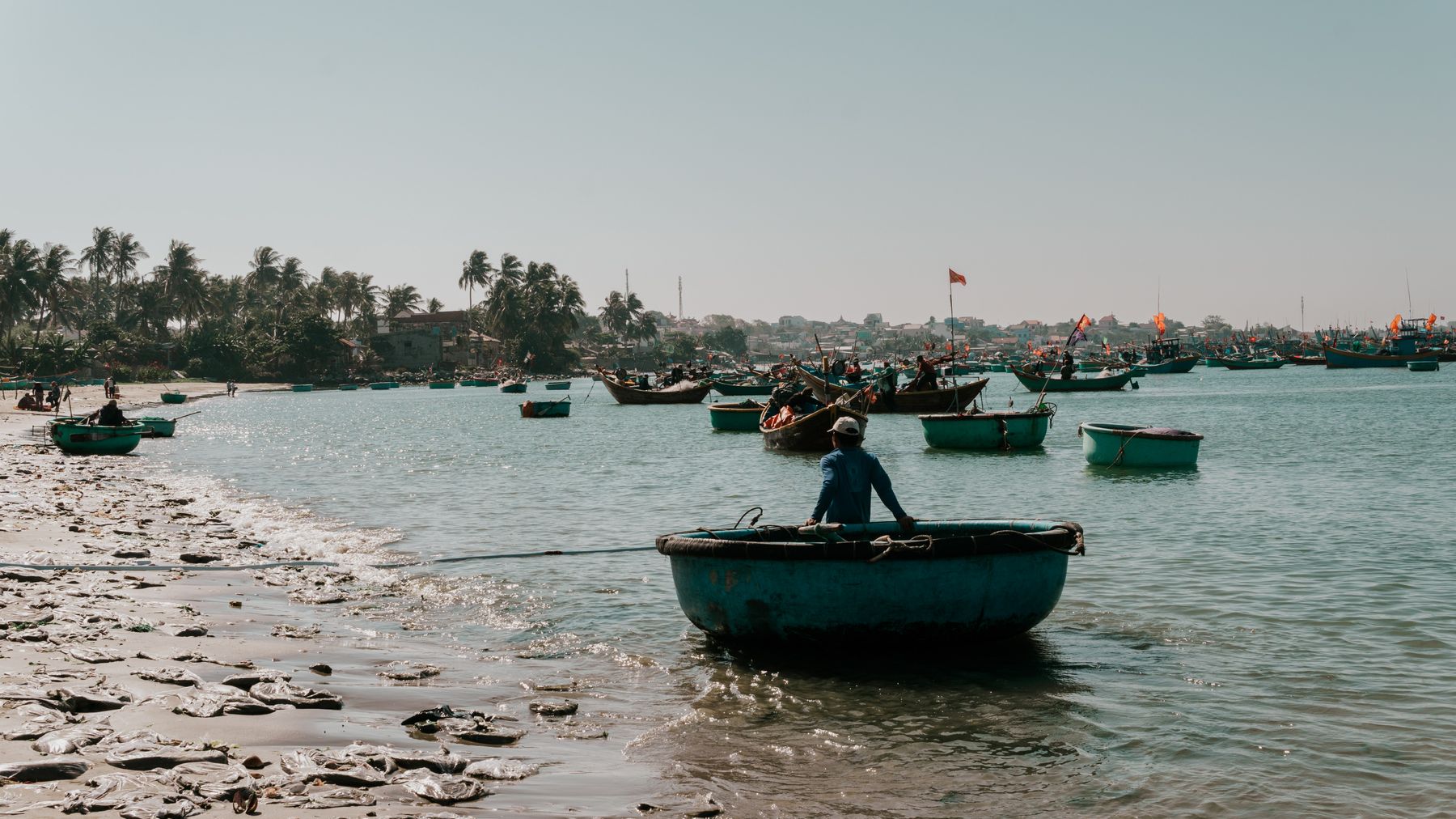
Photo by Long Bà Mùi on Pexels
What to do
Walk the shrine complex
Take your time in the main hall. The murals on the interior walls tell the Thay Thim story in painted panels — even without reading Vietnamese, the narrative is visual and easy to follow. Notice the altar arrangement: layers of fruit, incense, and paper offerings stacked in front of carved wooden figures. If you visit during the festival, you may see "hat boi" (classical opera) performed in the courtyard.
Explore the beach and dunes
The beach behind the shrine stretches for a couple of kilometers. It's not a swimming beach — the currents can be rough — but it's good for walking. Low sand dunes covered in scrub rise behind the shoreline, and local fishing boats are often beached nearby. Early morning is the best time if you want to see fishermen hauling nets.
Visit the Thay Thim tombs
About 2 km inland from the shrine, a smaller site marks the traditional burial place of Thay and Thim. It's a simple pair of graves under old trees, usually quiet. Ask at the shrine for directions — locals will point you the right way.
Check out the La Gi fish market
Back in La Gi town, the morning fish market along the Dinh River is worth a stop. It runs from about 5:30 to 8:00 AM. You'll see the day's catch sorted on tarps — squid, mackerel, snapper, shrimp — and the energy of traders negotiating prices.
Where to eat nearby
La Gi is a fishing town, so seafood is the obvious call. "Banh canh" with crab — thick tapioca noodles in a rich, peppery broth with chunks of local crab — is a regional specialty here and costs 35,000–50,000 VND a bowl. Look for small shops along the main road near the market.
For something different, try "banh xeo" at one of the roadside stalls in town. The version here uses more seafood filling than the Saigon style, and the crepes tend to be smaller and crispier. A plate runs about 20,000–30,000 VND.
Where to stay
La Gi has a handful of guesthouses and mini-hotels. Don't expect anything fancy — most are basic but clean, with air conditioning and hot water. Budget rooms go for 200,000–350,000 VND per night. A few newer places along the coast road charge 500,000–800,000 VND and have sea-facing rooms.
If you'd rather stay in Mui Ne and day-trip to Dinh Thay Thim, that works fine — the ride is manageable in a half-day.

Photo by Theodore Nguyen on Pexels
Practical tips locals would tell you
- Dress respectfully at the shrine. Covered shoulders and knees. This is an active place of worship, not a ruin.
- Bring your own water. There's one small drink stall near the shrine parking area, but nothing reliable on the beach.
- Incense is available at the entrance if you want to make an offering. It's free or donation-based.
- Go early. By midday the coastal sun is intense and there's almost no shade on the beach side.
Common mistakes to avoid
- Skipping the tombs. Most visitors only see the main shrine and miss the burial site. It's a short ride and gives context to the whole story.
- Visiting only during the festival. The festival is impressive, but the shrine is actually more atmospheric when it's quiet — incense smoke drifting through empty halls, waves audible from the courtyard.
- Not bringing cash. There are no ATMs near the shrine and card payment doesn't exist here. Bring enough VND from La Gi or Mui Ne.
- Assuming you can swim. The beach looks inviting, but the undertow along this coast is no joke. Wade if you want, but ask locals before going deeper.
Practical notes
Dinh Thay Thim is the kind of place that rewards you for slowing down and paying attention. It's not a full-day destination — combine it with a morning at the La Gi fish market and lunch in town, and you've got a solid half-day trip that gets you well off the usual Mui Ne circuit.
Last updated · May 29, 2026 · independently researched, never sponsored.