Bai Tu Long Bay sits 40 km east of Halong Bay, across the border into Quang Ninh Province's quieter waters. The limestone formations are identical; the crowds are not. If you've heard that Halong is overrun, Bai Tu Long is where you actually go.
A three-day cruise here costs 80–150 USD per person (shared cabins) to 250+ USD (private), including meals, kayak time, and cave visits. Budget another 30 USD for the Hanoi-to-port transfer. It's not cheap, but the trade-off—solitude in a seascape you'll recognize from a thousand photos—is worth it.
Day 1 — Hanoi to Bai Tu Long + Board
Leave Hanoi (하노이 / 河内 / ハノイ) around 8:00 AM from your hotel. Most cruise companies offer pickup from the Old Quarter; your booking will confirm the exact spot. The drive to Bai Tu Long port in Ha Long takes 2.5–3 hours, depending on traffic and which port you're heading to (Bai Tu Long cruises typically depart from Ha Long city's eastern docks or from smaller ports like Cai Rong).
Arrival is typically noon to 1:00 PM. You'll board your junk—a traditional wooden sailing vessel or modern steel replica, depending on your package. Orientation takes 30 minutes: cabin assignment, emergency drill, onboard rules, and a meal plan rundown.
Lunch is served at 1:30–2:00 PM (usually fresh seafood: canh cua, grilled fish, rice, and vegetables). After eating, the boat departs into the bay. The first afternoon is leisurely—most crews anchor near a limestone island or sheltered cove for an optional swim or snorkel around 4:00 PM. If you're not keen on cold water, you can stay on deck with "Vietnamese coffee" or bia hoi (a light local beer served on most cruises).
Dinner is typically 6:30–7:00 PM. Expect more seafood, rice dishes, and fresh fruit. Many junks offer sunrise tai chi or evening squid-fishing trips for night owls. Most travelers sleep by 9:00 PM.
Day 2 — Kayaking, Swimming, Vung Vieng Floating Village
Breakfast is around 7:00 AM (toast, eggs, fruit, coffee). By 8:00 AM, you're in a kayak.
This is where Bai Tu Long shines. The water is calm, the islands are dense, and—unlike central Halong (하롱 / 下龙 / ハロン)—you rarely see another tour boat. You'll paddle through narrow channels between limestone walls, under natural arches, and past mangrove forests. The paddling is gentle; most tourists manage it without prior experience. Kayak time is usually 1.5–2 hours, either as a guided group paddle or as independent exploration with a guide trailing behind.
By 10:30 AM, you're back aboard for brunch-noodle-soup-guide), banh mi, or fried rice, depending on the boat). Midday is rest time in your cabin.
Around 2:00 PM, the boat moves to Vung Vieng floating village. This is where the itinerary splits. Some cruises include a village tour by rowboat; others let you skip it. If you go, expect to see floating fish farms, floating homes, and floating schools in close quarters—it's touristy, but genuine. Fishermen have lived here for generations, and the setup is unchanged. A one-hour rowboat visit costs 10–15 USD if not included in your cruise package. Kids often board asking for snacks or money; it's standard, not aggressive.
Swimming time is usually 4:00–5:00 PM in a sheltered bay, often with a smaller, rockier island as backdrop. The water temperature drops to 15–18°C in winter (Nov–Mar) and warms to 25–28°C in summer; a rashguard is sensible in cooler months.
Dinner is 6:30 PM (same format as Day 1). Some boats offer cooking classes or hands-on demonstrations; others don't. Ask when you book if this matters to you.

Photo by Hugo Heimendinger on Pexels
Day 3 — Thien Canh Son Cave + Return to Hanoi
Early start: 7:00 AM breakfast, 8:00 AM cave visit.
Thien Canh Son (also written Thiên Cảnh Sơn) is a limestone cave on the southern rim of Bai Tu Long. It's less famous than Sung Sot or Thof Nai in central Halong, so far fewer tourists clamber through it. The cave is accessed by rowboat from your junk, then a short walk up wooden steps. Inside, stalactites hang from a cathedral-like ceiling; the light filtering through openings in the rock is dramatic in morning sun. Allow 45 minutes to an hour.
Return to the boat by 10:00 AM for a late brunch (often banh canh, a thick tapioca-and-pork soup, or leftovers-style rice bowls). By 11:00 AM, the boat turns back toward Ha Long city or your departure port.
Arrival is typically 2:00–3:00 PM. You'll disembark, collect your luggage, and board a minibus for the drive back to Hanoi (another 2.5–3 hours). Most cruises include this return transfer. You'll be dropped at your original hotel around 6:00–7:00 PM.
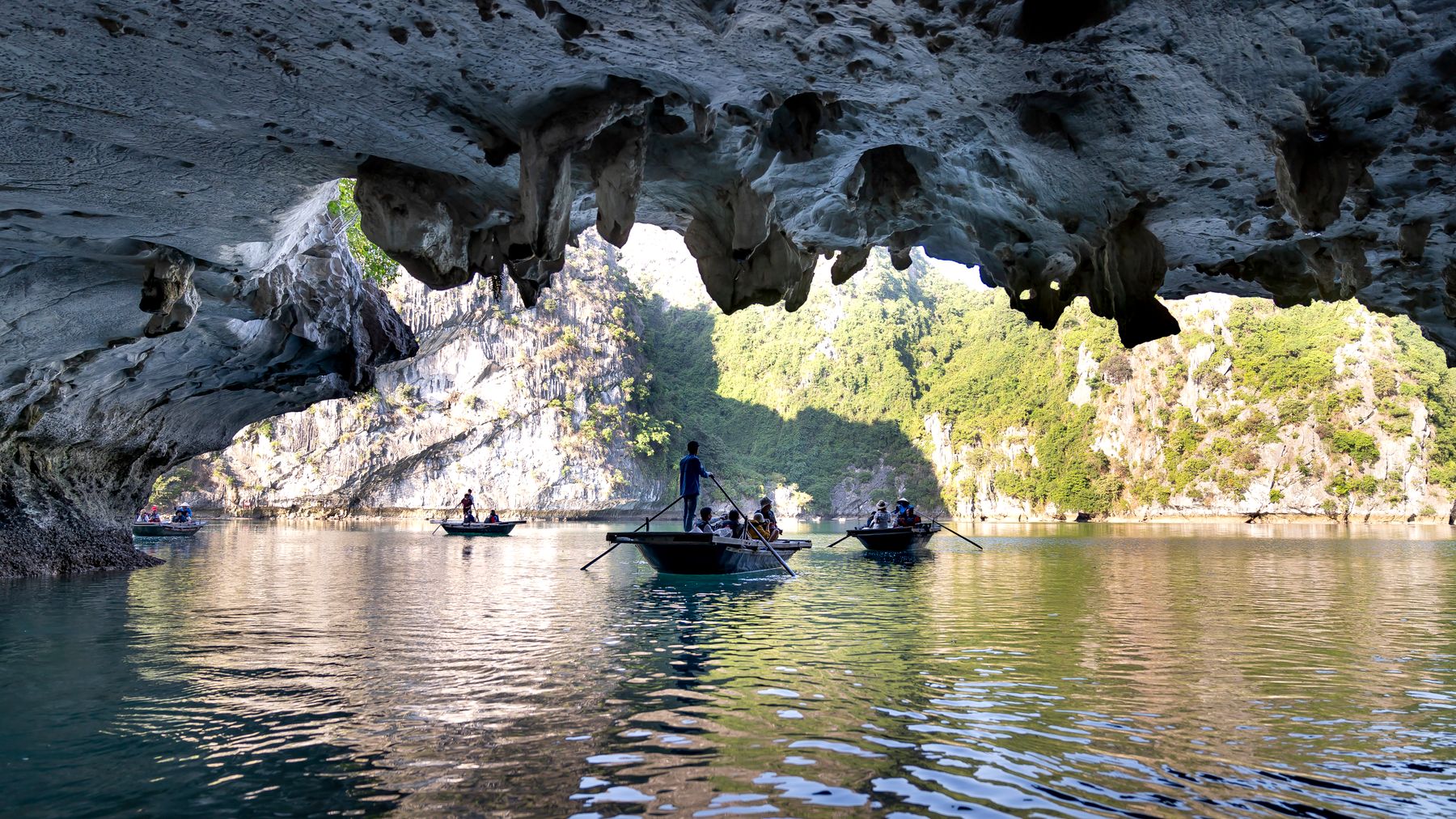
Photo by Quang Nguyen Vinh on Pexels
Why Bai Tu Long Wins Over Central Halong Now
Halong Bay proper—the UNESCO World Heritage site—welcomes 10,000+ visitors daily during peak season (Apr–Oct). Most arrive on identical cruise ships, spend three hours at Sung Sot cave with 500 other people, and leave. The experience is authentic in landscape but crowded in execution.
Bai Tu Long is different. It's part of the same geological formation but lies outside the main UNESCO zone. Fewer operators run cruises here, so fewer boats clog the anchorages. You'll see limestone formations as dramatic as Halong's; you'll swim in the same emerald water; you'll kayak through identical narrow channels—but you'll do it with 20 people on your boat, not 1,500 in a mega-ship.
The caves are smaller and less "branded," which also means fewer crowds. Vung Vieng is more authentic because fewer cruises stop there—it hasn't been polished into a theme-park version of itself.
The trade-off: Bai Tu Long boats are often smaller, older, and less luxurious than Halong's high-end junks. Cabins have no air-con on budget cruises (fans only); mattresses are thinner; hot water is inconsistent. If you're paying 250+ USD, you'll get better amenities, but it's not a guarantee. Read recent reviews carefully.
Frequently Asked Questions
How much does a Bai Tu Long Bay cruise cost per person?
A three-day Bai Tu Long Bay cruise runs 80–150 USD per person for shared cabins, or 250+ USD for a private cabin. Meals, kayaking, and cave visits are included. Budget an additional 30 USD for the transfer from Hanoi to the port. If the floating village tour is not part of your package, a rowboat visit to Vung Vieng adds 10–15 USD.
What is the travel time from Hanoi to Bai Tu Long Bay?
Leave Hanoi around 8:00 AM and expect a 2.5–3 hour drive to the departure port in Ha Long city, with boarding around noon to 1:00 PM. Most cruise companies offer hotel pickup from the Old Quarter. Departure ports vary — some cruises leave from Ha Long city's eastern docks, others from smaller ports like Cai Rong.
When is the best time to swim in Bai Tu Long Bay?
Water temperature ranges from 15–18°C in winter (November through March) and warms to 25–28°C in summer. If you visit during the cooler months, bring a rashguard. Swimming is typically scheduled at 4:00–5:00 PM in sheltered bays near limestone islands, on both Day 1 and Day 2 of the standard three-day itinerary.
Practical Notes
Book 2–4 weeks ahead if you're visiting Apr–Oct; last-minute slots fill. Winter (Nov–Mar) is quieter and cold—water temps drop to 15–17°C, so most travelers don't swim. Seasickness is rare in Bai Tu Long's protected waters, but if you're prone, bring medication; the motion during the Hanoi-to-port drive is worse than on the water. All cruises include meals and cave entry; tip the crew 50,000–100,000 VND (2–4 USD) per person if service is good—it's customary and appreciated.
Last updated · May 29, 2026 · independently researched, never sponsored.