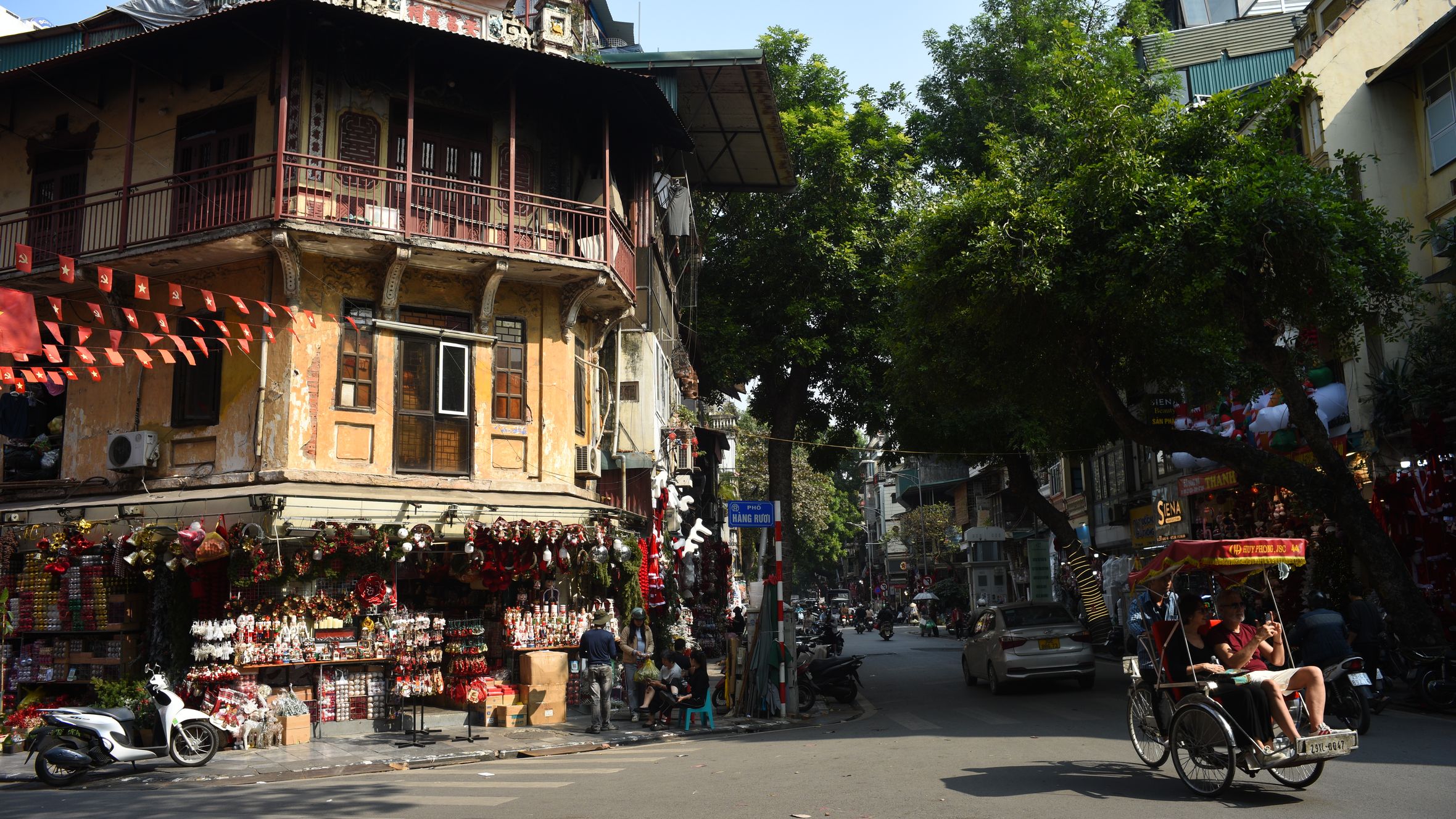
Hanoi rewards photographers who wake early and stay patient. This itinerary chains five days around light, crowds, and the city's layered textures: narrow streets stacked with motorbikes, water reflections, steam rising from "pho" pots at 6 a.m., and architecture that changes color every hour. Bring a 35mm or 50mm prime, a tripod for low light, and extra battery cards.
Day 1 — Old Quarter Golden Hour
Start at Hoan Kiem Lake (Sword Lake) at 4 p.m. The light is already warm; the crowds are thinning. Walk the eastern shore toward Ngoc Son Temple. Shoot the red Huc Bridge around 5:15 p.m.—tourists clump on it, but the angle from the southern bank, looking north, frames the bridge against the old colonial buildings of the Old Quarter. The light turns amber.
By 5:45 p.m., move into the Old Quarter proper. Enter via Hang Buom or Hang Dao streets. Walk slowly. The light now cuts through the narrow alleys in sharp, diagonal lines. Shoot the hawkers setting up for evening—bicycle vendors with stacked goods, cyclos waiting for passengers, the texture of weathered shopfronts. At 6:30 p.m., find Ta Hien Street, the backpacker thoroughfare. It's touristy, but the light is peak, and the street's architecture is photogenic: narrow, packed with people, laundry hanging overhead, beer signs glowing. Shoot here until dusk (around 6:45 p.m. in winter, 7:15 p.m. in summer).
Eat dinner in the Old Quarter: pick any "banh mi" stand on Hang Gai Street, or sit at one of the plastic-stool "[bia hoi](/posts/bia-hoi-hanoi (하노이 / 河内 / ハノイ)-street-beer)" (draft beer) spots on Luong Ngoc Quyen. Bia hoi costs ~20,000 VND per glass; a banh mi ~25,000–35,000 VND. Shoot the street-food scene with available light—the neon signs, the vendor's hands, the crowd.
Day 2 — Tran Quoc Pagoda and West Lake at Sunrise
Wake at 5:00 a.m. Grab coffee ("ca phe sua da", iced coffee with condensed milk, ~20,000 VND) from any street vendor near your hotel. Head to Tran Quoc Pagoda by 5:45 a.m.—it sits on a narrow peninsula jutting into West Lake, about 4 km north-west of the Old Quarter. Taxi or Grab is fastest (~50,000–80,000 VND). The pagoda opens early; monks are often visible in the grounds.
Shoot the pagoda's reflection in still water during the 6:15–6:45 a.m. window. The light is soft, diffuse. The lake is calm. Few tourists arrive before 7 a.m. Walk around the pagoda's base; the architecture is elegant and old (rebuilt in 1615), and the surrounding residential area is quiet—motorbikes, locals buying breakfast, temple incense.
Stay at West Lake until 8:00 a.m. Walk the lakeside promenade. Shoot joggers, vendors, the golden light on the water. Grab a second coffee or a sticky rice with egg "banh cuon" (steamed rice-flour rolls, ~15,000 VND) from a street stand.
Return to the Old Quarter or your hotel by 10:00 a.m. Rest in midday heat. At 4:00 p.m., photograph Hoan Kiem Lake again from different angles—the western shore (smaller crowds), or the Temple of Literature (Tran Quoc Pagoda's distant cousin, more crowded but architecturally rich). Shoot until 6:30 p.m. Dinner: "bun cha (분짜 / 烤肉米粉 / ブンチャー)" (grilled pork with noodles, ~50,000–80,000 VND at a named establishment, or ~30,000 VND at a street stall) on Hang Manh Street.

Photo by Linh Tran on Pexels
Day 3 — Bat Trang Ceramic Village and Long Bien Bridge
Day trips outside the Old Quarter. Head south-east to Bat Trang, a pottery village 15 km from central Hanoi (~1 hour by Grab, ~80,000–120,000 VND). Arrive by 8:00 a.m. The village is quiet before 10 a.m.; artisans are at wheels and kilns. Shoot the workshops: hands shaping clay, bisque pots cooling, stacks of finished ceramics. Light is natural from shop fronts and open doors—moody, side-lit. Most artisans don't mind photography; a simple "anh toi, duoc khong?" (brother/sister, is it OK?) is polite.
Walk Bat Trang's main streets. Buy a ceramic object if you like (a small dish, ~50,000–150,000 VND). Eat at a local pho stand (~40,000 VND). Grab coffee at a small cafe. Leave by noon.
Return to central Hanoi. By 3:00 p.m., head to Long Bien Bridge, the French colonial cantilever bridge spanning the Red River. It's iconic, atmospheric, and crowded—but the light and texture reward the trip. Approach from the eastern bank (easier access). Shoot from below, from street level, and from the bridge itself (it still carries pedestrian traffic). The bridge's iron lattice, rust, and the river below are stark. Shoot the vendors and motorbikes crossing. Stay until 5:30 p.m. for warm light on the bridge's underside.
Dinner: grab "hu tieu" (clear pork-and-shrimp soup, ~40,000 VND) or "mi quang" (turmeric noodles, ~45,000 VND) at a restaurant near Long Bien. These are traditional Hanoi/northern dishes, easy to find in the Hoan Kiem area.
Day 4 — Tay Ho Flower Market at 4 a.m., Then French Quarter
This is the toughest day: wake at 3:00 a.m. Grab delivers reliably that early. Head to Tay Ho Flower Market (Chua Hang Flower Market), about 6 km west. Arrive by 4:15 a.m. The market is chaotic, vibrant, and beautiful in pre-dawn darkness mixed with stall lights. Vendors are arranging orchids, roses, lilies, and branches for Tet / 越南春节 / テト) (Vietnamese New Year) or weddings. Shoot the color, the hands, the chaos, the light. Bring fast film (ISO 1600+) or a tripod and slow shutter. The market winds down by 7:00 a.m.; leave by then.
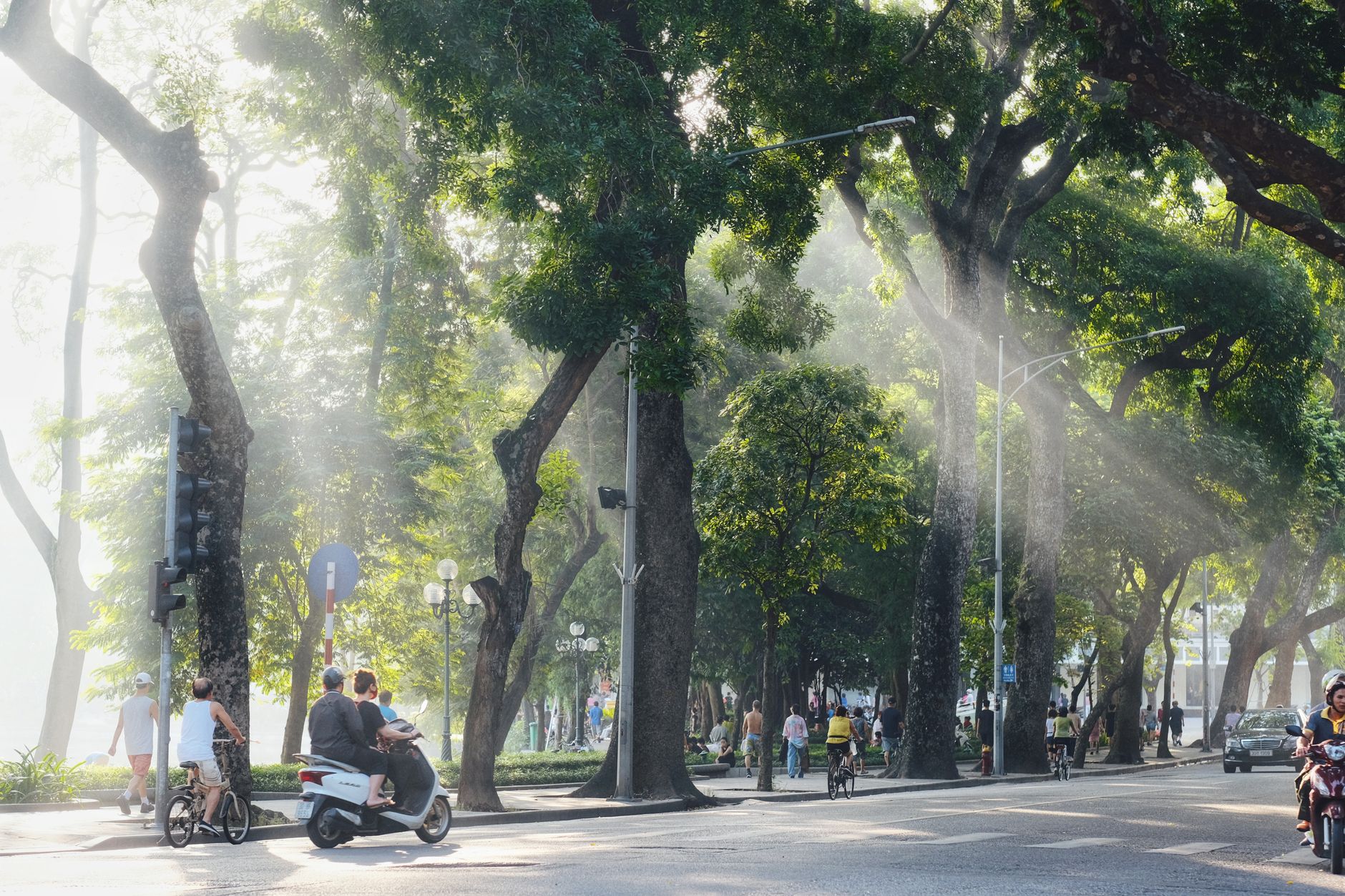
Return to your hotel by 8:00 a.m. Sleep 2–3 hours. By 11:00 a.m., explore the French Quarter (Ba Dinh, Tay Ho districts): tree-lined avenues, colonial villas, shuttered windows, faded ochre facades. Shoot architecture, details (door handles, window frames, peeling paint). Light is harsh midday; wait until 4:00 p.m. for warm side-light on the buildings. Streets like Ngo Thi Nham, Phan Boi Chau, and the area around St. Joseph's Cathedral are classic. Cathedral itself is Gothic, worth a shot (open to visitors; be respectful inside).
Dinner: "bun rieu" (crab-and-tomato noodle soup, ~50,000 VND) or a sit-down meal at a French-influenced cafe (Cafe Pho Co, Nola Cafe, ~80,000–150,000 VND for entree).
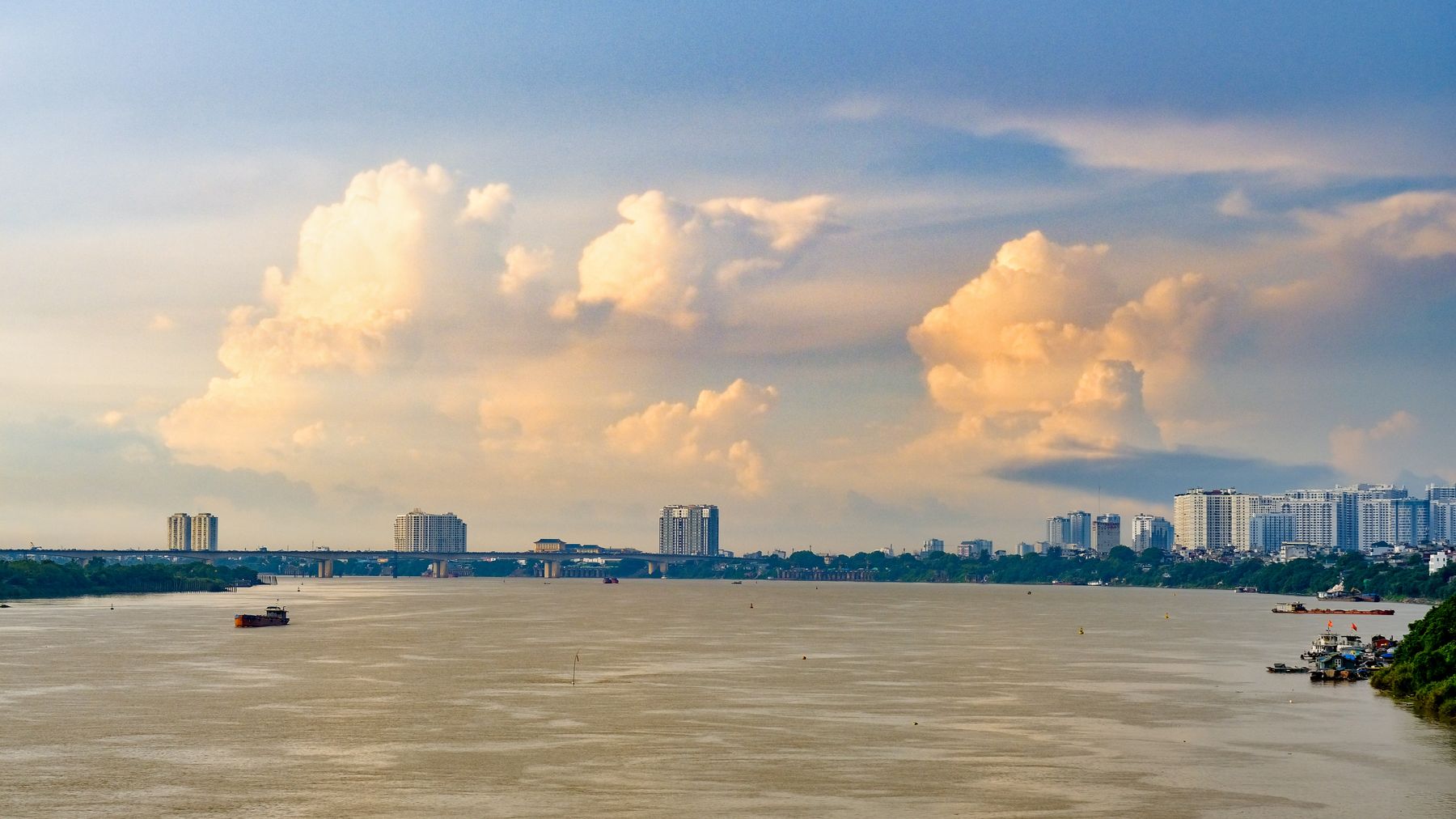
Photo by tu nguyen on Pexels
Day 5 — Hoa Lo Prison and Departure
Wake early. Photograph Hoan Kiem Lake one more time at sunrise (5:45 a.m.) from a different angle—the northern shore near Dong Xuan Market (Hanoi's oldest covered market, bustling by 6:00 a.m.). Shoot vendors, produce, the energy.
By 9:00 a.m., visit Hoa Lo Prison (Maison Centrale in French colonial times). It's a museum now, located in central Hanoi (Ba Dinh district). The architecture is sombre and geometric—tall brick walls, narrow corridors, cell blocks. Shoot the spatial geometry, the light filtering through barred windows, the scale. It's a serious place; be respectful. Allow 1.5 hours. Entry is ~30,000 VND.
Return to your hotel by noon. Grab lunch: "com tam" (broken-rice with pork, ~40,000–50,000 VND) or a final "pho" (~40,000–60,000 VND). By 2:00 p.m., head to Noi Bai Airport or your departure point.
Frequently Asked Questions
How early should I arrive at Tran Quoc Pagoda for the best light?
Arrive by 5:45 a.m. to catch the optimal reflection window between 6:15 and 6:45 a.m., when the light is soft and West Lake is calm. The pagoda sits on a peninsula about 4 km north-west of the Old Quarter — a Grab ride costs roughly 50,000–80,000 VND. Few tourists arrive before 7 a.m., giving you clear sightlines around the pagoda's base.
What streets in the Old Quarter offer the best evening photography conditions?
Enter via Hang Buom or Hang Dao streets around 5:45 p.m., when light cuts through narrow alleys in sharp diagonal lines. By 6:30 p.m., move to Ta Hien Street, where laundry hangs overhead and beer signs glow against packed architecture. Street food is cheap: bia hoi (draft beer) runs about 20,000 VND per glass and banh mi from 25,000 to 35,000 VND on Hang Gai Street.
When does golden hour hit Hoan Kiem Lake and the Huc Bridge?
Arrive at Hoan Kiem Lake by 4:00 p.m. and position on the southern bank by 5:15 p.m. to catch the Huc Bridge turning amber against the Old Quarter's colonial buildings. Light peaks around 6:30 p.m. and fades to dusk by 6:45 p.m. in winter or 7:15 p.m. in summer, giving a shooting window of roughly two to three hours from arrival.
Practical notes
Bring a fast lens (f/1.8 or wider) for low-light street work; a tripod for pre-dawn shots; and spare batteries. Respectfully ask permission before photographing people—a smile and "duoc khong?" opens doors. Learn the Vietnamese word for "photo" ("chup anh") and "thank you" ("cam on"). Hanoi's traffic is intense; street crossings require patience and timing, not speed. Water and electrolytes are essential; the pace is fast. Most sites charge no entry; museums (Hoa Lo, Temple of Literature) are 20,000–50,000 VND. Grab and taxis are cheap and reliable; no need to rent a motorbike unless experienced.
Last updated · May 29, 2026 · independently researched, never sponsored.