Walk into any Vietnamese home kitchen or street-food stall and the condiment shelf tells you everything. It is cluttered, sticky, and completely non-negotiable — a lineup of bottles, jars, and squeeze containers that do more flavor work than the stove itself.
The Maggi Question
Maggi seasoning sauce — that dark, thin liquid in the yellow-capped bottle — has been in Vietnamese kitchens since the French colonial period, and it has stayed. You will find it on the table at "pho" shops, next to the hoisin and the chili paste, and in the prep buckets of "banh mi" carts everywhere from Hanoi to the Mekong Delta (메콩 델타 / 湄公河三角洲 / メコンデルタ).
But calling Maggi Vietnamese is a stretch. It is a Swiss product, made by Nestle, and its flavor profile — heavily glutamate-forward, sharp, almost metallic in large quantities — is genuinely different from local soy sauces. Vietnamese cooks use it as a fast umami hit, a seasoning shortcut. It is not a dipping sauce. It is not a cooking sauce in the way that Chinese or Japanese soy sauce is. It is a condiment for correction: a few drops on rice, into broth, or whisked into a quick marinade.
If you are eating "com tam" (broken rice) at a sidewalk stall in Saigon and the plate arrives with a small dish of dark liquid alongside the nuoc cham, there is a reasonable chance that dish contains Maggi, not soy sauce. Many cooks blend the two.
Domestic Soy Sauce: The Brands Worth Knowing
Local "xi dau" (soy sauce) is a different product with a different logic. The two dominant domestic brands are Nam Duong and Chinsu, both widely available in supermarkets and wet markets across Vietnam (베트남 / 越南 / ベトナム). Nam Duong tends to be lighter in salt and slightly sweeter — it works well in marinades for grilled pork and in dipping sauces where you want the other elements (lime, garlic, chili) to come forward. Chinsu's soy sauce runs darker and more savory, closer to what you might expect if you've cooked with Chinese light soy.
A 500ml bottle of either runs 15,000–25,000 VND at a supermarket like Vinmart or Co.opmart. At a wet market you might find smaller local-production bottles for less, though quality varies and some are heavily diluted.
For cooking, most Vietnamese home cooks rotate between xi dau and fish sauce depending on the dish. Soy sauce tends to appear in dishes with Chinese or Hoa (ethnic Chinese-Vietnamese) influence — clay pot preparations, stir-fries, braised pork belly. Fish sauce takes over in anything distinctly Vietnamese: soups, salads, the omnipresent nuoc cham.
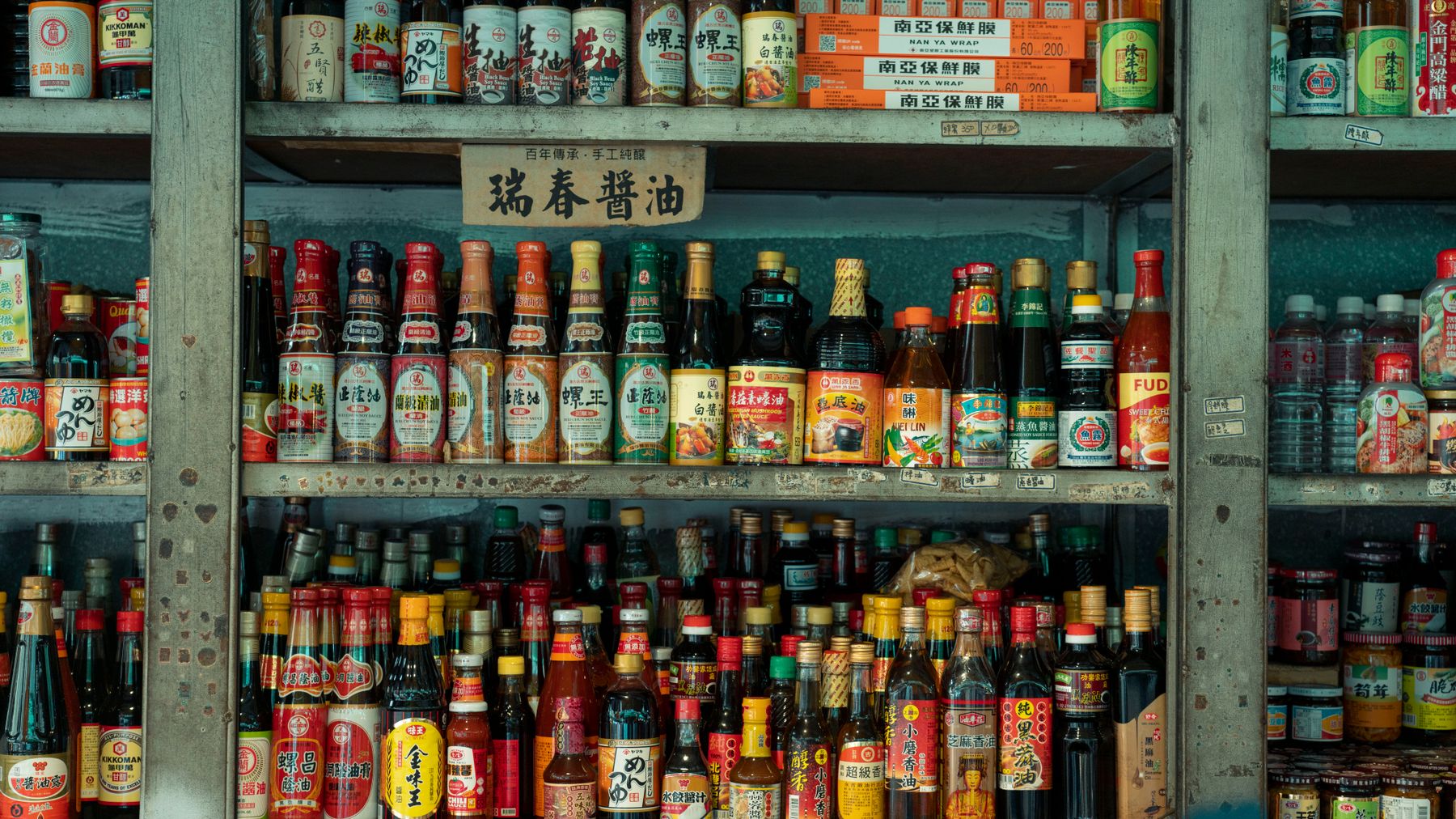
Photo by Jimmy Liao on Pexels
Regional Soy Sauces
Hoi An has its own fermented soy product worth flagging: "tuong" (fermented soybean paste and sauce), which shows up in the dipping sauce for "cao lau" and in local versions of "mi quang". It is thicker than standard xi dau, darker, and funkier — more like a loose miso in texture, less like a pourable sauce. If you eat cao lau in Hoi An and notice a grayish-brown paste on the side of the bowl, that is tuong. It is not optional.
In the north, particularly in Hanoi, "tuong Ban" from Bac Ninh province has a long reputation as a premium artisan soy product. It is made in the village of Dinh Bang and sold in ceramic jars. The flavor is complex and less salty than industrial xi dau, with a faint sweetness from the fermentation. You will find it in specialty food shops in Hanoi's Old Quarter and at Dong Xuan Market. A small jar runs 40,000–70,000 VND.
Down in the Mekong Delta — around Can Tho and further south — soy sauce gets sweeter. The regional palate skews that direction, and local condiment blends often have added sugar or caramel color. The dipping sauces at a Delta "banh xeo" stall will be noticeably sweeter than what you'd find at the same dish in Da Nang or Hue.

Photo by Elly Mar Tamayor on Pexels
The Rest of the Shelf
Soy sauce and Maggi are only two slots on a shelf that can easily hold eight or ten bottles. A reasonably stocked Vietnamese kitchen condiment lineup also includes:
- Nuoc mam (fish sauce): the real backbone. Phu Quoc and Phan Thiet are the benchmark production regions. Look for protein content on the label — 40°N or higher means quality.
- Tuong ot (chili sauce): Chinsu and Cholimex are the household brands. Neither is particularly spicy by global standards, but Cholimex's garlic-chili version has a cult following in the south.
- Hoisin sauce: used at the table for pho in the south (Hanoi pho shops will quietly judge you for it), and as a dipping base for "goi cuon" (fresh spring rolls).
- Giam (rice vinegar): pale, mild, used in pickling the daikon and carrot that go into banh mi and many salads.
- Dau hao (oyster sauce): ubiquitous in stir-fries and morning glory (rau muong) preparations.
- Mam tom (shrimp paste): intensely pungent, purple-gray, used sparingly. Essential for bun rieu and some northern preparations. Not for the uninitiated.
What to Buy and Bring Home
If you are shopping for edible souvenirs, skip the airport Maggi and look for tuong Ban in a ceramic jar, a good bottle of Phu Quoc fish sauce (Red Boat is the export brand; locally you want Thanh Ha or Khai Hoan), or a jar of Hoi An tuong paste. All three travel well, add something genuinely hard to replicate outside Vietnam, and cost less than a coffee at a hotel bar.
Practical notes: Vietnamese soy sauce and condiments are sold at every wet market, supermarket, and convenience store. Prices are significantly lower at wet markets and traditional grocery shops than at tourist-facing stores. If you are cooking in Vietnam, Co.opmart is the most consistent supermarket chain for condiment variety across regions.
Last updated · May 29, 2026 · independently researched, never sponsored.