Saigon does "banh mi" differently from anywhere else in Vietnam: the baguette is crispier, the pate is thicker, and the cart vendor will stare at you expectantly while eight motorbikes idle behind you. Here's how to not freeze up.
What Makes Saigon Banh Mi Different
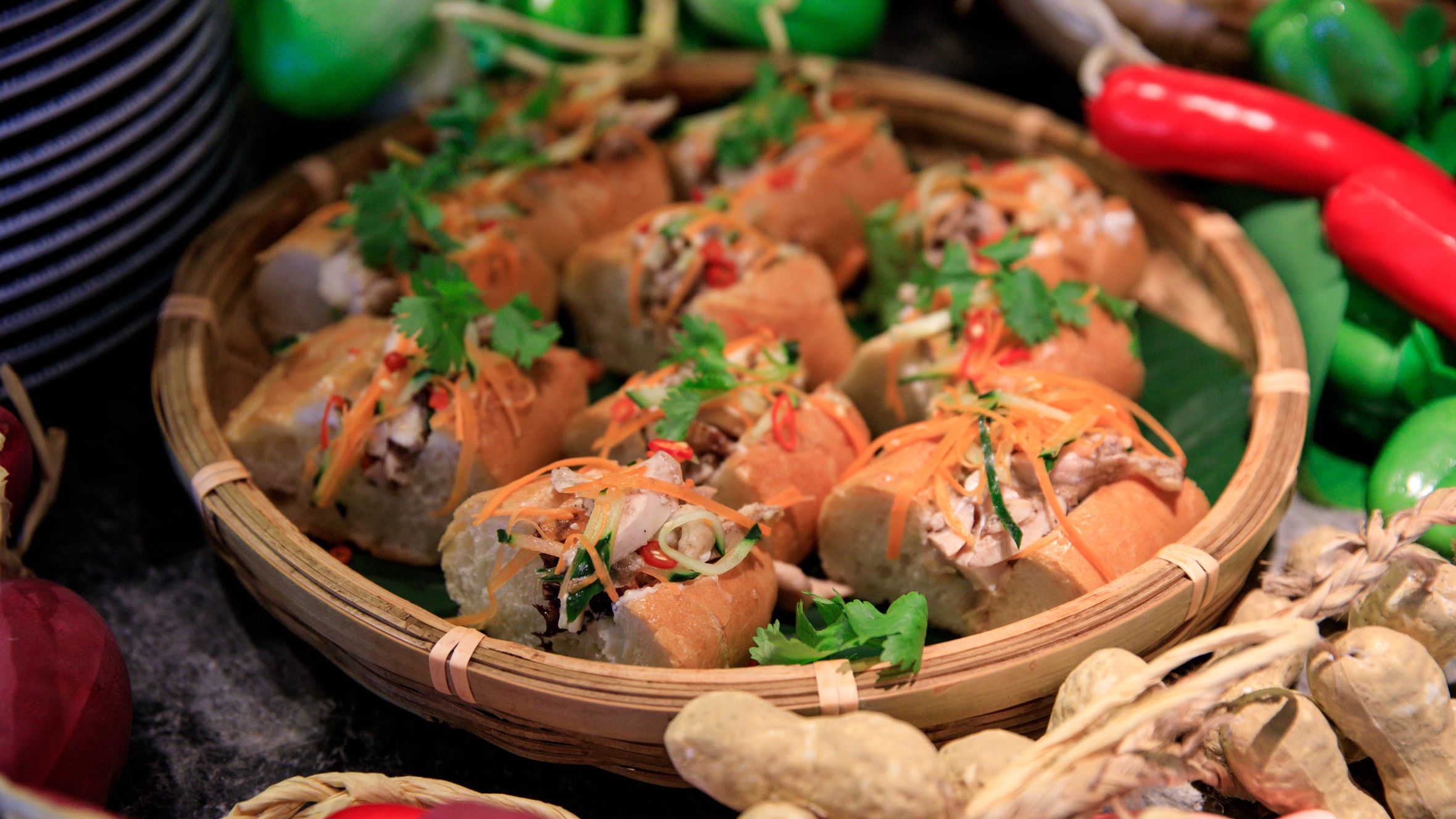
The baguette itself is the starting point. Saigon (사이공 / 西贡 / サイゴン) loaves are shorter and more aggressively crusted than the softer, longer versions you get in Hoi An or Hue. They shatter when you bite them. That's intentional — the crust gives structural contrast to the wet fillings inside.
Standard fillings on a full-build Saigon "banh mi (반미 / 越式法包 / バインミー) dac biet" (special combination) run roughly:
- Pate — pork liver, spread thick on both halves of the bread
- Cha lua — steamed pork roll, sliced thin
- Thit nuong — char-grilled pork (optional, not always included)
- Do chua — pickled daikon and carrot, julienned
- Dua chua — fermented mustard greens, sharper and funkier than do chua
- Cucumber — sliced lengthwise for crunch
- Cilantro — a full handful, not a garnish
- Chili — fresh slices or a smear of chili sauce, ask for it mild if you need to
- Maggi or soy sauce — a quick drizzle to finish
That combination costs between 25,000 and 45,000 VND at a street cart. Anywhere charging 70,000+ is targeting tourists or serving a premium product — both exist, and neither is wrong.
Two Spots That Define the Genre
Banh Mi Huynh Hoa
26 Le Thi Rieng, District 1. Open roughly 14:30–23:00 daily (they sell out, sometimes earlier).
This is the one people argue about. Huynh Hoa uses more filling than almost any other spot in the city — the sandwich is fat enough that you need two hands and a plan. The pate-to-bread ratio leans heavily toward pate. Prices sit around 40,000–45,000 VND per sandwich. There will be a queue. It moves fast; just get in it.
Ordering is simple: hold up fingers for how many you want. The vendor will ask if you want chili — nod or shake your head. Everything else is standard. They don't do custom builds here; you get the house sandwich.
Banh Mi Hoa Ma
53 Cao Thang, District 3. Open 06:00–10:00 (breakfast only, closed when they're done).
Hoa Ma is older and lower-key. It opens at dawn and shuts mid-morning, which means it feeds a crowd of locals on their way to work rather than tourists hunting lunch. The sandwich here is slightly leaner than Huynh Hoa's, with a better balance between bread and filling. They also do "banh mi op la" — a fried egg version that pairs well with Vietnamese coffee on the side. Around 25,000–30,000 VND.
If you're near District 3 in the morning and you miss it, you missed it. Come back tomorrow.

Photo by Pragyan Bezbaruah on Pexels
How to Order at a Random Street Cart
Most banh mi carts don't have menus. Here's a fast vocabulary list:
| What you want | What to say | |---|---| | One sandwich | "Mot cai banh mi" | | Special combo | "Banh mi dac biet" | | Pate only | "Banh mi chi pate" | | Egg | "Banh mi op la" | | No chili | "Khong ot" | | Extra chili | "Them ot" | | How much? | "Bao nhieu?" |
Point works fine if you're stuck. Most vendors at tourist-adjacent carts are practiced at reading gestures. Point at the pate, point at the cha lua, hold up one finger. You'll get a sandwich.
Pay when you receive it, not before. Street cart transactions in Saigon almost always go: sandwich handed over, money exchanged, change returned. If someone asks for money upfront at a cart with no posted price, clarify the price first.
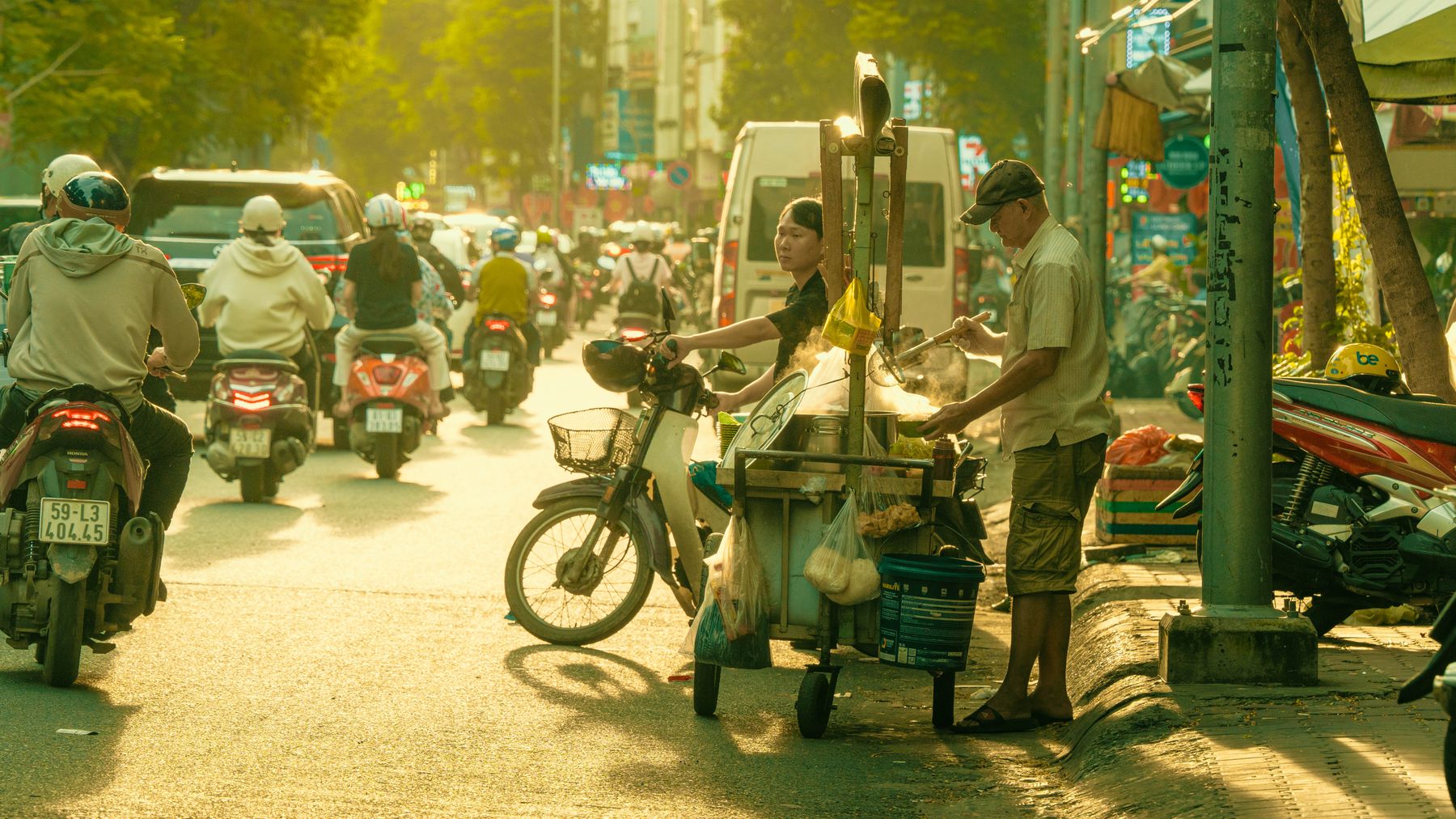
Photo by Nguyễn Hoàng Văn on Pexels
What to Drink With It
A banh mi at 7 a.m. next to a cup of "ca phe sua da" — iced milk coffee — is one of the more satisfying breakfasts in the city. Most banh mi carts are within thirty seconds of a coffee cart or a plastic-stool cafe. Buy them separately; drink the coffee while you eat the sandwich standing up or perched on a curb. This is correct behavior.
Practical Notes
Bring small bills — 20,000 and 50,000 VND notes. Street vendors rarely have change for 200,000 or 500,000. The best banh mi windows in Saigon are early morning (06:00–09:00) and late afternoon (15:00–18:00); midday versions often use bread that's been sitting since dawn. If the baguette doesn't crunch when the vendor squeezes it before filling, find another cart.
Last updated · May 29, 2026 · independently researched, never sponsored.