Day 1 — District 1 Essentials
Start in the city center where the food is direct and uncompromising. Saigon's downtown district moves fast, and so should your appetite.
Begin at Banh mi Huynh Hoa (17 Ly Tu Trong, Ben Thanh Ward). Arrive by 7 a.m. or expect a queue. The "banh mi" here is the ur-text: a 40-year-old recipe, crispy exterior, soft interior, layered with pate, cold cuts, pickled daikon and carrot, cilantro, and a dab of mayo and chili mayo. One sandwich costs 35,000 VND. Eat standing at the counter or take it to nearby Tao Dan Park.
Walk off breakfast. By 10:30 a.m., head to Com tam Ba Ghien (60 Nguyen Hue, District 1). "Com tam" (broken rice) is the workday staple—cheaper than whole grain, nuttier, a texture that holds onto meat juices better. Order the com tam with grilled pork chop (com tam suon). The pork is marinated in fish sauce and sugar, cooked over charcoal. Cost: 45,000–50,000 VND. Eat here alongside construction workers, shop owners, and office staff. This is the real lunch rhythm.
Rest until late afternoon. Around 5 p.m., navigate to Hu Tieu Nam Vang (48 Nguyen Trai, District 1), a small stall run by a family from Cambodia. "Hu tieu" is a clear broth—pork-based, flavored with anchovy and dried squid—topped with pork meatballs, shrimp, liver, and crispy fried shallots. The version here includes both thin noodles and tapioca noodles, a choice many Saigon "hu tieu" spots offer. Bowl: 50,000 VND. Sit on a plastic stool. Listen to the vendor's daughter practice her English with customers.
Day 2 — Cholon (District 5)
Cholon is Saigon (사이공 / 西贡 / サイゴン)'s Chinese-Vietnamese quarter, a half-hour taxi ride or bus ride west from Ben Thanh Market. The food here is denser, more layered, built on recipes that traveled from Fujian and Guangdong and landed here 150 years ago.
Start with Banh xeo 46A (46A Nguyen Trai, District 5). "Banh xeo"—a crepe—is built in front of you: rice flour and turmeric in a hot pan, a pour of coconut milk, then meat (pork belly or shrimp), bean sprouts, and green onion. The fold, the sizzle, the crunch. Eat it by tearing off pieces of the golden edge and wrapping them in fresh herbs and lettuce with a dab of "nuoc cham" (fish sauce with lime and chili). One "banh xeo" feeds one person; order two and share. Cost: 60,000 VND each. The owner has been at this corner for 20 years.
Walk Cholon's streets—Nguyen Trai, Ong Ich Khiem. The Chinese temples, the gold shops, the medicine houses with drawer after drawer of bark and seeds. Stop for mid-afternoon egg coffee at Cafe Sao Trang (145 Tran Hung Dao, District 5). This is less a tourist stop and more a neighborhood ritual: a glass of Vietnamese "ca phe sua da" (dark roast with sweetened condensed milk) with a whipped egg foam stirred in. The sweetness and the bitterness together. 25,000 VND.
At 6 p.m., enter Hu Tieu My Tho (101 Tran Hung Dao, District 5). This place is the real deal—a family-run broth shop with a menu that hasn't changed in 30 years. Order the "hu tieu xao": broth with stir-fried noodles, pork, shrimp, and squid, plus a crackle of fried shallots and garlic. 65,000 VND. The broth is light but deeply savory. Drink it. Eat the noodles. Ask for a second bowl of broth if you want—they offer it free.

Image by Diego Delso via Wikimedia Commons (CC BY-SA)
Day 3 — District 4 + Night Markets in Phu Nhuan
On your final day, move between lunchtime chaos and evening buzz.
Start at Quan 7 Phan Xich Long (7 Phan Xich Long Street, District 1), a small stall serving "banh canh"—a thick, chewy noodle soup made from tapioca flour. The version here comes with pork meatballs and crab. It is comfort food distilled. 45,000 VND. Eat early, around 11 a.m., because the stall closes by 1 p.m.
After lunch, cross to District 4 (Can Tho neighborhood). Pho 2A (2A Tran Hung Dao, District 4) is a lunch-and-early-dinner "pho" shop. The broth is beef-based, simmered for 12 hours, with star anise and cinnamon speaking clearly. A bowl of "pho tai" (rare beef) or "pho nam" (well-done beef and tendon) is 50,000–60,000 VND. The place is narrow, bright, no frills. Sit next to a woman eating her third bowl of the week.
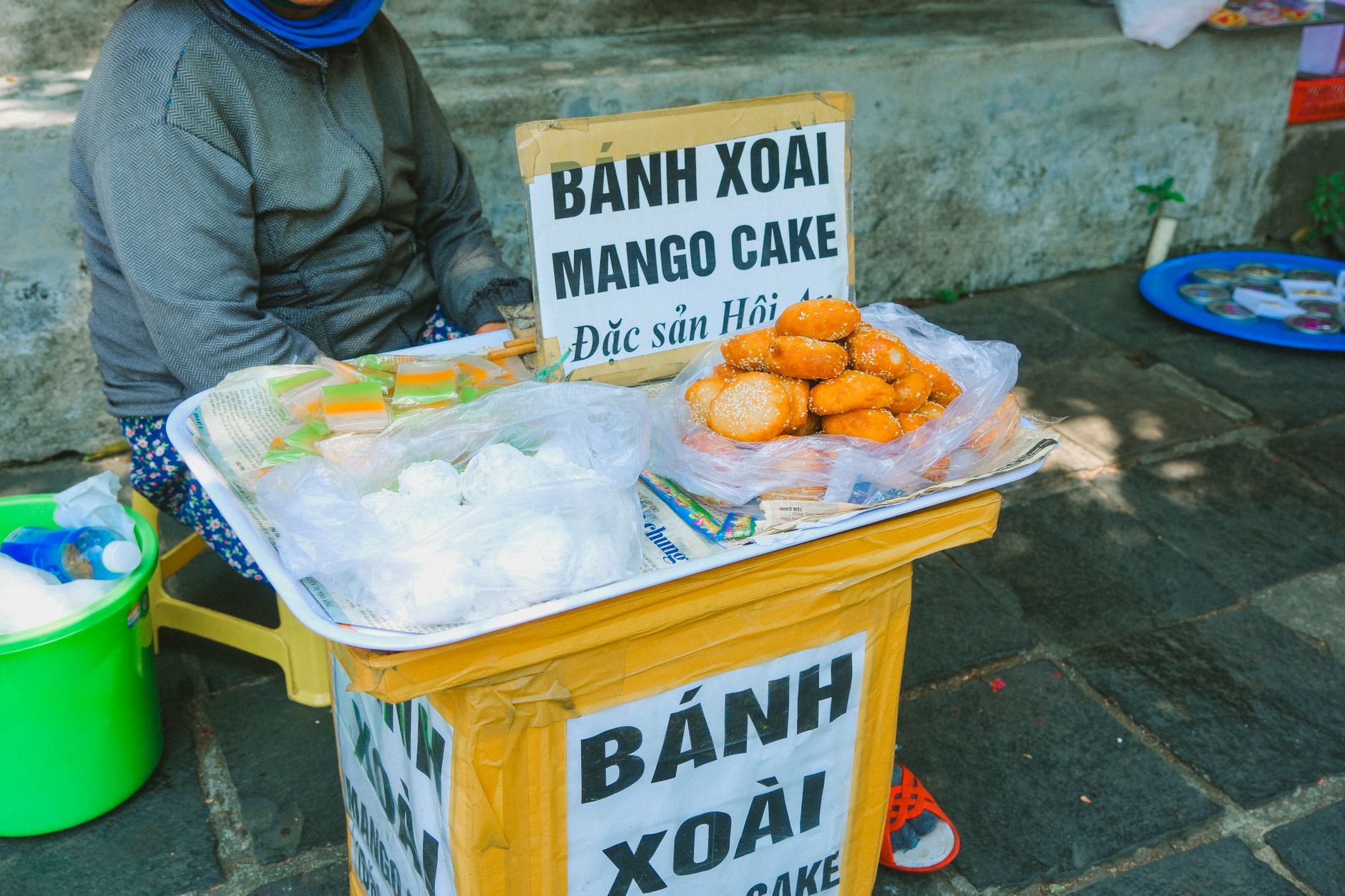
In the evening, head to the night markets. Phu Nhuan night market (Phan Xich Long & Hoang Hoa Tham, District 10) opens around 6 p.m. and runs until 10 p.m. This is where locals eat: grilled seafood, sticky rice with mango, sugar cane juice, "cha gio" (fried spring rolls), "goi cuon" (fresh spring rolls with shrimp and pork), satay on skewers. Prices range from 20,000 to 80,000 VND per item. Wander. Eat what appeals. Strike up conversation with the vendor. This is the street food moment that gets closer to the actual rhythm of how Saigonese eat.
Alternatively, visit Tan Dinh Night Market (Tan Dinh Ward, District 1) on Friday, Saturday, or Sunday evenings. Same energy, slightly less crowded, food quality equally high.

Image by Diego Delso via Wikimedia Commons (CC BY-SA)
Frequently Asked Questions
How much does a typical street food meal cost in Saigon?
Street food in Saigon is affordable across all three days of this trail. A banh mi at Huynh Hoa costs 35,000 VND, broken rice with grilled pork at Com Tam Ba Ghien runs 45,000-50,000 VND, and a bowl of hu tieu at the Cholon family shop is 65,000 VND. Banh xeo at 46A Nguyen Trai is 60,000 VND each. Budget roughly 150,000-200,000 VND per day eating this way.
What is the difference between hu tieu and pho in Saigon?
Hu tieu uses a clear pork-based broth flavored with anchovy and dried squid, topped with pork meatballs, shrimp, liver, and fried shallots. It is distinct from pho in both broth base and toppings. Saigon versions often offer a choice between thin noodles and tapioca noodles. The version at 48 Nguyen Trai, District 1, is made by a family originally from Cambodia, reflecting the dish's cross-border origins.
When should you arrive at Banh Mi Huynh Hoa to avoid a long queue?
Arrive by 7 a.m. The article specifically notes that arriving later means waiting in a queue. Banh Mi Huynh Hoa at 17 Ly Tu Trong, Ben Thanh Ward, has been running the same recipe for 40 years. One sandwich costs 35,000 VND. You can eat at the counter or carry it to nearby Tao Dan Park, which is a short walk away.
Practical notes
Bring cash (VND) — most street stalls and small vendors don't accept cards. Wear comfortable shoes; you'll walk 5–8 km per day. Bring a small umbrella or raincoat; Saigon rains come fast. Eat early when possible — many family stalls shut down by 1 or 2 p.m., reopening for dinner around 5 p.m.
Last updated · May 26, 2026 · independently researched, never sponsored.