Banh Beo in Hue Is Borderline Different
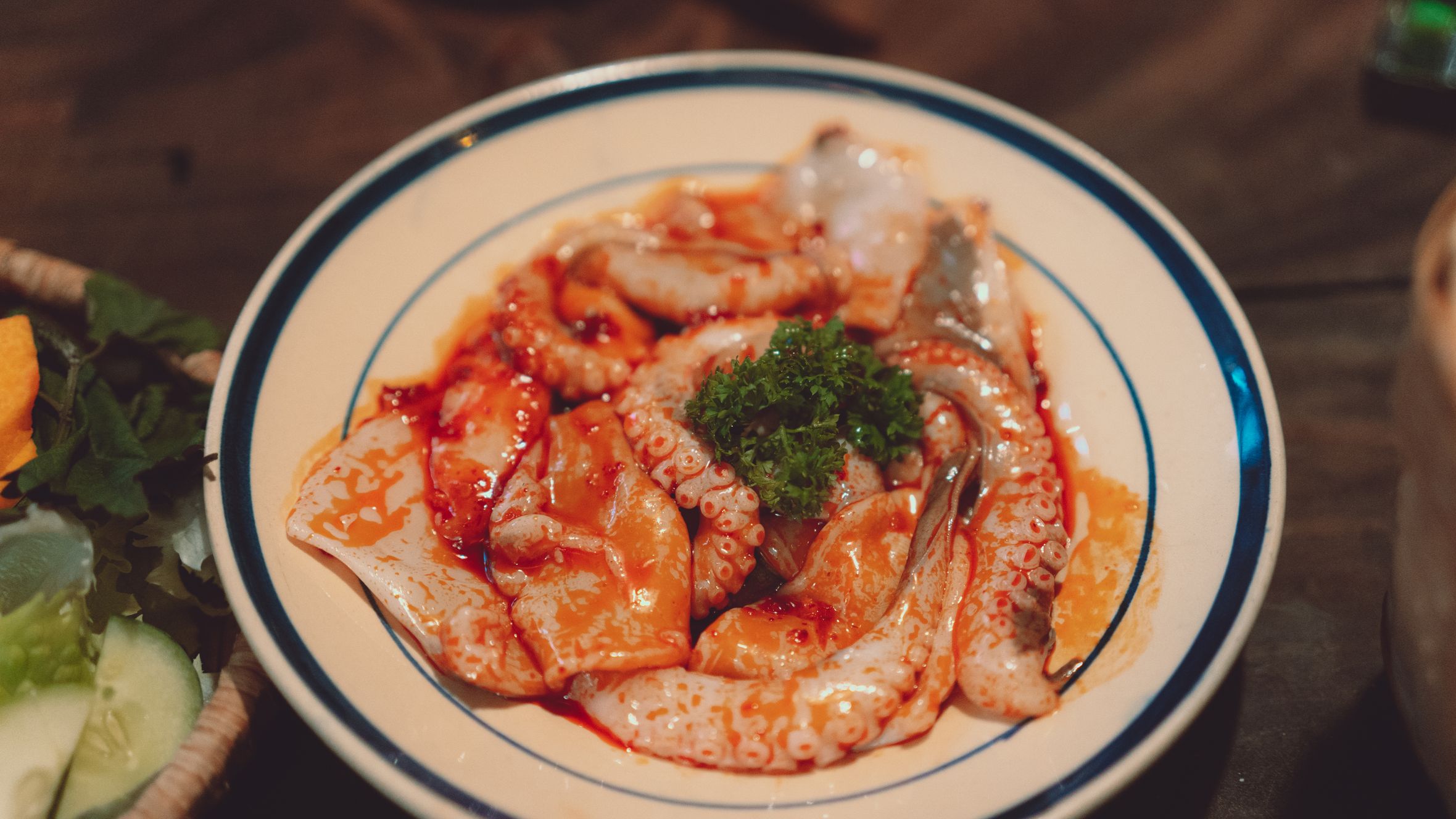
"Banh beo" — those thumbnail-sized rice pancakes — are eaten all over Vietnam. But in Hue, they're treated like a separate dish. The cakes are thinner and crispier than you'll find up north, the toppings are lighter (fewer shrimp, more precision), and the dipping sauce hits differently. It's not just regional pride; the texture and eating ritual are genuinely distinct. If you've had banh beo in Hanoi and didn't get what the fuss was about, Hue might convert you.
Banh Beo Co Nhat (Anchor Spot)
Every person I asked — street vendor, hotel staff, cyclo driver — eventually said the same thing: "Banh Beo Co Nhat." It's tucked on Nguyen Hue (후에 / 顺化 / フエ) street, a narrow shopfront facing a small square where tourists rarely wander. Open from 06:00 to around 11:00, lunch only. They make about four batches a day, hand-ladling batter into metal molds over a coal fire, stacking finished cakes into small stacks on a bamboo stand.
Order by pointing or holding up fingers — five cakes, ten cakes, twenty. Each cake gets a whisper of dried shrimp, scallion oil, and fish sauce dip on the side. A portion of ten runs 25,000 VND. Eat them immediately, standing up if you have to. After 15 minutes they lose the crisp.
Banh Beo Anh Minh
On Pham Hong Thai street, near the market, this is the taller, airier version of a banh beo stall. Anh Minh (the owner's name, which is how everyone refers to it) opens at 05:30 and sells out most days by 10:00. The cakes here are paper-thin, almost translucent if you hold them up. The topping ratio is conservative — a dusting of shrimp, a drizzle of oil, that's it. The dip includes a sharper fish sauce, borderline aggressive, which some prefer.
They also sell banh cuon (steamed rice rolls) if banh beo is gone. Ten cakes cost 25,000 VND; twenty for 45,000 VND. Cash only. No English menu, no signage in Roman letters. Ask your hotel to write the name in Vietnamese and show it to a local.
Banh Beo at Dong Ba Market
If you're already at Dong Ba Market for breakfast, the banh beo stall near the western entrance (opposite the fish section) is legitimate. Run by two women in their 60s, it's been there at least 15 years. Not quite as famous as Co Nhat, but locals definitely eat here. The cakes are slightly thicker, which some say holds the filling better. Toppings are generous by Hue standards — actual chunks of shrimp, not powder. Ten cakes for 20,000 VND; twenty for 35,000 VND.
Open 05:30–10:00. Arrive before 07:00 if you want first pick; after that, quality drops slightly (cooled cakes, rushed batches).
Photo by Vietnam Tri Duong Photographer on Pexels
Banh Beo Sold by Street Vendors (Mobile Stalls)
Early morning, 06:00–08:00, you'll see two or three banh beo carts wheeled out onto Tran Phu street (the waterfront road). They're usually parked near cafes or intersections. Quality varies wildly — some are excellent, some are last night's leftovers reheated. The advantage is mobility; you can eat while walking along the Perfume River. Price is the same, 25,000 VND per ten.
Ask locals which cart they recommend. Or look at the sheen on the cakes — dull and pale = stale; glossy and golden = fresh off the pan.
What You're Actually Eating
Each banh beo is made to order (or in small batches), ladled into a coin-sized mold, steamed briefly, then pan-fried until the bottom crisps. The top stays soft. Toppings go on while it's still warm: powdered shrimp (sometimes fresh shrimp), green onion, crispy fried shallots (optional), and a thin drizzle of fish sauce mixed with chili oil. You pinch it with chopsticks, dunk the edge in the dip, and eat it in one or two bites.
The texture is crucial. A good banh beo should give you a crispy bottom and a tender top, with a slight bounce. If it's gummy or chewy, it's overcooked or too old.
Why Hue's Version Stands Apart
In Hanoi (하노이 / 河内 / ハノイ), banh beo is fluffier and often drowns in toppings and sauce. In Saigon, they're sometimes larger and greasier. Hue's approach is minimalist: thin, crisp, pristine. You taste the rice, not the fill. It's an older style, closer to how it was eaten 50 years ago. The city's culinary conservatism — the preference for delicate, centuries-old recipes — shows here.

Photo by Pew Nguyen on Pexels
When to Go (and Why Timing Matters)
Banh beo is breakfast food. All the spots listed above are open 05:30–11:00 only. You won't find them at lunch or dinner. Locals eat them before work, standing up, in five minutes flat.
Best time: 06:30–07:30, when the day's batch is fresh and the rush hasn't peaked. Any later and you're eating yesterday's technique on today's fire. Weekends are busier; weekday mornings are quieter but equally good.
How to Order (No English Menu)
Point. Hold up fingers. Say "nam cai" (five cakes) or "muoi cai" (ten cakes) or "hai muoi cai" (twenty). If you want extra sauce, say "thêm nước" (more sauce). Chopsticks and a small dish come automatically. Most stalls have a basket of cakes already made; they plate up what you ask for. If the basket is empty, they'll make a fresh batch, which takes three to four minutes.
Price is fixed. No haggling. They may ask where you're from, but it's just chat, not a prelude to upselling.
Practical Notes
Bring small bills (50,000 VND notes or smaller). Banh beo stalls don't have change-making machines. Eat immediately — standing, sitting on a plastic stool, or leaning against the storefront. Don't wait. And go hungry; ten cakes is lighter than it sounds, and you'll want twenty if you're eating it as a full breakfast.
Last updated · May 26, 2026 · independently researched, never sponsored.