Hoi An's Buddhist dining culture and steady stream of health-conscious travelers have quietly made it one of the better cities in Vietnam (베트남 / 越南 / ベトナム) for eating vegan. You won't have to hunt hard — but knowing which places are actually good versus which ones just slap a leaf on the menu helps.
Why Hoi An Works for Plant-Based Eating
Buddhist vegetarian cooking — called "an chay" in Vietnamese — has deep roots here. On the 1st and 15th of each lunar month, a large chunk of the local population goes fully plant-based, which means many restaurants already have the muscle memory for it. The tourist economy has pushed things further, layering in raw cafes, smoothie bowls, and Western-style vegan brunch spots alongside the traditional "chay" kitchens. The result is a genuine range: you can eat a 40,000 VND bowl of Buddhist noodles in the morning and a 180,000 VND cashew-cheese flatbread by the river at night.
Old Town Favorites
Minh Hien Vegetarian Restaurant
This is the place locals point you to when you ask about "com chay" — Buddhist vegetarian rice plates. Minh Hien has been running for years on Tran Phu Street and does the classics without fuss: braised tofu, stir-fried morning glory, jackfruit cooked to a convincing meaty texture, and "banh cuon" filled with mushroom and wood ear fungus instead of pork. Lunch plates run 50,000–70,000 VND. The room is plain, the service is quick, and nothing on the menu is trying to impress you — it's just solid everyday cooking.
Streets Restaurant Hoi An
Run as a social enterprise training disadvantaged youth in hospitality, Streets does a strong vegan menu alongside its broader offering. The vegan "banh xeo" here is worth the trip alone — a rice-flour crepe cooked in coconut milk, stuffed with bean sprouts, mushrooms, and tofu, served with herbs and lettuce leaves for wrapping. It's lighter than the pork-and-shrimp original but the crispiness holds. Main dishes sit around 90,000–130,000 VND. The setting on Hang Dieu Street is calm enough for a proper sit-down lunch.
Tam Tam Cafe & Bar
Not exclusively vegan, but they've built out a serious plant-based section and the kitchen handles it well. The vegan "goi cuon" — fresh rice paper rolls stuffed with tofu, herbs, vermicelli, and pickled vegetables — are a reliable order. Good spot for a longer meal because the courtyard is pleasant and they don't rush tables.
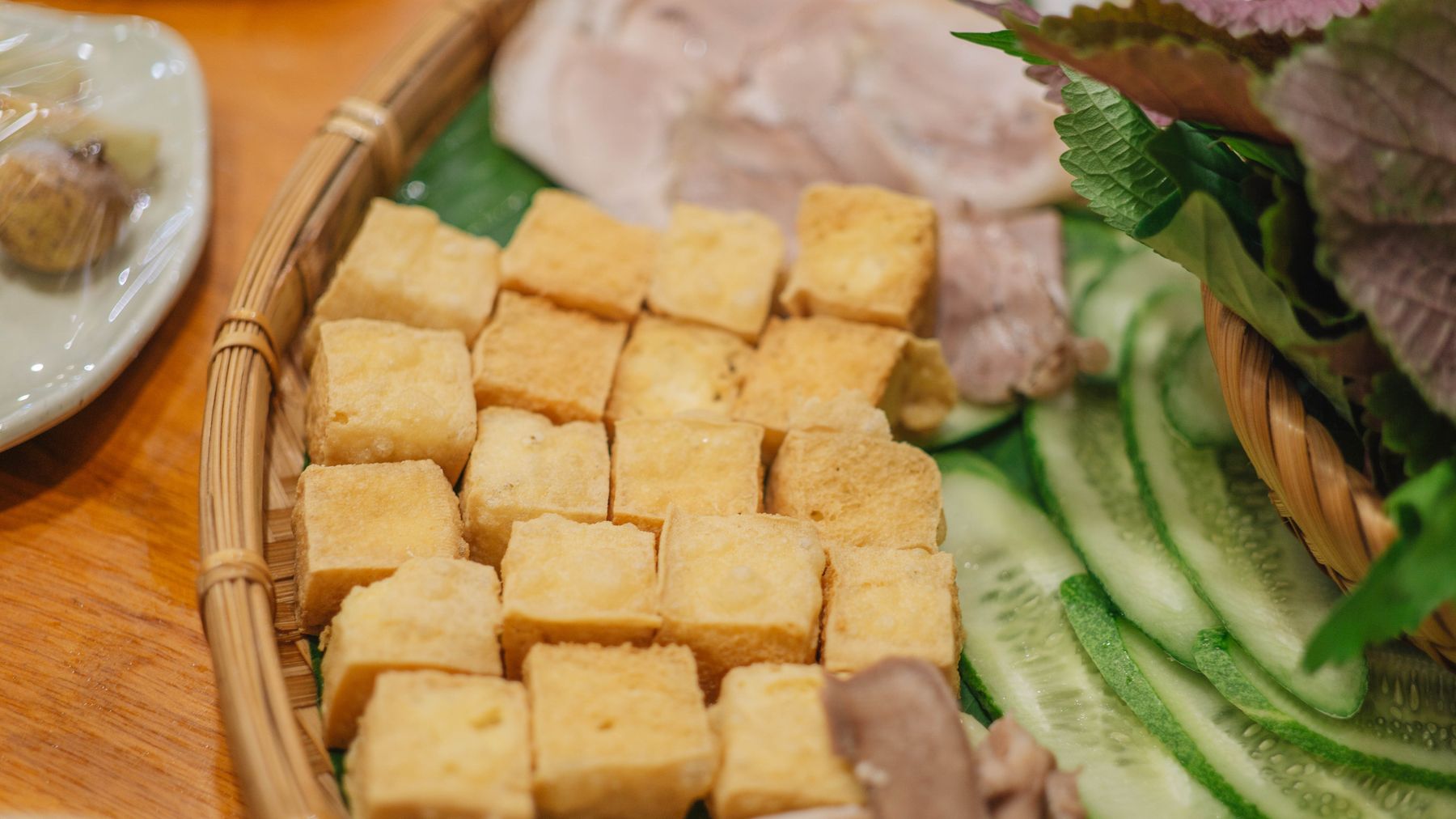
Photo by FOX ^.ᆽ.^= ∫ on Pexels
Raw Cafes and Juice Bars by the River
The stretch of Nguyen Phuc Chu Street along the Thu Bon River has become the informal home of Hoi An (호이안 / 会安 / ホイアン)'s raw-and-wellness cafe scene. These places lean more toward the international backpacker and yoga-retreat crowd, but the food quality is genuine.
Reaching Out Tea House
Primarily a tea house (and another social enterprise, staffed entirely by people with hearing disabilities) but worth mentioning here because the snack menu is fully vegetarian and mostly vegan. The "lotus tea" is exceptional — fragrant, subtle, nothing like the jasmine tea you get everywhere else. Sit, slow down, order a pot. It's one of the more thoughtful spaces in the Old Town.
The Hoi An Roastery (Vegan Options)
Mainly a coffee operation — their Vietnamese-grown single-origin beans are the draw — but they stock oat milk and almond milk, which is still not universal in smaller Vietnamese cafes. If you need your "ca phe sua da" made plant-based while working through a morning in the Old Town, this is the reliable stop.
An Bang Beach Raw Cafes
If you're making the 3 km trip out to An Bang Beach (worth it), several small cafes near the northern end of the beach strip do acai bowls, raw bliss balls, and cold-pressed juice. Prices are higher than Old Town — budget 80,000–120,000 VND for a smoothie bowl — but you're also sitting twenty meters from the ocean, so the math works out.

Photo by Sachith Ravishka Kodikara on Pexels
Practical Tips for Vegan Eating in Hoi An
Watch the "vegetarian" label. In Vietnamese cooking, "chay" (vegetarian) sometimes includes shrimp paste or fish sauce as a seasoning, particularly in older-style Buddhist kitchens where the focus is on avoiding meat rather than all animal products. If you're strictly vegan, ask: "Khong co nuoc mam, khong co mam tom?" (No fish sauce, no shrimp paste?) Most places dealing with international visitors understand the question.
Go early for chay kitchens. The local Buddhist vegetarian spots often sell out of their best dishes by 1pm. Minh Hien and places like it cook a fixed batch each morning — show up at 11am for the full spread.
Market eating is harder. The Hoi An Central Market (Cho Hoi An) is great for fruit, fresh herbs, and browsing, but cooked stalls are heavily meat- and seafood-focused. Don't count on finding a proper vegan meal there.
Tet and lunar calendar dates are golden. If you happen to be in Hoi An around Tet or on a lunar 1st or 15th, the number of "an chay" options across the city spikes noticeably. Even non-vegetarian restaurants often run a separate chay menu those days.
Practical Notes
Hoi An's Old Town is compact enough that you can walk between most of these spots in under fifteen minutes. Budget eating — local chay plates, market fruit — runs 40,000–80,000 VND per meal; the riverside cafes and social-enterprise restaurants sit in the 90,000–180,000 VND range. Neither will strain a travel budget.
Last updated · May 26, 2026 · independently researched, never sponsored.