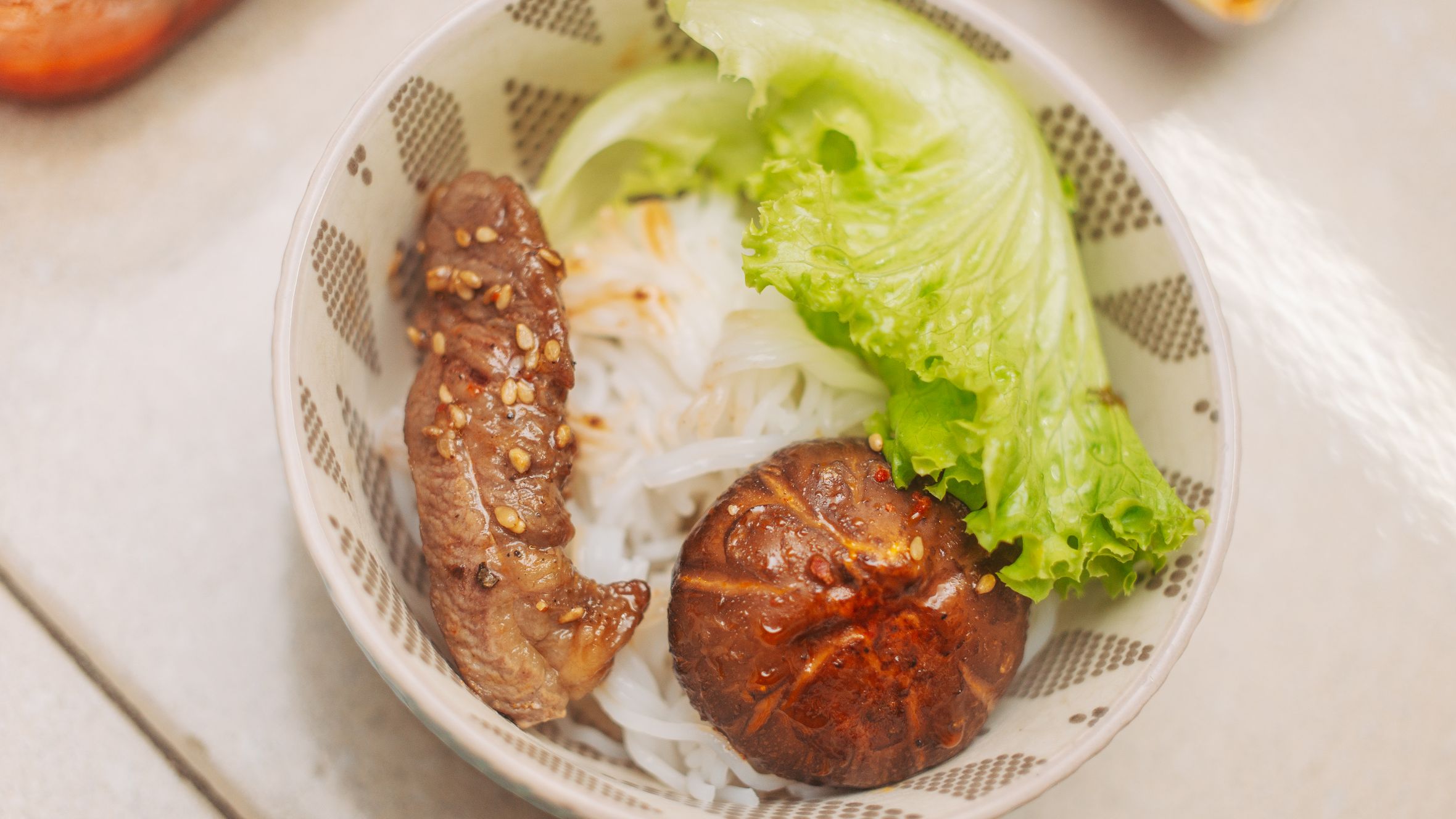
Cold noodles, hot pork, herbs cut tableside — "bun thit nuong" is the kind of bowl that looks deceptively simple until you realise how much is happening in it. It's not as globally famous as pho or banh mi, but among Vietnamese people it's everyday food, eaten any time from breakfast through late afternoon.
What It Is
The dish is a dry-style vermicelli bowl: thin round rice noodles (bun) served cold or at room temperature, topped with sliced grilled pork (thit nuong), and dressed at the table with a pool of "nuoc cham" — the lime-fish sauce-sugar-chilli dipping sauce that anchors half the dishes in Vietnamese cooking. A scattering of crushed roasted peanuts goes over the top, along with pickled carrot and daikon (do chua), and a generous pile of fresh herbs: mint, perilla, bean sprouts, and sometimes shredded banana blossom depending on where you are.
No broth. The noodles stay dry until you pour the nuoc cham over everything and toss it yourself. That's the move.
Where It Comes From
The dish is most strongly associated with central and southern Vietnam (베트남 / 越南 / ベトナム), particularly Hue and Saigon. In Hue, the grilled pork tradition runs deep — the city's cuisine has always leaned toward charcoal heat and fermented funk, and bun thit nuong fits that grammar. In Saigon, it became a street-food staple, sold from carts and shophouses throughout the city's districts, particularly in neighborhoods with large numbers of central Vietnamese migrants who arrived after 1975.
It shares DNA with other Vietnamese noodle-herb-sauce assemblies, and if you've eaten "goi cuon" (fresh spring rolls) you'll recognise the same herb-and-peanut logic. The pork preparation, though, is where the dish earns its character.
The Pork: What to Look For
Good thit nuong is marinated overnight in a mixture of lemongrass, garlic, shallots, fish sauce, sugar, and sometimes a small amount of five-spice. The sugar is essential — it creates the caramelised char on the outside of the meat while keeping the interior moist. Pork shoulder or pork neck (thit co vu) is the preferred cut; it has enough fat to survive high heat without drying out.
The meat should arrive with visible grill marks and a dark, slightly sticky exterior. If it's pale and steamed-looking, that's a warning sign — some shops cook the pork in advance and reheat it without re-grilling, and it shows in the texture. The best versions are sliced thin, arranged in overlapping pieces so every bite gets some charred edge.
In the central style, the pork is sometimes skewered as nem nuong (pork paste sausage grilled on bamboo) alongside or instead of sliced pork. This version is common in Da Nang and Hue (후에 / 顺化 / フエ), and gives the bowl a slightly different texture — denser, springier meat with a smoky exterior.
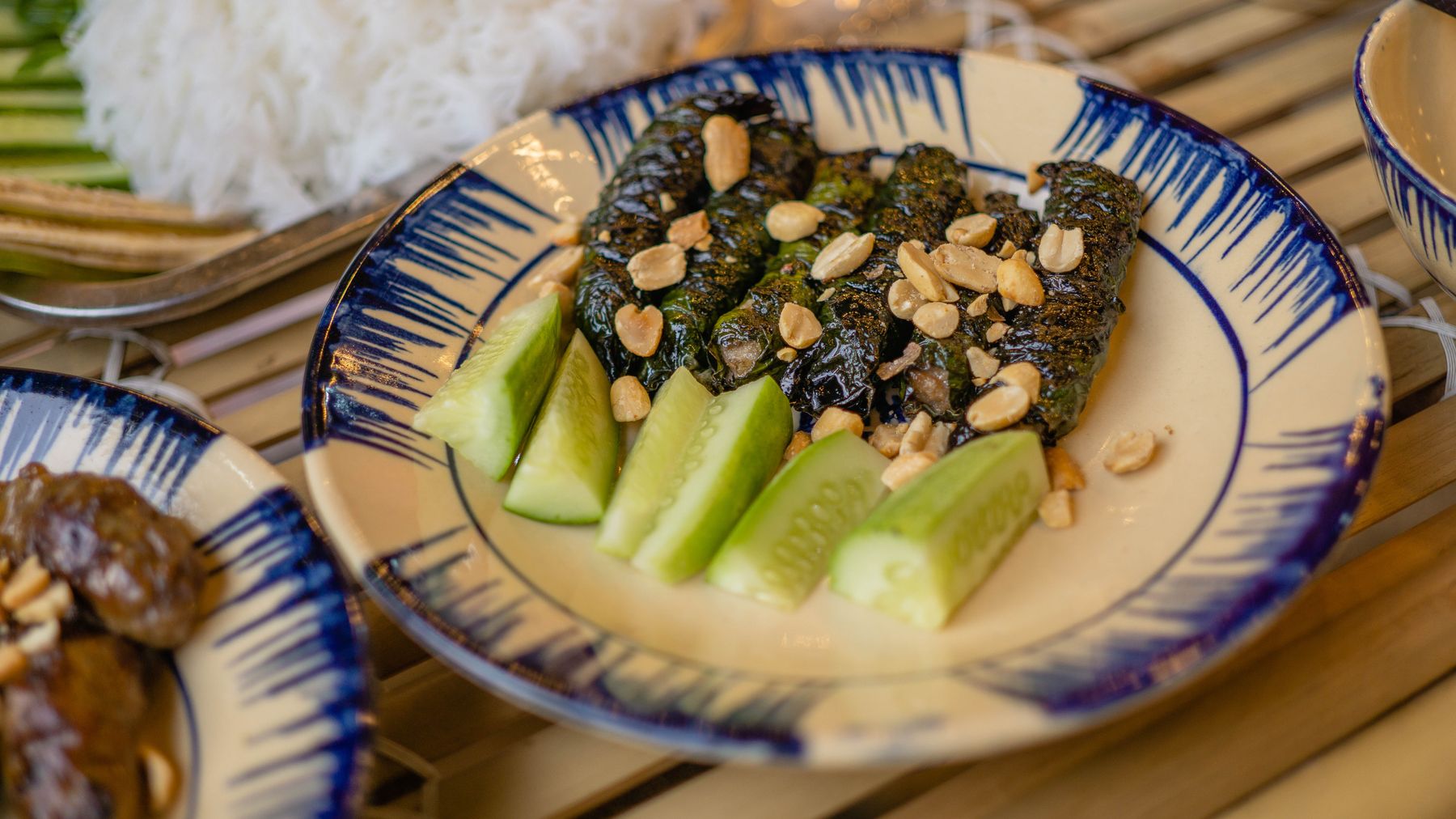
Photo by FOX ^.ᆽ.^= ∫ on Pexels
Central vs. Southern: The Real Difference
This is where opinions get strong.
The central version) tends to be spicier, with a nuoc cham that hits harder on the chilli and sometimes incorporates shrimp paste (mam tom) as a secondary condiment on the side. The herb selection skews toward the pungent end — more perilla, more Vietnamese balm (kinh gioi). The noodle portion is often smaller, offset by more pickled vegetables.
The southern version) is sweeter and more abundant. The nuoc cham is calibrated toward sweetness over heat, the pork portion is generous, and the herb plate tends to include bean sprouts and shredded banana blossom (hoa chuoi). Cha gio — crispy fried spring rolls — are frequently offered as an add-on or served already tucked into the bowl, which turns the dish into a kind of greatest-hits combo. This is the version most visitors encounter first.
Neither is more correct. They reflect genuinely different regional food philosophies.
The Nuoc Cham Formula
The dipping sauce is the hinge the whole dish swings on. A basic working ratio: two parts fish sauce, two parts warm water, one part fresh lime juice, one part sugar, fresh chilli and minced garlic to taste. The sugar should be fully dissolved before you add lime. Some cooks use a small amount of rice vinegar instead of or alongside lime for a flatter, more stable acidity.
At the table, the sauce is poured over the bowl — not used as a dip. You pour, then toss. The noodles absorb the liquid and the peanuts soften slightly. Eating it within two or three minutes of dressing is the move; if it sits too long the noodles go claggy.

Photo by Quang Nguyen Vinh on Pexels
How to Order
Walk into any bun thit nuong shop in Saigon or Da Nang and the default bowl runs 35,000–55,000 VND. You'll often be asked whether you want cha gio added (another 10,000–15,000 VND); say yes once, at least. The herb plate comes automatically — use all of it. Ask for extra nuoc cham if you need it; most places refill it without charge.
In smaller central Vietnam towns, the dish may be listed as "bun thit nuong nem lui" if the pork is served skewered. Order that version when you see it.
Where to Try It
Quan Bun Thit Nuong Co Ut — Saigon (District 3) A narrow shophouse on Dinh Tien Hoang that's been running the southern style for decades. The pork arrives properly charred, the cha gio are thin and shatter on contact, and the nuoc cham is calibrated correctly — sweet up front, fish sauce in the finish. Bowls run 45,000 VND. Expect a short queue on weekday mornings.
Bun Thit Nuong Nem Lui Ba Hue — Hue (near Dong Ba Market) The central version done honestly: skewered nem lui on lemongrass stalks, a shrimp paste condiment on the side, and a nuoc cham that's noticeably less sweet than the Saigon standard. The setting is basic — plastic stools, a charcoal grill on the footpath — but the pork quality is consistent. Around 40,000 VND.
Bun Thit Nuong 63 — Da Nang (Hai Chau District) A reliable stop if you're spending time in Da Nang. The portion size is generous, they grill to order rather than batch-cooking, and the herb plate always includes fresh perilla. Good entry point for the central style if Hue isn't on your itinerary.
Practical Notes
Bun thit nuong is primarily a daytime dish — most dedicated shops close by 2 or 3 pm. It's not a dinner staple in the way that pho or bun bo hue can be. If you're exploring Hoi An or Hue and want a lunch that won't slow you down for the afternoon, this is a smart call: light enough to keep moving, satisfying enough to skip a snack.
Last updated · May 29, 2026 · independently researched, never sponsored.