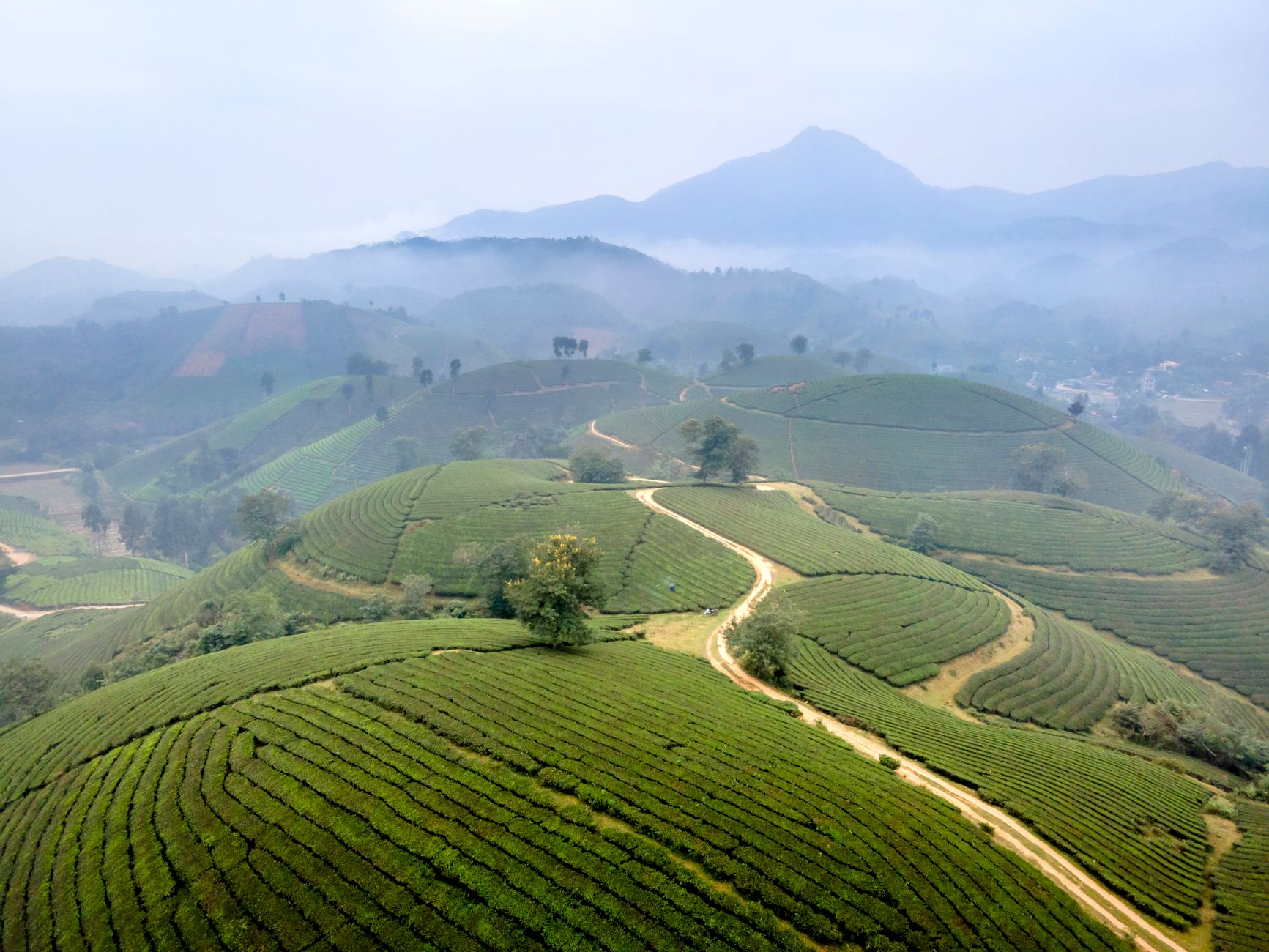
Ba Ra Mountain sits about 723 meters above sea level in what used to be Binh Phuoc province before the 2025 administrative merger folded the area into greater Dong Nai. The cable car running up its flanks — Cap Treo Ba Ra — isn't on most foreign travelers' radar, which is precisely why it's worth the trip. You get highland air, a functioning pilgrimage site, and a day out of Saigon that doesn't involve beach traffic or resort markup.
What it is
Cap Treo Ba Ra is a gondola-style cable car system that carries passengers from the base station near Phu Nghia commune up to the summit area of Ba Ra Mountain. The system opened in the early 2010s as part of a broader push to develop Ba Ra — Nui Ba as a tourism zone. The mountain itself has historical significance as a former military observation point, but today it's mainly a destination for domestic tourists, Buddhist pilgrims visiting the summit pagoda, and Saigon (사이공 / 西贡 / サイゴン) residents looking for weekend altitude.
The ride covers roughly 2.4 km and takes about 10-12 minutes one way. Cabins are enclosed and seat 6-8 people. It's not a thrill ride — it's a slow, quiet ascent over forest canopy with views that open up gradually as you climb.
Why travelers go
Three reasons, mainly. First, it's one of the few cable car experiences in southern Vietnam (베트남 / 越南 / ベトナム) outside of the major resort operations. Second, Ba Ra's summit offers genuine panoramic views across the southeastern highlands — on clear days you can see plantation land stretching to the horizon in every direction. Third, the area around Ba Ra Mountain sits next to Ba Ra Lake (Ho Thac Mo), a large reservoir that's pleasant for a half-day of low-key exploring.
It's not a place you'll spend three days. But paired with a night in the area and a morning on the lake, it makes a solid overnight trip from Saigon.
Best time to visit
November through April is your window. This is the dry season in the south, and Ba Ra's elevation means morning fog can roll in during the wet months (May-October), cutting visibility from the summit to almost nothing. The cable car also occasionally suspends service during heavy rain or high winds.
Weekday mornings are ideal. Weekends — especially long weekends and holidays around Tet — bring domestic tour groups and the queues stretch accordingly. If you can swing a Thursday or Friday visit, you'll likely have a cabin to yourself.
How to get there from Saigon
Ba Ra Mountain is roughly 160 km northeast of Saigon. The most practical route is to drive or arrange private transport via National Highway 13 through Binh Duong, then connect to DT741 heading north toward Phuoc Long town. Total drive time is around 3.5-4 hours depending on traffic getting out of the city.
There are also intercity buses from Saigon's Mien Dong bus station to Phuoc Long. Expect to pay around 120,000-150,000 VND for the bus, with a travel time of 4-5 hours. From Phuoc Long town center, the cable car base station is about 8 km — a xe om (motorbike taxi) will run you 30,000-50,000 VND.
Renting a motorbike in Saigon and riding up is doable if you're comfortable on Vietnamese highways. The road quality is decent once you're past Thu Dau Mot.

Photo by Quang Nguyen Vinh on Pexels
What to do
Ride the cable car (obviously)
A round-trip ticket runs about 150,000-200,000 VND for adults. Buy tickets at the base station — there's no real benefit to booking ahead. The ride itself is the highlight: quiet, smooth, with the canopy dropping away beneath you. Bring a light jacket; the temperature at the top can be 4-5 degrees cooler than the base.
Walk the summit trails
Once you're up top, a network of paved and semi-paved paths connects the cable car terminal to the summit pagoda, several viewpoint platforms, and a few smaller shrines. The full loop takes about 45 minutes at a comfortable pace. The highest point has a geodesic marker — a good photo spot without the usual selfie-stick crowd.
Visit the summit pagoda
The Buddhist pagoda near the peak is an active place of worship, not a museum piece. Remove shoes, dress modestly (cover shoulders and knees), and you're welcome to look around. Incense smoke, chanting from speakers, and the occasional monk going about daily business. It's calm and unpretentious.
Explore Ba Ra Lake
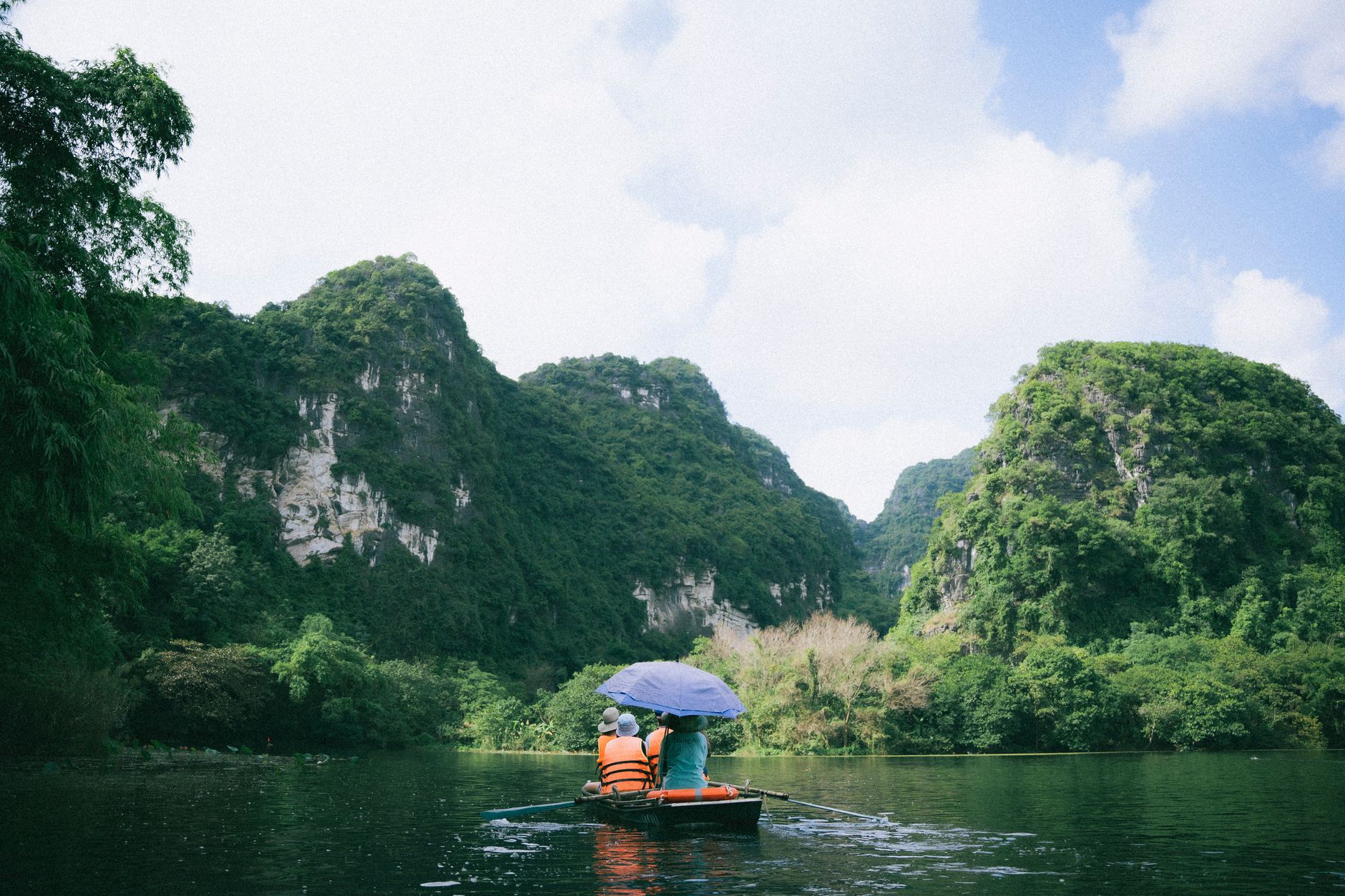
Back at the base, Ho Thac Mo (Ba Ra Lake) is a 10-minute drive away. You can hire a small boat for a lap around the reservoir — expect to pay around 200,000-300,000 VND for a private boat for an hour. The water is clean by Vietnamese reservoir standards and the surrounding hills are thickly forested. Mornings are best, before the midday heat flattens everything.
Hike instead of riding
If you'd rather earn the summit, there's a hiking trail from the base area. It's roughly 5 km with moderate elevation gain — figure 1.5-2 hours up. The trail is shaded but not well-marked in places, so ask at the ticket office for current conditions. You can take the cable car down for a one-way fare of around 100,000 VND.
Where to eat nearby
Phuoc Long town is your best bet. Look for "com tam" — the broken rice plates here come with grilled pork and a fried egg, solid and cheap at 35,000-45,000 VND. There are also several spots along the main road serving "bo la lot" (beef wrapped in betel leaf), which this part of the south does well. A plate of bo la lot with rice paper, herbs, and dipping sauce runs about 80,000-120,000 VND and feeds two comfortably.
Don't expect much at the summit itself — there's a small refreshment stand with instant noodles, bottled water, and snacks, but nothing worth planning a meal around.
Where to stay
Phuoc Long town has a handful of nha nghi (guesthouses) and mini-hotels in the 200,000-400,000 VND per night range. They're basic — clean bed, air conditioning, hot water — but functional. For something slightly more polished, look for the newer hotels along DT741 approaching town, where 500,000-700,000 VND gets you a proper room with breakfast included.
There's no resort infrastructure here. If you need a pool and room service, this isn't the trip.

Photo by Kirandeep Singh Walia on Pexels
Practical tips locals would tell you
- Bring cash. Card payment is unreliable at the cable car station and nonexistent at most Phuoc Long eateries.
- Wear shoes with grip if you plan to hike or walk the summit trails. The paved sections get slippery when damp.
- Start early. The cable car usually opens at 7:00 or 7:30 — riding first thing means cooler temperatures and better visibility.
- Bring your own water. The summit kiosk marks up bottled water to 20,000 VND. Buy at the base for 8,000 VND.
- Sunscreen matters even on overcast days at this altitude.
Mistakes to avoid
- Going on a rainy weekend. You'll queue for an hour, ride through cloud cover, see nothing, and eat instant noodles. Check weather before committing.
- Skipping the lake. A lot of visitors treat Ba Ra as cable-car-and-done. The lake is the quieter, arguably more enjoyable half of the trip.
- Wearing sandals on the summit trails. The stone paths near the pagoda get wet from mist and runoff. Flip-flops are a recipe for a bad fall.
- Not bringing a layer. It's the south, yes, but 700 meters of elevation makes a difference. Mornings at the top can feel genuinely cool by Vietnamese standards.
Practical notes
Cap Treo Ba Ra works best as an overnight trip from Saigon — drive up in the morning, ride the cable car, explore the lake in the afternoon, sleep in Phuoc Long, and drive back the next day. It pairs well with a broader loop through the southeastern highlands if you're renting a motorbike and have a few days to spare. Don't expect polish or tourist infrastructure — that's part of the appeal.
Last updated · Jul 27, 2026 · independently researched, never sponsored.