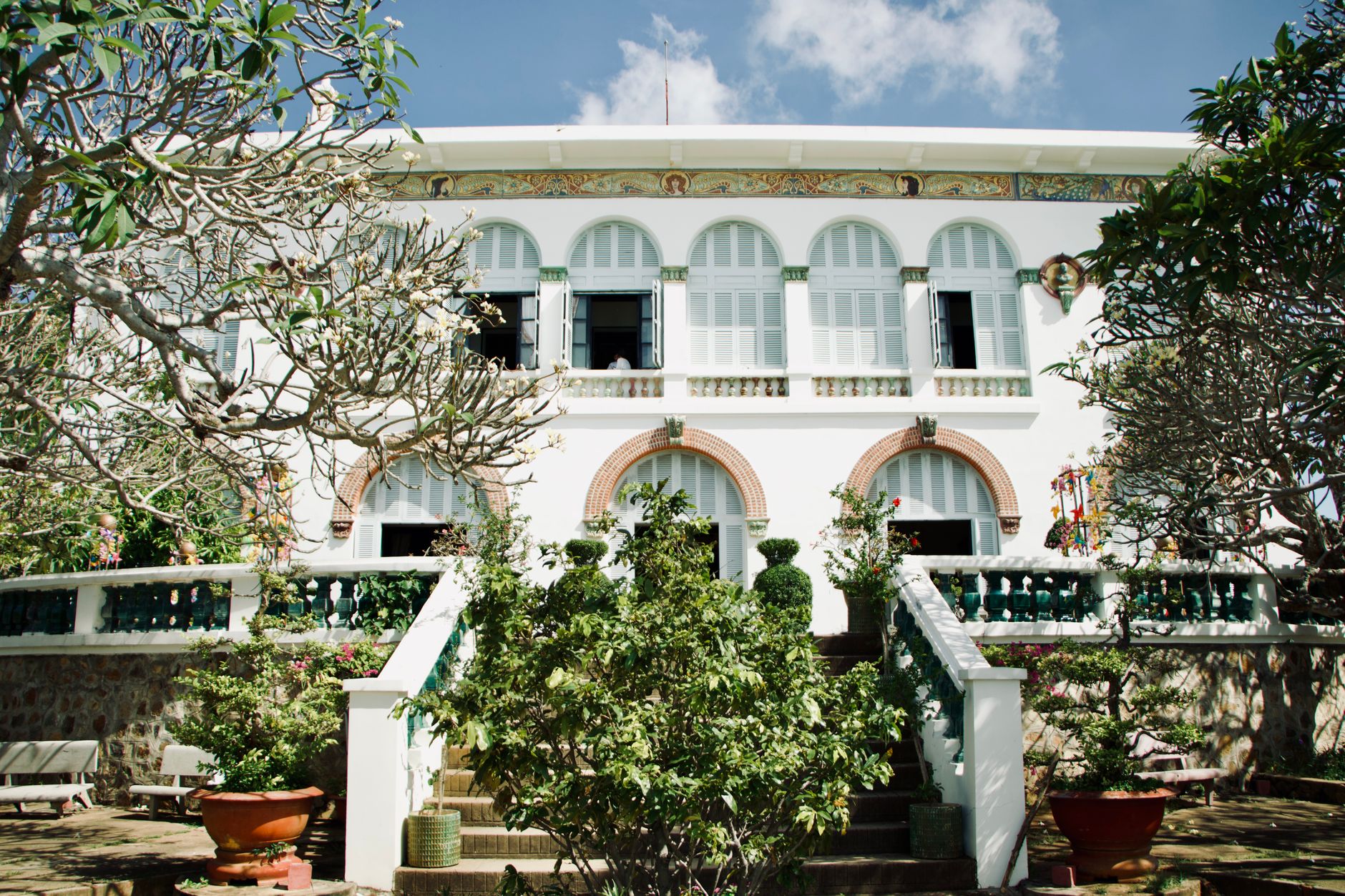
Cho Han sits right on the west bank of the Han River, a five-minute walk from the Dragon Bridge. It's been Da Nang's main market since the French colonial period, and while it's not as chaotic or sprawling as Dong Xuan Market in Hanoi or Ben Thanh Market in Saigon, it does something those markets sometimes struggle with: it still functions primarily as a market for people who live here.
What Cho Han is — and a bit of history
The market has operated at this spot on Tran Phu and Bach Dang streets since the early 20th century. The current building is a rebuilt version — the original structure was damaged during wartime and reconstructed in the 1980s. It's a no-frills, two-story concrete building with a basement level. Ground floor handles fresh produce, meat, seafood, and dry goods. Upper floor is mostly clothing, fabric, souvenirs, and household items.
With Da Nang (다낭 / 岘港 / ダナン)'s recent administrative merger with Quang Nam province, the city has expanded significantly, but Cho Han remains the commercial anchor of the old urban core — the part of Da Nang most travelers actually spend time in.
Why travelers go
Cho Han isn't a tourist attraction in the theme-park sense. You go because it's a functioning market in a convenient location, and it gives you something the beachfront hotels and Instagram bridges don't: ordinary life happening at full speed. The seafood section alone is worth a walk-through — piles of squid, mantis shrimp, razor clams, and fish you won't recognize, all priced by the kilogram and sold by women who've been doing this for decades.
It's also genuinely useful. Need a cheap rain poncho? Cho Han. Looking for dried squid or coffee to bring home? Cho Han. Want a bowl of "mi quang" at 7 a.m. surrounded by market vendors on their breakfast break? Cho Han.
Best time to visit
The market opens around 6:00 a.m. and winds down by 6:00 p.m., though the food stalls on the ground floor get going earliest. For the best experience, arrive between 7:00 and 9:00 a.m. — the produce is freshest, the vendors are in good spirits, and the heat hasn't turned the building into a sauna yet.
Season-wise, Da Nang's dry months run from about March through August. September to November brings the heaviest rain, and while the market operates rain or shine, navigating wet floors with loaded motorbikes squeezing past you isn't everyone's idea of fun. If you're visiting during Tet, expect limited hours and higher prices on everything.
How to get there
From Da Nang's main tourist strip along My Khe Beach, Cho Han is about 4 km west — a 15-minute taxi or Grab ride costing roughly 40,000–60,000 VND. From Da Nang International Airport, it's around 3 km and takes 10 minutes outside of rush hour.
If you're coming from Hoi An (호이안 / 会安 / ホイアン) (about 30 km south), a Grab car runs 250,000–350,000 VND and takes 40–50 minutes depending on traffic. Local buses also connect the two cities for around 30,000 VND, dropping you within walking distance of the market.
The market is on the corner of Tran Phu and Bach Dang streets, directly across the river from the Novotel. You can't miss it — it's one of the few large buildings in the area that isn't trying to look modern.
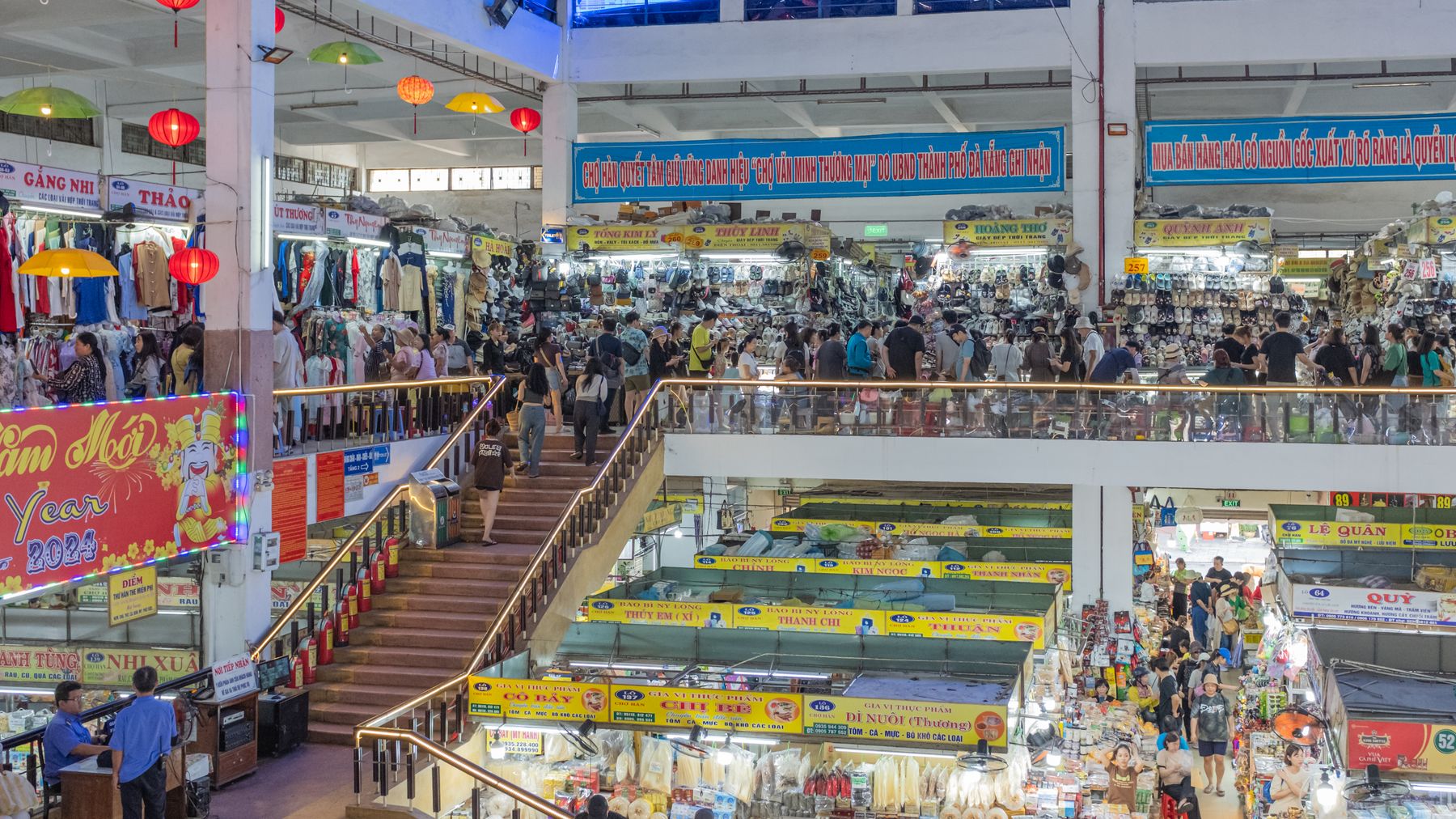
Photo by Kirandeep Singh Walia on Pexels
What to do
Walk the seafood section
The ground floor's seafood area is loud, wet, and fascinating. Vendors will let you look without pressure. If you're staying somewhere with a kitchen, you can buy fresh prawns or fish here for a fraction of restaurant prices — 150,000–200,000 VND per kilogram for decent tiger prawns.
Eat breakfast at the food stalls
Several stalls inside the market serve "banh canh" (thick tapioca noodle soup), mi quang, and "bun cha" — the Da Nang versions, which differ from their Hanoi or Hue counterparts. A bowl runs 25,000–40,000 VND. Grab a plastic stool and eat where the vendors eat.
Browse the fabric and "ao dai" tailors
The upper floor has a row of tailors who can make a custom ao dai in 2–3 days. Prices start around 500,000 VND for basic fabric and tailoring, going up to 2,000,000 VND or more for silk. Quality varies — ask to see finished samples before committing.
Pick up local snacks and dried goods
Dried squid, roasted cashews, lotus tea, and locally grown coffee beans are all solid things to bring home. The dried goods section is near the back of the ground floor. Prices aren't fixed, but they're generally reasonable — a 500g bag of roasted cashews goes for about 100,000–150,000 VND.
Check the surrounding streets
The blocks around Cho Han — especially along Hung Vuong and Nguyen Chi Thanh — are packed with smaller shops and street food carts. Don't limit yourself to the building itself.
Where to eat nearby
Within a 10-minute walk of Cho Han, you can find some of Da Nang's better-known local dishes:
- "Banh xeo" Ba Duong (at 280 Hoang Dieu, about 800 m from the market) has been serving oversized Central Vietnamese-style crispy pancakes for years. A plate with all the herbs and dipping sauce runs about 30,000–50,000 VND.
- "Com tam" stalls pop up along Tran Phu in the evenings — broken rice with grilled pork, a fried egg, and pickled vegetables for around 35,000 VND.
For vietnamese coffee, the streets around the market have plenty of small cafes where a "ca phe sua da" costs 15,000–25,000 VND.
Where to stay
Cho Han is in Da Nang's city center, so accommodation options cluster nearby:
- Budget: Guesthouses and hostels along Bach Dang and Tran Phu streets start at 200,000–400,000 VND per night.
- Mid-range: 3-star hotels within walking distance run 500,000–1,000,000 VND. Several sit right along the riverfront with decent views.
- Upper range: The Novotel and similar international hotels are across the river, a 5-minute walk over the Han River Bridge, from about 1,500,000 VND upward.

Photo by Tuan Minh on Pexels
Practical tips locals would tell you
- Bargain gently on the upper floor, not on the ground floor. Fresh food prices are already tight-margin. Clothing and souvenirs have more room to negotiate — aim for 10–20% off the first quoted price, not 50%.
- Bring small bills. Vendors deal in cash and often can't break 500,000 VND notes early in the morning. Keep a stack of 10,000 and 20,000 VND notes.
- Watch your phone and wallet. Cho Han isn't particularly dangerous, but it's crowded and busy. Keep valuables in front pockets or a crossbody bag.
- Use the bathroom before you go. The market restrooms exist but aren't pleasant. Nearby cafes are a better option.
Common mistakes to avoid
- Comparing it to Hoi An's markets. Hoi An is 30 km south and geared more toward tourists. Cho Han is a working market — adjust your expectations accordingly.
- Coming at midday. The building has limited ventilation. Between 11:00 a.m. and 2:00 p.m., it's hot and many vendors take a break.
- Buying too quickly. Walk the full market once before purchasing. The same items often appear at multiple stalls, and prices vary.
- Skipping the surrounding streets. Some of the best food and shopping near Cho Han is actually outside the building, on the side streets and alleys within a two-block radius.
Practical notes
Cho Han is open daily, roughly 6:00 a.m. to 6:00 p.m., with food stalls opening earliest. There's no entrance fee. It pairs well with a morning walk along the Han River or an afternoon visit to the Dragon Bridge, which lights up on weekend evenings. Budget about 1–2 hours for a thorough visit, longer if you eat.
Last updated · May 29, 2026 · independently researched, never sponsored.