Chua Phuoc Hau sits about 6 km outside Vinh Long city center, on the bank of a narrow canal in Tien Loi commune. It's not a tourist attraction in the typical sense — no ticket booth, no gift shop — but it's one of the Mekong Delta (메콩 델타 / 湄公河三角洲 / メコンデルタ)'s most significant Buddhist temples, and spending a morning here gives you a side of southern Vietnam that the floating markets don't.
What it is
Chua Phuoc Hau was founded in 1894 as a modest thatched-roof pagoda. It grew into something more substantial under the monk Thich Khanh Anh in the 1930s and 1940s, and later became closely associated with the Most Venerable Thich Minh Dang Quang, the founder of the Vietnamese Mendicant Buddhist order ("Khât Si"). The temple was rebuilt and expanded several times through the 20th century, and what you see today is a mix of old-school southern Vietnamese temple architecture — low-slung rooflines, open courtyards, ceramic tile work — alongside newer additions.
The main hall holds a large Shakyamuni Buddha statue and a series of carved wood panels that are worth a slow look. Behind the main complex, there's a garden area with fruit trees and a quiet path along the canal.
Why travelers go
Most foreign visitors who end up at Chua Phuoc Hau arrive by accident — cycling through the orchards south of Vinh Long, or on a homestay-arranged boat trip. That's part of the appeal. The temple grounds are genuinely peaceful, not performatively so. Monks go about their routines. Locals stop in to pray. There's no entrance fee, no pressure, no hawkers.
For anyone interested in Vietnamese Buddhism beyond the heavily touristed pagodas of Saigon or Hanoi, this is a grounded place to observe how a working temple actually functions in the Mekong Delta. The Mendicant Buddhist tradition here has a particular southern Vietnamese character — more austere than the ornate temples up north, more community-oriented.
Best time to visit
The dry season — roughly December through April — is the most comfortable window. The Mekong Delta gets genuinely soggy from June through October, and the canal-side roads around the temple can flood or turn to mud. January and February are ideal: warm but not brutal, dry paths, and if your visit lines up with Tet, the temple will be decorated and active with local worshippers.
Early mornings (before 9 AM) are best. The light is softer, the monks are often chanting, and you'll have the grounds more or less to yourself.
How to get there
From Saigon (사이공 / 西贡 / サイゴン), take a bus from Mien Tay bus station to Vinh Long city. The ride is about 2.5 hours on the expressway, and tickets run 90,000–130,000 VND depending on the operator. Phuong Trang (FUTA) and Thanh Buoi both run frequent departures.
From Vinh Long city center, the temple is roughly 6 km south. You can grab a "xe om" (motorbike taxi) for about 30,000–40,000 VND, or rent a bicycle from most guesthouses for 50,000–80,000 VND per day and ride there yourself — the route through the orchards and along the canals is flat and pleasant. If you're using a ride-hailing app, Grab works in Vinh Long but drivers can be sparse outside the center.
Note that with the recent administrative merger of the former Ben Tre and Tra Vinh provinces into the expanded Vinh Long province, some maps and GPS apps may show outdated boundaries. The temple location hasn't changed — just search for Chua Phuoc Hau, Tien Loi, Vinh Long.

Photo by Nguyen Truong Khang on Pexels
What to do
Walk the main hall and courtyard
Take your shoes off before entering the main worship hall. The carved panels along the interior walls depict scenes from the Buddha's life and are older than most of the structure itself — some date to the 1930s renovation. The courtyard between the main hall and the monks' quarters usually has a few bonsai trees and a large incense urn.
Sit in the garden
Behind the main complex, a path leads through a fruit garden — longan, mango, jackfruit depending on the season. There are concrete benches along the canal. This is where locals come to sit quietly, and you should do the same. Fifteen minutes here recalibrates your pace.
Attend a chanting session
If you arrive before 6 AM or around 5 PM, you may catch the monks' chanting. You're welcome to sit at the back of the hall and observe. Stay quiet, don't use flash photography, and dress modestly — long pants, covered shoulders.
Cycle the surrounding orchards
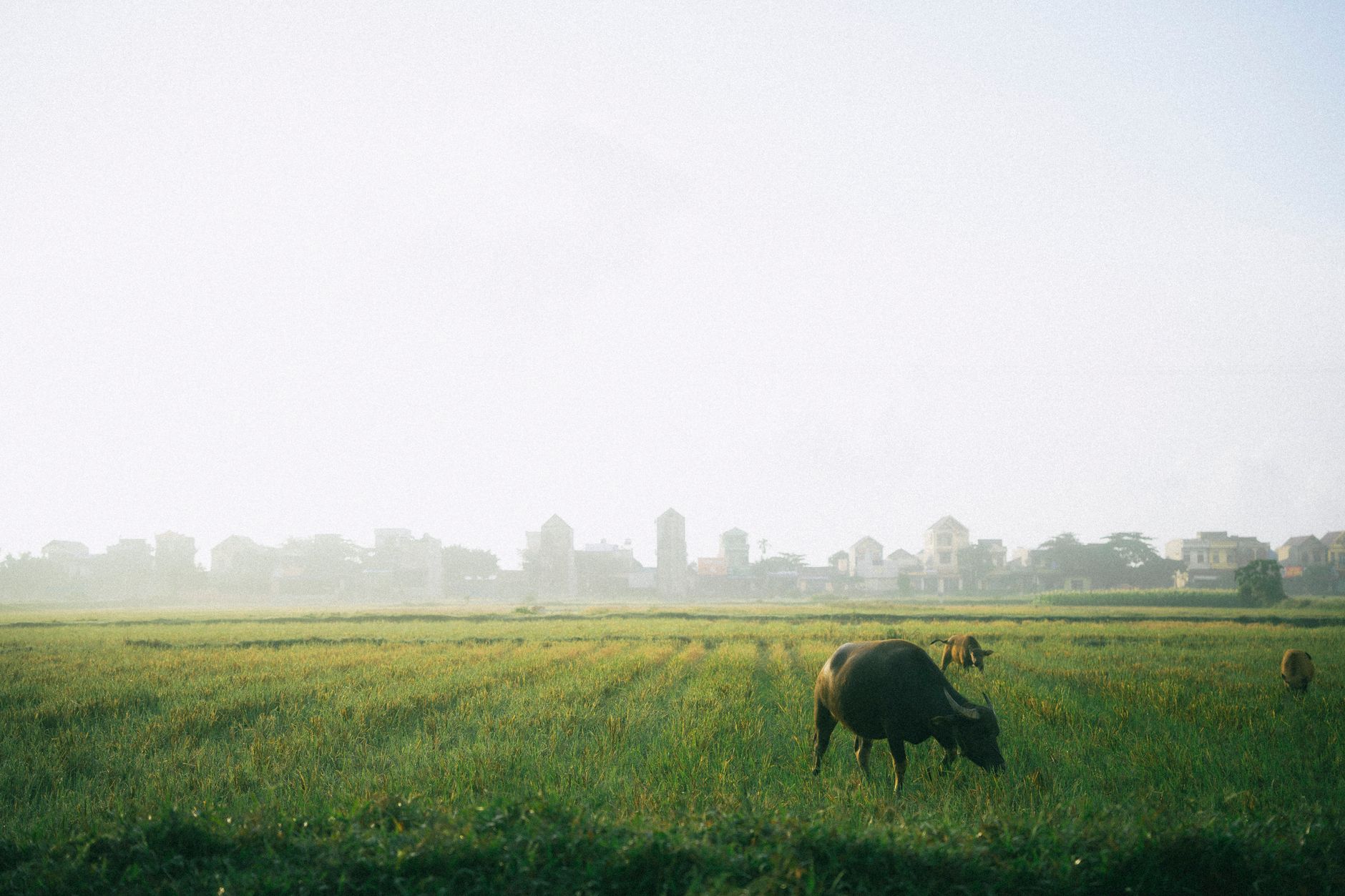
The roads around Chua Phuoc Hau wind through fruit orchards and past small canal-side houses. A two-hour loop south and east of the temple gives you a slice of rural delta life without any organized tour. Stop at a roadside stand for "nuoc mia" (sugarcane juice) — about 10,000 VND a glass.
Visit the nearby ceramic kilns
Vinh Long province has a long tradition of brick and ceramic production. A few working kilns operate along the river between the city and the temple. They're not set up for tourism, but if you stop and show interest, workers are usually happy to let you look around.
Where to eat nearby
Vinh Long city has solid Mekong Delta food. Look for "hu tieu" — the southern-style noodle soup with pork, shrimp, and a clear broth that's lighter than "pho". A bowl runs 30,000–45,000 VND at most street stalls along Phan Boi Chau street near the market.
Also worth trying: "banh xeo" in the delta style, which tends to be bigger and crunchier than what you get in Saigon, stuffed with shrimp, pork, bean sprouts, and wrapped in mustard greens. There are a couple of dedicated "banh xeo" shops on Hung Dao Vuong street — 40,000–55,000 VND per serving.
Where to stay
Vinh Long isn't overloaded with accommodation options, but there's enough. Budget guesthouses near the market run 200,000–350,000 VND per night. Mid-range hotels along the riverfront — Cuu Long Hotel is the most established — go for 400,000–700,000 VND. For something more atmospheric, several homestays on An Binh island (a short ferry ride from the city) offer rooms for 300,000–500,000 VND including breakfast and often a boat tour.
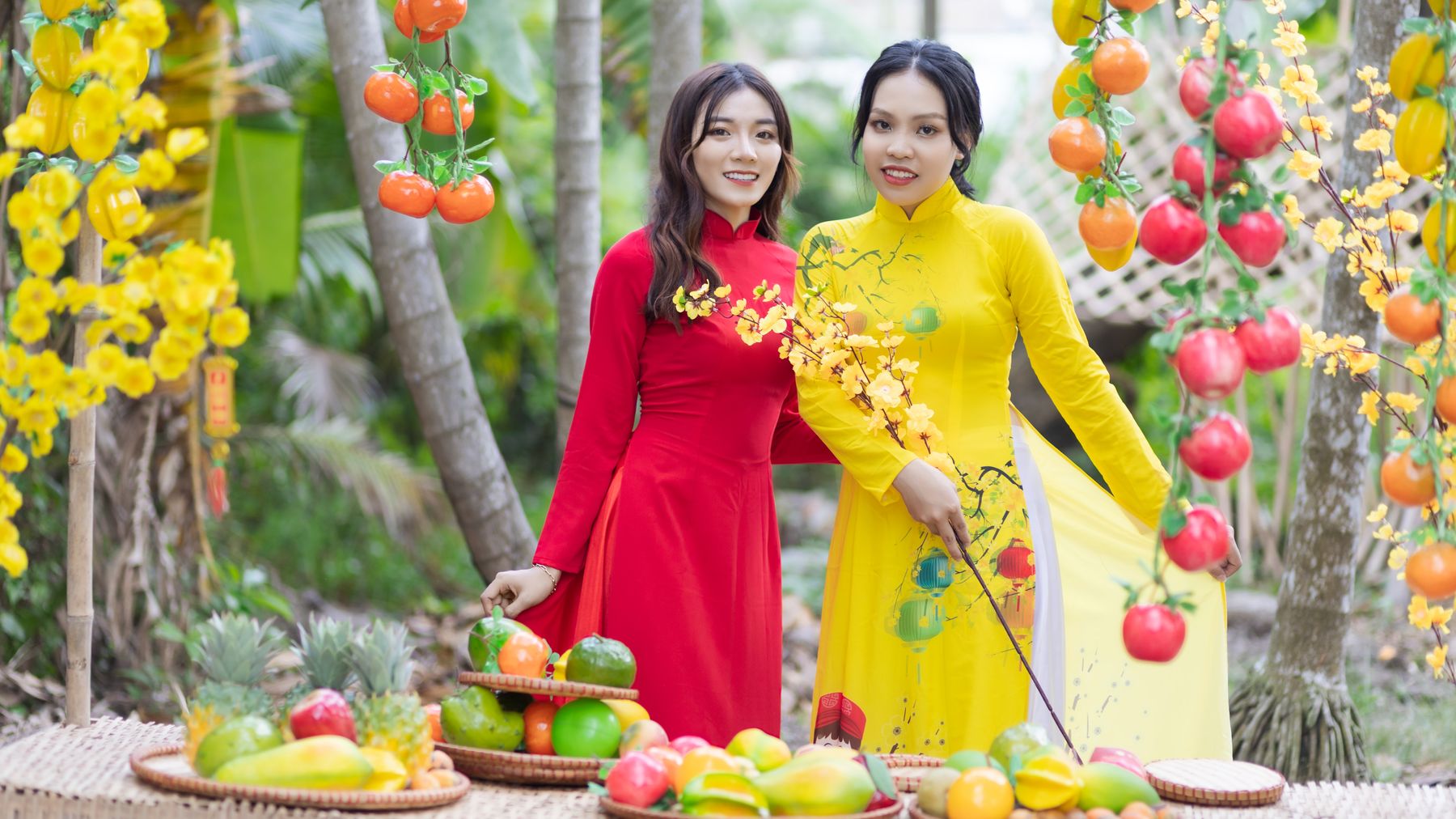
Photo by Hưng Hoàng on Pexels
Practical tips locals would tell you
- Dress conservatively. This is an active place of worship, not a ruin. Long pants and covered shoulders are expected, not optional.
- Bring your own water. There's no shop at the temple, and the nearest convenience store is back toward the city.
- If you want to make an offering, pick up incense or fruit at Vinh Long's central market before heading out. A small bundle of incense costs about 10,000 VND.
- The temple has no official visiting hours, but showing up between 7 AM and 5 PM is respectful. Avoid the midday rest period (11 AM–1 PM) when monks are eating and resting.
Mistakes to avoid
Don't treat the temple like a photo set. Wandering into the monks' living quarters, posing in front of altars, or flying a drone over the grounds will not go over well. Don't bring food to eat on the premises — it's considered disrespectful. And don't assume the temple is "just another pagoda" and rush through in ten minutes. The value here is in slowing down, which requires you to actually do it.
Practical notes
Chua Phuoc Hau works best as part of a longer day in Vinh Long — combine it with a morning at the floating market, an afternoon cycling the orchards, and an evening eating your way through the river-town food stalls. It's not the reason you come to the Mekong Delta, but it might be the thing you remember most clearly.
Last updated · May 26, 2026 · independently researched, never sponsored.