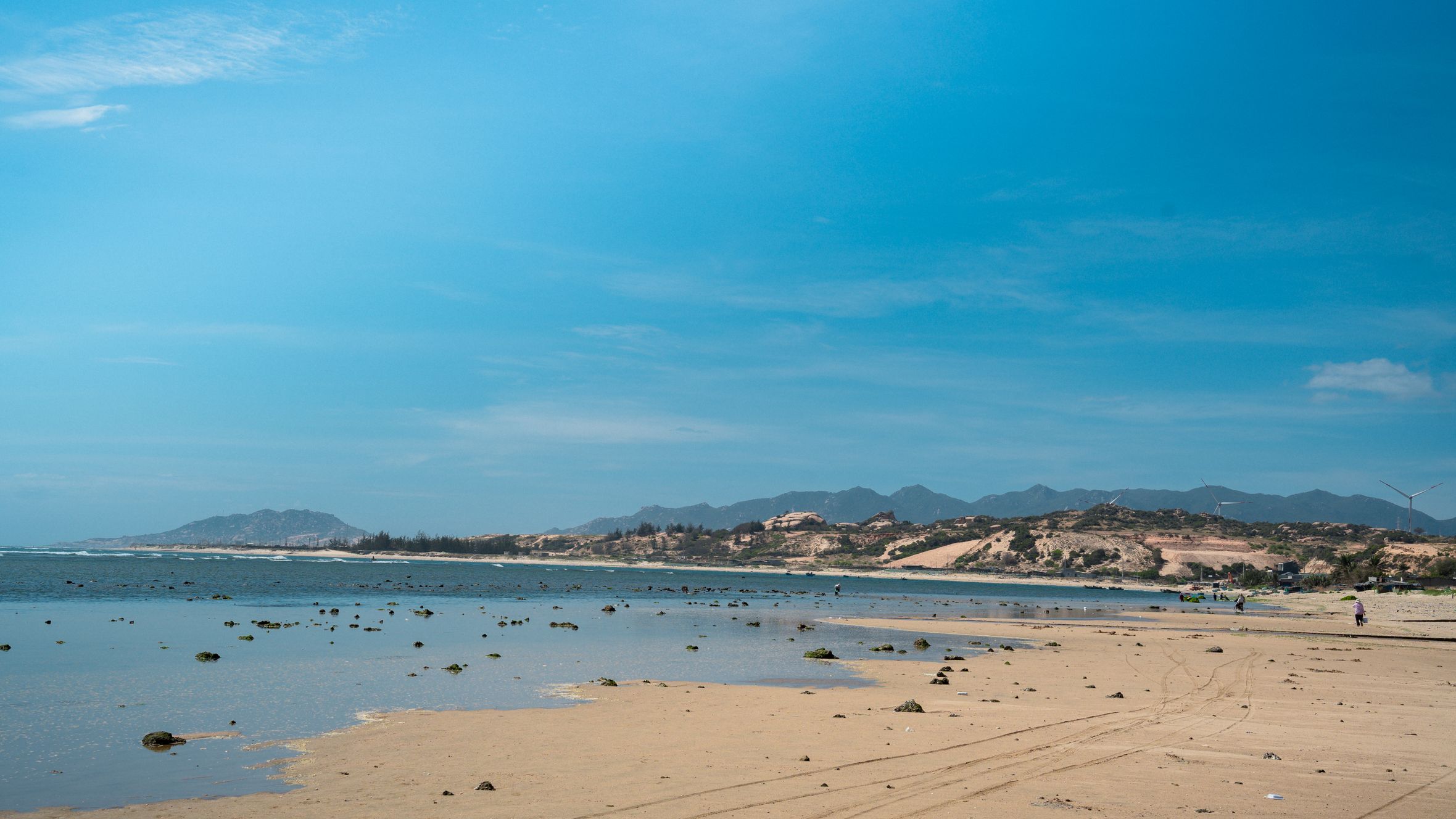
Cua Lo is where families from Hanoi and the northern midlands go when they want a beach weekend without flying south. It's not trying to be Phu Quoc or Da Nang. That's exactly what makes it worth knowing about.
What Cua Lo is — and a bit of backstory
Cua Lo is a 10 km stretch of sand along the coast of Nghe An province in north-central Vietnam. The town sits about 16 km east of Vinh, the provincial capital. It became a designated beach tourism area in 1994, and the local government has been building it up steadily since — seafood restaurants lining the shore road, mid-range hotels stacked a few blocks deep, and a boardwalk that fills up on summer evenings.
Before tourism, Cua Lo was a fishing village. You can still see that heritage in the morning markets and the small wooden boats moored at the southern end of the beach near the Lan Chau rocky outcrop. It's never really shed that fishing-town DNA, which keeps prices honest and the food genuinely good.
Why travelers go
Most foreign visitors skip Cua Lo entirely — it doesn't appear in many English-language guidebooks. The crowd here is overwhelmingly Vietnamese: Hanoians on long weekends, groups of retirees from Thanh Hoa, young couples from Vinh. That means the infrastructure is solid (good roads, ATMs, convenience stores) but the vibe is local. Nobody's going to charge you a "tourist price" for a plate of grilled squid because the pricing is set for domestic visitors who'd walk away.
The beach itself is wide, gently sloping, and the water stays shallow for a long way out — good for families with small kids. The sand is coarser than what you'd find at Mui Ne or Nha Trang (냐짱 / 芽庄 / ニャチャン), more tan than white, but it's clean and the water is clear enough on calm days.
Best time to visit
May through August is peak season. Water temperatures sit around 26-29°C, rain is infrequent (it picks up in September), and the town is fully alive — night market running, seafood stalls open late, beach bars blasting Vietnamese pop.
June and July are the busiest months. Hotel prices jump 30-50% on weekends and holidays. If you want the warm water without the weekend crush, aim for weekdays in May or early June.
Avoid October through February. The northeast monsoon brings grey skies, choppy water, and cold wind. Most beachfront restaurants scale back or close. Vinh itself is still worth a stop in the cooler months, but Cua Lo without swimming weather loses most of its appeal.
How to get there
Vinh is your gateway. From Hanoi (하노이 / 河内 / ハノイ), you have three main options:
- Train: The Reunification Express runs from Hanoi to Vinh in about 5.5-6 hours. Tickets range from 150,000 VND (hard seat) to around 450,000 VND (soft sleeper). Trains depart multiple times daily from Ga Ha Noi.
- Bus: Limousine buses from Nuoc Ngam or Giap Bat stations take about 5-6 hours and cost 200,000-300,000 VND. Several operators run the route; Hoang Mai and Duc Phuc are reliable.
- Flight: VietJet and Vietnam Airlines fly Hanoi to Vinh in about 1 hour. Book ahead and you can find fares from 500,000-900,000 VND one way.
From Vinh to Cua Lo, it's 16 km east on Highway 46. A taxi costs around 150,000-200,000 VND. Local buses run the route too, but they're slow and infrequent. If you're renting a motorbike in Vinh (about 120,000-150,000 VND/day), it's a straight 25-minute ride.

Photo by Long Bà Mùi on Pexels
What to do
Walk the Lan Chau peninsula
At the southern tip of the beach, a rocky outcrop juts into the sea. There's a small temple complex here — Lan Chau Temple — and a walking path along the rocks. Go early morning or late afternoon. The views north along the full length of Cua Lo beach are the best you'll get without a drone. It takes about 30 minutes to walk around.
Hit the seafood strip after dark
The beachfront road (Binh Minh) is lined with open-air seafood restaurants. The routine: you pick your seafood from tanks or ice trays, choose how it's cooked (grilled, steamed, stir-fried), and sit at plastic tables facing the water. Prices are posted per kilogram. Expect to pay 250,000-400,000 VND per person for a serious spread — prawns, clams, grilled fish, a few beers.
Take a boat to Hon Ngu island
About 4 km offshore, Hon Ngu (also called Nghi Son island) is a fishing island you can reach by speedboat from Cua Lo pier. The ride takes 15-20 minutes and costs around 100,000-150,000 VND round trip. There's a small beach, a fishing village, and a lighthouse. It's not a full-day destination — two or three hours is plenty — but it breaks up a beach trip nicely.
Catch the morning fish market
The market near the southern end of the beach kicks off around 5:00-6:00 AM when the boats come in. It's not a tourist attraction, it's a working market. You'll see the day's catch getting sorted, weighed, and carted off. If you're staying somewhere with a kitchen, you can buy directly — squid, crab, and mackerel are common. Otherwise, just go for the atmosphere and a bowl of "bun" (noodle soup) from one of the stalls nearby.
Rent a bike and ride to Bai Lu
About 5 km north of the main beach, Bai Lu is a quieter stretch of sand that locals prefer when the main strip gets crowded. Ride along the coast road — it's flat and easy. There are a few small drink shacks but no major restaurants, so bring water.
Where to eat
Seafood is the obvious play here, but two things are worth seeking specifically:
- Grilled "nem chua" from Nghe An: The province is known for its fermented pork roll, and the local version grilled over charcoal with chili is everywhere in Cua Lo. Look for the small carts near the night market area.
- "Banh canh" with crab: A thick-noodle soup made with real crab meat, not extract. Several places along Binh Minh road serve it for 40,000-60,000 VND a bowl. Ask your hotel for the nearest spot — the best ones rotate by season.
Where to stay
Cua Lo's accommodation is mostly mid-range. A few categories:
- Budget guesthouses (nha nghi): 200,000-400,000 VND/night. Basic rooms, fan or AC, a few blocks from the beach. Fine for a night or two.
- Mid-range hotels: 500,000-1,000,000 VND/night. Most are along Binh Minh road or one block back. AC, hot water, some with sea-view balconies. Muong Thanh has a property here if you want a familiar chain.
- Resort-style: Vinpearl has a Cua Lo property at the higher end, starting around 1,500,000-2,500,000 VND/night depending on season.
Book ahead for June-July weekends. Midweek in May, you can walk in and negotiate.

Photo by Quang Vuong on Pexels
Practical tips locals would tell you
- Bring cash. Card acceptance is spotty outside the bigger hotels. There are ATMs on the main road in town, but don't rely on paying by phone at a beachfront seafood place.
- Negotiate boat trips in advance. The Hon Ngu boat operators are used to group bookings. Solo travelers or couples can often join an existing group if you show up at the pier around 8:00 AM.
- Sunscreen is expensive locally. Stock up in Hanoi or Vinh. The convenience stores in Cua Lo carry it, but at marked-up prices.
- Motorbike parking on the beach road costs 5,000-10,000 VND. Pay it. The official lots have attendants and you won't worry about your rental.
Common mistakes to avoid
- Coming on a summer holiday weekend without a booking. Cua Lo fills up fast during national holidays (April 30, September 2). Prices double and rooms vanish.
- Skipping Vinh entirely. The city gets dismissed as just a transit point, but the local "bun bo" (not Hue-style, the Nghe An version is its own thing) and the street food around Vinh's Cho Vinh market are worth a meal stop.
- Expecting a tropical paradise. Cua Lo is a practical, unpretentious Vietnamese beach town. If you come with the right expectations — fresh seafood, local energy, decent swimming — you'll have a good time. If you're comparing it to Hoi An or Phu Quoc, you'll be disappointed for the wrong reasons.
Practical notes
Cua Lo works best as a 2-3 day side trip, either paired with Vinh or as a stop on a longer north-to-south route. It's real Vietnam beach culture without the international tourist markup, and the seafood alone justifies the detour.
Last updated · May 29, 2026 · independently researched, never sponsored.