What Dao Lan Chau actually is
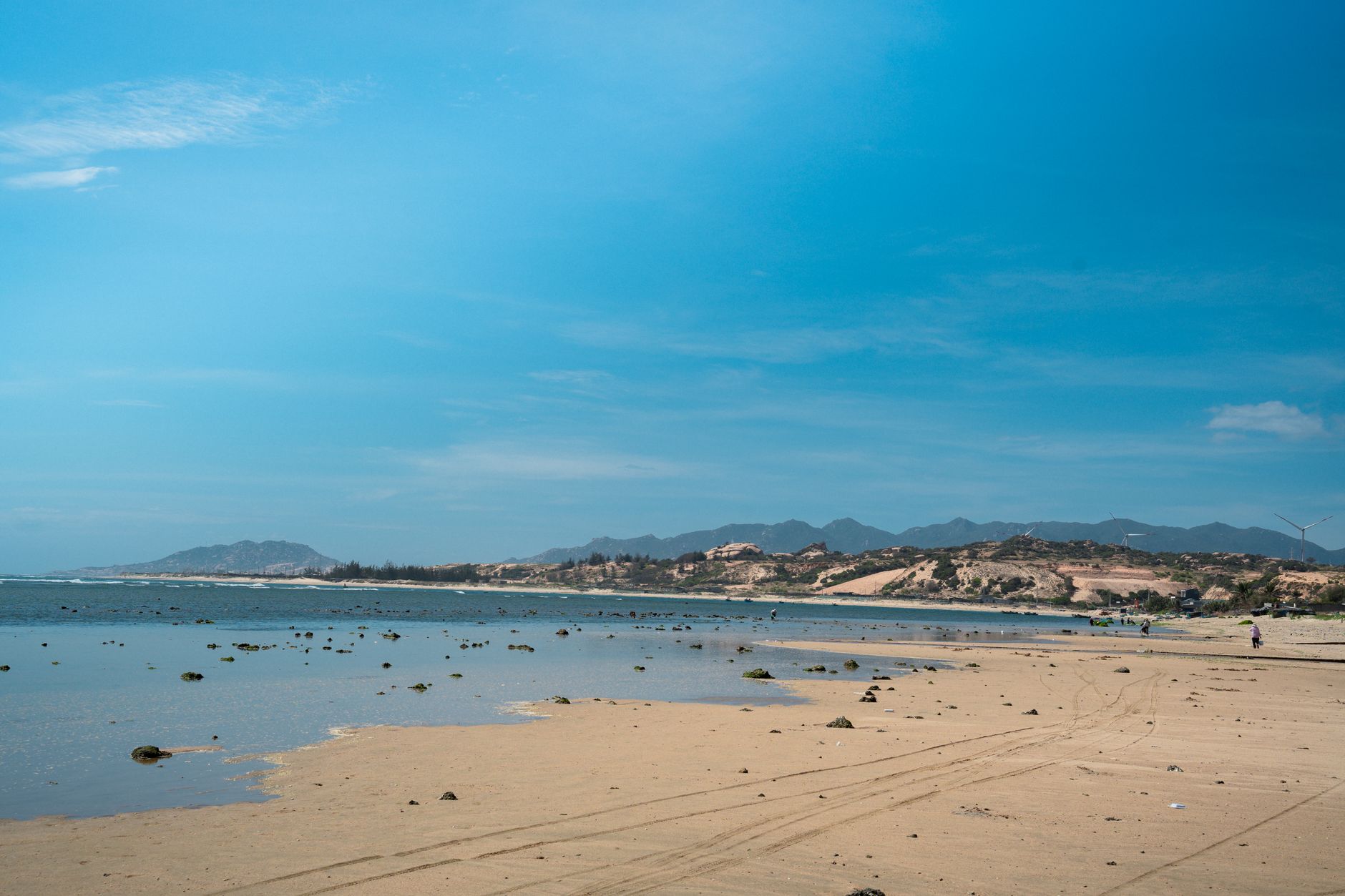
Dao Lan Chau sits just off the coast of Cua Lo town in Nghe An province, about 300 meters from the mainland. It's not really an island in the way most people imagine — at low tide, a natural sandbar connects it to Cua Lo Beach, so you can walk across with dry feet. At high tide, the water swallows the path and the island floats alone again. The whole thing is maybe 500 meters across, a cluster of dark basalt rocks topped with a small temple, some wind-bent trees, and a lot of character.
Locals have considered the island sacred for centuries. The temple on top — Den Lan Chau — is dedicated to a sea goddess, and fishermen from the area still come here to pray before heading out. During the Ly Dynasty, the island was already noted as a spiritual site along the Nghe An coast. None of that history feels forced or touristy. There's no ticket booth, no velvet ropes. It's just a rocky island with a shrine and a good view.
Why travelers go
Cua Lo is where families from Hanoi and Vinh go for summer weekends. It's not on the international tourist trail, which means Dao Lan Chau gets almost zero foreign visitors. That's part of the appeal — you're experiencing a genuinely local coastal scene rather than a packaged attraction.
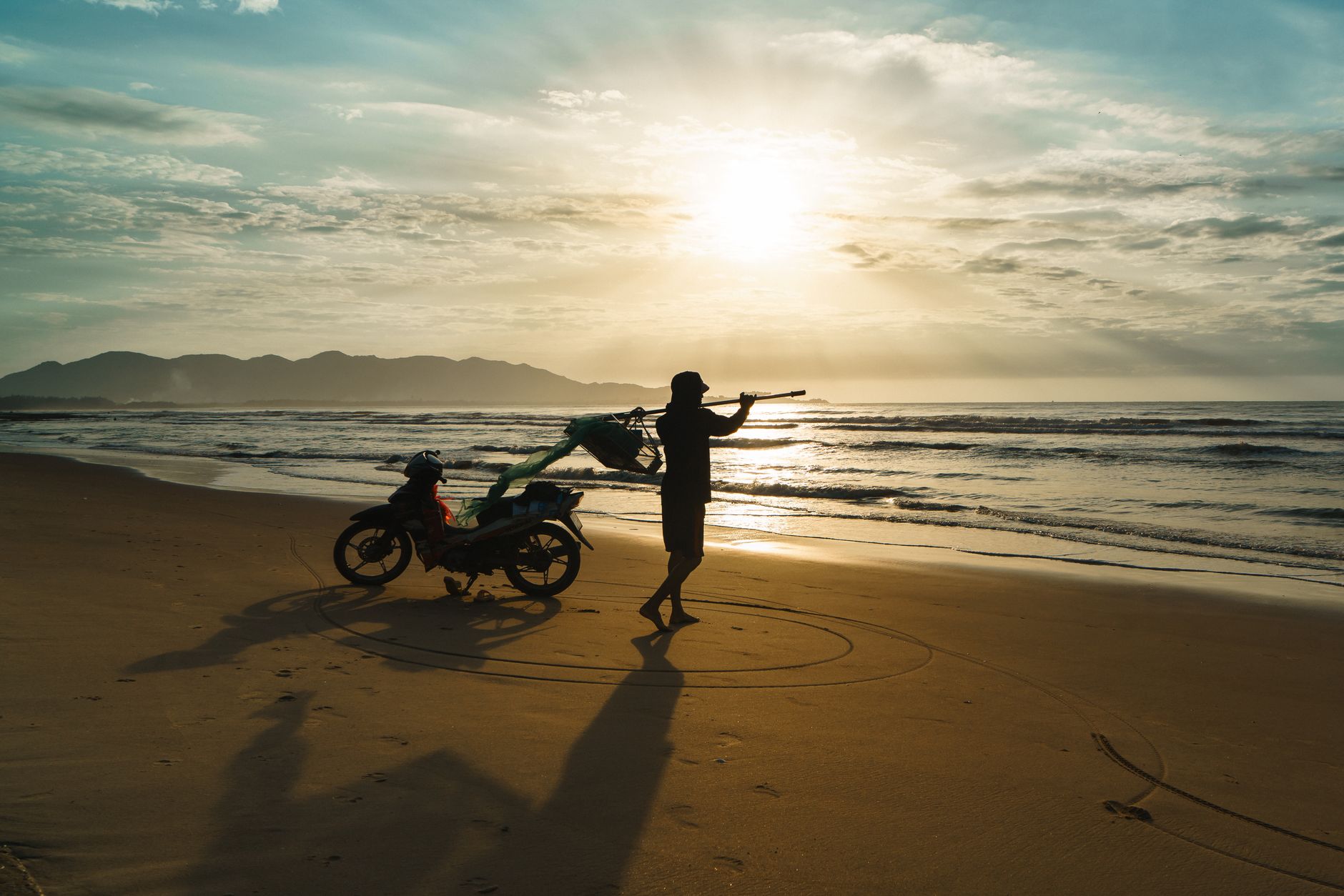
The island itself is photogenic in a rough, unpretentious way. Dark volcanic rock against blue-green water, incense smoke drifting from the temple, fishing boats anchored in the shallows. It's a good half-day detour if you're passing through Nghe An on the north-south route or spending time in Vinh.
Best time to visit
Aim for April through August. This is when the weather along the Nghe An coast is warm and dry enough for beach time, and the sea is calm. June and July are peak local holiday season — expect crowds at Cua Lo Beach on weekends, though the island itself never gets packed.
Avoid October through February. The northeast monsoon brings grey skies, choppy water, and cold wind off the sea. The sandbar crossing can be unpredictable, and swimming is off the table.
If you want the best experience on the island, check the tide schedule for Cua Lo before you go. Low tide in the morning means you can walk across early, explore the temple, and be back on the mainland before the midday heat.

Photo by Haneul Trac on Pexels
How to get there
The nearest city is Vinh, about 16 km inland from Cua Lo Beach.
From Hanoi (하노이 / 河内 / ハノイ): Vinh is roughly 290 km south. You can take a train from Hanoi station (around 5-6 hours, tickets from 150,000-350,000 VND depending on seat class) or a bus from Nuoc Ngam bus station (about 5.5 hours, 180,000-250,000 VND). Flights from Hanoi to Vinh take under an hour and cost 500,000-1,200,000 VND if booked early.
From Vinh to Cua Lo: Grab a taxi or local bus heading east toward the coast. The ride is 16 km and takes about 25 minutes. A taxi runs around 100,000-150,000 VND. Local bus number 03 also covers this route for about 15,000 VND.
From Cua Lo Beach to the island: Walk. At low tide, the sandbar is exposed and you just stroll across — it takes about five minutes. Wear sandals you don't mind getting wet, because the sand can still be damp. At high tide, you'll need to wait or hire one of the small boats that local fishermen operate for 30,000-50,000 VND per person.
What to do
Walk the sandbar crossing
This is the main event. Timing your visit to catch the sandbar at low tide feels like a small adventure — the path emerges from the water, and you cross with the sea on both sides. It's about 300 meters. Bring a waterproof bag for your phone.
Visit Den Lan Chau temple
The temple at the island's peak is small but atmospheric. Stone steps lead up through the rocks, and the shrine is shaded by old trees. Fishermen leave offerings here — fruit, incense, small bottles of rice wine. It's a working place of worship, not a museum, so dress modestly and keep your voice down.
Climb the rocks for the coastline view
From the top of the island, you get a wide panorama of Cua Lo Beach stretching north and south, the fishing fleet offshore, and on clear days, the green hills behind Vinh. The rocks are rough basalt — grippy but sharp, so skip the flip-flops for this part.
Swim at Cua Lo Beach
Back on the mainland, Cua Lo has a long, wide sand beach. The water is warm from May through August and the waves are gentle. Beach chair rentals go for about 30,000-50,000 VND. It's not the prettiest beach in Vietnam (베트남 / 越南 / ベトナム) — the sand is more grey-brown than white — but the water is clean and it's a good place to cool off after the island walk.
Watch the squid boats at night
If you stay until evening, the squid fishing boats head out after dark with bright green lights to attract their catch. The lights dotting the horizon are one of those quiet, unscripted moments that stick with you.
Where to eat nearby
Cua Lo is seafood territory. Restaurants line the beachfront road, and most have tanks out front where you pick your fish.
Order "oc" — sea snails cooked with lemongrass, chili, and coconut milk. It's the default beach snack here, sold at almost every stall for 40,000-80,000 VND a plate. The other local move is "muc nang" — sun-dried squid, grilled over charcoal and served with chili-lime dipping sauce. Vendors sell it along the beach in the late afternoon.
For a full meal, look for places serving "lau ca kem bong" — a fish hotpot made with locally caught sea bass and a sour tamarind broth. A pot for two people runs about 200,000-300,000 VND.

Photo by Koen Swiers on Pexels
Where to stay
Cua Lo has plenty of accommodation, almost all geared toward Vietnamese domestic tourists.
- Budget: Guesthouses ("nha nghi") along the beach road start at 200,000-400,000 VND per night. Basic but clean, usually with air conditioning and hot water.
- Mid-range: Three-star hotels closer to the beach center charge 500,000-900,000 VND. Some include breakfast and sea-view rooms.
- Higher-end: A handful of resorts sit at the north end of the beach, ranging from 1,000,000-2,000,000 VND per night. Vinpearl has a property here if you want a pool and buffet.
Book ahead if visiting on a weekend in June or July — Cua Lo fills up fast during summer.
Practical tips locals would tell you
- Tide timing matters more than anything. Check a tide chart for Cua Lo the morning of your visit. Low tide is your window — miss it and you're either swimming or waiting.
- Sunscreen and water. There's no shade on the sandbar and very little on the island beyond the temple area. Bring both.
- Cash only. The island has no ATM, no card machines, nothing. Small vendors near the beach accept only cash. Withdraw in Vinh or at the ATMs near Cua Lo market.
- Respect the temple. Cover your shoulders, take off your shoes before entering, and don't climb on the shrine structures for photos. People pray here daily.
Common mistakes to avoid
- Showing up at high tide without checking. This is the number one disappointment. The sandbar disappears completely, and the boat option isn't always available.
- Expecting a tropical island experience. Dao Lan Chau is a rocky outcrop with a temple, not a palm-fringed atoll. Calibrate your expectations and you'll enjoy it more.
- Skipping Vinh entirely. Most travelers blow through Vinh, but it's worth a morning — the central market has good "banh mi" stalls and strong drip "vietnamese coffee" for cheap. It's also the gateway to Kim Lien village, Ho Chi Minh's birthplace, if that interests you.
- Wearing nice shoes on the crossing. The sandbar is wet sand and shallow seawater. Rubber sandals or bare feet only.
Last updated · May 29, 2026 · independently researched, never sponsored.