What Bai Dua actually is
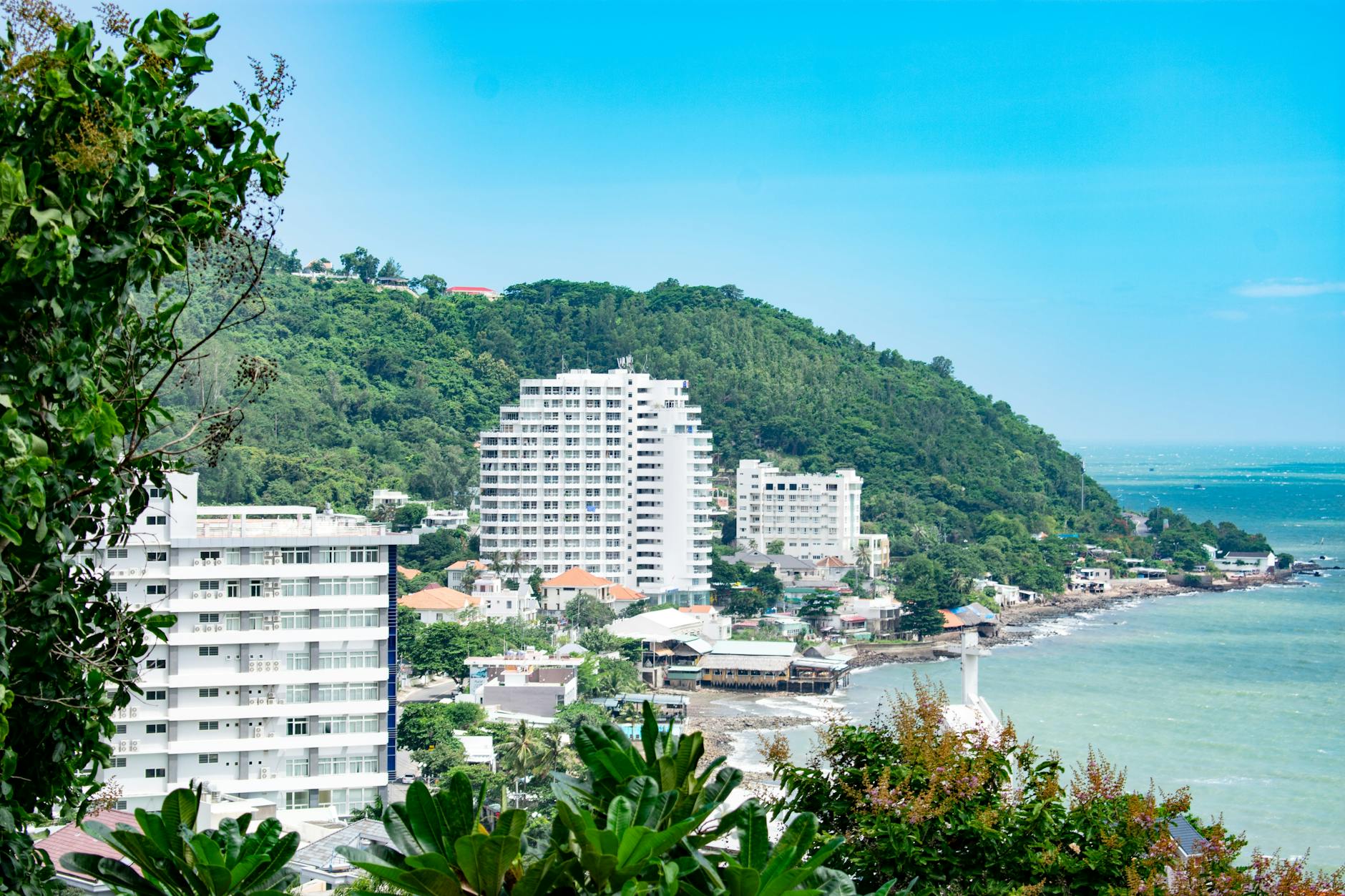
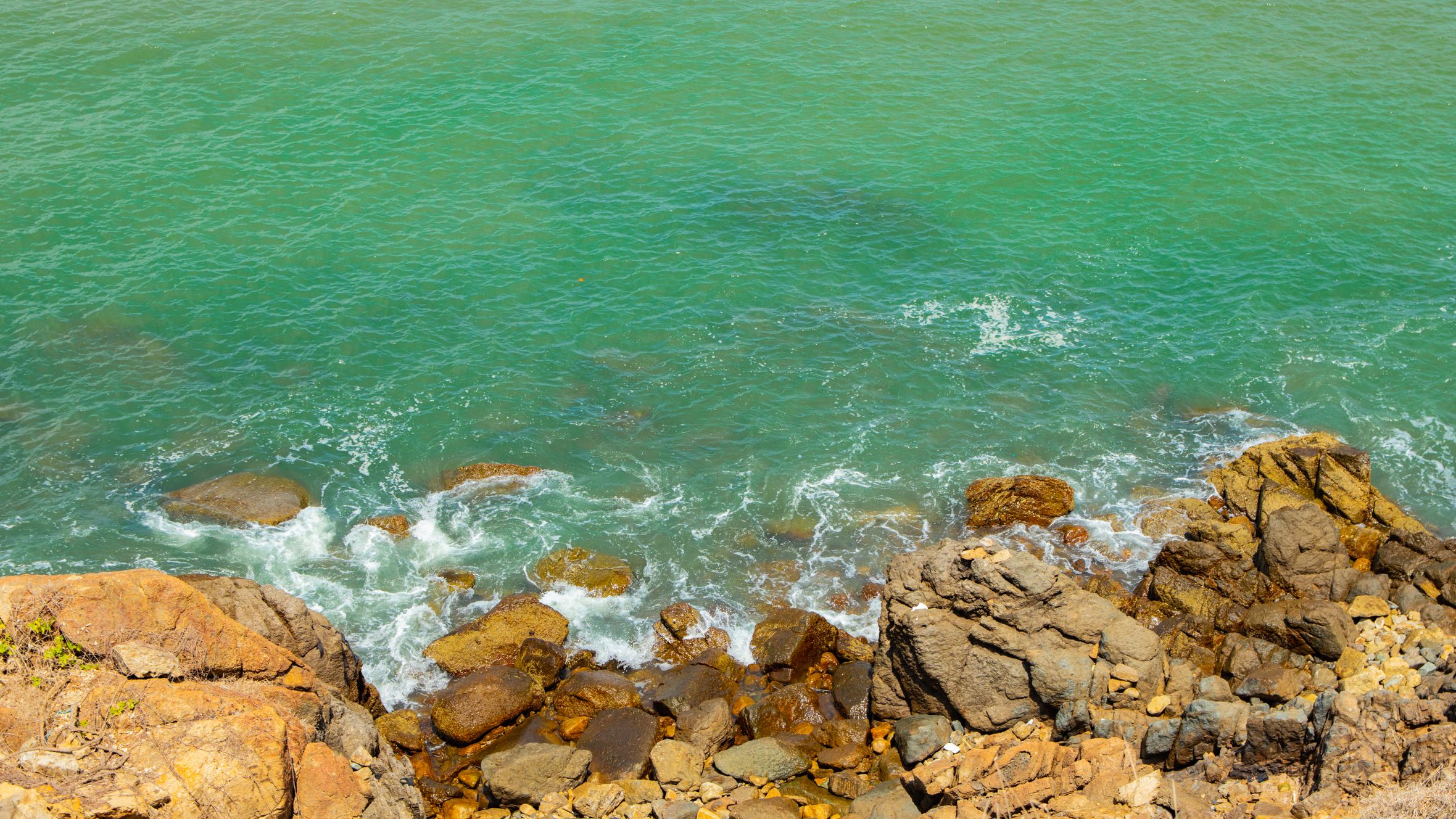
Bai Dua — Pineapple Beach — is a small, rocky cove sitting at the foot of Nui Nho (Small Mountain) in Vung Tau, directly below the massive Christ of Vung Tau statue. It's not a long stretch of powdery sand. It's a crescent of dark rock, tidal pools, and a narrow strip of coarse beach backed by dense coastal trees. That's exactly the appeal.
Following the 2025 administrative merger, Vung Tau (붕따우 / 头顿 / ブンタウ) is now officially part of the expanded Ho Chi Minh City. For travelers, not much changes on the ground — the same roads, the same hydrofoils — but you'll start seeing Vung Tau listed under the HCMC umbrella on maps and booking platforms. Bai Dua itself remains what it's been for decades: a low-key spot where locals go to escape the crowds of Back Beach and Front Beach.
The name comes from the wild pineapple plants ("dua dai") that once grew thick along the hillside. You'll still see some clinging to the rocks near the walking paths.
Why travelers go
Bai Dua isn't a beach day destination in the usual sense. You don't come here to lay out a towel and bake for six hours. People come for the rock scrambling, the views back across to Vung Tau's coastline, the relative quiet, and the walk up to the Christ statue from the coastal side.
It's also one of the better spots in the Vung Tau area for sunrise. The cove faces east, the rocks give you elevation, and on clear mornings the light across the water is genuinely good — not a word I throw around. Photographers know this spot.
For anyone based in Saigon (사이공 / 西贡 / サイゴン) looking for a day trip or overnight that doesn't require a flight, Bai Dua and the surrounding Nui Nho area are about as easy as it gets.
Best time to visit
November through April is the dry season and your best window. Skies are clearer, humidity drops slightly, and the rocks around Bai Dua aren't slick with rain. December through February tends to be the most comfortable, with temperatures around 26-30°C.
Avoid weekends and public holidays year-round if you want the cove to yourself. During Tet and long weekends, Vung Tau fills up fast — Bai Dua included. A Tuesday morning in January? You might have the rocks almost to yourself.
The wet season (May to October) brings afternoon downpours and rougher seas. The rocks get genuinely slippery. Not dangerous if you're careful, but less pleasant.
How to get there from Saigon
Hydrofoil (fastest, most popular): Greenlines or Vina Express from Bach Dang Wharf in District 1 to Vung Tau. About 90 minutes, tickets run 250,000-350,000 VND one way. Book a day ahead on weekends. From Vung Tau's hydrofoil terminal, Bai Dua is roughly 5 km south — a 30,000-40,000 VND taxi or Grab ride.
Bus: Phuong Trang (FUTA) runs coaches from Mien Dong bus station. Around 2-2.5 hours depending on traffic, 80,000-120,000 VND. Cheaper but slower.
Motorbike: The ride from central Saigon is about 110 km via the Long Thanh - Dau Giay Expressway and then National Route 51. Takes roughly 2-2.5 hours without heavy traffic. This is the most flexible option and lets you stop at roadside "com tam" joints along the way.
Once in Vung Tau, head to Hai Dang Street on the southern tip of Nui Nho. The path down to Bai Dua starts near the lighthouse area.

Photo by Quang Vuong on Pexels
What to do
Walk to the Christ statue
The main draw. From Bai Dua, a paved path with stairs leads up Nui Nho to the 32-meter Christ of Vung Tau statue. It's about a 30-minute climb — steep in parts, shaded by trees. Entry is free. The views from the statue's base span the entire Vung Tau peninsula. Go early morning to beat both the heat and the tour groups.
Rock scrambling and tidal pools
The volcanic rock formations along Bai Dua are genuinely interesting to explore at low tide. Small pools trap fish, crabs, and sea urchins. Wear shoes with grip — flip-flops on wet volcanic rock is a bad idea. Check tide times before you go; low tide exposes the best pools.
Sunrise photography
Get there by 5:15 AM. The eastern exposure and layered rock foreground make this one of the better coastal sunrise spots within easy reach of Saigon. No tripod restrictions, no entrance fees at that hour.
Walk the coastal path toward Nghinh Phong Cape
A rough trail connects Bai Dua south toward Nghinh Phong (Wind-Greeting Cape), another rocky headland. The walk takes about 20 minutes one way and gives you a different angle on the coastline. Not well-marked, so follow the worn paths.
Just sit
Seriously. Find a flat rock, watch the fishing boats, drink a coffee you brought in a thermos. Not everything needs to be an activity.
Where to eat nearby
Bai Dua itself has no restaurants. Walk or ride back toward Vung Tau's main streets for food.
"Banh khot" is the signature Vung Tau dish — tiny crispy rice flour pancakes cooked in clay molds, topped with shrimp, eaten wrapped in herbs and lettuce with fish sauce. Banh Khot Goc Vu Sua on Nguyen Truong To Street is a reliable local favorite. Expect to pay around 60,000-80,000 VND for a full portion.
For seafood, the string of restaurants along Back Beach (Thuy Van Street) has grilled squid, clams, and prawns. Prices vary wildly — check before ordering. Budget around 200,000-400,000 VND per person for a solid seafood spread with beer.
If you're craving something familiar, Vung Tau has decent "banh mi" vendors scattered around the market area near Front Beach.
Where to stay
Budget (300,000-600,000 VND/night): Guesthouses and mini-hotels along Thuy Van Street and in the backstreets near Front Beach. Basic but functional — AC, hot water, Wi-Fi.
Mid-range (800,000-1,500,000 VND/night): Boutique hotels closer to the coast. Several options along Ha Long Street with sea views and pools.
Upscale (2,000,000+ VND/night): A handful of resort-style properties on the outskirts of town toward Long Hai. Worth it if you're staying multiple nights.
Most travelers doing Bai Dua as a day trip from Saigon skip accommodation entirely.

Photo by life vibes on Pexels
Practical tips locals would tell you
- Bring water. There's no vendor at the cove itself, and the climb to the Christ statue in midday heat will drain you.
- Wear proper shoes. The rocks are sharp and uneven. This isn't a sandals beach.
- Sunscreen matters more here than on a flat beach — the rock reflects heat and you're often at an angle with no shade.
- If you're taking the hydrofoil back, book your return ticket in advance. Evening boats on Sundays sell out.
- The path down to Bai Dua is not well-lit. Don't try it after dark unless you know the route.
Common mistakes to avoid
Expecting a swimming beach. Bai Dua is rocky. You can get in the water in spots, but it's not a swim-and-float situation. For that, go to Back Beach.
Coming on a holiday weekend. Vung Tau is Saigon's default weekend escape. During Tet / 越南春节 / テト) or September 2 holidays, the town triples in population. Bai Dua gets crowded and loses its appeal.
Skipping the early morning. By 10 AM, tour groups arrive at the Christ statue and filter down. The cove is a different place at 6 AM versus noon.
Practical notes
Bai Dua works best as part of a broader Vung Tau day trip or overnight from Saigon. Pair it with a morning visit to the lighthouse, lunch in town, and an afternoon on Back Beach. The hydrofoil makes it easy enough to do in a single long day without feeling rushed.
Last updated · May 29, 2026 · independently researched, never sponsored.